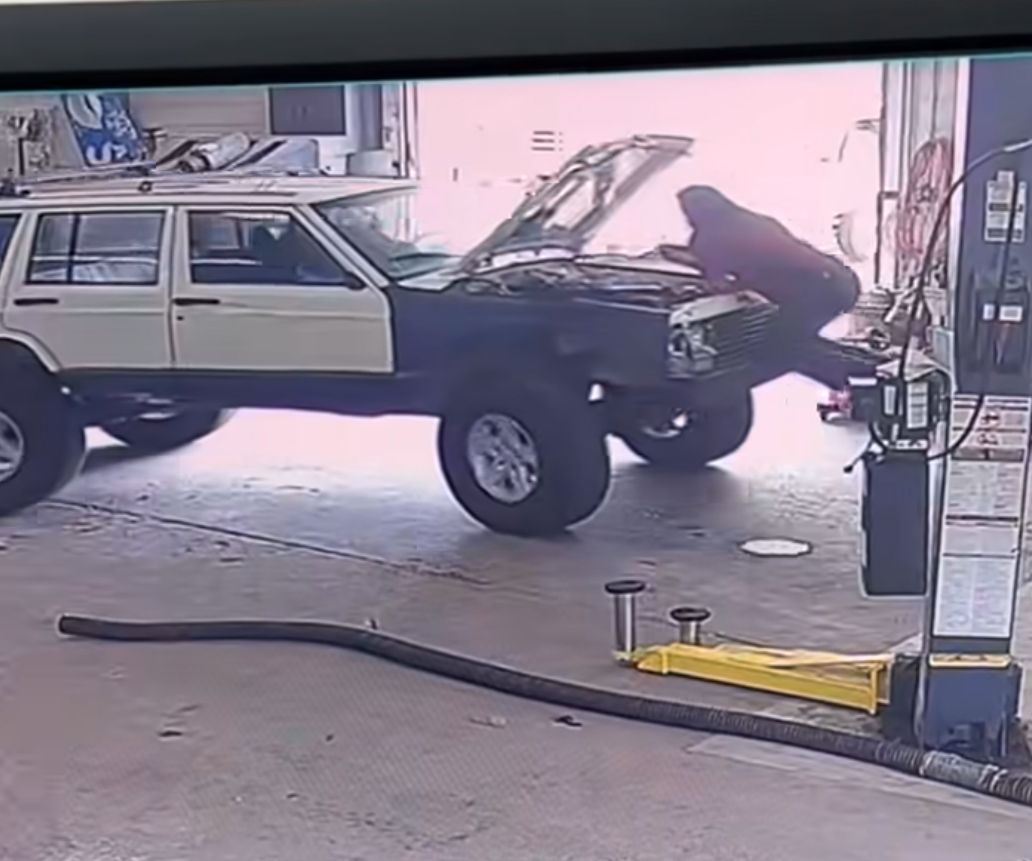
A clip from a Utah auto shop has the internet equal parts impressed and horrified, and honestly, both reactions make a lot of sense.
A Facebook video posted by Master AutoTech, a Utah-based shop, recently set the internet ablaze after showing one of their technicians doing something that looks absolutely unhinged at first glance. With the car rolling forward and a coworker behind the wheel, the mechanic leaned over the open engine bay and repeatedly sprayed starting fluid into the engine to keep it alive. The shop’s caption said it all: “When the mechanic has to be the fuel pump.” Casual? Maybe. Chaotic? Definitely.
The video hit over 504,000 views in a matter of days, pulling in comments from seasoned mechanics who have lived this exact moment, curious car owners who had no idea this was even a thing, and a handful of people who were equal parts amazed and horrified. It turns out, this little maneuver sits in a very specific gray zone where legitimate automotive know-how meets “please don’t try this at home.”
So what exactly is going on here, and why would a professional mechanic do something that looks this wild? The answer is more interesting than you might expect. Behind the apparent madness is a clever bit of diagnostic logic, a real safety risk, and a window into the kind of creative problem-solving that shop life sometimes demands.
What a Fuel Pump Actually Does (And Why It Matters)
To understand the video, it helps to understand what a fuel pump is supposed to be doing in the first place. In modern vehicles, the fuel pump is responsible for drawing gasoline from the tank and pushing it toward the engine at the right pressure. No fuel pressure, no combustion. No combustion, no movement. It is that simple, and when the pump fails, the car simply dies.
When a mechanic suspects a fuel delivery problem, one of the fastest ways to confirm it is to introduce a substitute fuel source directly into the engine. Starting fluid is extremely combustible, even more so than regular gasoline, which means a small spray of it can trigger ignition even when the normal fuel supply is completely absent. If the engine fires up on starting fluid but dies the moment you stop spraying, that tells a mechanic almost immediately that fuel delivery is the problem. It is a diagnostic trick as much as it is a workaround.
From there, the issue could point to a few different culprits: a dead fuel pump, a clogged fuel filter, faulty injectors, or even an electrical failure somewhere in the system that is cutting off power to the fuel delivery components. A proper fuel pressure gauge can help narrow things down further.
Why the Mechanic Was Doing This While the Car Was Moving
This is the part that really gets people. If the goal was just to diagnose a fuel problem, why was the car rolling?
The answer is pretty straightforward, even if it looks dramatic: the shop needed to move the vehicle. Maybe it was blocking a bay. Maybe it needed to roll into one. Whatever the reason, pushing a car by hand is a hassle, and if you can get the engine to run for 30 seconds of controlled movement, that is often the faster and more practical option.
Several mechanics in the comments pointed this out directly. One noted that if a part is three days out and you need the bay cleared, you do what you have to do. Another said they had done the same thing so many times it barely registered as unusual anymore. In the context of a busy shop with space at a premium and vehicles that refuse to cooperate, a little ingenuity goes a long way.
The Real Safety Risks You Should Know About
Here is where things get less funny. Starting fluid is extremely flammable. It is not designed to be used as an ongoing fuel substitute, and it does not lubricate engine components the way gasoline does. Use too much of it, and you risk engine damage. Get it near a hot surface or an open spark at the wrong moment, and you risk something far worse.
The comment section on the video made that crystal clear. One viewer wrote that they had been in a similar situation and barely avoided setting the car on fire. Another described a plastic intake manifold that did not survive the experience, complete with a mid-shop explosion. A third admitted to losing most of their beard, their eyelashes, and a portion of their eyebrows. These are not hypothetical risks. They are real consequences that actual people have experienced.
The mechanic in the video appears to know what they are doing, and the setting looks controlled. But it is worth being clear: this is not a technique for home mechanics to experiment with. Even professionals who do this regularly acknowledge that it requires experience, caution, and a very clear understanding of what can go wrong.
What This Viral Moment Teaches Us About Car Ownership
Beyond the entertainment value, this video is actually a pretty useful reminder for anyone who owns a vehicle. Fuel system problems are more common than people realize, and they are not always obvious. A car that cranks but will not start, or one that runs for a few seconds and dies, could be pointing to a failing fuel pump long before it gives out entirely.
Mechanics recommend paying attention to signs like engine sputtering at high speeds, difficulty starting when the tank is low, or a noticeable whining noise from near the fuel tank. A fuel pressure gauge is an inexpensive tool that can save a lot of guesswork. And if your car suddenly will not stay running, resist the urge to keep cranking the starter and instead get it to a shop where the fuel system can be properly tested.
The mechanic in the video did what experienced technicians sometimes have to do: improvise under real constraints, using solid mechanical knowledge to bridge a gap. It looked wild. It kind of was wild. But it also worked.