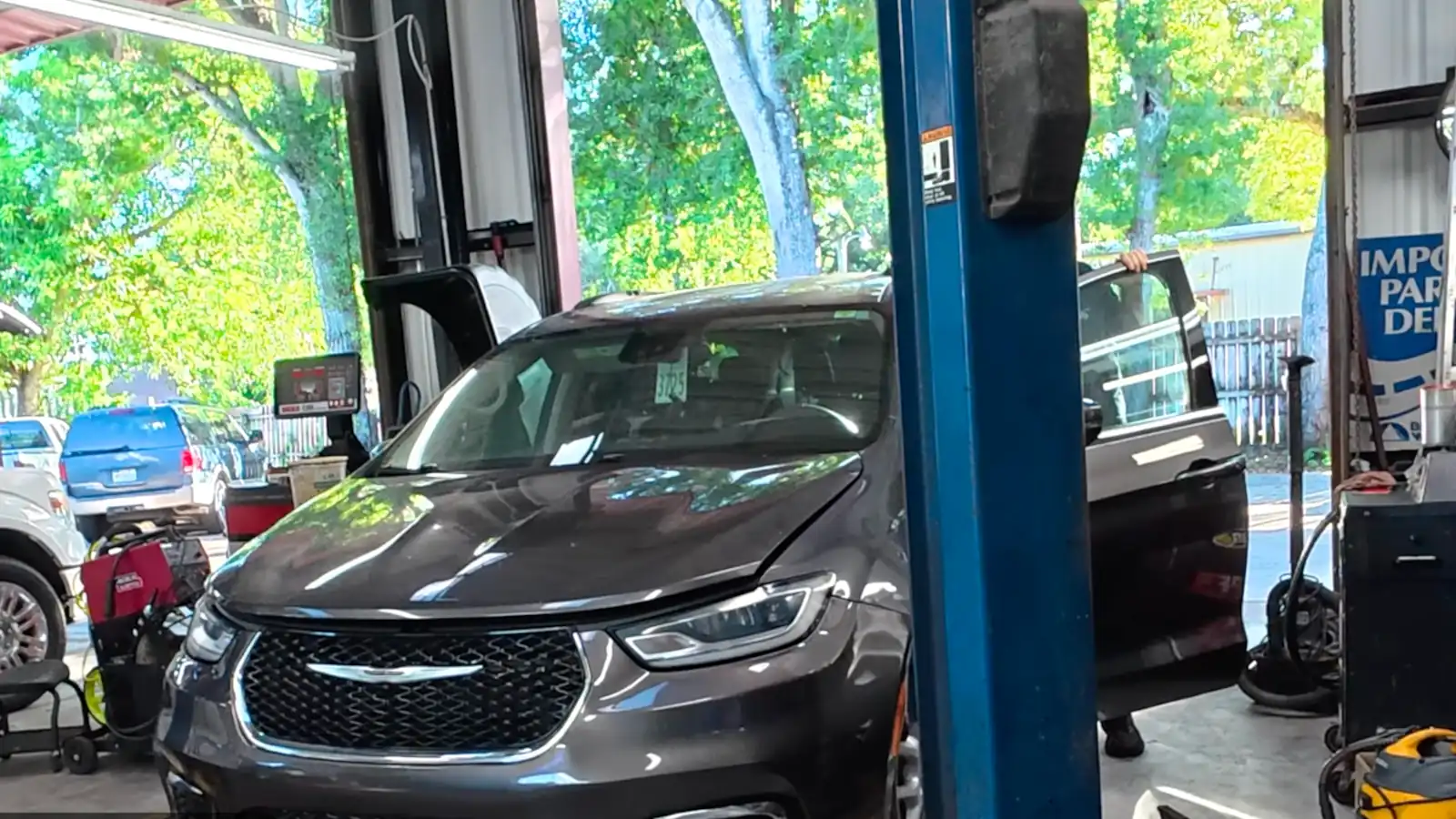
Three trips to the dealership, and what do you get? For one Chrysler Pacifica owner, it was a torn-apart engine and an estimate to replace it completely.
The trouble started in early 2026, when the owner’s 2022 Pacifica developed an engine misfire and a coolant leak. The dealership replaced a cylinder head, but the same symptoms returned just over a week later. A second visit didn’t fix it, so the owner sought another opinion.
That’s when independent mechanic Raymond Mackinlay, better known as Rainman Ray’s Repairs on YouTube, got involved. He found coolant in one of the engine’s cylinders and got the Pacifica running again.
The owner sent the minivan back, hoping the dealership would finally fix the leak. Instead, according to Mackinlay, the dealership blamed severe overheating for the engine damage and recommended replacing it at the owner’s expense.
What a Mess
Embedded media follows; please allow a moment to load.
Refusing to pay for a new engine, the owner argued that the dealership’s earlier repairs were responsible and had the Pacifica returned to Mackinlay’s shop. In the video, Mackinlay examines the dismantled engine and explains why he questions the dealership’s diagnosis.
He begins by collecting engine parts left inside the Pacifica. Some are in the back of the minivan, while others are loose under the hood.
Among the parts are a water pump, an intake manifold, valve covers, and several camshafts. The camshafts catch Mackinlay’s attention because they’re resting against other metal components.
He explains that the camshafts contain magnetic parts used to track their position. Metal contact can damage those components, and Mackinlay suspects the camshafts may no longer be usable.
Something Isn’t Right
In an earlier inspection video published September 9, 2026, Mackinlay found enough coolant inside cylinder five to keep the engine from turning. When the owner tried starting it, the attempt also blew a starter fuse.
Using a straightedge and feeler gauges, Mackinlay checks whether the replacement cylinder head is warped. After removing leftover gasket material, he finds the surface is largely flat.
The engine block is another story.
Near cylinder five, Mackinlay measures a gap of about 0.0015 inches between his straightedge and the block. He believes the uneven surface may have reduced the pressure holding the head gasket in place, allowing coolant to enter the cylinder.
Those Marks Matter
Mackinlay also finds circular scratches across the engine block’s gasket-sealing surface. Suspecting someone used an abrasive cleaning wheel during an earlier repair, he tests a similar tool on a section of the block he won’t reuse. It leaves marks resembling the ones he found.
Mackinlay also finds scratches beneath remnants of the old gasket material, which he believes shows the marks were already there before he began inspecting the block. He suspects someone previously used an abrasive wheel, potentially damaging the sealing surface, but cannot establish exactly when the marks were made or prove they caused the engine failure.
Based on his measurements and the marks he found on the block, Mackinlay concludes that the earlier repair work contributed to the engine’s problems.
The Pacifica remains at Mackinlay’s shop awaiting an engine replacement. If the dealership agrees to cover the repair, Mackinlay thinks the owner will likely have him inspect the final work.