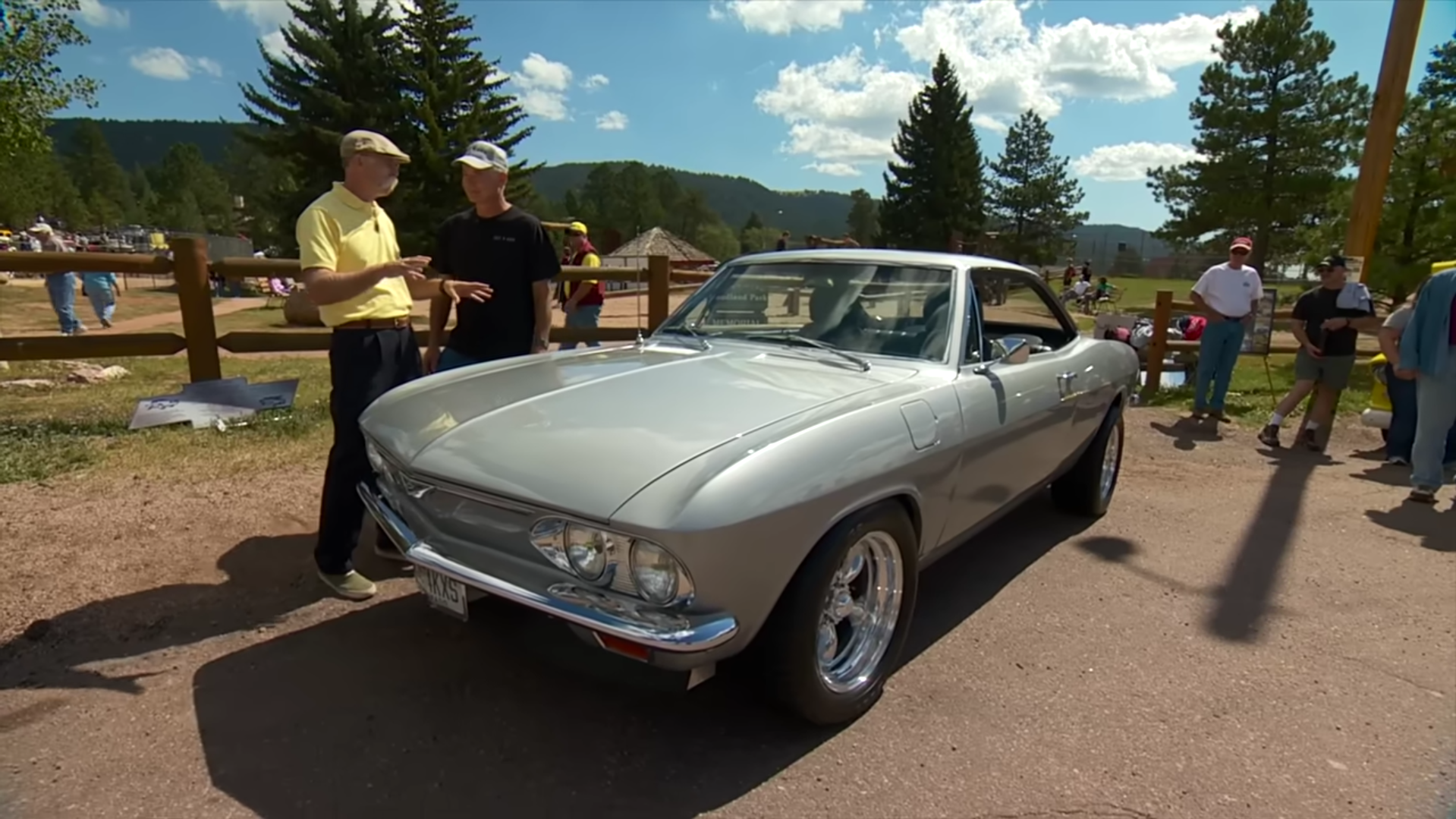
Some project cars take a few years to complete. Others become lifelong passions. For one Colorado enthusiast, a 1966 Chevrolet Corvair evolved from a car purchased in the late 1970s into a custom build that took roughly 25 years to bring to life.
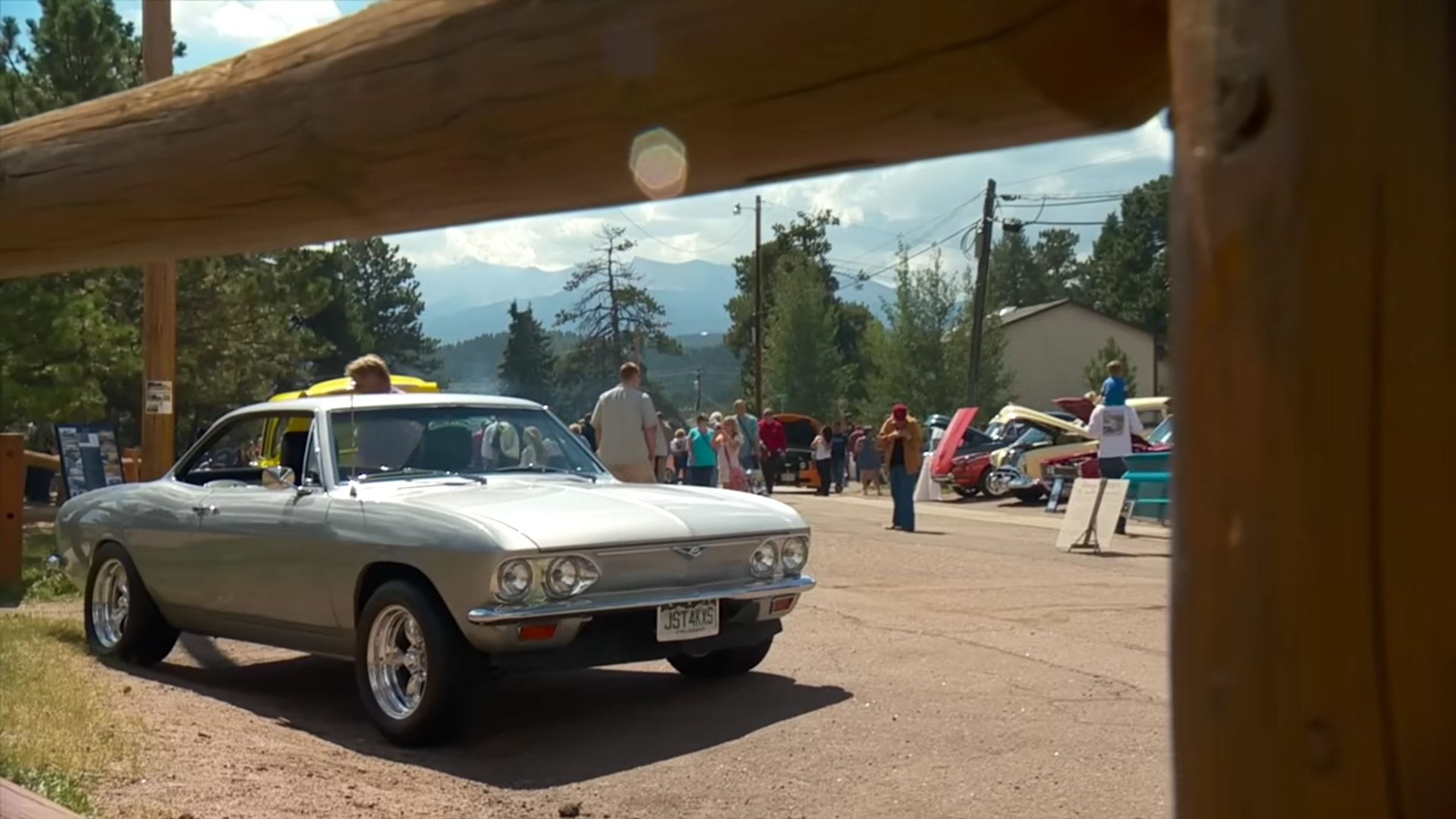
The silver Corvair, nicknamed “Just For Kicks,” recently appeared at the Cruise Above the Clouds event in Woodland Park, Colorado, where owner George shared the remarkable story behind the car with the MyClassicCarTV YouTube channel. While its clean appearance immediately catches the eye, the biggest surprise isn’t visible until the rear decklid is opened.
At first glance, the coupe looks like a carefully restored second-generation Corvair with tasteful upgrades. Its classic proportions remain intact, the interior stays true to the original design, and the modifications never overwhelm the car’s character.
Hidden behind the rear seats, however, is an extensively engineered V8 conversion that transforms Chevrolet’s compact rear-engined coupe into something far more potent than its designers could have imagined.
A Corvair That Stayed In The Family
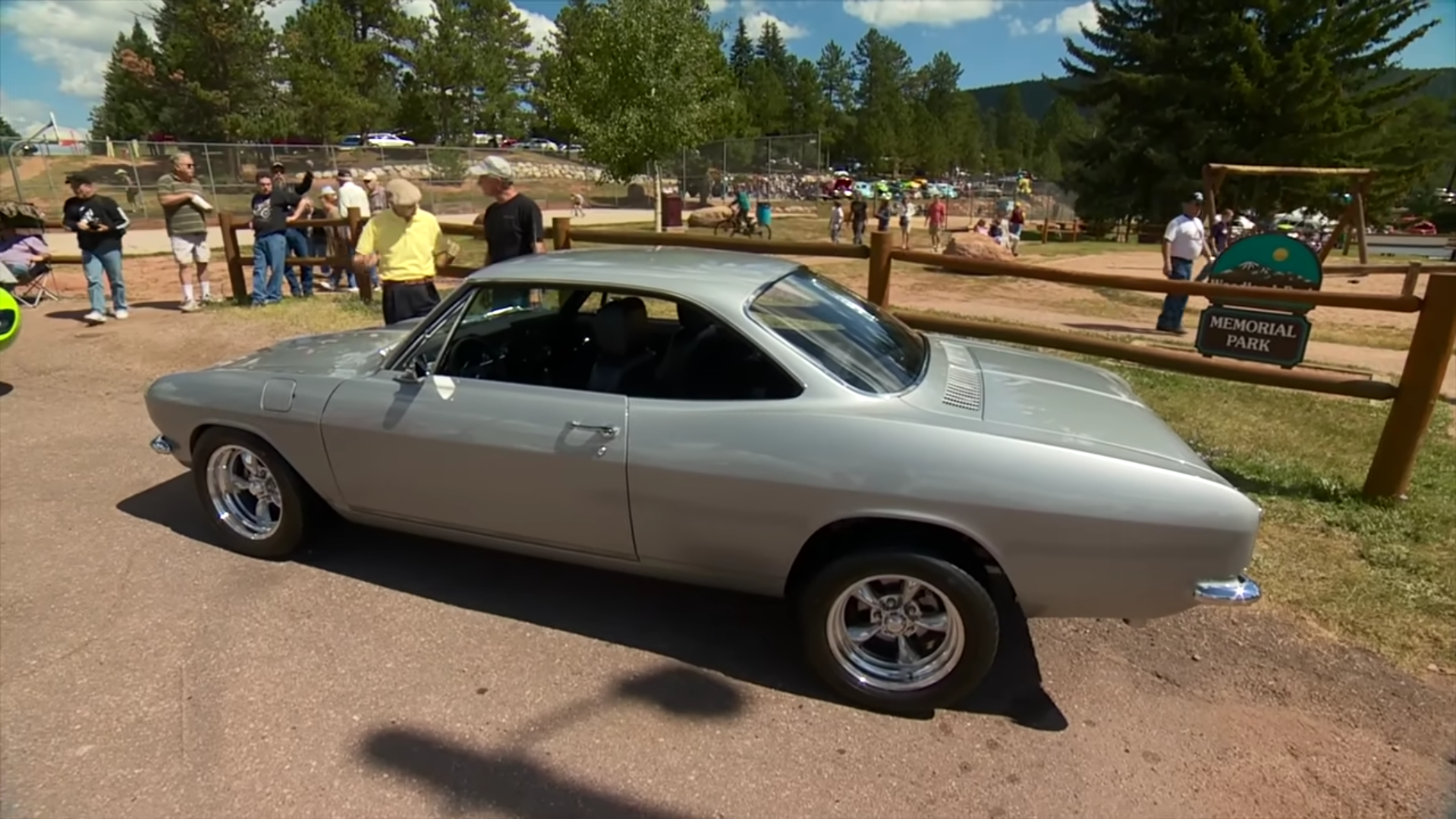
George has owned the Corvair since 1977, giving him nearly five decades with the car. Like many long-term restoration projects, progress came in stages as time, finances, and family commitments determined when work could continue.
He says the project remained in storage for years before circumstances finally allowed him to complete the build. According to George, it was only after about 25 years—and with his wife’s approval—that the dream became reality.
The finished product reflects patience rather than haste. Every modification appears carefully considered, resulting in a car that feels cohesive instead of heavily customized for the sake of attention.
Modern Touches Without Losing Its Identity
Although the Corvair now wears a silver finish instead of its original Tonawanda Blue paint, much of its classic styling has been preserved.
American Racing 16-inch wheels modernize the stance without looking out of place, while the distinctive roofline and flowing rear fenders continue to showcase why many enthusiasts consider the 1965-69 Corvair one of Chevrolet’s most attractive designs of the era.
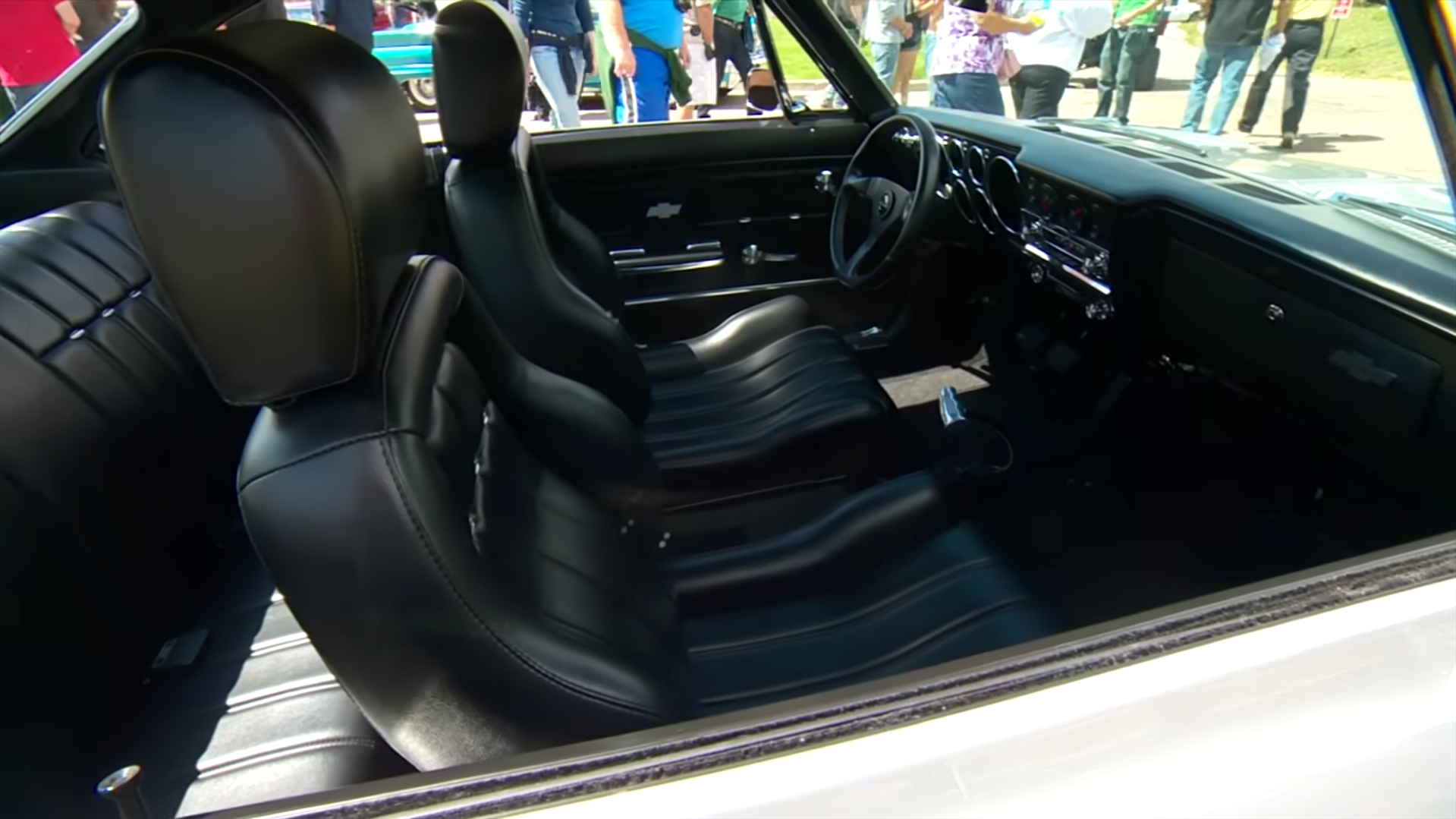
Inside, George deliberately avoided reinventing the cabin. The factory instrument cluster remains in place, now fitted with modern VDO gauges, while the replacement bucket seats retain the original upholstery pattern using material and buttons from the factory seats.
Even the shifter was redesigned with practicality in mind. By relocating it toward the center of the cabin, George created additional legroom while maintaining a period-correct appearance.
A Lightweight Coupe With V8 Power
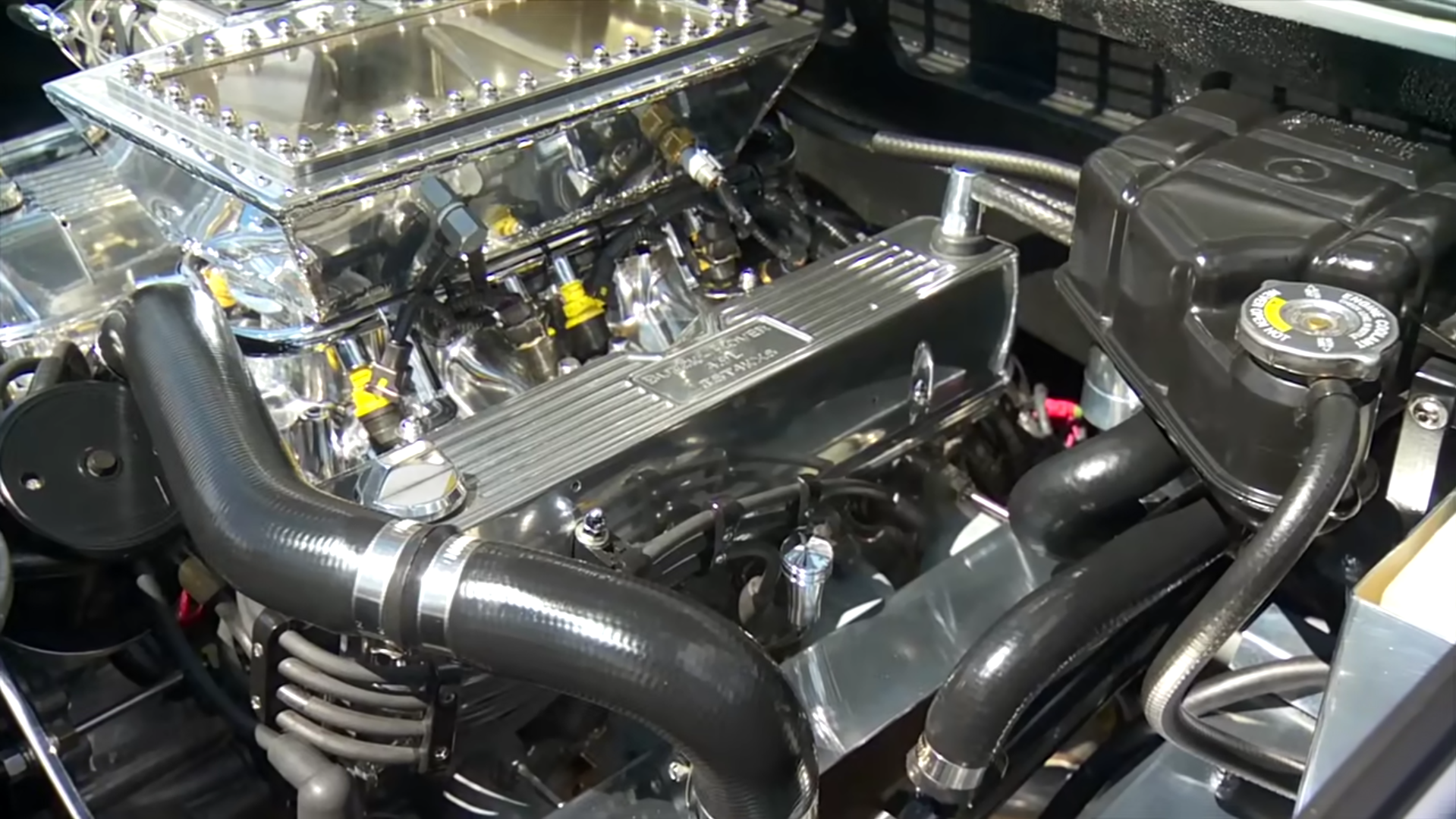
The real centerpiece of the build sits beneath the rear decklid. Replacing the factory flat-six is an extensively modified aluminum Buick-Rover V8. Originally based on the well-known 215-cubic-inch design, the engine has been enlarged to approximately 300 cubic inches through internal modifications.
The naturally aspirated V8 features ported cylinder heads, electronic fuel injection, equal-length intake runners, and a custom-fabricated airbox designed to resemble classic Enderle injection stacks. Because the Corvair’s drivetrain rotates opposite to a conventional front-engine layout, the engine also required a specially ground reverse-rotation roller camshaft.
Cooling presented another engineering challenge. Rather than relying on a rear-mounted radiator, George installed one at the front of the car, routing coolant through pipes running inside the rocker panels before returning it to the engine.
An Accusump oil accumulator was also fitted, allowing the lubrication system to be pressurized before every startup to reduce engine wear caused by dry starts.
Serious Performance In A Small Package
The extensive mechanical work produces impressive numbers for such a lightweight car. George estimates the V8 delivers around 350 horsepower to the rear wheels. Considering the Corvair weighs less than 3,000 pounds, the power-to-weight ratio places it well beyond what anyone would expect from a 1960s compact coupe.
Despite the dramatic increase in performance, the engine installation remains remarkably tidy. Packaging the V8 into the Corvair’s rear engine compartment required extensive fabrication, leaving very little unused space beneath the decklid.
Built Exactly The Way He Wanted
Projects like “Just For Kicks” highlight what makes the custom car hobby unique. Rather than chasing factory-correct originality or building an all-out race car, George spent decades refining a vision that balanced classic styling with modern performance.
The result surprises nearly everyone who sees it. From the outside, it appears to be a beautifully restored second-generation Corvair. Lift the rear decklid, however, and the carefully engineered V8 installation completely changes first impressions.
After nearly 50 years of ownership and a quarter-century of work, George’s Corvair proves that some of the best custom builds aren’t finished on a deadline. Instead, it’s completed only when the owner decides every detail is exactly where it belongs.