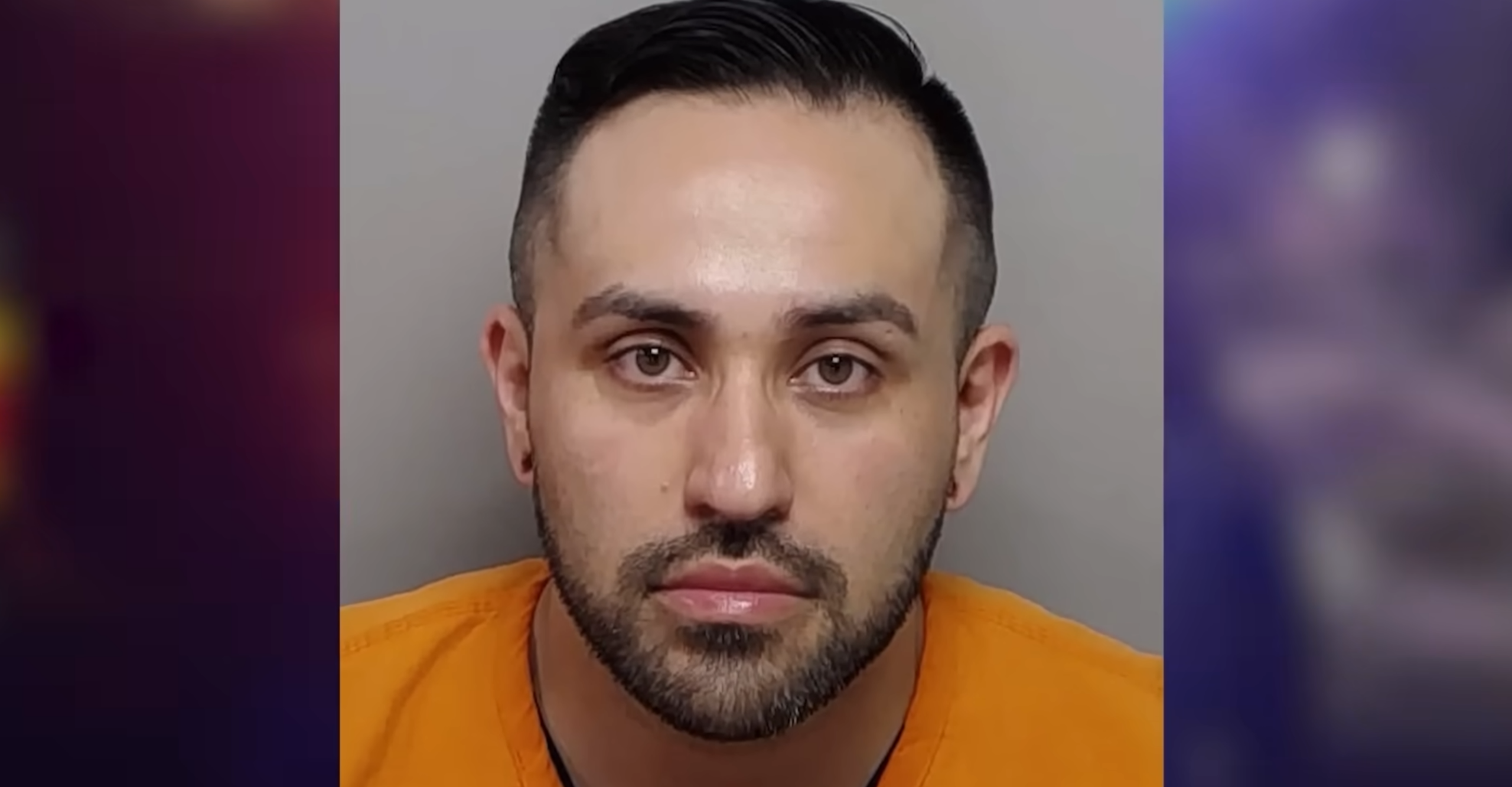
A San Antonio man is facing serious criminal charges after investigators say surveillance footage blew apart his story about a woman’s death following what police now believe was a high-speed illegal street race on the city’s far west side.
Thirty-eight-year-old Marcus Garcia was taken into custody in connection with the February death of Brittany Flanders, who was 29 years old at the time. According to authorities, Flanders lost her life after falling off the back of a motorcycle during what detectives say was a reckless street race that reached nearly double the posted speed limit. The incident occurred just after midnight on February 19th near the intersection of Culebra and Tezel Road.
What makes this case especially heartbreaking is a cruel twist of timing: court records reveal that Brittany Flanders died just one day before her 30th birthday. She never got the chance to mark that milestone, and the people who loved her are now left grappling with a loss that was entirely preventable.
Garcia is now charged with racing on a highway causing death, a serious felony offense under Texas law. But before that charge came, investigators say Garcia initially tried to walk away from the scene and distance himself from any involvement, telling officers on the scene he was simply a witness. That version of events, however, did not hold up for long.
Surveillance Video Told a Very Different Story
What ultimately unraveled Garcia’s account was the footage captured by security cameras at businesses along Culebra Road. According to the arrest warrant, detectives reviewed that video and found something that directly contradicted what Garcia had told police.
The footage reportedly showed two motorcycles traveling side by side at high speeds through the area, clocking in at roughly 75 miles per hour in a posted 45 mph zone. That is not casual cruising. That is nearly twice the legal limit on a public street, well past midnight, with a passenger on board.
Garcia’s initial story had been that Flanders hopped onto a different motorcycle at a stoplight and fell from that bike shortly after. But according to investigators, the video evidence does not support that account. Detectives now believe Flanders fell from the back of Garcia’s motorcycle during hard acceleration as the race was underway.
Adding another layer to the case, the arrest warrant notes that Garcia did not have a license to operate a motorcycle. So not only was he allegedly racing at dangerous speeds on a public road, but he was not legally permitted to be riding in the first place.
What Texas Law Says About Street Racing Causing Death
Street racing is not just a traffic offense in Texas. Under state law, racing on a highway is a Class B misdemeanor on its own, but when that racing causes the death of another person, the charge escalates significantly. Prosecutors can pursue felony charges, and the penalties can include substantial prison time.
Texas Transportation Code Section 545.420 specifically prohibits racing on public roads and highways. When a fatality results, the case can be prosecuted under broader vehicular manslaughter or criminally negligent homicide statutes, depending on the circumstances. Garcia’s specific charge, racing on a highway causing death, reflects the direct link investigators have drawn between the alleged race and Flanders’ death.
Legal experts who follow traffic fatality cases often point out that these prosecutions hinge on establishing that the racing itself was the direct cause of the death, not simply a background event. Surveillance footage showing speed and the sequence of events can be critical in making that connection.
What This Case Teaches Us About Street Racing Dangers
Street racing remains one of the most preventable causes of traffic fatalities in the United States. According to the National Highway Traffic Safety Administration, speed-related crashes kill tens of thousands of people every year, and illegal street racing specifically has been tied to hundreds of deaths annually across the country.
What often gets lost in the thrill-seeking is the reality that passengers, bystanders, and other drivers are put at risk by decisions they had no part in making. Brittany Flanders reportedly was not the one racing. She was a passenger. And yet she paid the ultimate price.
Advocates for traffic safety have long pushed for stricter enforcement of anti-racing laws, better surveillance coverage in areas known for late-night racing activity, and stronger public education around the consequences of this kind of behavior. The Flanders case is a stark reminder that when things go wrong at 75 miles per hour, there are no second chances.
Where the Case Goes From Here
As of the time of this report, Garcia is in custody and facing the racing on a highway causing death charge. The investigation was led by San Antonio Police Department detectives, who credit the review of business surveillance footage along Culebra as the turning point in building the case.
Brittany Flanders was 29 years old. She should have been celebrating her 30th birthday the very next day. Instead, her family is left to make sense of a loss rooted in a decision she did not make, on a road she should have been able to cross safely. That is the reality behind every one of these cases, and it is a reality that does not go away when the headlines do.
Sources:
KENS 5 News San Antonio, report by Vanessa Croy
Texas Transportation Code Section 545.420
National Highway Traffic Safety Administration (NHTSA), speed-related crash data