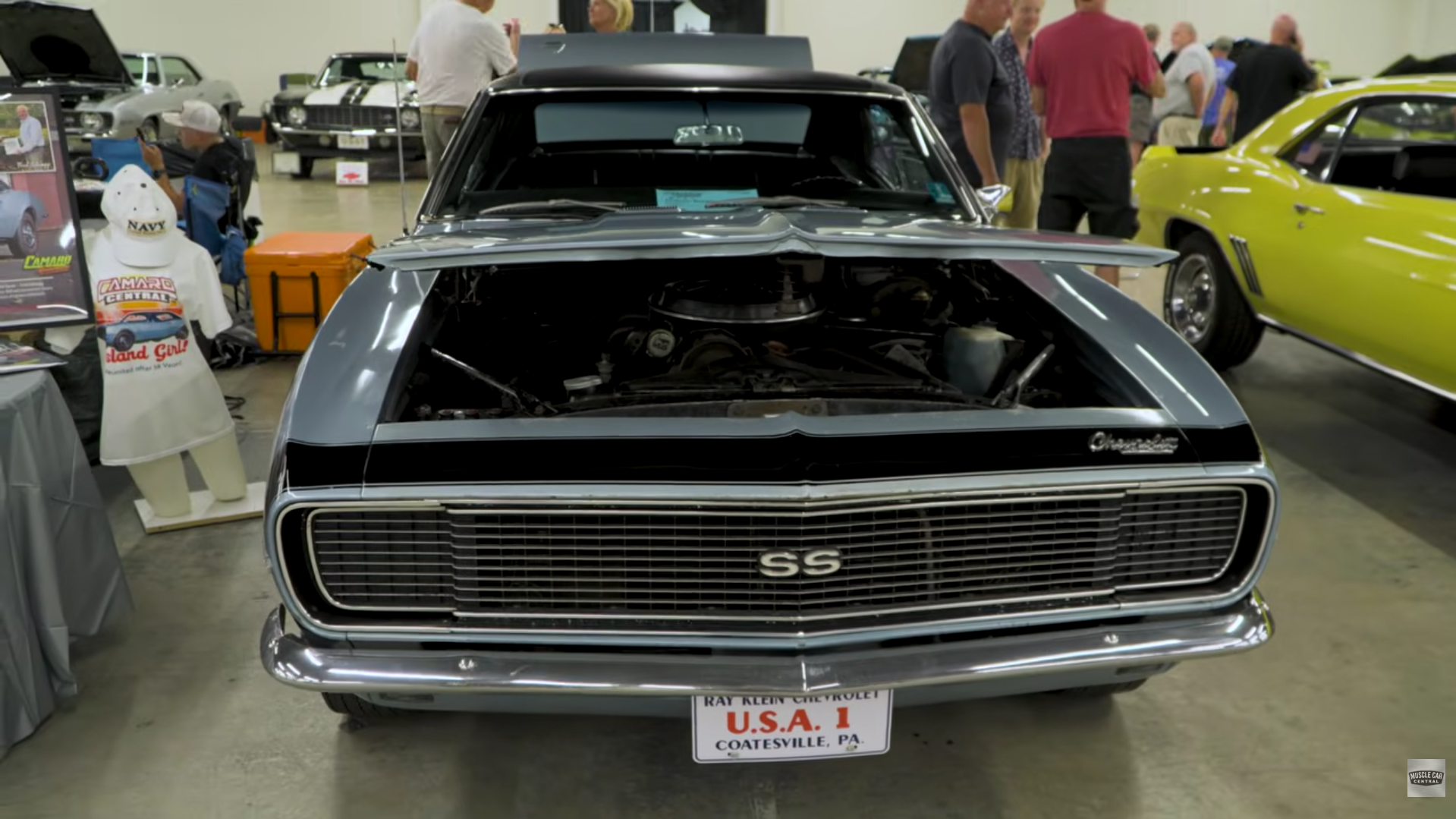
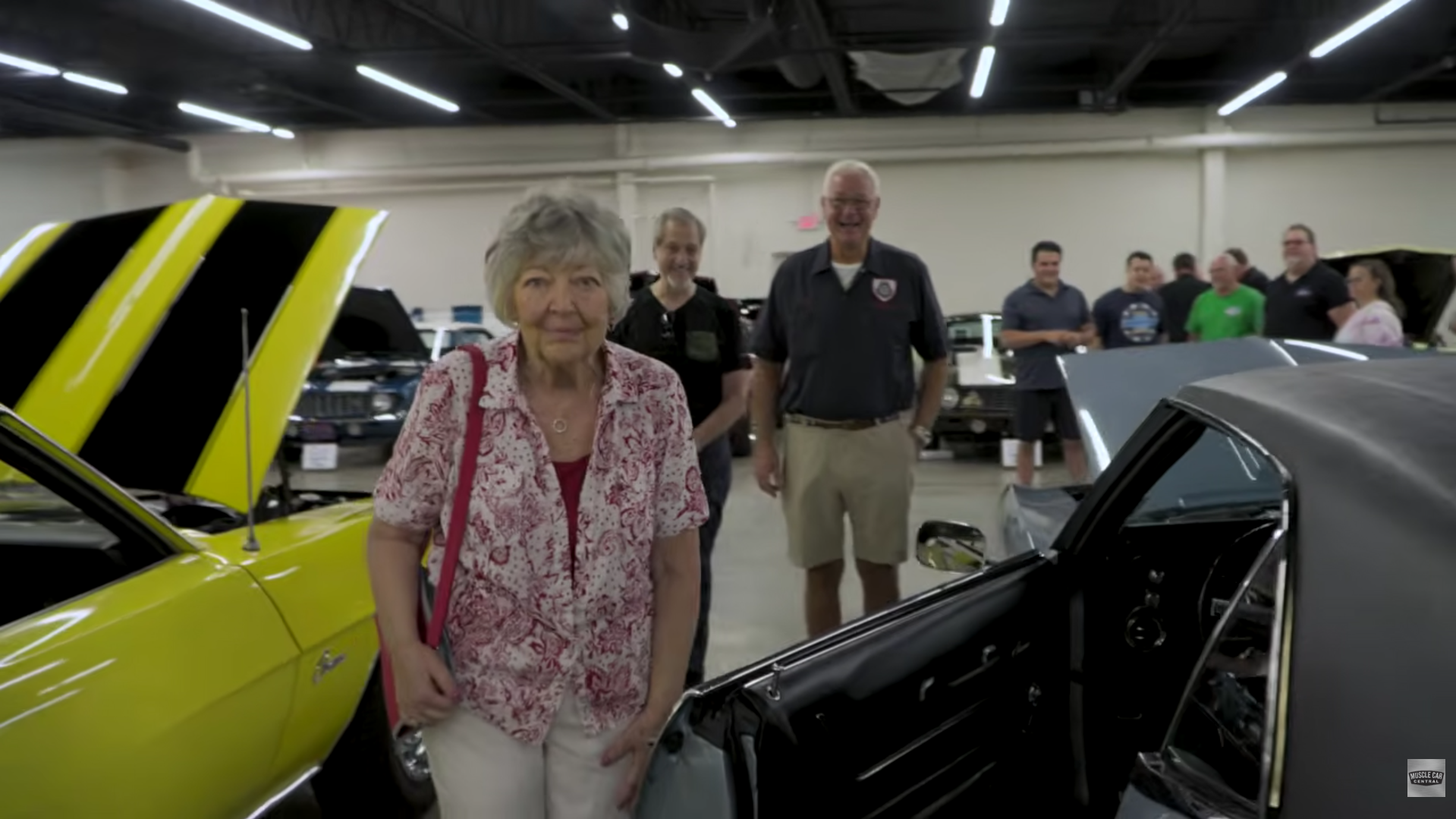
A woman who ordered a 1968 Chevrolet Camaro RS/SS when she was 20 years old has finally been reunited with the car nearly six decades later. Pat Klein came face-to-face with the Island Teal coupe at the 2026 Camaro Nationals, bringing together the original owner, the car’s current caretaker, and a remarkable chain of history stretching back to the late 1960s.
Klein ordered the Camaro during the summer of 1967 through her father’s dealership, Ray Klein Chevrolet in Coatesville, Pennsylvania. She selected an unusually desirable combination that included the L48 350-cubic-inch V8, a four-speed manual transmission, Positraction rear axle, tachometer and gauge package, deluxe interior, and both Rally Sport and Super Sport equipment.
She owned the car for only a relatively short period before trading it toward another performance car, and she had not seen it since 1968. As documented by Muscle Car Central on YouTube, the Camaro later passed through the hands of two deeply committed owners who preserved it rather than modifying or restoring away its originality.
Now known as “Island Girl,” the Camaro has covered only 40,096 miles and has reportedly been off the road since 1976. Its reunion with Klein turned a well-preserved muscle car into something far more personal, reconnecting the vehicle with the woman who chose every major option when it was new.
Ordered By A 20-Year-Old Performance Enthusiast
Klein was no stranger to fast Chevrolets when she ordered the 1968 Camaro. She had already owned a similarly equipped 1967 Camaro, and her father encouraged her to trade it after one year because a newer car would offer better resale value and potentially lower payments.
Her replacement was finished in Island Teal and equipped with a 295-horsepower 350 V8, an M20 four-speed manual, a 12-bolt Positraction rear end, and deluxe interior trim. The car also received a 3.07 rear axle ratio, reportedly chosen by her father after a series of speeding tickets and concerns that a shorter gear would encourage even quicker acceleration around town.
Klein eventually traded the Camaro for a 1969 Corvette after writing to a Chevrolet regional representative to secure an additional allocation for her father’s dealership. Her enthusiasm for performance cars continued afterward, including ownership of an LS6 Chevelle.
The Second Owner Preserved Every Detail
The Camaro’s second owner, Tom Lukatch, purchased it from the dealership’s used-car showroom in October 1968 when he was 19 years old. His father reportedly had to co-sign the loan, but Lukatch treated the car with extraordinary care from the beginning.
He stored it indoors, kept it covered, and even left the doors and trunk lid slightly open to avoid compressing the original weather seals. Newspapers were placed beneath the floor mats to protect the factory carpet and the small rubber nibs on the underside of the mats, with one sheet dating back to September 1970.
The car was parked in 1976 after its carburetor was stolen while it was at an inspection station. Rather than risk further damage, Lukatch brought the Camaro home and kept it stored until deciding to sell it in 1989.
A Sale Complicated By Tragedy
Current owner Fred Schempp first learned about the Camaro after meeting Lukatch at a Super Chevy event in 1988. When he finally saw the car the following year, he was stunned by its original paint, untouched interior, preserved trim, and careful storage.
Schempp purchased the car in June 1989 after Lukatch told him he wanted the Camaro to go to someone who would preserve it. Shortly after the sale, Lukatch died by suicide, leaving Schempp with the car and a signed payment receipt but without the promised title.
For years, Schempp searched for legal records, relatives, and documentation that could establish the Camaro’s ownership history. He was eventually awarded a Pennsylvania title through the court system after presenting proof of the 1989 transaction.
Tracking Down The Original Owner
A handwritten note eventually led Schempp to the name Pat Klein, and an online search in 2016 connected him with the woman who had ordered the car new. After leaving a cautious telephone message, he received a return call confirming that he had found the correct person.
The two remained in contact for years, sharing records and stories about the Camaro. Klein was able to explain several unusual details, including its axle ratio, factory options, and the circumstances surrounding her decision to sell it.
The car also carries several production anomalies, including a 1967-style emblem and other early components despite being a 1968 model. Built at Chevrolet’s Norwood, Ohio, plant in September 1967, it provides a rare look at how assembly-line parts and model-year transitions did not always follow a perfectly consistent pattern.
Island Girl Returns To Pat
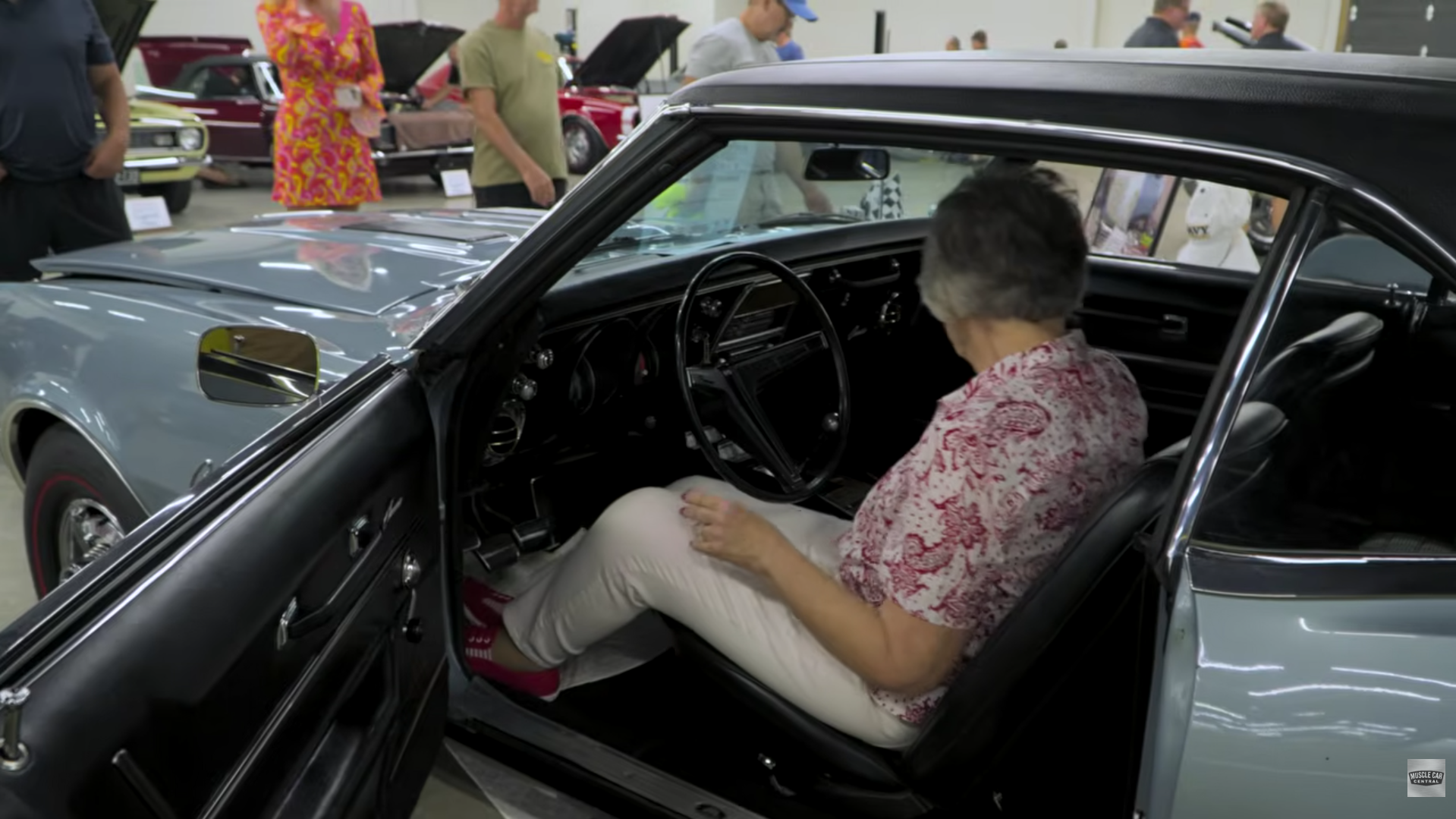
At the 2026 Camaro Nationals, Klein finally saw the Camaro again after 58 years apart. She recognized the car immediately, became visibly emotional, and climbed back behind the wheel while recalling the time when she and her future husband were dating and the Camaro was still nearly new.
Schempp displayed the car with a tribute recognizing Klein, Lukatch, and the families connected to its history. The presentation also included period photographs, dealership details, and the story behind the “Island Girl” nickname, which references both the Island Teal paint and Klein’s lifelong appreciation for performance cars.
The Camaro remains remarkably original, retaining its paint, interior, spare tire, hubcaps, trim, and many of the small details typically lost over decades of ownership. Its condition is impressive, although the reunion gave the car something no restoration could reproduce: a direct connection to the person who ordered it 58 years earlier.