
The 1970s were truly the golden age of automotive excess in America. While today’s cars prioritize efficiency and maneuverability, the disco decade was all about size, presence, and making a statement in every parking lot.
Before the oil crisis and changing consumer preferences downsized everything on wheels, American automakers were in an arms race to build the longest, most imposing vehicles possible.
1973-1976 Cadillac Fleetwood Seventy-Five: 252.2 Inches
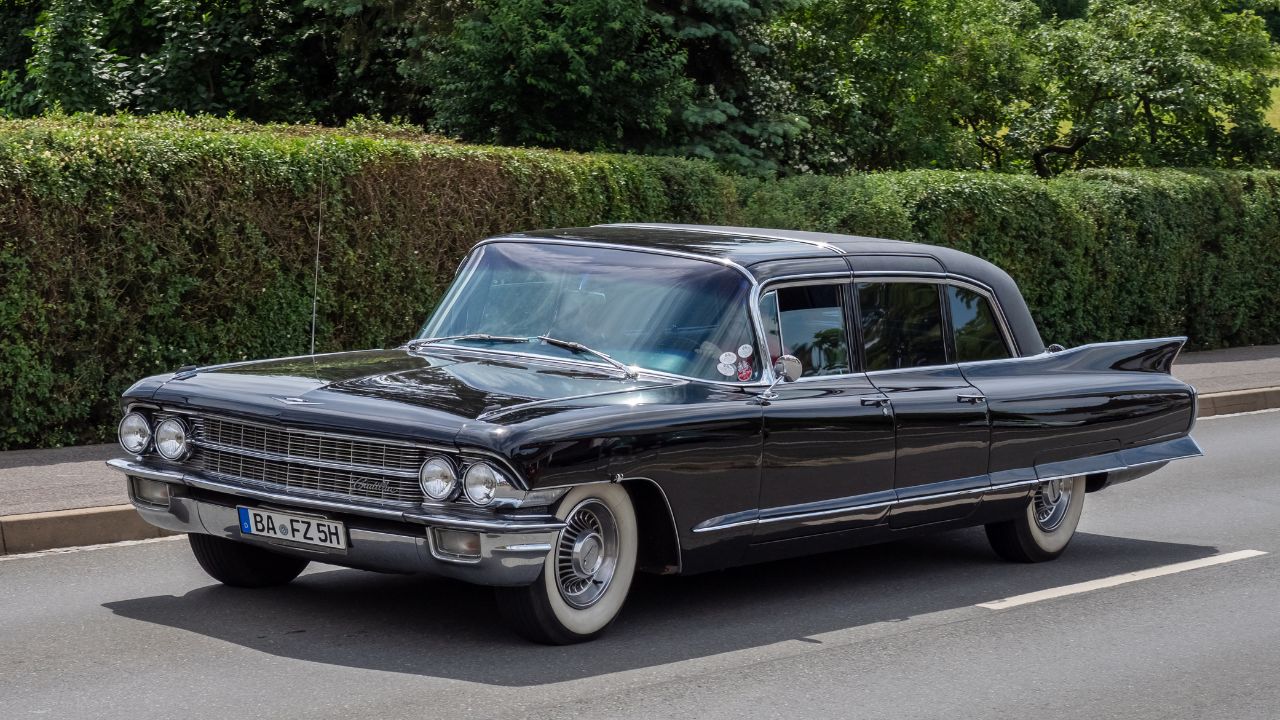
The undisputed king of automotive length was Cadillac’s flagship limousine. At over 21 feet long, this behemoth was designed for heads of state, celebrities, and anyone who wanted to make the ultimate entrance.
The Seventy-Five came with a formal partition between the front and rear compartments, making it feel more like a moving living room than a car.
1971-1976 Cadillac Eldorado: 224.1 Inches

Cadillac’s personal luxury coupe was nearly 19 feet of pure style and presence. The Eldorado’s front-wheel-drive layout was revolutionary for such a large American car, though most buyers probably cared more about the distinctive styling and plush interior.
This was the car that said you’d made it, even if parallel parking became a tactical operation.
1971-1976 Buick Electra 225: 233.7 Inches

Buick’s flagship lived up to its “deuce and a quarter” nickname with nearly 19.5 feet of luxury. The Electra 225 offered a smooth, quiet ride that made highway cruising feel effortless.
General Motors positioned this as the “doctor’s car,” according to sites like Hagerty: upscale enough for professionals but not quite as flashy as a Cadillac.
1970-1976 Lincoln Continental: 232.0 Inches

Lincoln’s Continental was the brand’s answer to Cadillac’s dominance in the luxury segment. At just over 19 feet long, it featured Lincoln’s signature Continental spare tire hump on early models.
The Continental was known for its solid build quality and distinctive styling that somehow managed to look formal yet approachable.
1971-1976 Oldsmobile Ninety-Eight: 230.9 Inches

Oldsmobile’s top-of-the-line sedan stretched over 19 feet and represented the brand’s “Rocket” era perfectly. The Ninety-Eight was positioned as GM’s technology showcase, often featuring the latest innovations before they trickled down to other divisions.
It offered luxury car comfort with a slightly more accessible price point than its Cadillac cousins.
1970-1978 Lincoln Mark IV and Mark V: 230.0 Inches

Lincoln’s personal luxury coupe series was designed to compete directly with the Eldorado, including quite similar 0-60 speeds, according to MotorTrend. The Mark IV and its successor, the Mark V, featured distinctive “Rolls-Royce” style grilles and opera windows that became synonymous with 1970s luxury.
These cars were favorites among entertainers and anyone who wanted to cruise in style.
1973-1977 Chrysler New Yorker Brougham: 229.7 Inches

Chrysler’s flagship sedan proved that luxury wasn’t exclusive to General Motors and Ford. At nearly 19 feet long, the New Yorker Brougham offered a different take on American luxury with its more formal, upright styling.
Chrysler buyers appreciated the car’s solid construction and distinctive design language that set it apart from the competition.
1970-1976 Pontiac Grand Ville: 228.0 Inches

Pontiac’s full-size flagship brought performance heritage to the luxury car segment. The Grand Ville combined traditional luxury appointments with Pontiac’s sporty DNA, making it popular with buyers who wanted presence without sacrificing the brand’s performance image.
It was essentially a more exciting take on the typical luxury sedan formula.
1970-1976 Chevrolet Caprice: 226.0 Inches

Chevrolet’s top-line sedan proved that luxury could be accessible to a broader audience. At 18.8 feet long, the Caprice offered many of the same comfort features as more expensive cars but at Chevrolet prices.
It became a favorite of fleet buyers and families who wanted a prestigious-looking car without the premium badge price. The handling? A bit boat-like.
1975-1979 Cadillac Seville: 204.0 Inches

Ironically, one of the most significant Cadillacs of the decade was also one of the shortest on this list. The Seville was Cadillac’s response to growing interest in smaller, more efficient luxury cars, yet it still measured 17 feet long.
This “compact” Cadillac proved that American luxury could adapt to changing times while maintaining its essential character.
Conclusion

These automotive giants represented the last hurrah of American automotive excess before practical concerns took over.
While we might chuckle at the idea of daily driving a 21-foot-long car today, these vehicles reflected an era when bigger truly was better, and automotive success was measured in inches as much as sales figures. They remain fascinating reminders of a time when American automakers weren’t afraid to think big – really, really big.