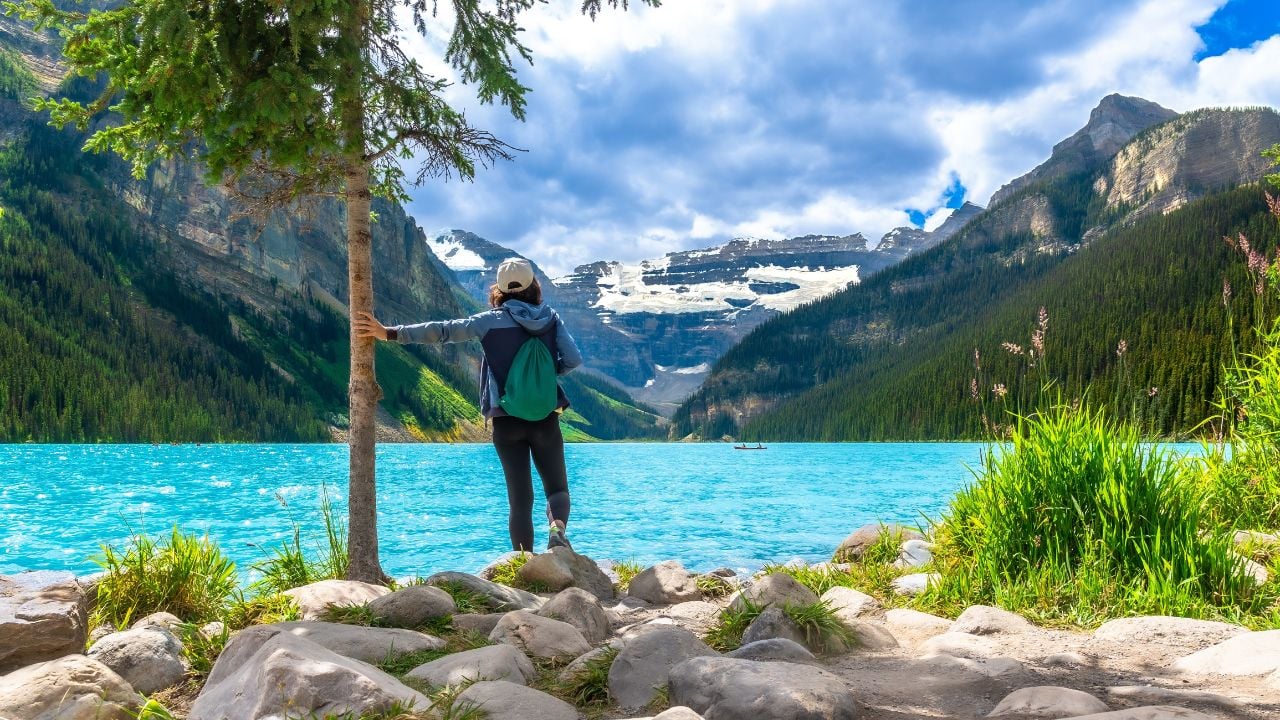
Summer changes some destinations completely. In Banff, the season brings long mountain days around lakes, trails, shuttles, and alpine towns. In Provence, lavender fields, village markets, dry heat, and shaded lunches shape the countryside. In Lofoten, daylight stretches across beaches, fishing villages, ridges, and coastal roads. Edinburgh fills with festival crowds and late-night shows, while the Dolomites shift from ski slopes to lifts, rifugios, meadows, and hiking towns.
These places are not just warmer versions of themselves. Summer changes how travelers move through them, what they eat, how late the day lasts, and how much of the landscape becomes part of the trip.
1. Banff and Lake Louise, Canada
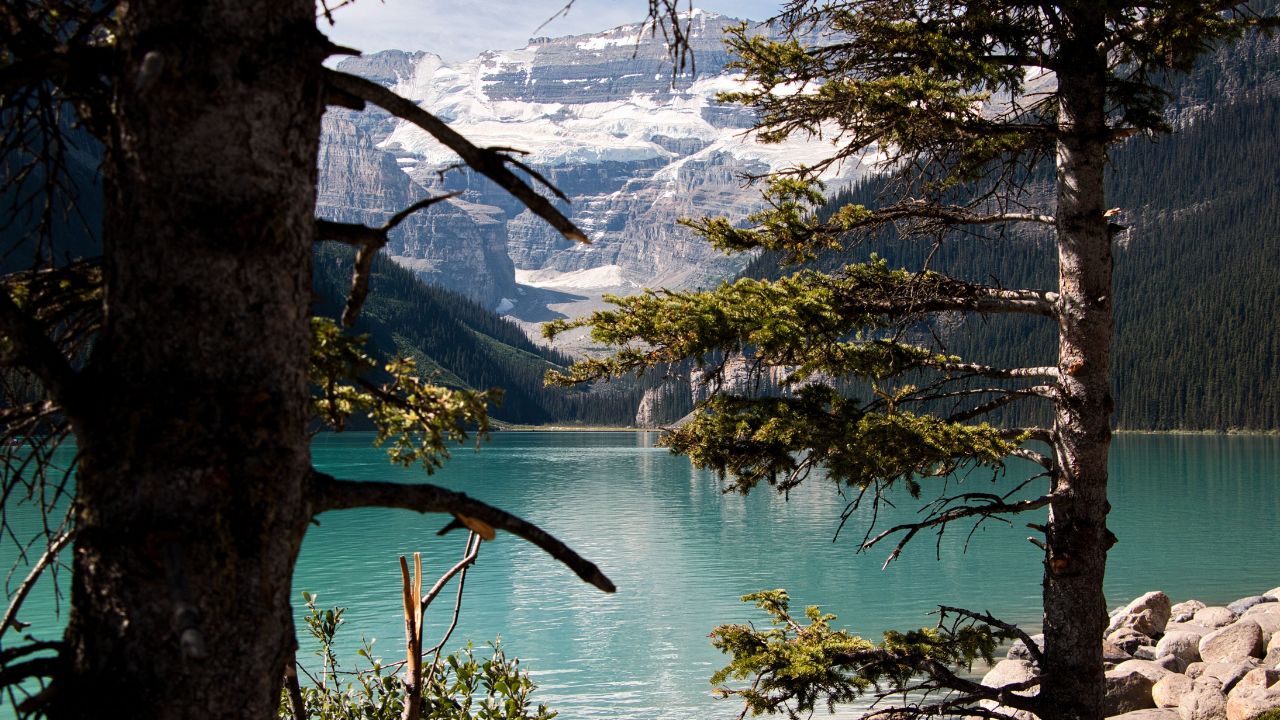
Banff becomes a fuller alpine trip in summer, when the lakes, trails, roads, and mountain towns all start pulling in different directions. Lake Louise and Moraine Lake draw much of the attention, but a good summer day can stretch far beyond one stop by the water.
Parks Canada says Moraine Lake Road is closed to personal vehicles year-round, with access permitted through Parks Canada shuttles, Roam Transit, and licensed commercial operators. Visitors also need reservations for Parks Canada shuttles to Lake Louise and Moraine Lake. The access rules reflect how much pressure surrounds the park’s most famous summer corners.
A Banff day can begin with cold air near Lake Louise, continue onto a forest trail, pause for a meal in Lake Louise Village or Banff, then end with an evening drive as the peaks cool down. Wildlife, weather, pine forest, and the distance between places all become part of the trip.
The summer appeal is not only the blue water. It is the movement from lake edge to trail, from town to valley, and from bright mountain light into a colder evening that still feels tied to the park.
2. Provence Lavender Country, France
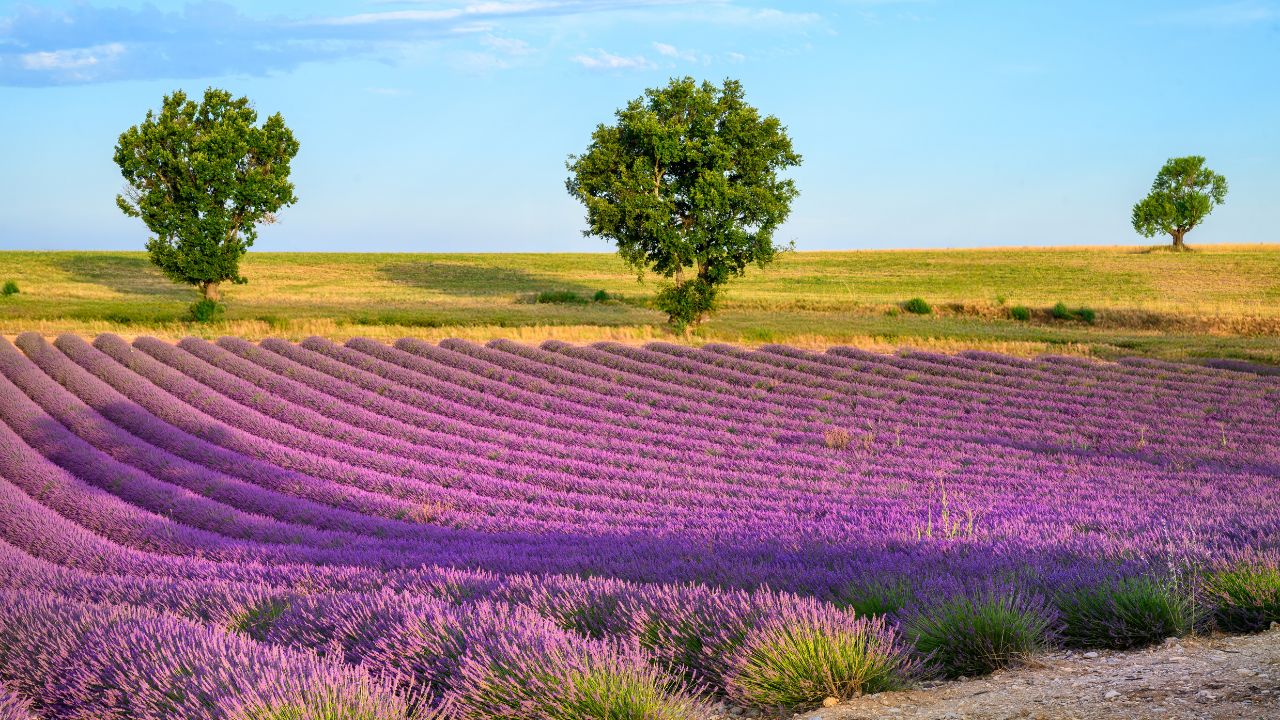
Provence in summer has its own pace: warm stone villages, market mornings, shaded lunches, small roads between fields, and lavender carried through dry air. The season gives the region a sensory rhythm that does not feel the same at any other time of year.
Marseille Tourism says lavender is generally in bloom from mid-June to early August, with harvest around July 15 on the Valensole plateau and later harvests in northern Luberon, Drôme, and around Sault. Provence’s summer mood can shift from one area to another, with lower fields filling and being cut earlier while higher areas hold the season longer.
The lavender is the obvious draw, but the better trip includes more than standing beside a field. Valensole, Sault, the Luberon, village markets, honey, olive oil, rosé, stone streets, and long meals all belong to the same summer landscape.
A good lavender route leaves room for a market bag, a village stop, and a slow evening after the heat softens. Provence does not need to be rushed from field to field; the color, scent, food, village life, and dry southern light carry the day.
3. Lofoten Islands, Norway

Lofoten’s summer identity comes from light. The islands do not behave like a normal beach or mountain destination because the day stretches strangely, and evening can become the best time to move. Fishing villages, beaches, ridges, red cabins, harbors, and coastal roads all take on a different mood when the sky refuses to fully darken.
Visit Lofoten says the midnight sun season runs from May 28 to July 14, with exact dates varying by location. It also notes that Uttakleiv can see the midnight sun from May 25 to July 18. That long-light season changes how travelers use the islands. A beach walk, a quiet drive, or a ridge hike can happen when most destinations would already be closing down.
A Lofoten summer trip does not need to sit inside normal daytime hours. It can include seafood near the harbor, a slow road between villages, a beach stop late in the evening, or a hike held for clearer weather. Weather, clouds, and visibility keep shifting, so one open pocket of light can become the best part of the day.
Summer here is about having enough time to follow the light, the road, and the weather when they finally line up.
4. Edinburgh, Scotland
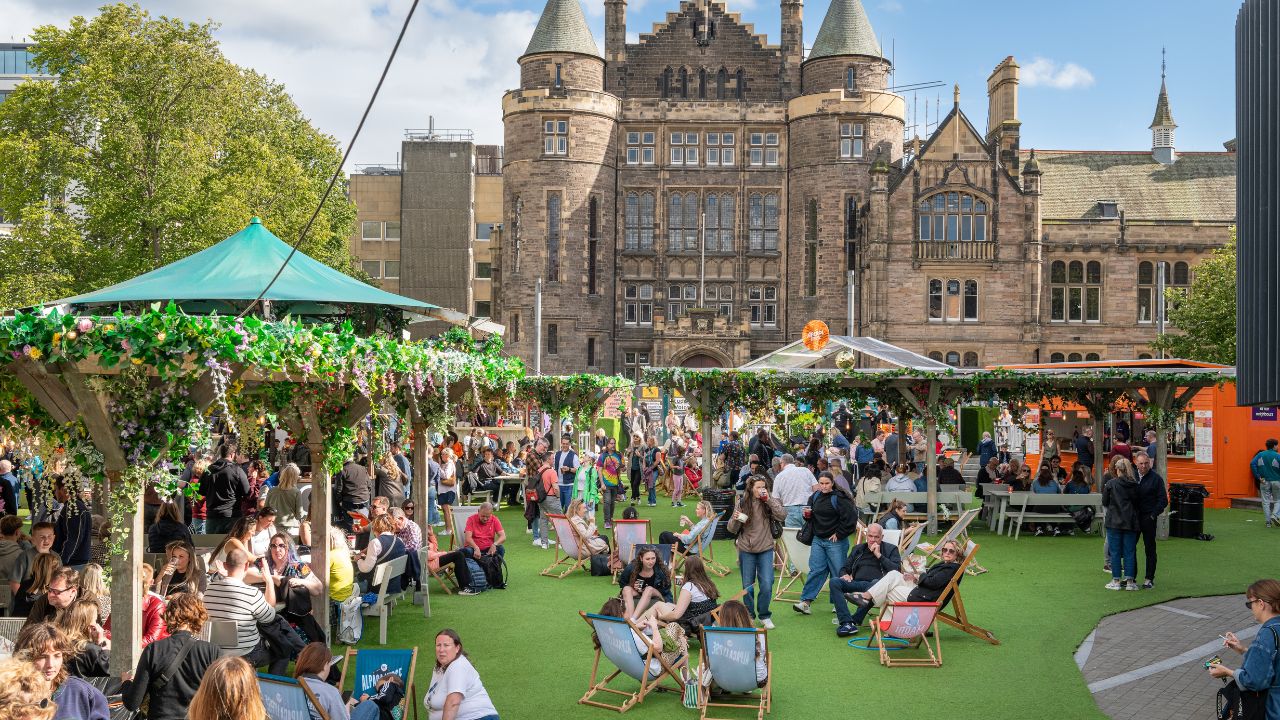
Edinburgh changes character in summer, especially when August turns the city into a stage. The Old Town, closes, pubs, courtyards, theaters, sidewalks, and late-night streets fill with performers, flyers, ticket queues, music, comedy, and visitors moving between shows.
VisitScotland lists the Edinburgh International Festival from August 7 to 30, 2026, and the Edinburgh Festival Fringe from August 7 to 31, 2026. For travelers who want performance, street energy, theater, comedy, music, and late nights, that window is the main reason to go.
The city outside the festival peak has a different summer rhythm. June, early July, and September still bring long light, castle visits, hill walks, museums, the New Town, Stockbridge, bookstores, pubs, and quieter time around the closes and gardens.
One Edinburgh summer trip is loud, crowded, theatrical, and full of late shows. Another is slower, with long evenings around hills, stone streets, history, neighborhoods, and pub tables. Both are real versions of the city.
5. The Dolomites, Italy
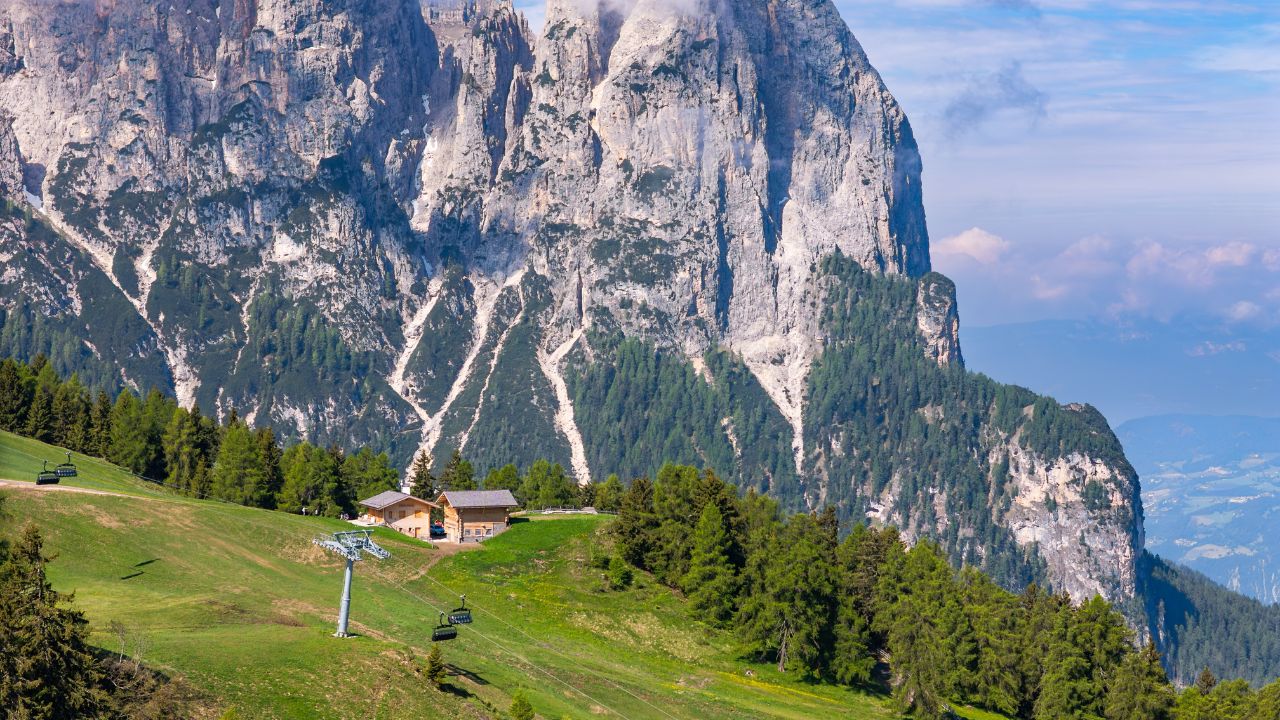
The Dolomites become a different world in summer. Ski towns turn toward hiking, mountain huts, lifts, wildflowers, cycling, lake walks, and long lunches above the valleys. The peaks are still the same jagged shapes, but the season changes how visitors move through them.
Visit Trentino says many summer lifts in the Dolomites operate between June and September, giving access to summits, views, and mountain refuges that would normally require much harder climbs. That lift network makes high mountain days possible for more than expert hikers.
A Dolomites summer day can start in a valley town, climb by lift, continue on foot, stop at a rifugio for lunch, and return to a village by evening. The food matters too: dumplings, polenta, speck, alpine cheeses, and Ladin traditions make the mountains feel lived in rather than only scenic.
Summer turns the Dolomites into a system of lifts, trails, huts, villages, meadows, weather shifts, and meals at altitude. The mountains become something to move through slowly, not just something to look at from one stop.