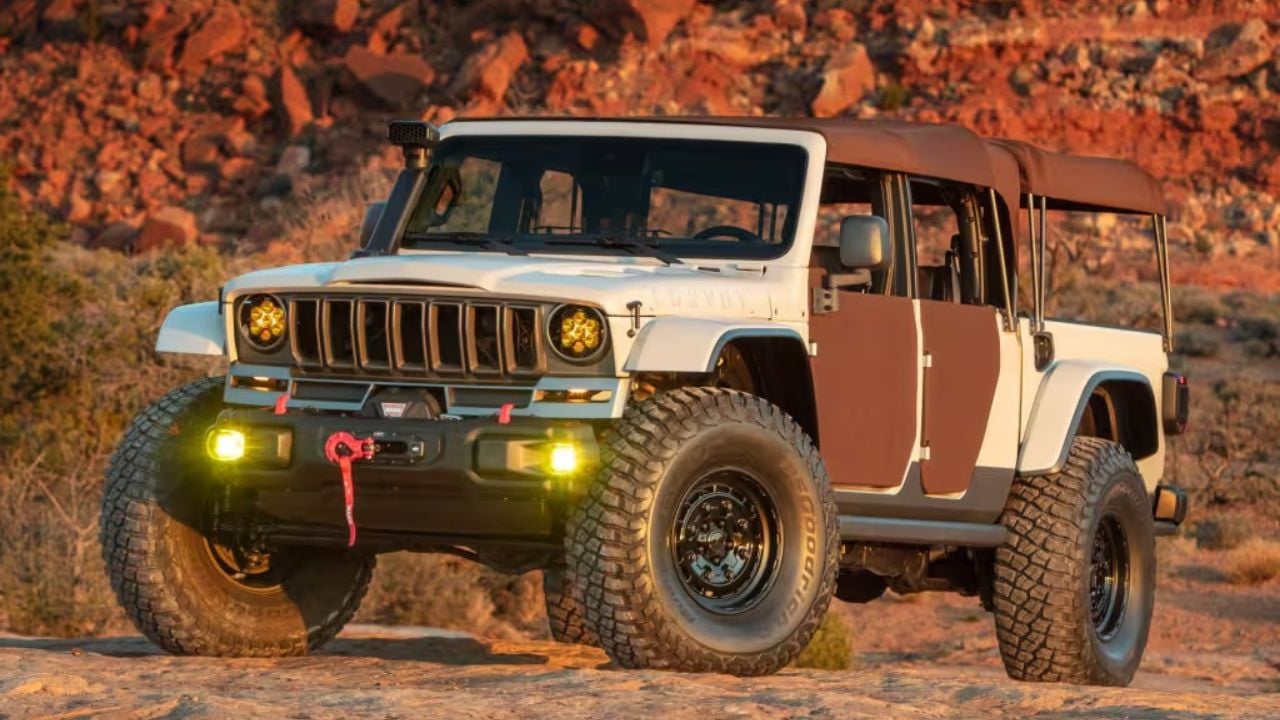
Stellantis’ latest product plan brought a flood of news for its American brands. The broader FastLane 2030 roadmap calls for 60 new or redesigned vehicles globally by 2030, plus 50 refreshes across the company’s brands.
Among the future products, one name stood out immediately for Jeep fans: Scrambler.
At first, it sounded like another concept built mainly for shows and promotional events. Now it appears Jeep is preparing a real production model inspired by the kind of wild off-road ideas usually seen at Easter Jeep Safari.
According to details shared in Detroit by Tim Kuniskis, Stellantis’ head of American brands, Ram CEO, and head of SRT, the new Scrambler will not follow a normal pickup formula. The idea is much more ambitious.
A Jeep Safari Idea Moving Toward Production
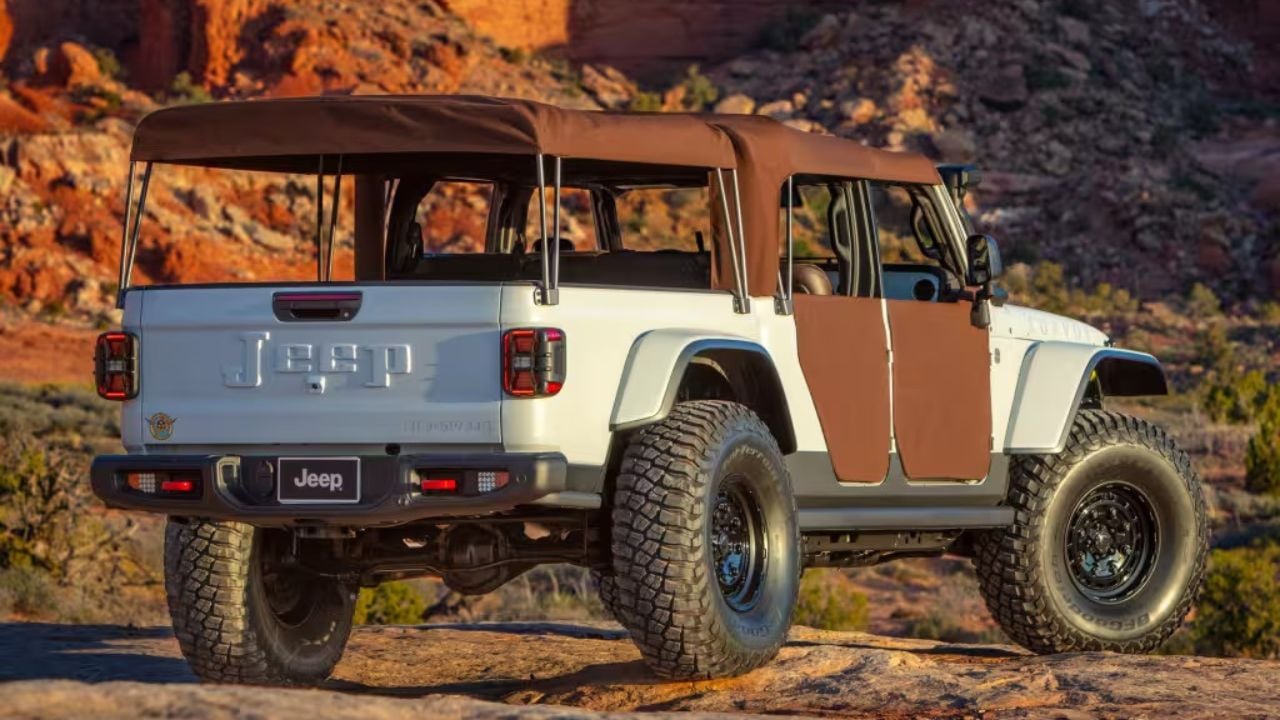
Kuniskis told The Drive that Jeep is effectively taking the kind of idea fans usually see at Easter Jeep Safari and moving it toward a real production vehicle.
That matters because Jeep has spent years building wild one-off concepts for Moab. Those vehicles often get huge attention from enthusiasts, but only parts of their ideas usually reach showrooms.
The Scrambler appears to be different. It is expected to mix classic American off-road character with modern modular construction, open-air freedom, and a cabin layout unlike anything in Jeep’s current lineup.
The most unusual detail involves the rear seats. They will reportedly be able to change position and direction, turning the Scrambler into something far more flexible than a conventional two-door pickup.
A Cabin That Can Turn Into A Cargo Area
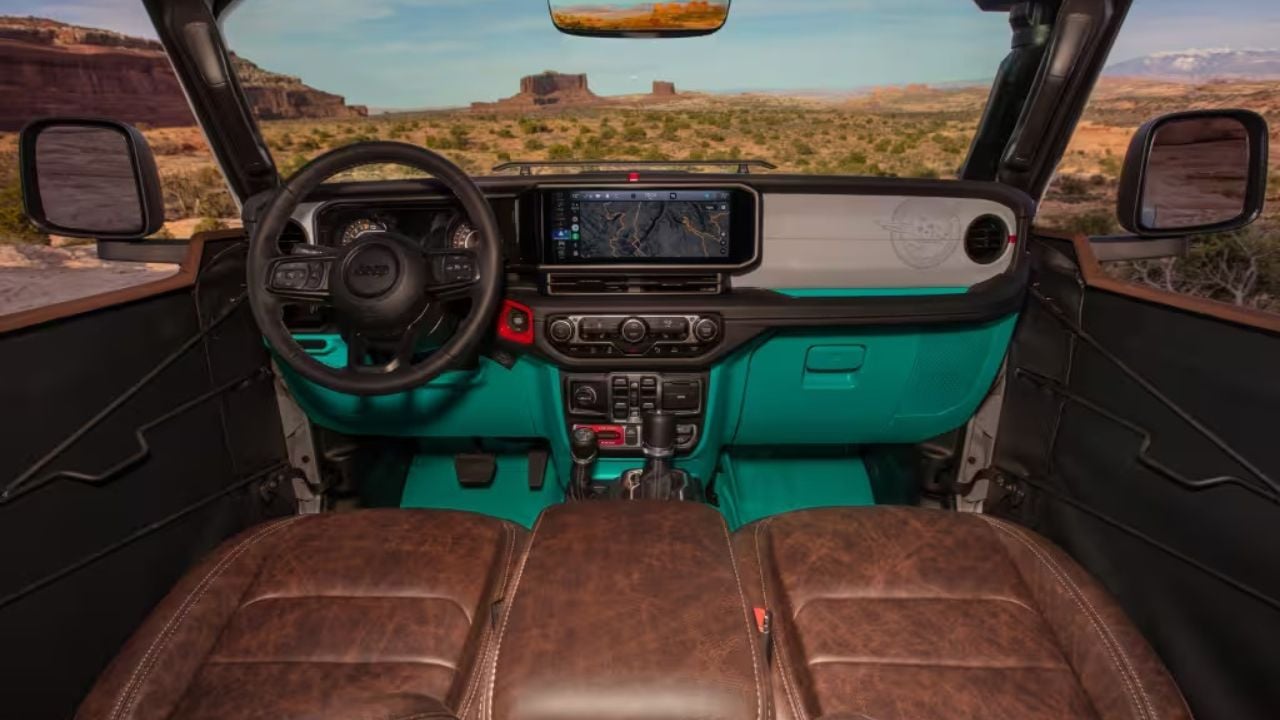
The rear-seat idea sounds strange until the roof comes off. Kuniskis explained that when the rear section is open, the seats can fold backward and lie flat, creating a bed floor behind the front row.
That setup reportedly gives the Scrambler a larger cargo area than the current Jeep Gladiator, even though the Scrambler is expected to be a shorter, more unusual vehicle overall.
In that form, the Scrambler becomes a mix of SUV, pickup, convertible, and off-roader. It can carry passengers, then change into a more useful cargo machine when the rear seats are folded into the floor.
Kuniskis described the idea as a “Swiss Army knife” of trucks. That phrase fits the concept better than a normal pickup label, because the Scrambler is being designed around multiple use cases instead of one fixed body style.
Two Big Doors And A Removable Rear Roof
The Scrambler’s construction will be very different from the standard Gladiator. Instead of the usual four-door layout, the model is expected to use one pair of large doors, more like an old American coupe than a modern crew-cab truck.
Those longer doors should make access to the rear seats easier. The rear body section and roof will also be removable, giving the Scrambler a character closer to classic open SUVs such as the Chevrolet K5 Blazer than a normal midsize pickup.
Another unusual feature is a side step that allows passengers to climb directly into the rear section when the roof is removed. That makes more sense once the rear seats are turned around and used in an open-air, rear-facing position.
The goal is not just to make the Scrambler look different. Jeep appears to be building a vehicle that can change personality depending on the day: trail toy, open-air cruiser, compact pickup, or strange adventure machine.
SRT Power Could Make It A Jeep Halo Model
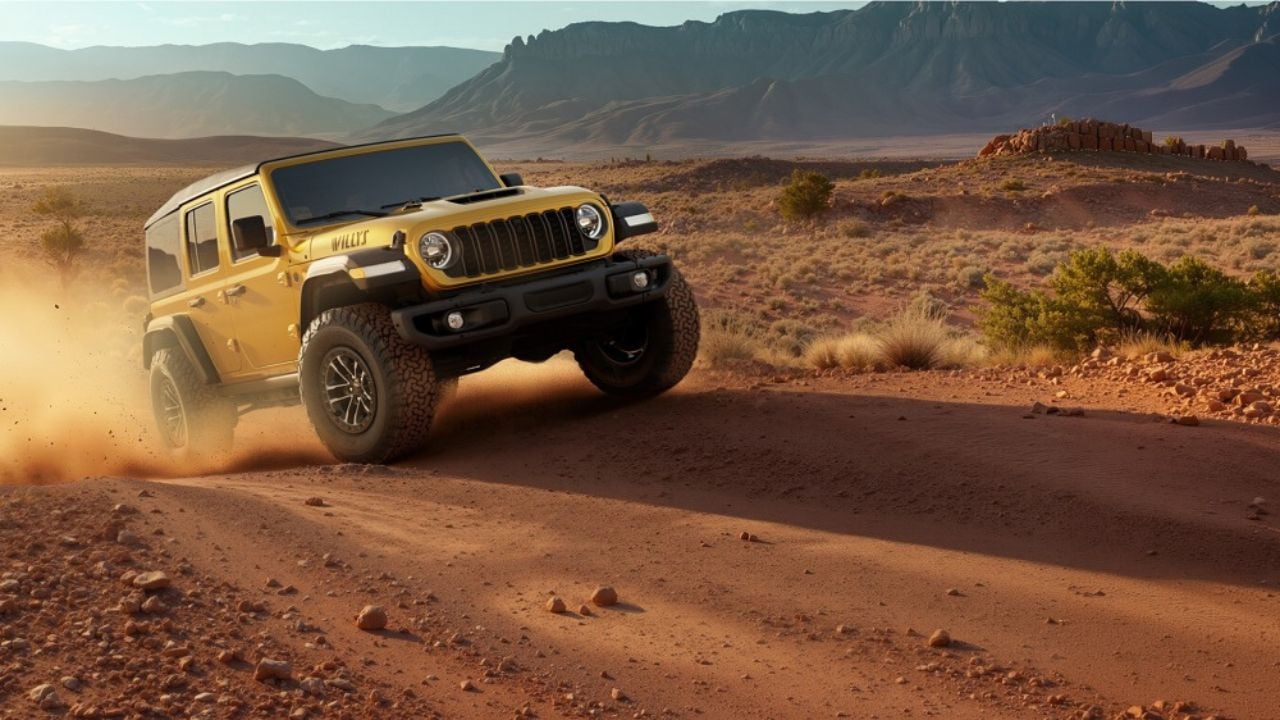
Jeep has not released final powertrain details, but the SRT badge is the part that makes the Scrambler feel like more than a niche body-style experiment.
Car and Driver reports that an SRT version is confirmed and expects the model to use the 6.4-liter 392 Hemi V8. Other reporting still frames V8 power as likely rather than officially detailed, so the safest reading is simple: the Scrambler SRT is coming, but Jeep has not fully shown its hand.
If the 392 Hemi does appear, the Scrambler would become one of the most emotional vehicles in the Jeep lineup. It would combine open-air body flexibility, old-school muscle, and serious off-road personality in a package no normal crossover could imitate.
There is also a major chassis detail that makes the Scrambler more interesting. Car and Driver reports that Jeep confirmed independent front suspension for the model, with independent rear suspension still under consideration. That would move the Scrambler away from traditional Wrangler solid-axle logic and toward higher-speed desert performance.
Timing And Pricing Are Still Unclear
Current reporting points to a late-decade arrival, but the exact timing is not fully settled. Car and Driver expects the Scrambler to arrive for 2028, while other reporting suggests it could land closer to 2029 or 2030 as part of Stellantis’ broader product plan.
Before that, Jeep is expected to update the rest of its lineup, including the Wrangler and Gladiator. That makes the Scrambler feel less like a simple one-off addition and more like part of a larger reset for Jeep’s off-road identity.
Pricing has not been announced. Still, an SRT-badged Scrambler with specialized hardware and possible V8 power would almost certainly sit far above ordinary Wrangler and Gladiator trims.
For Jeep loyalists, the most important part is that the company appears ready to take a real risk again. Instead of another conventional lifestyle pickup, the Scrambler promises something closer to old American off-road icons: modular, strange, open, muscular, and built around adventure.
That is exactly why the Scrambler matters. Jeep does not need another predictable truck. It needs a halo model that reminds people why the brand became interesting in the first place.
This article was originally published by Autorepublika.com and is republished with permission. It has been reviewed and edited by Guessing Headlights.