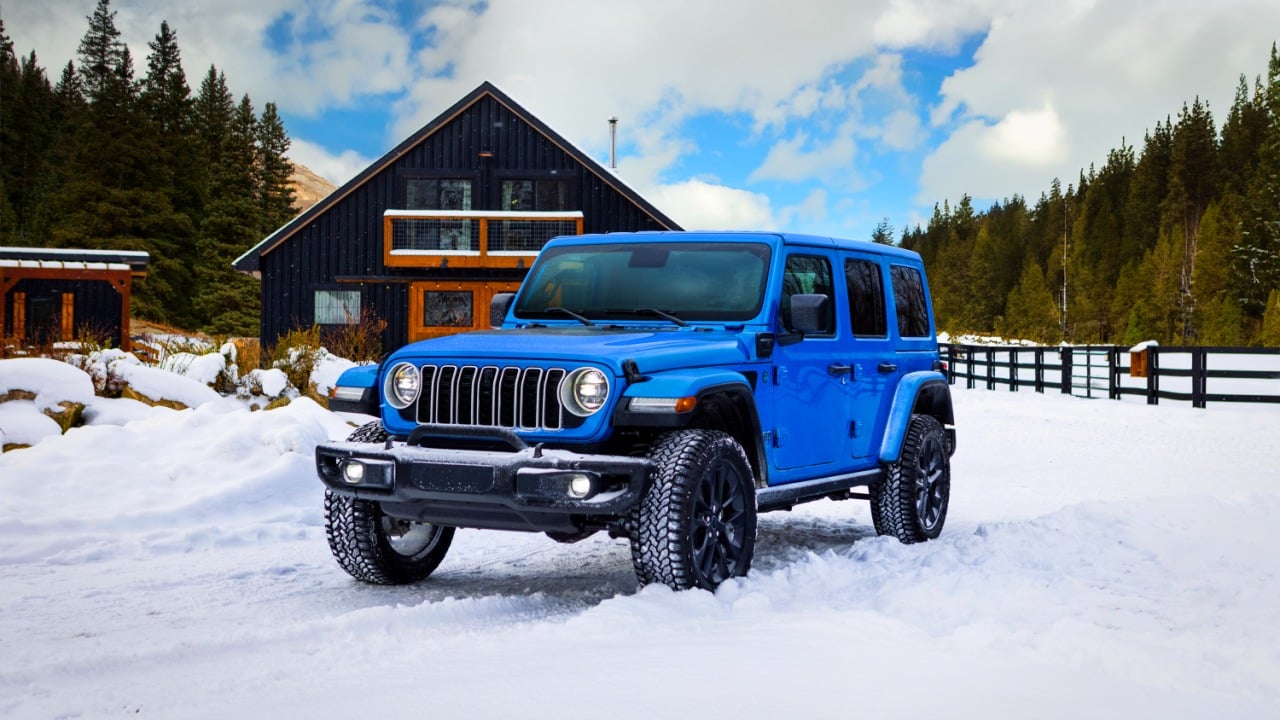
Most recalls are annoying. This one feels downright insulting. Imagine opening your mail and finding out the SUV you are still making monthly payments on could suffer a catastrophic engine failure, possibly lose power without warning, and, in the worst-case scenario, even catch fire—and then being told there is still no actual repair ready. That is not a rough ownership experience; that is a masterclass in how to turn a new-vehicle payment into a monthly reminder that modern car ownership can go sideways in a hurry.
That is the limbo one Jeep lessee in Rhode Island says he is living in right now. He and his wife leased a 2024 Wrangler 4xe in October 2024, then later received three recall notices. One was for the tire-pressure monitoring system. Another involved the hybrid system and fire risk. The third was the one that really changed the mood: an engine-related recall warning that sand left over from the casting process could contaminate internal parts and trigger severe failure.
And here is the part that really lands badly: the Jeep has reportedly been sitting at the dealer for more than 60 days, the monthly payment is still $520, and the path out of the lease was described as paying more than $13,000 in remaining obligations up front. In other words, the vehicle is effectively sidelined, but the bill is still showing up right on time. If that sounds less like customer care and more like recall purgatory with financing attached, that is because it is.

The Recall Behind the Headache Is Not a Small One
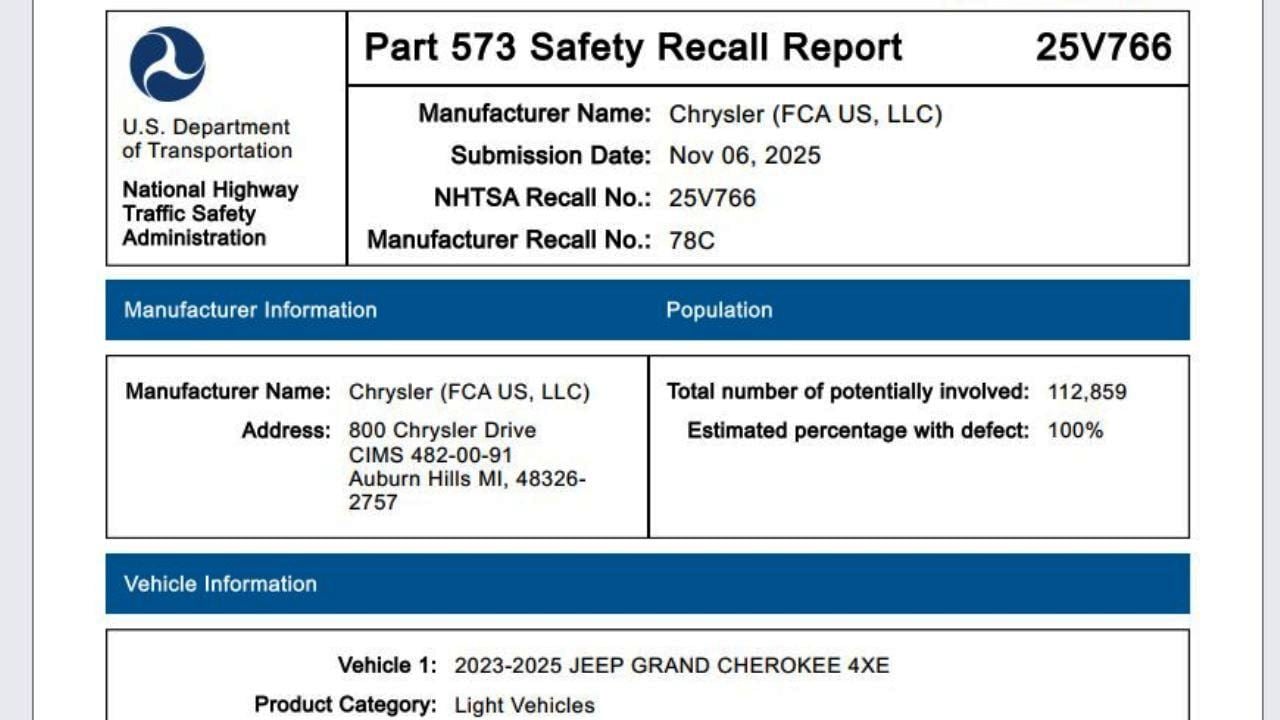
This is not some tiny, low-volume service campaign buried in dealer paperwork. NHTSA recall 25V766 says Chrysler is recalling 117,902 plug-in hybrid Jeeps in the U.S., including 39,975 model-year 2023–2025 Grand Cherokee 4xe SUVs and 77,927 model-year 2024–2025 Wrangler 4xe SUVs. The problem is about as ugly as it sounds: sand from the engine casting process may have contaminated internal engine components. According to the filing, that contamination can lead to catastrophic engine failure, a vehicle fire, or sudden and unrecoverable loss of propulsion.
NHTSA’s filing also makes it clear this was not pulled out of thin air. FCA said it opened an investigation in May 2025 after seeing an increase in engine-compartment fires and loss-of-propulsion incidents. By October 20, 2025, the company said it was aware of 36 fires, 50 loss-of-propulsion field reports, 144 warranty claims, and three injuries potentially related to the issue. Drivers might hear knocking from the engine bay or see the malfunction indicator lamp before failure, but that is not exactly comforting when the possible outcomes include fire or a dead vehicle in traffic.
The Worst Part Is That There Still Is No Real Remedy
Here is where the story stops being merely alarming and starts becoming absurd. The official recall report says the remedy is still under development. Not delayed by a week. Not “available next month.” Under development. NHTSA’s paperwork also lists the campaign as a phased recall, which means owners can know they are sitting on a serious defect while still having no concrete repair date. That is a miserable place to leave people, especially when the vehicle in question is not some old beater but a late-model SUV they are still actively paying for.
And this is not even the only recall hanging over Jeep’s 4xe lineup. In November, Stellantis recalled 320,065 Wrangler 4xe and Grand Cherokee 4xe vehicles in the U.S. over battery-fire risk, with owners told to park outside and away from structures while a remedy was being prepared. So when one lessee says three recall letters showed up, and two of them involved fire-related risks, that does not sound like rotten luck anymore. It sounds like the kind of ownership spiral that can ruin a brand relationship fast.

This Is Where a Safety Issue Turns Into a Consumer Problem
There is also a bigger point here, and it is one the industry keeps pretending is just an unfortunate side effect of “complexity.” By law, automakers must notify owners once a safety defect is identified, even if the fix is not ready yet. Consumer guidance on recalls with no available remedy basically boils down to: document everything, escalate to the manufacturer, ask for reimbursement or a rental, file a complaint with NHTSA, and explore lemon-law options if the situation drags on. That is useful advice, sure. It is also a pretty bleak sign when the best ownership strategy sounds like part customer-service script, part legal prep.
And that is why this story hits harder than a typical recall item. The mechanical issue is serious enough on its own. But what really makes people angry is the financial absurdity around it: the lower-value loaner, the dealer lot delay, the finger-pointing between the dealer, manufacturer, and finance company, and the idea that the consumer keeps paying premium money while the actual vehicle sits unusable. Recalls are supposed to be about safety. When they drag on without a real fix, they start feeling like something else entirely — a test of how much inconvenience, uncertainty, and cost a customer will swallow before giving up.