The automotive world has always moved fast, but some cars moved faster than the rest of us were ready for. Japanese automakers have a particular knack for this, showing up with technology and ideas that made everyone else scramble to catch up.
While Detroit was perfecting the V8 and Europe was obsessing over road feel, Japanese engineers were quietly building the future in their workshops. Some of these cars flopped commercially because buyers didn’t understand what they were looking at, while others succeeded and changed the industry forever. Either way, they all share one thing in common: they arrived before their time, packed with innovations that would become standard years or even decades later.
Here are eleven Japanese cars that were basically a glimpse into the future.
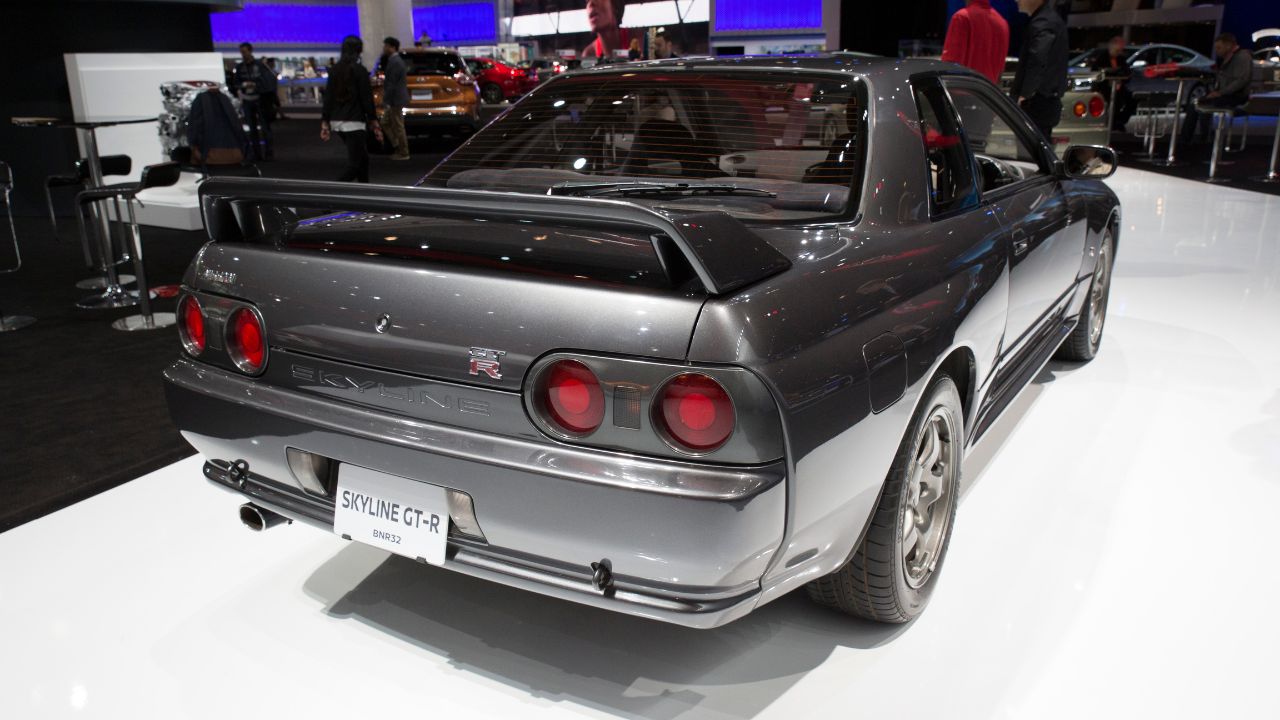
1989 Nissan Skyline GT-R (R32)

The R32 GT-R did more than raise the bar: it launched the bar into orbit and left it there.
Nissan’s ATTESA E-TS all wheel drive system could vary torque delivery between the rear and front axles far more quickly than most performance cars of the era. Pair that with Super HICAS rear wheel steering and the twin turbo RB26DETT, officially rated at 276 horsepower under Japan’s “gentleman’s agreement,” and you had a tech heavy monster. It dominated Group A touring car racing so thoroughly that Australian regulators responded with penalties and restrictions, including added weight and boost limits.
When regulators start stacking penalties and restrictions on a car, you know the engineers did something right. The R32 proved that electronics and driving engagement weren’t enemies, they could be best friends.
1990 Mazda MX-5 Miata

The Miata was ahead of its time by looking backward, and somehow that made it revolutionary.
While sports cars were getting heavier, more complex, and more expensive throughout the 1980s, Mazda said “what if we just made a simple, affordable roadster?” The concept seemed almost naive, a lightweight two-seater with a modest engine and no fancy tech. But that simplicity was the innovation, reminding everyone that driving fun didn’t require 300 horsepower and a computer science degree.
The Miata became the best-selling roadster in history and sparked a whole movement toward driver-focused cars. Three decades later, automakers are still trying to recapture the Miata’s magic formula.
Mazda understood something in 1990 that the industry wouldn’t fully appreciate until much later: sometimes the future means remembering what made cars great in the first place.
1997 Toyota Prius
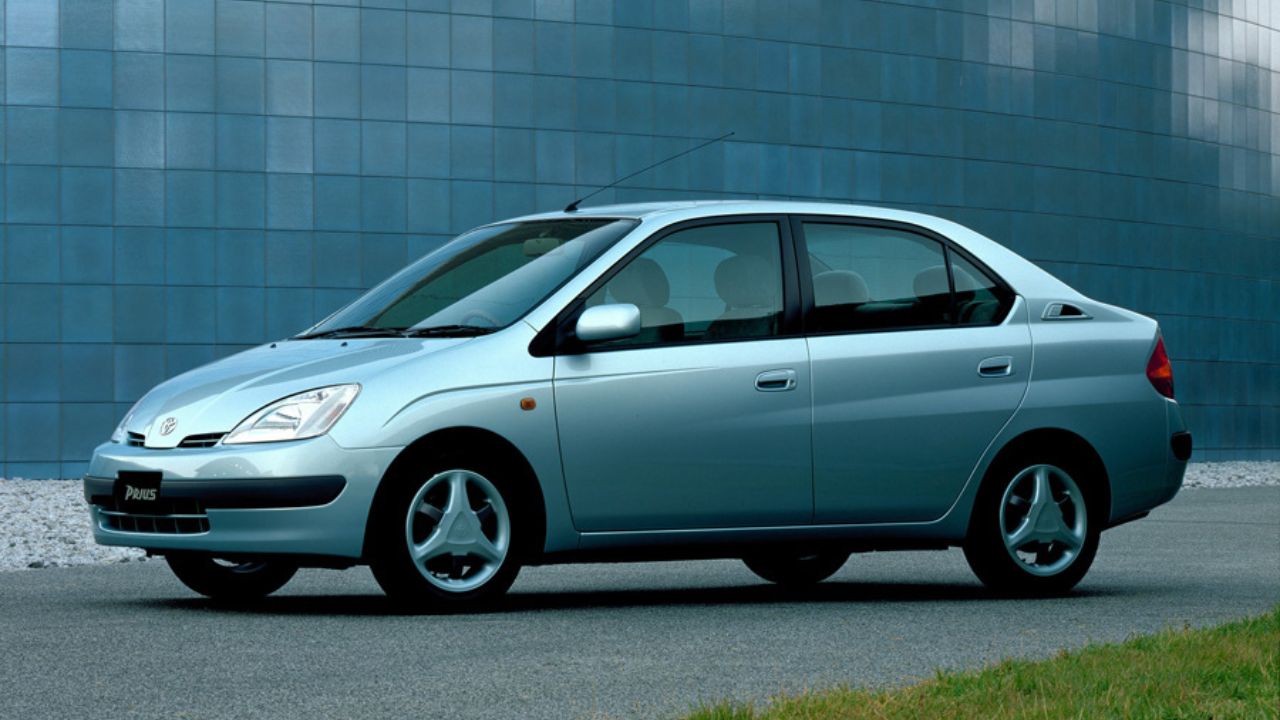
Talk about showing up to the party early, the Prius arrived when most people thought “hybrid” was a type of bicycle. Wait, it’s not?
Toyota took a massive gamble combining a gasoline engine with an electric motor at a time when EVs were golf carts and SUVs ruled the road. The Prius went on sale in Japan in 1997 and began selling in Europe and North America in 2000. Early U.S. Prius models were rated at about 41 mpg combined, which seemed impressive but not revolutionary to American buyers initially.
Then gas prices spiked, environmental awareness grew, and suddenly Toyota looked like automotive prophets. The Prius proved that fuel efficiency could be mainstream and that buyers would accept new technology if it saved them money at the pump. Love it or hate it, this car fundamentally changed how automakers approached efficiency and electrification.
Every hybrid and plug-in hybrid on the road today owes something to Toyota’s weird little sedan from 1997.
1990 Honda NSX

Honda looked at the supercar formula, temperamental, expensive to maintain, impossible to see out of, and decided to fix everything wrong with it.
The NSX brought Formula One technology to the street with an all-aluminum body that made it lighter than its competitors while keeping build quality that wouldn’t make you cry at the dealer. Ayrton Senna provided feedback during chassis development, and the result handled like a mid engine exotic but started every morning like a Civic.
Pop-up headlights, VTEC power, and ergonomics you could actually live with made this the thinking person’s Ferrari. The problem was that it worked almost too well, people cross-shopped it with luxury sedans instead of Ferraris because it was so practical.
The NSX showed that supercars didn’t have to be constantly broken or terrifying to drive, a lesson the industry took another twenty years to fully embrace. Turns out being ahead of your time means some people won’t recognize your category.
1991 Subaru SVX

The SVX looked like a spaceship designed by Giugiaro, and its window-within-a-window glass treatment still looks futuristic today.
Subaru packed it with a 230-horsepower flat-six engine and standard all-wheel drive when most sport coupes were sending power to the rear wheels only. The interior featured aircraft-inspired switchgear and a design language that wouldn’t have seemed out of place in a concept car.
Unfortunately, the SVX arrived during a recession without a manual transmission option, which confused enthusiasts who couldn’t figure out if it was a grand tourer or a sports car. The technology was there, active all-wheel drive, a sophisticated suspension, and aerodynamics that prioritized function over focus groups. Subaru was basically building a luxury performance coupe for a market that didn’t quite exist yet.
If the SVX had launched five years later with a six-speed manual, we might be talking about it the way we talk about the NSX.
1990 Mazda Eunos Cosmo

Most people have never heard of the Eunos Cosmo, which is a shame because it had technology that seemed pulled from 2005.
This Japan-only luxury coupe offered an early factory GPS navigation system, along with a color CRT touchscreen used to control functions like climate and audio. Under the hood sat an optional 20B three rotor rotary rated at 280 PS (about 276 hp), paired with a four speed automatic.
The interior looked like a first-class airplane cabin, with supportive leather seats and enough tech to intimidate early adopters. Mazda built the Cosmo as a halo car to showcase their technological capabilities, and it definitely succeeded at that. The problem was that all this innovation came at a price point that made potential buyers think twice, especially during Japan’s economic bubble burst.
Still, that GPS system alone makes the Cosmo historically significant, Mazda put a navigation computer in a car before most people had computers at home.
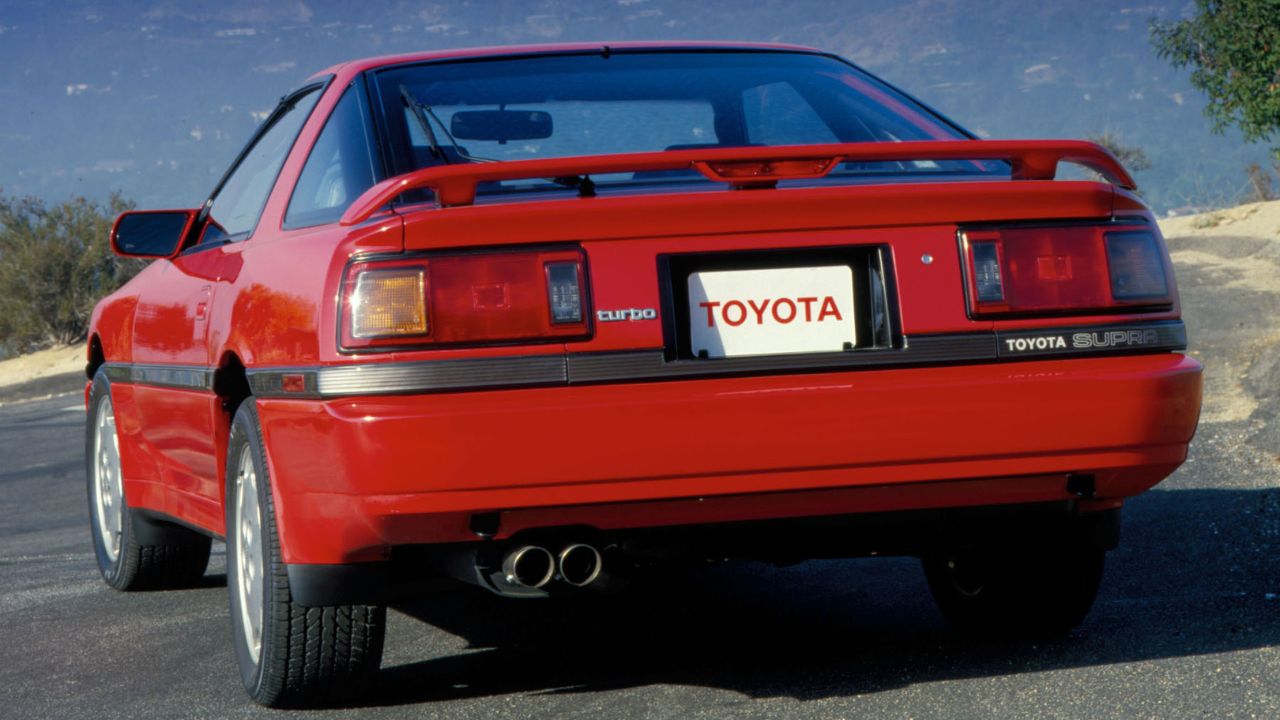
1987 Toyota Supra Turbo (MA70)
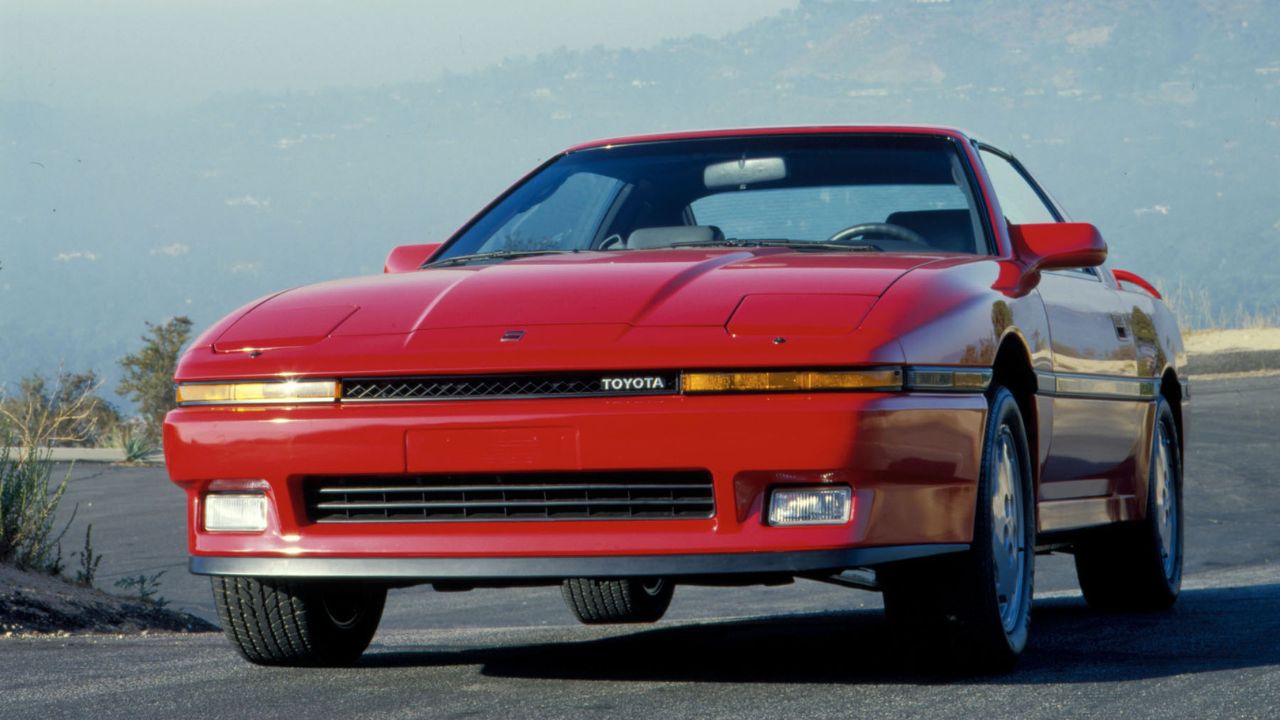
The third-generation Supra was the first to really establish its own identity separate from the Celica, and boy, did it come out swinging.
Toyota equipped it with an electronically controlled suspension that adjusted damping based on driving conditions, a feature luxury cars barely had at the time. The turbo inline-six produced 230 horsepower and could be tuned well beyond that with simple modifications, hinting at the legendary status the Supra name would achieve.
A digital dashboard option displayed information in ways that seemed impossibly futuristic to 1987 eyes. The chassis was overbuilt and the suspension geometry was sophisticated enough to handle way more power than Toyota officially offered. This generation laid the groundwork for the MkIV that everyone obsesses over, proving Toyota’s sports car engineers were thinking several steps ahead.
Sometimes being ahead of your time means building the foundation that the legend will stand on.
1991 Mitsubishi 3000GT VR-4

Mitsubishi looked at the sports car playbook and decided to add every technology they could possibly fit under the sheet metal.
All-wheel drive, four-wheel steering, active aerodynamics, electronically controlled suspension, twin-turbocharged V6, the VR-4 had it all. Active aerodynamics included automatically deploying front and rear spoilers, including a rear wing that moved at speed to increase downforce.
The interior came with leather, dual-zone climate control, and enough electronic features to require actual study of the owner’s manual. At around 3,800 pounds, the 3000GT was heavy, but it channeled 300 horsepower through all four wheels with impressive capability.
The problem was complexity, all that technology meant more things to maintain and higher costs. Mitsubishi basically built a Japanese take on a high-tech grand tourer that predicted the spec-sheet arms race modern performance cars would eventually enter.
Sometimes being first means carrying weight that later generations will figure out how to shed.
1985 Toyota MR2

Mid-engine layouts were supposed to be for exotic sports cars, not affordable coupes built by the company that made the Corolla.
Toyota didn’t care about supposed-to and built the MR2 anyway, putting the engine behind the driver in a lightweight package that cost about as much as a well-equipped Civic. The handling was telepathic, the styling looked like a baby Ferrari, and the fuel economy was excellent because physics works the same whether you’re driving a Fiat X1/9 or a Lotus.
Toyota proved that sophisticated chassis dynamics didn’t require a six-figure price tag or Italian heritage. The first-generation MR2 also featured a surprisingly practical trunk up front and enough storage behind the engine for groceries or track day tools. This was democratic performance engineering, bringing mid-engine handling to people who couldn’t afford a Fiorano test track.
The MR2 showed up in 1985 and basically said “mid-engine cars for everyone,” which was a pretty radical idea for a mass-market manufacturer.
1999 Honda Insight

Honda’s first hybrid arrived in the U.S. before the Prius and took a completely different approach to efficiency. Instead of building a practical sedan, Honda created an ultra-aerodynamic two-seater that looked like it was carved by the wind itself.
The aluminum body and lightweight construction helped the Insight achieve an EPA-estimated 70 mpg highway, a number that still seems impressive today. The parallel hybrid system was simpler than Toyota’s setup, using the electric motor primarily to assist the gasoline engine rather than working in tandem.
Manual transmission availability made it the enthusiast’s hybrid, though that particular market segment turned out to be very small. The original Insight was too niche and too weird-looking for mainstream success, but it proved that Honda could play the hybrid game their own way.
Sometimes ahead-of-its-time means the market takes one look and says “not yet, thanks.”
1989 Nissan 240SX (S13)
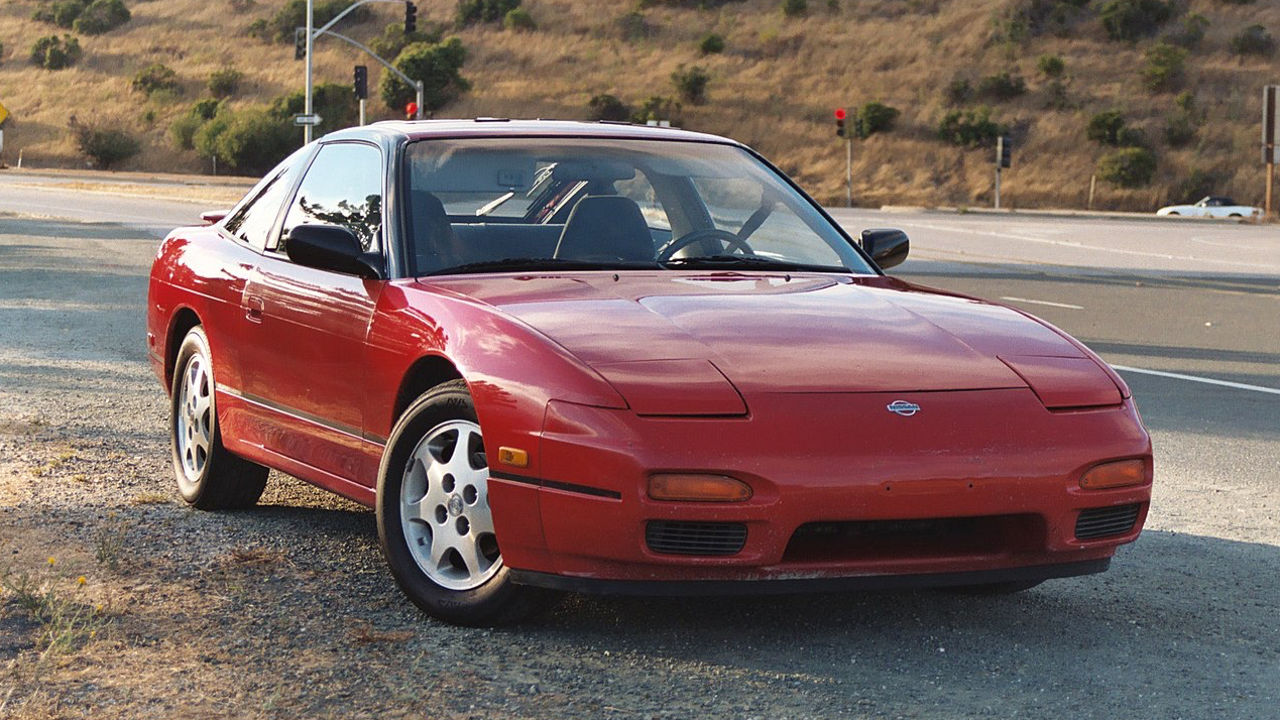
The S13 240SX might not seem particularly advanced on paper, but its real innovation was philosophical rather than technological.
Nissan built a rear-wheel-drive sports coupe focused entirely on driving dynamics and balance rather than straight-line speed. The naturally aspirated four-cylinder made a modest 140 horsepower, but the chassis could handle three times that much with the right modifications.
Multi-link rear suspension, near-perfect weight distribution, and steering feedback that modern cars still struggle to match made the 240SX a tuner’s dream. Nissan basically created the template for the affordable, modification-friendly sports car that would define import tuning culture. The S13 understood that engagement matters more than spec sheets, a lesson the industry forgot and is only now relearning.
Being ahead of your time sometimes means everyone realizes you were right only after you’ve been discontinued for years.
Conclusion
Looking back at these eleven Japanese pioneers, a pattern emerges that says as much about innovation as it does about timing. These cars didn’t just push technological boundaries, they challenged assumptions about what buyers wanted, needed, or were ready to accept. Some succeeded commercially and changed the industry forever, while others became cult classics appreciated mainly by enthusiasts who understood what they were looking at.
The beauty of hindsight is recognizing that nearly every mainstream automotive feature we take for granted today, hybrid powertrains, adaptive suspension, four-wheel steering, accessible mid-engine layouts, showed up first in a Japanese car that made people scratch their heads. These weren’t just cars; they were arguments for a different future, written in aluminum, steel, and revolutionary engineering. The next time someone tells you a new car feature seems unnecessary or ahead of its time, remember that people said the same thing about navigation systems, hybrid drivetrains, and affordable sports cars that actually worked.