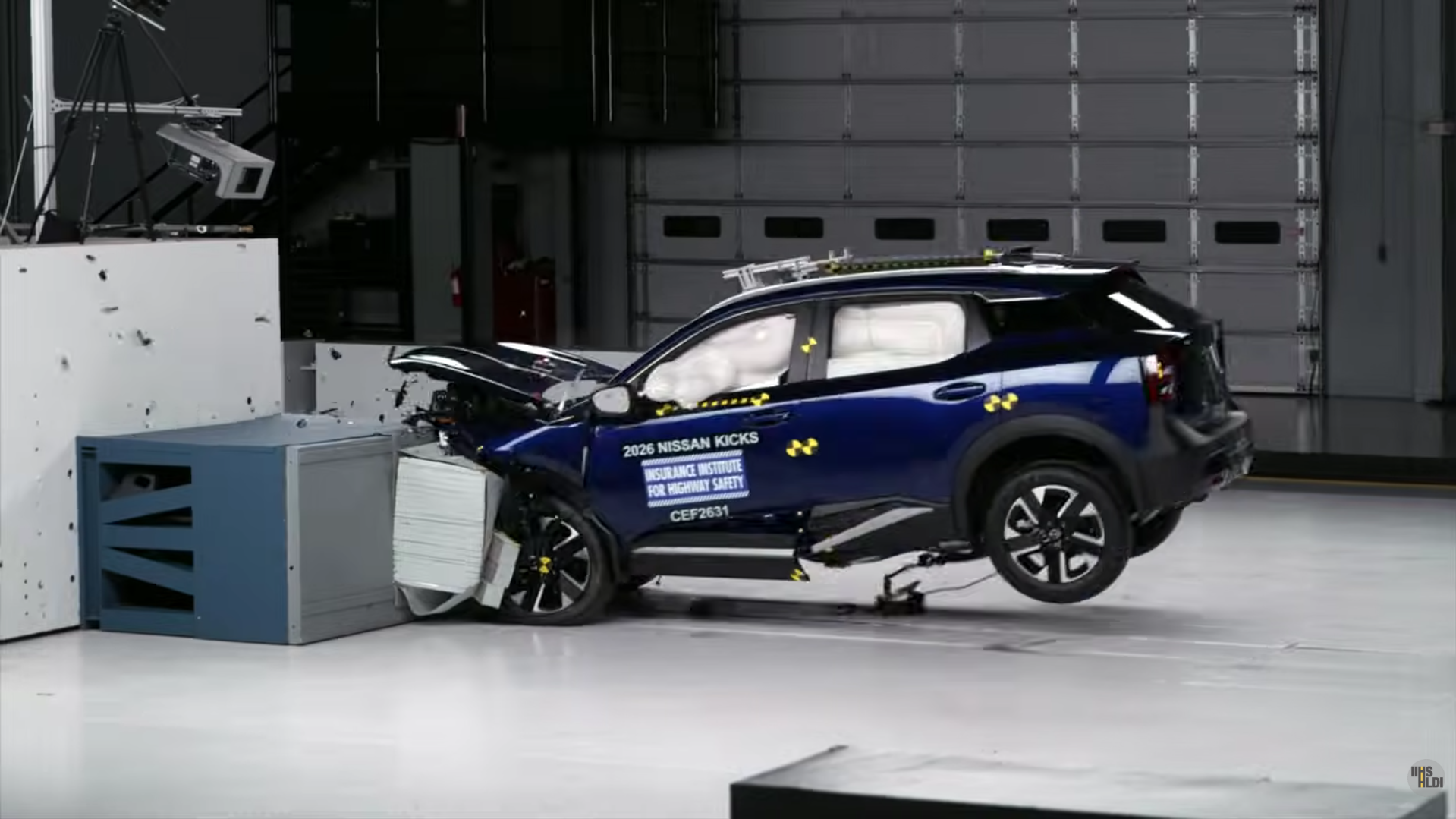
The Insurance Institute for Highway Safety (IIHS) recently put some of the most popular crossovers on the market through a fresh round of crash tests. They found that several well-known models struggled with an important aspect of occupant protection, while one affordable vehicle managed to stand out.
The vehicles tested included the Audi Q3, Toyota RAV4, Chevrolet Trailblazer, and Nissan Kicks. Only one managed to earn the organization’s coveted Top Safety Pick award.
Surprisingly, that honor went to the humble Nissan Kicks, which outperformed its more expensive rivals in a crucial frontal crash test. The Kicks initially struggled with the same evaluation before Nissan addressed the problem earlier this year.
According to the IIHS, the difference came down to improvements in rear-passenger protection. Nissan made a relatively simple change that turned one of the Kicks’ biggest weaknesses into a strength.
Nissan Kicks Goes From Poor To Good
When the redesigned Kicks arrived for the 2025 model year, it received a poor rating in the updated moderate overlap front crash test. This evaluation emphasizes protection for passengers sitting in the second row.
Nissan subsequently revised the rear seat belts, which significantly improved the crossover’s performance. As a result, 2026 and 2027 Kicks models built after June 2026 earned a good rating and qualified for Top Safety Pick.
The Kicks narrowly missed the higher Top Safety Pick+ award because its vehicle-to-vehicle crash prevention system received a marginal rating.
Toyota And Audi Fall Short
The redesigned Toyota RAV4 earned good scores in most evaluations, but its moderate overlap result prevented it from receiving an award. The standard hybrid received an acceptable rating, while the plug-in hybrid managed only marginal.
Audi’s Q3 performed even worse in that particular test, receiving a poor rating despite earning good scores in every other assessed category.
The Chevrolet Trailblazer also received a poor moderate overlap rating, alongside disappointing results for headlights and crash prevention.
Meanwhile, the Volkswagen Jetta, the only sedan included in this round of ratings, also failed to qualify for either safety award.
Rear-Seat Protection Is Important
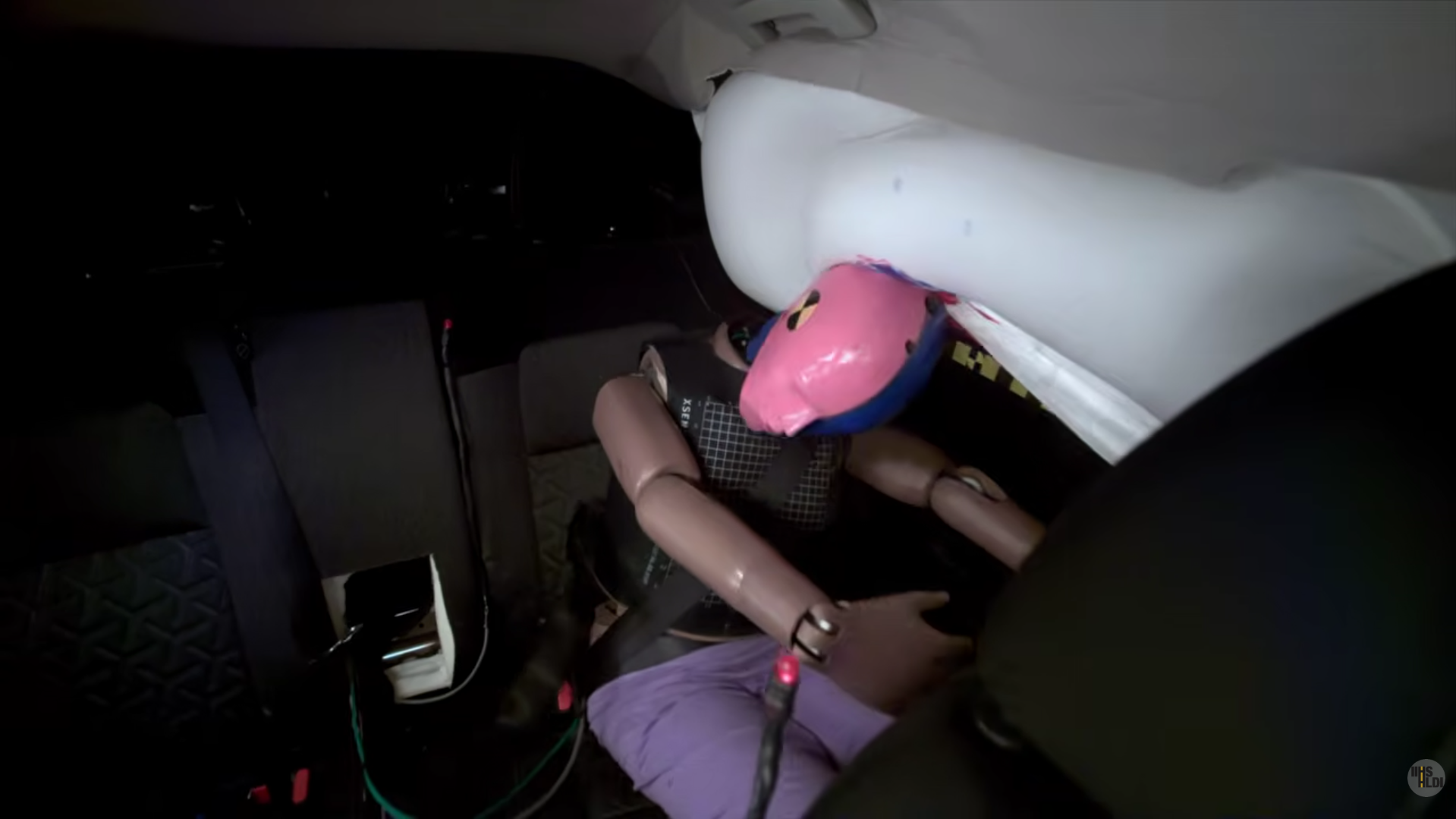
The IIHS updated its moderate overlap front crash test to better assess injuries suffered by rear-seat occupants. The evaluation now includes a second crash-test dummy positioned behind the driver.
To qualify for Top Safety Pick, vehicles must earn good ratings in the small overlap front, moderate overlap front, and side-impact tests. They must also meet minimum standards for headlights and pedestrian crash prevention.
Nissan’s improvement shows how manufacturers can meet tougher safety standards without completely redesigning a vehicle. Toyota, Audi, and Chevrolet now have some catching up to do, especially when it comes to protecting passengers in the back seat.