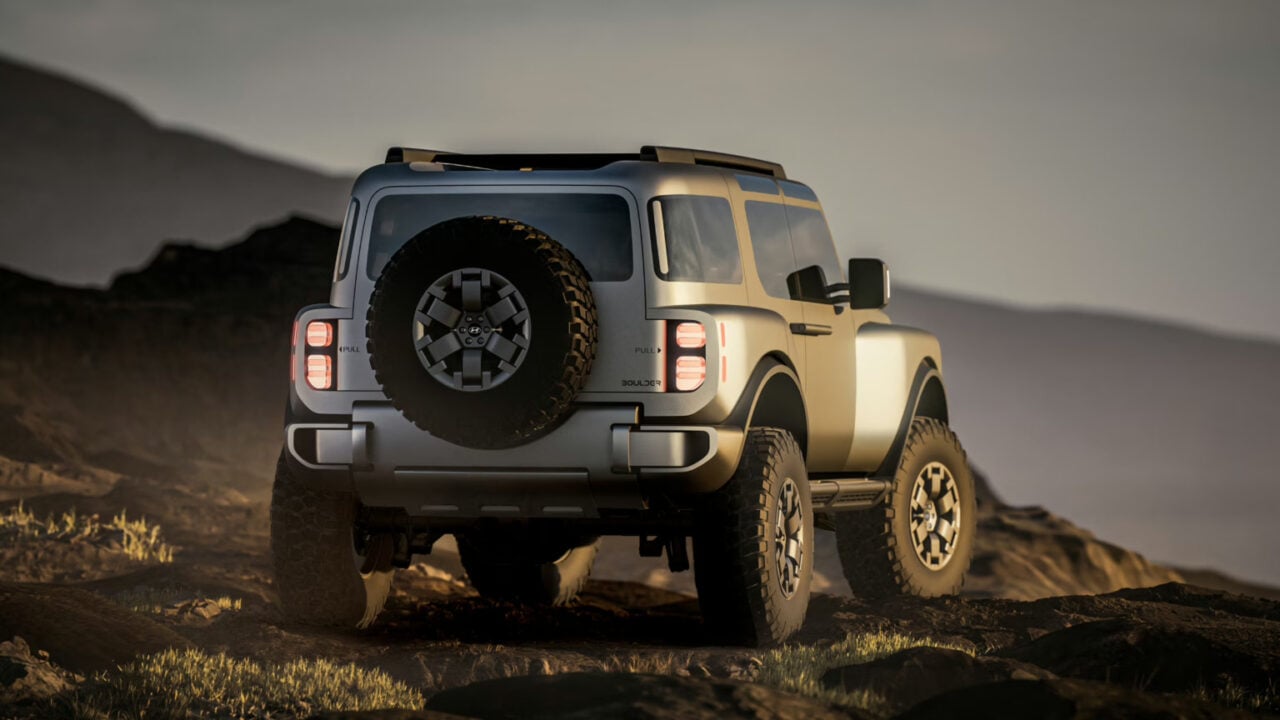
Hyundai may be preparing one of its most ambitious moves yet in the American truck market. A newly uncovered U.S. patent reveals the company is developing a dedicated body-on-frame electric vehicle platform designed specifically for rugged pickups and SUVs, marking a major departure from the unibody architecture used across its current EV lineup.
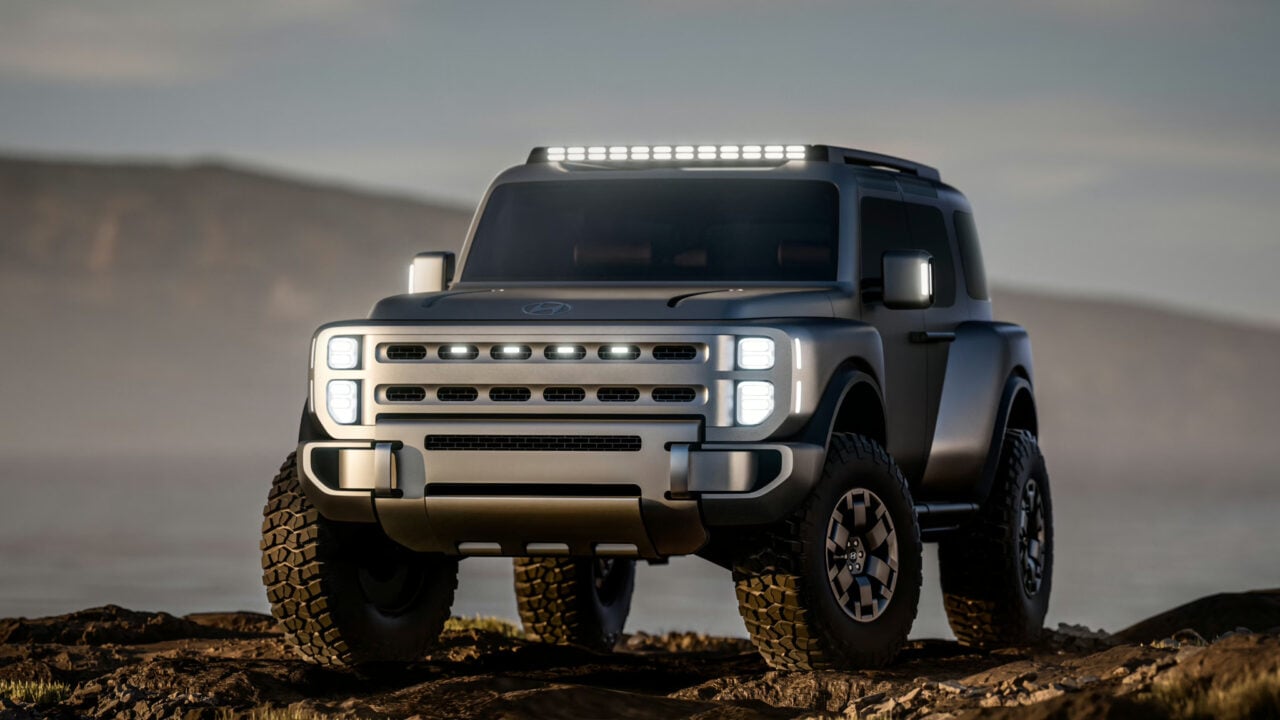
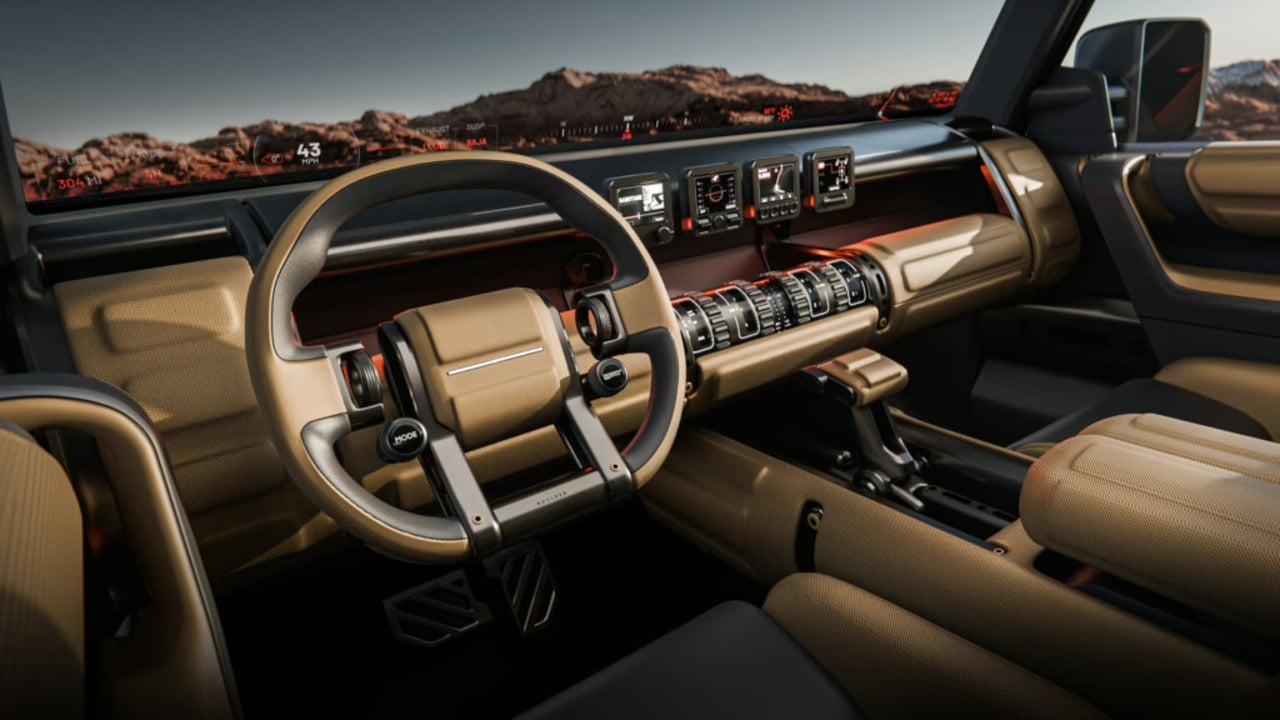
The patent surfaced shortly after Hyundai introduced the Boulder Concept at the 2026 New York International Auto Show. While the concept drew attention for its aggressive styling and oversized off-road tires, the real story may lie underneath the sheet metal. The design study previews a fully boxed ladder-frame platform engineered to support heavy-duty electric capability, long-range performance, and serious off-road durability.
If Hyundai follows through on its plans, the new architecture could underpin a midsize electric pickup destined for North America by 2030. The platform is also expected to support additional SUV models aimed directly at the growing off-road segment currently dominated by vehicles like the Ford Bronco and Jeep Wrangler.
The patent signals something larger than just another EV project. It suggests Hyundai is taking aim at the limitations that have challenged today’s electric trucks, particularly weight, towing performance, structural durability, and range under load.
A Different Approach From Hyundai’s Current EVs
Most modern Hyundai EVs, including the popular Ioniq models, use unibody platforms optimized for crossovers and passenger vehicles. The newly patented design moves in a completely different direction by adopting a traditional ladder-frame chassis commonly used in trucks and heavy-duty SUVs.
According to the patent, Hyundai plans to integrate the battery pack directly within the frame rails instead of simply mounting it beneath the cabin floor. The battery is positioned low inside the structure, helping lower the center of gravity while also improving protection during impacts and off-road driving.
The patent also outlines several structural reinforcement systems intended to improve crash safety and chassis rigidity. Side-impact deformation zones, reinforced bulkhead sections, and specialized frame chambers are all designed to shield the battery pack from damage during collisions or extreme suspension articulation.
One particularly interesting detail involves the shape of the battery housing itself. Hyundai describes an “L-shaped” structural design that allows the battery to sit low without sacrificing ground clearance, an important factor for trucks and SUVs expected to handle difficult terrain.
Built For Towing, Payload, And Off-Road Capability
Electric pickups have already proven capable of delivering enormous horsepower and torque figures, but towing and sustained heavy-duty use remain major engineering challenges. Large battery packs add significant weight, and range often drops dramatically under load.
Hyundai’s patent appears specifically engineered to address those weaknesses. By making the battery a structural component of the ladder frame itself, the company could potentially improve chassis strength while reducing unnecessary weight and packaging compromises.
The modular architecture is also reportedly designed to support multiple wheelbases, battery capacities, and even different powertrain types. While the focus is clearly on EV development, the platform could allegedly accommodate hybrid and combustion applications depending on market needs.
That flexibility could prove valuable in North America, where truck buyers prioritize towing capability, durability, and practicality just as much as electrification. Hyundai appears determined to avoid creating what critics often describe as “electric crossovers pretending to be trucks.”
Hyundai’s American Truck Push Is Becoming Serious
The company’s strategy is increasingly centered on the United States. Reports surrounding the patent indicate Hyundai intends to source steel from a new multi-billion-dollar Louisiana facility while manufacturing future trucks in America, potentially near the company’s massive Georgia Metaplant.
That localization effort could help Hyundai compete more aggressively against entrenched domestic rivals while also strengthening eligibility for future EV incentives and supply chain requirements.
The production pickup previewed by the Hyundai Boulder Concept would place Hyundai into direct competition with vehicles like the Ford F-150 Lightning, Chevrolet Silverado EV, and future models from Rivian and Jeep.
Hyundai has already shown it can move quickly in the EV space. The company’s recent electric models have earned strong reviews for efficiency, charging speeds, and value, but the truck market presents a completely different challenge with far less room for compromise.
The EV Truck Market Is Entering Its Next Phase
Early electric pickups focused heavily on acceleration, technology, and headline-grabbing performance numbers. The next phase of the segment will likely depend on whether manufacturers can deliver vehicles that genuinely meet the demands of truck buyers who tow, haul, and drive long distances regularly.
Hyundai’s patent suggests the company understands that distinction. Rather than adapting an existing crossover platform for truck duty, the automaker appears to be developing a purpose-built architecture from the ground up.
A production version remains several years away, and Hyundai has not officially confirmed final specifications or launch timing beyond the broad 2030 target. Even so, the patent offers one of the clearest indications yet that the battle for the future of electric trucks is shifting toward dedicated heavy-duty platforms rather than modified passenger-car foundations.
If Hyundai successfully translates this engineering concept into production, established truck makers may soon face a far more serious challenger than many expected.