
The idea that a Volkswagen could “save” Porsche sounds like internet folklore, but there is a real business story behind it. The Touareg did not hand Porsche a bailout check.
What it did was make Porsche’s first modern SUV possible by sharing development costs, manufacturing infrastructure, and core hardware across multiple brands. That partnership helped make the Porsche Cayenne financially viable at scale, and Porsche credits the model with creating the economic basis for sustainable success and investment in future sports cars.
The key point is scale: Porsche could build brilliant sports cars, but it could not easily create the kind of steady, high-volume revenue stream that larger automakers rely on. A shared SUV program lowered the risk, sped up development, and gave Porsche access to the kind of production footprint it did not have on its own.
That is why the Touareg connection keeps coming up whenever people talk about how Porsche became the modern, highly profitable company it is today.
Porsche Needed a High-Volume Plan

Porsche’s real crisis years were not the early 2000s. The company was in deep trouble in the early 1990s, when sales dropped and losses piled up, prompting a hard restructuring under Wendelin Wiedeking after he took charge in the early part of that decade.
The Boxster became one of the big steps in Porsche’s recovery because it broadened the customer base and improved cash flow. Still, Porsche remained a relatively small manufacturer compared with the global giants, and it needed a way to generate steady volume without turning into a mass-market brand.
Ferdinand Piech Wanted Volkswagen To Go Upmarket
At the same time, Volkswagen leadership was chasing a higher-end image. The plan included models like the Touareg SUV and the Phaeton sedan as flagships meant to prove Volkswagen could play in more premium territory. Volkswagen itself later described the Touareg as a key move that lifted the brand to a higher level when it launched in 2002.
Building brand-new vehicles in that class is expensive, especially when you are starting from scratch. That is where the opportunity emerged. If Porsche wanted an SUV and Volkswagen wanted a premium SUV, the smartest solution was to share the bones underneath.
One Platform Became Three SUVs
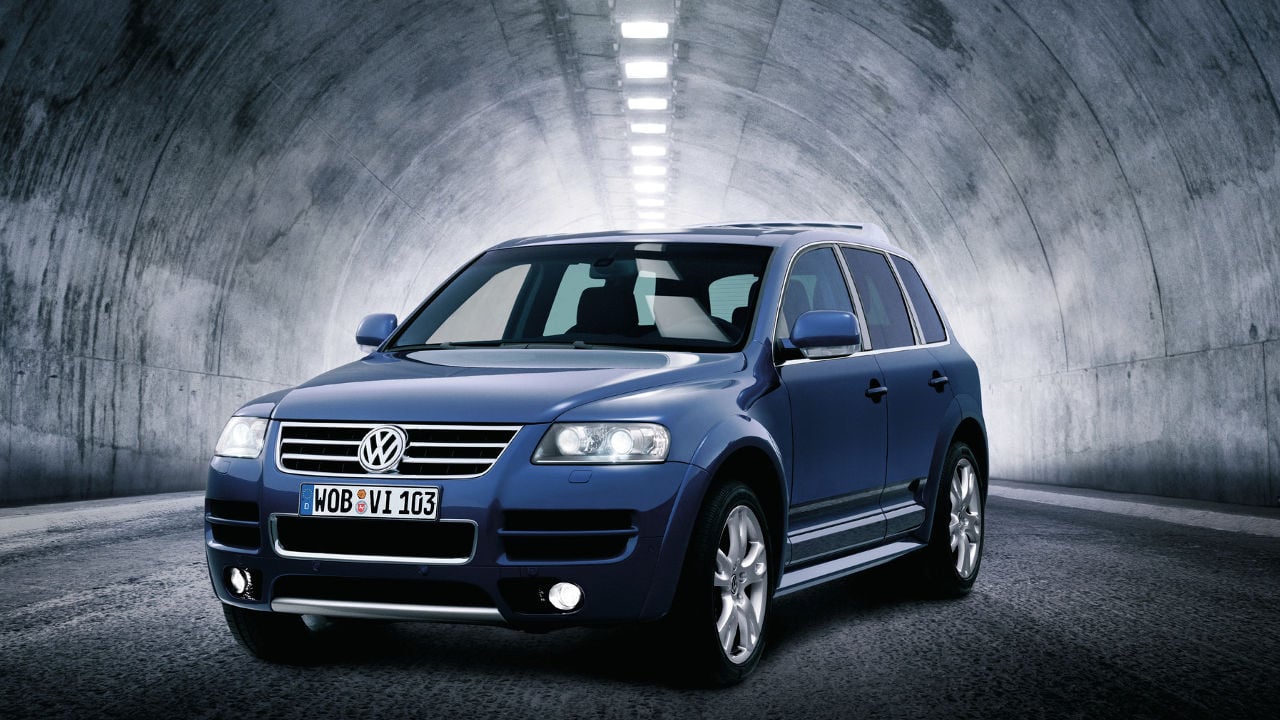
Volkswagen Group and Porsche co-developed a shared SUV architecture, often referred to as the PL71 platform. It underpinned the first-generation Volkswagen Touareg and Porsche Cayenne, and it later formed the basis for the first-generation Audi Q7 as well.
Just as important as the platform was where the vehicles would be built. Volkswagen’s Bratislava plant in Slovakia became the manufacturing hub for multiple large Volkswagen Group SUVs, including the Touareg and the Cayenne.
For Porsche, this mattered because it could not economically scale Cayenne production on its own the way a high-volume automaker could. Using Volkswagen’s industrial footprint allowed Porsche to sell an SUV in far larger numbers than any sports car program could reasonably deliver.
The Cayenne Became Porsche’s Financial Foundation

The Cayenne’s impact is not speculation. Porsche has stated that more than 276,000 first-generation Cayennes were produced from 2002 to 2010, a volume that would have been unthinkable for Porsche’s core lineup on its own.
Porsche also credits the Cayenne with providing the economic foundation for investments in future sports cars and describes the model as a major driver of Porsche’s growth in size and profitability.
That is the heart of the Touareg connection. Without a shared platform and shared production strategy, the Cayenne would have been far harder to justify financially. Without the Cayenne’s volume and profit contribution, Porsche’s modern expansion, including later hits like the Macan, would have looked very different.
The SUV Bet Changed Porsche’s Sales Mix
SUVs did not just add an extra model to Porsche showrooms. They reshaped Porsche’s entire business model. In recent years, the Macan has often been Porsche’s best-selling model line globally, showing how central SUVs have become to the company’s results.
That shift is why people say a Volkswagen helped save Porsche. The Cayenne created the scalable profit base Porsche needed, and the Cayenne was born from a platform-sharing deal that also produced the Touareg.
Touareg’s Long Run And Why It Is Ending

The Touareg itself became a long-running flagship. Volkswagen says it has sold more than 1.2 million Touaregs across three generations, and it has announced the current Touareg generation is entering its final production phase. Volkswagen Australia says production of the combustion engine Touareg ends in 2026, with the “Final Edition” available to order in Australia until the end of March 2026.
Even if the Touareg name eventually returns in a different form, its legacy is already set. It helped launch an entire family tree of large Volkswagen Group SUVs and, through its shared roots with the Cayenne, played a real role in Porsche’s modern success story.
The Real Answer In One Sentence
The Volkswagen Touareg “saved” Porsche because the Touareg and Cayenne were twins under the skin, and that shared engineering and manufacturing strategy made the Cayenne profitable at scale, giving Porsche the financial foundation to keep building the sports cars people actually associate with the brand.
This article originally appeared on Autorepublika.com and has been republished with permission by Guessing Headlights. AI-assisted translation was used, followed by human editing and review.