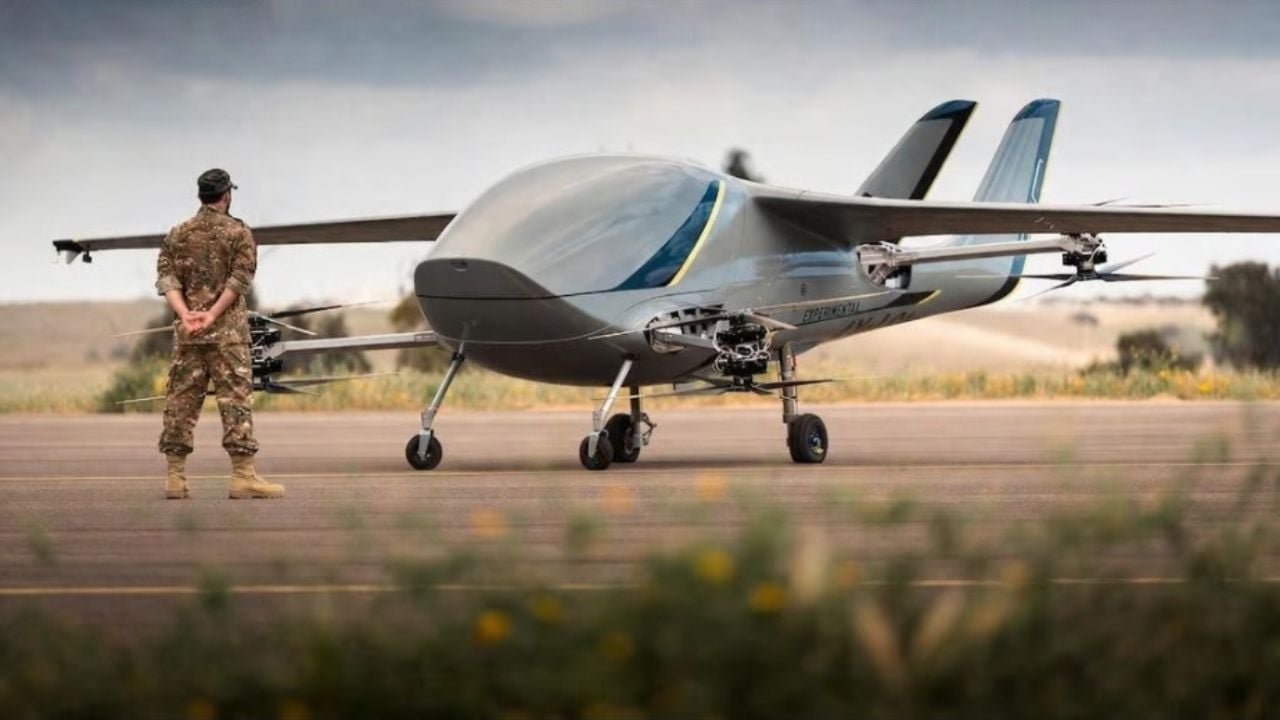

An Israeli aviation startup is trying to do for airborne logistics what platform architecture did for modern automotive manufacturing: strip out complexity, reduce cost per unit, and push capability into something far more scalable than legacy hardware allows.
A recent Israeli media report confirmed that the US military has shown interest in an autonomous cargo aircraft designed by Israeli aviation startup AIR, a company that focuses on advanced electric aviation.
The primary draw is the eVTOL’s payload of around 550 lbs, reportedly aimed at solving ship-to-ship logistics in high-risk theaters like the contentious Strait of Hormuz. The best part is perhaps the price; it reportedly comes at half the cost of a chopper.
According to reporting by Ynet News, the company AIR has brought its cargo-focused electric vertical takeoff and landing aircraft into flight testing and is now drawing attention from US military branches as global security pressures reshape how supplies move through contested airspace and sea lanes.
It’s Cheaper, But not Cheap
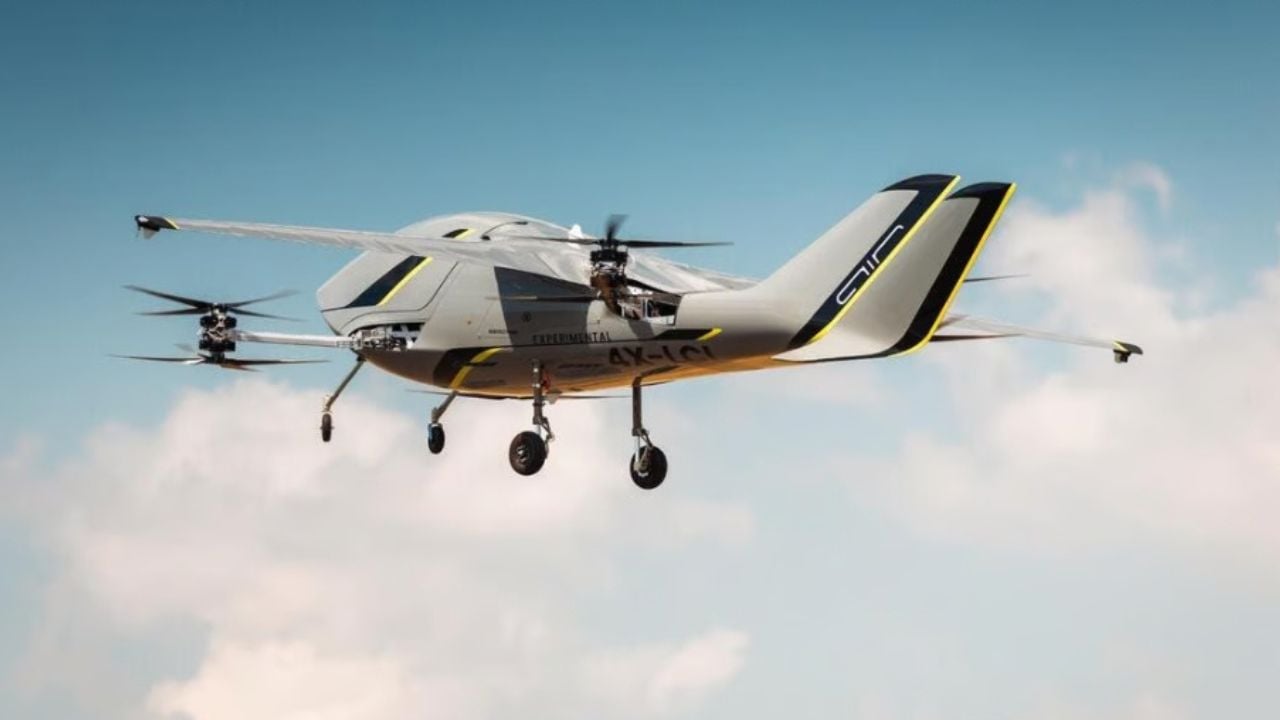
The aircraft in question is not a consumer curiosity or a light delivery drone. It is an autonomous eVTOL cargo platform capable of carrying up to 250 kilograms, or roughly 550 pounds.
That places it in a class that starts to overlap with helicopter utility roles, particularly in ship-to-ship logistics, offshore resupply, and contested maritime corridors.
AIR positions it as a lower-cost alternative to rotary-wing aircraft, with a price point of about $1 million per unit, compared with tens of millions for traditional military helicopters.
The system completed its maiden flight earlier this month, marking a transition from concept and simulation into physical validation. From there, momentum appears to be shifting toward real procurement interest.
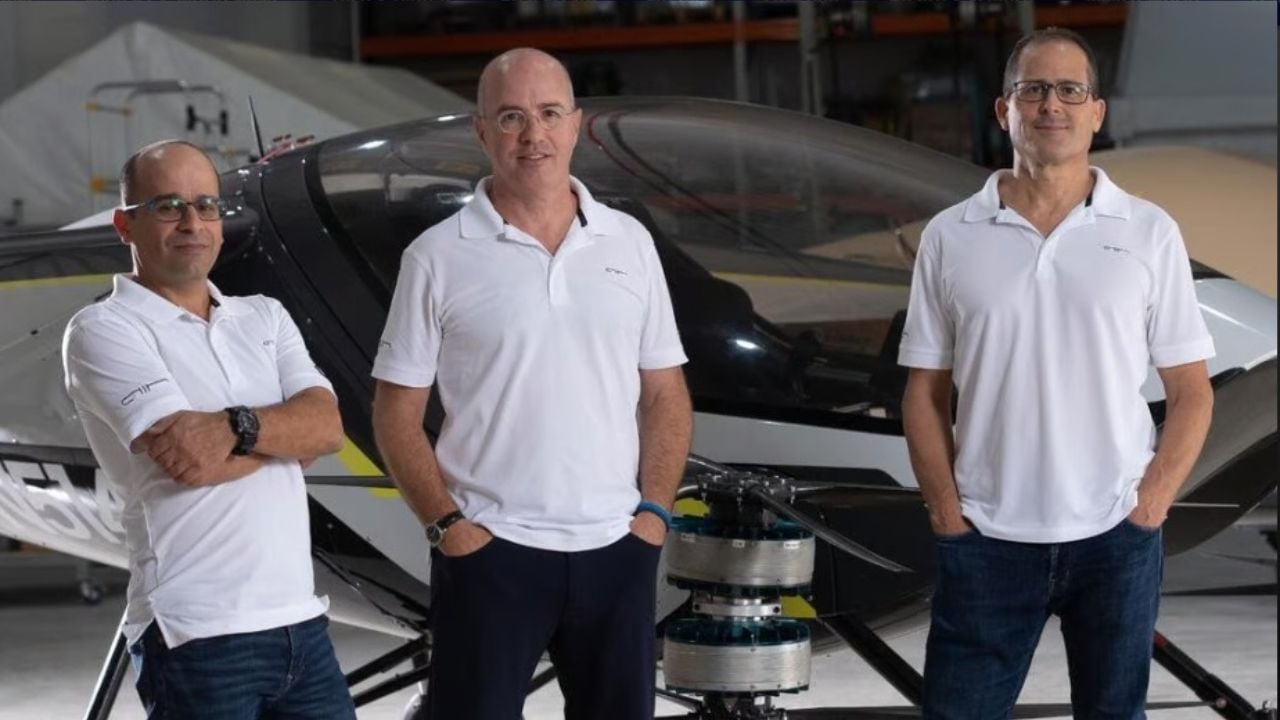
A defense customer has already purchased a unit, and additional aircraft are slated for shipment to the United States for certification and military evaluation. AIR is also in talks with multiple US military branches, including the Air Force, Navy, and Marine Corps, according to CEO and co-founder Rani Plaut.
A Work Tool for High-Risk Zones
The operational logic being explored is tightly linked to high-risk environments such as the Strait of Hormuz, where naval logistics require constant movement between vessels.

In those environments, helicopters are typically used to transfer supplies ship to ship, and that task carries inherent danger due to hovering over moving decks, unpredictable wind conditions, and operational exposure.
AIR’s aircraft is designed to remove the pilot from that equation entirely. Missions are pre-programmed, and the aircraft executes them autonomously.
In Plaut’s framing, the shift from manned to unmanned is not just technological but philosophical.
The platform is described as a work tool rather than a strategic asset. The implication is straightforward. If a unit is lost, it does not carry the same operational or human cost burden as a manned aircraft.
That distinction makes a huge difference in environments where risk tolerance and sortie frequency shape logistics strategy as much as raw performance.
Headquartered in Israel and the US
Technically, the AIR Cargo platform combines vertical lift capability with fixed-wing forward flight. It takes off and lands vertically, removing the need for runways or ship-mounted launch infrastructure, then transitions into more efficient cruise flight once airborne.
That hybrid architecture mirrors broader trends in aerospace design, where efficiency and flexibility are being balanced against the energy demands of electric propulsion.
The company is also building on its broader eVTOL ecosystem, including the AIR ONE, a two-seat electric aircraft designed for personal aviation. That model has already attracted significant commercial interest, with more than 3,000 customers reportedly on a waiting list and over $1 billion in orders.
While the passenger aircraft remains subject to regulatory approval by the US Federal Aviation Administration, the cargo division is already generating revenue, with more than 25 units sold and initial deliveries underway.
AIR itself is a relatively young company, founded in 2018 and headquartered between Israel and the United States, with production in Kfar Yona and operations in Florida.
It has raised around $30 million to date, including backing from Entrée Capital, and employs roughly 70 people. Despite its size, it is attempting to scale manufacturing using automotive-style production methods, aiming for higher output than traditional aerospace norms typically allow.
The Strait as a Real-World Use Case
Global defense and commercial logistics operators are increasingly looking for alternatives to helicopters, which are expensive to procure, expensive to maintain, and limited by crew requirements.
Autonomous systems that can carry meaningful payloads open a different design space, where cost per mission and risk exposure become the dominant variables.
As reported by Ynet News, AIR’s immediate focus is not civilian air mobility, even though that remains part of its long-term roadmap. The near-term opportunity sits in defense logistics, particularly in maritime zones where constant resupply is required and where human exposure creates operational constraints.
The Strait of Hormuz scenario is not hypothetical in that sense, but a real-world use case shaping procurement conversations.