

The modern car has since stopped being just a box of pistons, motors, and rubber meeting asphalt. It is a data ecosystem on wheels, quietly assembling a digital autobiography of everywhere it has been and everything it has done.
A recent telematic teardown highlighted by The Drive shows just how complete that record can be when a group of security researchers purchased a wrecked Chinese EV and extracted its telematics module to reconstruct the vehicle’s entire life history, mile by mile, stop by stop.
The vehicle in question was a BYD Seal, but the specific brand matters less than the architecture it represents.

Modern electric vehicles routinely integrate telematics control units that function as communication hubs between the car, satellites, mobile networks, and backend servers. These modules are responsible for navigation, emergency services, software updates, and fleet diagnostics.
What often goes unnoticed is that they also persistently log GNSS (global navigation satellite system) data, system events, and mobility history inside onboard storage, sometimes without strong encryption barriers.
Your Car Never Forgets
The researchers, known in the tech world as “white hat hackers,” or “ethical hackers,” acquired a used module from the salvaged BYD, effectively a sealed black box with years of accumulated movement data still intact.
Once connected to a reader interface, they extracted the filesystem using open-source tools typically available to anyone with technical curiosity and patience.
No manufacturer credentials were required. No proprietary forensic lab was involved. The barrier to entry was surprisingly low for something that contained such a granular record of real-world movement.
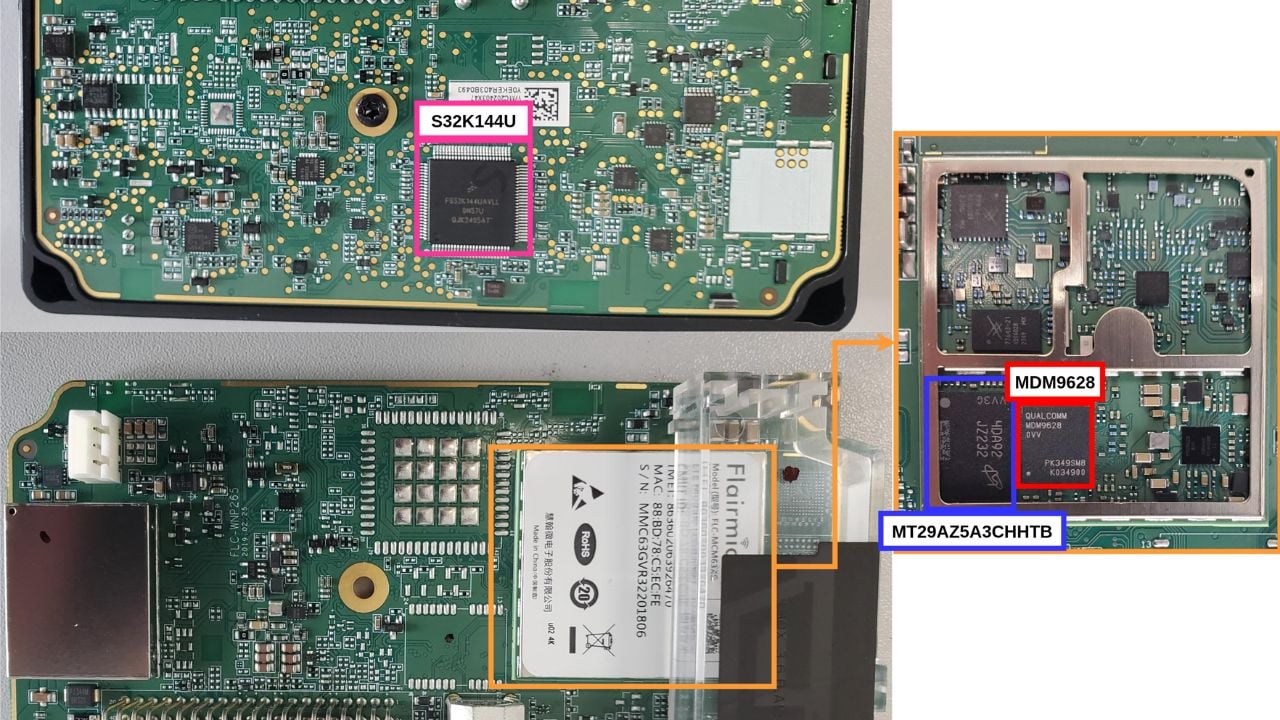
Inside the extracted partitions were GNSS logs, timestamps, and system-level records that allowed reconstruction of the car’s full geographic trajectory. Every ignition cycle, every prolonged stop, every long-distance journey was embedded in coordinate form.
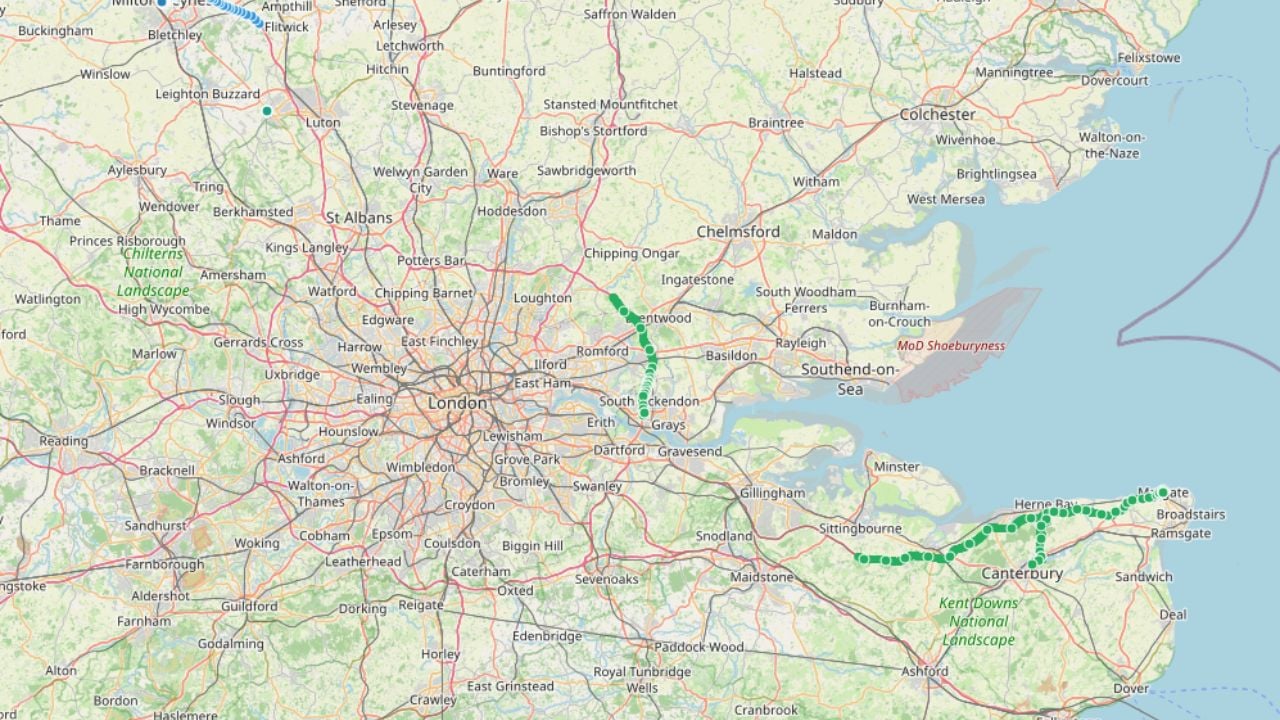
When mapped, those points formed a continuous narrative stretching from factory production in China, through shipping and registration processes, into its operational life in the United Kingdom, and finally to its dismantling in Europe.
Every Mile, Logged Forever
The dataset is particularly striking due to its continuity. This was not intermittent telemetry or occasional snapshot data. It was dense, persistent logging that effectively transformed the vehicle into a passive tracking device documenting its entire existence.
Even subtle anomalies stood out in the reconstruction.
One cluster of GPS points revealed a prolonged stationary period at a single location, an irregularity that later aligned with evidence of an accident involving the vehicle.
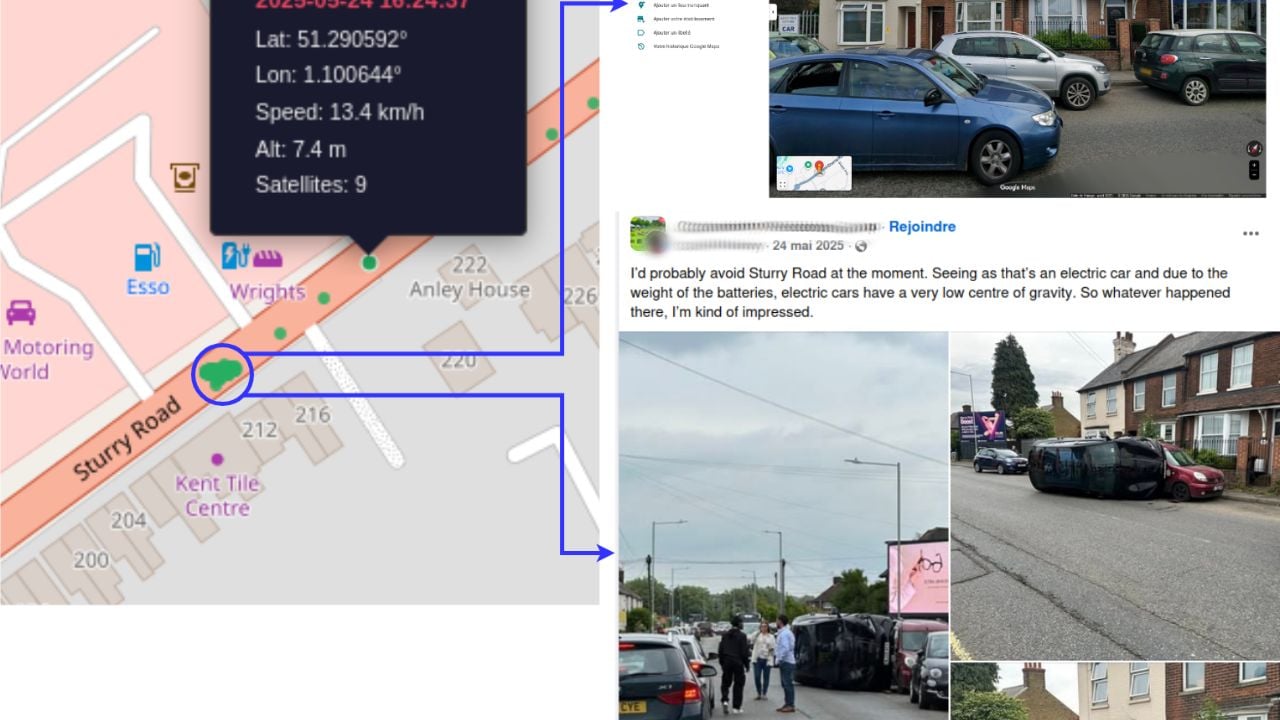
Cross-referencing publicly available information helped complete that missing chapter of its timeline.
From a technical standpoint, the process relied on parsing raw GNSS logs and correlating them with system timestamps, then reconstructing spatial paths using standard mapping tools. Once geospatial data was aligned chronologically, behavioral patterns emerged.
Daily routes, habitual stops, and extended downtime periods became visible without needing any additional sensor data beyond what was already embedded in the module.
This type of forensic reconstruction underscores a broader shift in automotive design philosophy. Automobiles are increasingly built around software-defined architectures where connectivity is not optional but foundational.
That connectivity enables remote diagnostics, efficiency improvements, and advanced driver assistance features, yet it also expands the surface area for data persistence. Even when a car is removed from active service, its internal components can retain traces of its operational history unless explicitly wiped or encrypted.
The Data Shadow Problem
Security researchers often describe this as a “data shadow,” that is, a residual footprint left behind in hardware that survives long after the vehicle itself changes ownership or condition. In this case, the shadow was a literal coordinate-by-coordinate reconstruction of lived motion.
The implications extend beyond curiosity or technical novelty.
If a salvaged module can reveal this much about a vehicle’s past, similar components in active cars may already be accumulating comparable datasets. The difference is not in the existence of the data, but in who has access to it and under what safeguards it is stored.
With this demonstration, automakers would be well advised to begin tightening encryption standards in newer platforms, and regulatory pressure is gradually pushing the industry toward stronger privacy protections.
Still, legacy systems and cost-driven design choices mean that large portions of the global auto fleet operate with varying levels of data security maturity.
Wrecked Car, Full Story
The researchers’ experiment does not suggest that every vehicle is actively exposed or that personal tracking is easily weaponized. Rather, it highlights how much information is technically present inside automotive systems, often in forms that are more persistent and recoverable than many owners realize.
Ultimately, the wrecked EV told a complete story without saying a word. It recorded its journey from assembly line to scrapyard with a precision that rivaled fleet telemetry systems, all stored inside a single module designed for connectivity rather than permanence.
This demonstration exposes how deeply modern mobility is intertwined with silent data collection, waiting to be read long after the engine stops turning.