

Just two hours before she was scheduled to trade in her Kia for a new car, Bre experienced a sudden and severe mechanical failure. “I don’t have a good luck,” she said almost crying.
While sitting in the car, the transmission warning light lit up on the dashboard, and the engine began to shake violently. This unexpected breakdown threatened to derail the entire trade-in deal, leaving her panicked and uncertain about whether the dealership would even accept the vehicle in its current condition.
In a TikTok video posted by user Bre (@beepboopboopbeepbeepboop), she expressed her frustration and desperation, stating she had never been happy with the car. She tried basic maintenance steps, including adding oil, hoping to resolve the issue, but nothing worked.
A follow-up video revealed that a diagnostic scan pointed to a misfire, specifically a faulty ignition coil, rather than a complete transmission failure. She’s a bit relieved by that news.
She attempted a DIY repair by replacing the third coil but admitted the car was still shaking afterward, leaving her out of pocket for parts and effort.
Dealership Day Goes Wrong
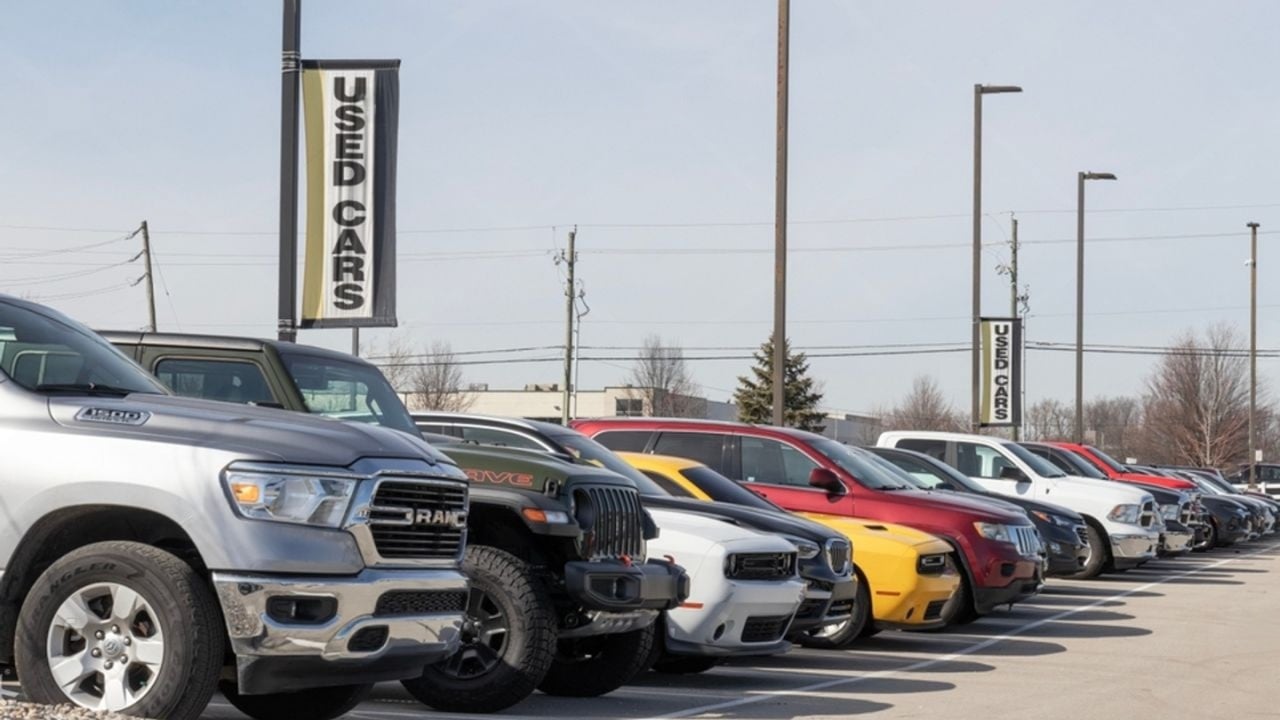
With the trade-in deadline looming and the car still not running right, she decided to cut her losses. In a comment, she wrote, “I just traded that POS.” Apparently, despite the persistent misfire codes and having already spent roughly $300 on attempted fixes, the dealership did agree to take the vehicle.
However, the trade didn’t come without financial consequences. She still owed approximately $12,000 on her loan but only received about $7,500 for the trade-in. This left her with several thousand dollars in negative equity, which she had to roll into her next car loan, bringing the total of the new loan to around $32,000.
And she thought she was heading into a clean, predictable trade-in that morning.
A Kia that had served its time, a dealership appointment already locked in, and the expectation that the last chapter of ownership would close without drama. Instead, the car chose the final hours before handover to stage a mechanical protest that turned a simple transaction into a stressful diagnostic puzzle.
It started with a warning light.
Warning Lights, Bad Vibes

The dashboard lit up with a transmission-related alert, the kind of symbol that instantly changes how a driver feels about every vibration, every shift, every sound from under the hood.
Almost immediately after, the vehicle began to shake in a way that was impossible to ignore. With the trade-in appointment already scheduled, there was little appetite for delay.
Her first instinct, of course, was to investigate the basics. Fluids were checked. Oil was topped up. The hope was that the issue might be a sensor glitch or a temporary fault that would clear with a reset-style approach. The car did not cooperate with that theory.
The warning light stayed on. The shaking continued.
At that point, attention shifted from optimism to troubleshooting.
A diagnostic scan was carried out, pulling stored codes from the vehicle’s system. The results pointed away from the worst-case assumption of a failing transmission and toward something more specific: a misfire condition.
That detail changed the entire tone of the situation.
Misfires often trace back to ignition components, fuel delivery irregularities, or air intake issues, all of which sit far below the cost and severity of a transmission replacement. In this case, the suspicion narrowed toward ignition coils.
One coil was replaced in an attempt to correct the problem. It was a logical first step, inexpensive compared to major drivetrain repairs, and aligned with the scan results. The expectation was that the shaking would ease once the faulty component was removed from the equation.
It did not.
Dealerships Often Take Problem Cars
A flashing warning light (especially transmission or misfire) means active damage. She should’ve stopped driving immediately. Every mile she drove risked turning a $300 coil repair into a multi-thousand-dollar transmission or catalytic converter failure.
She threw $300 at a guessed coil replacement based on a scan code. Codes tell you where the problem is detected, not what is wrong. A misfire could be a coil, plug, injector, wiring issue, or even low compression. She needed a mechanic to swap coils between cylinders to confirm the diagnosis before buying parts.
And most importantly for the trade-in situation, she should have been honest but strategic with the dealership. Many dealers will still take a car with mechanical issues; they often have cheap in-house mechanics or auction connections. But by attempting a DIY repair and failing, she lost leverage and time.
@beepboopboopbeepbeepboop #GDI #kiamotors #mechanic #usedcar #buyingacar ♬ original sound – bre
There’s no doubt she was dealt a bad hand that day, but her best move would’ve been to call the dealership immediately, explain the situation honestly, and ask if they’d still honor the trade-in value (or a reduced one) without her touching it.
Some dealers will work with you. Instead, she panicked, threw parts at it, and still ended up rolling negative equity — exactly what a rushed, emotional decision guarantees.
What she needed was a mechanic’s diagnosis and a dealer’s pre-approval on a damaged trade. She got neither and it cost her thousands.