
General Motors has quietly taken another step toward a future where flat tires could be a thing of the past. In late 2025, the automaker was granted a US patent for a new type of non-pneumatic wheel, meaning a wheel that does not rely on pressurized air to carry a vehicle’s weight. While airless tires have been discussed for years, this patent offers a detailed look at how GM is thinking about making them practical for everyday road vehicles.
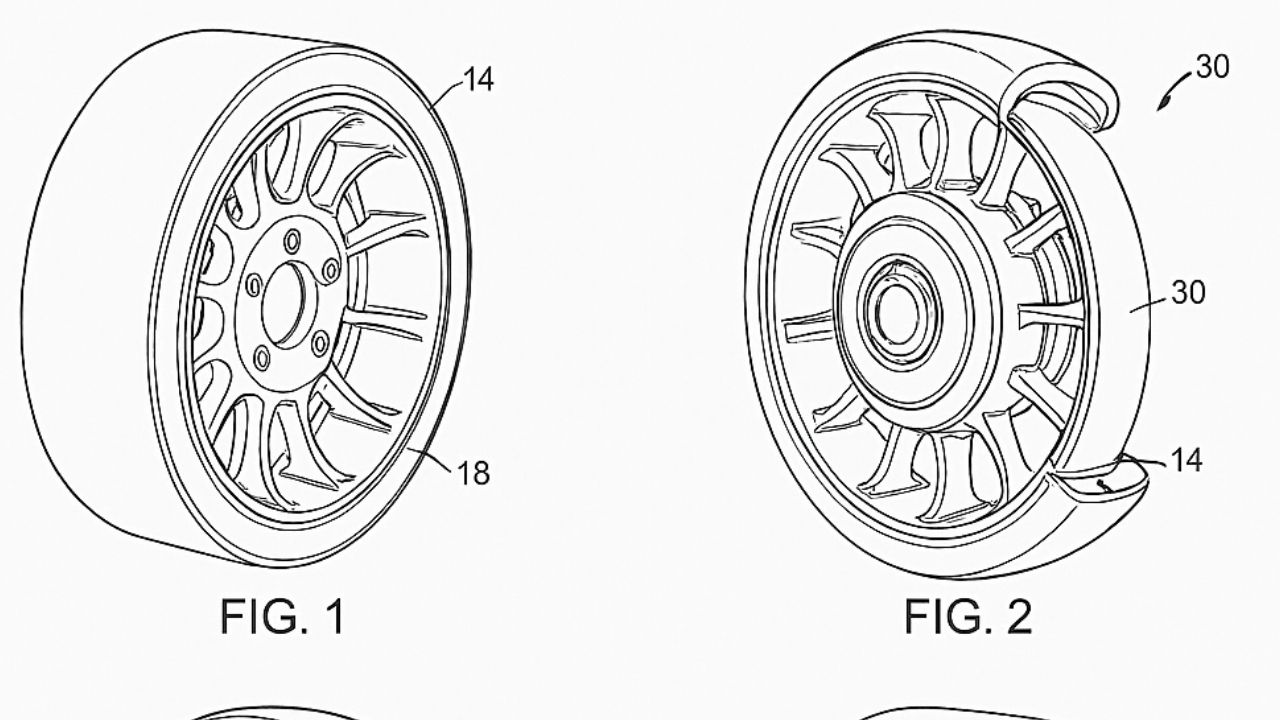
The patent, published as US12508841B2 and assigned to GM Global Technology Operations LLC, describes a wheel that replaces air pressure with carefully engineered structural components. Instead of an inflatable tire mounted on a rim, the wheel uses rigid and semi-flexible elements to support loads, absorb impacts, and maintain shape under driving conditions.
No Air, No Problem
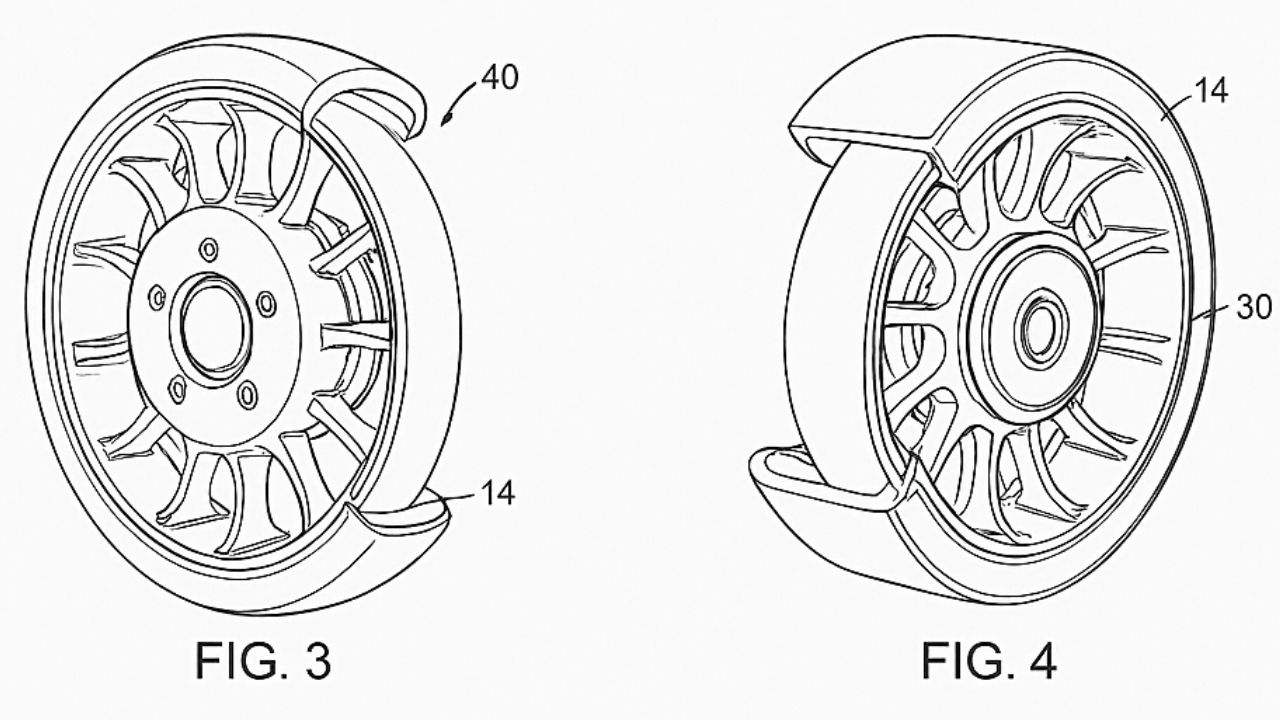
At the heart of the design are two circular structural rings, referred to in the patent as an inboard bead and an outboard bead. These beads are spaced apart from each other across the vehicle’s width. Connecting them are multiple supports arranged around the wheel’s circumference. These supports take on the job normally handled by air pressure, carrying the vehicle’s weight while allowing controlled flex as the wheel rolls over bumps and imperfections.
One of the more interesting aspects of the patent is how these beads are shaped and used. The inboard bead includes mounting apertures, essentially openings that allow the wheel to be attached to the vehicle. The patent describes how the size and positioning of these openings can vary, which opens the door to integrating other components directly into the wheel assembly.
In some configurations, the design allows space for an electric motor to be mounted in or near the wheel itself, a layout that could be especially useful for electric vehicles.
Because there is no air inside the wheel, the risk of punctures, blowouts, and pressure loss is eliminated. For everyday drivers, this could translate to fewer roadside emergencies and less time spent checking tire pressure. It also means more consistent performance, since the wheel’s behavior does not change with temperature swings or slow leaks.
From Patent to Pavement: The Challenge of Making It Real
The patent also focuses on durability and efficiency. By carefully shaping the supports that connect the two beads, GM aims to balance strength with flexibility. Too stiff, and the ride would feel harsh. Too soft, and the wheel would deform excessively under load. The patent goes into detail about how the supports can be spaced, angled, and shaped to tune ride comfort, noise levels, and handling characteristics.
Weight is another key consideration. Traditional tires and wheels include multiple layers of rubber, steel belts, and air-retaining liners. GM’s design aims to reduce unnecessary mass while maintaining structural integrity. A lighter wheel can improve acceleration, braking, and energy efficiency, which matters for both gasoline and electric vehicles.
It is important to note that a patent does not guarantee a production model is just around the corner. Automakers often patent ideas years before they appear on the road, and some never make it past the research phase. Still, this filing shows GM is actively investing engineering effort into non-pneumatic wheel technology, not just as a concept but as a detailed, manufacturable design.
For the average driver, the appeal is easy to understand. A wheel that cannot go flat, requires less maintenance, and potentially lasts longer could remove one of the most common headaches of car ownership. If GM can refine the ride quality, noise levels, and cost to match conventional tires, airless wheels could eventually move from experimental vehicles and specialty uses into daily commuting.
We have previously reported that GM has patented a new kind of cylinder deactivation system that uses clever valve-train design and hydraulic control to switch off engine cylinders when drivers don’t need all of them, enhancing efficiency.