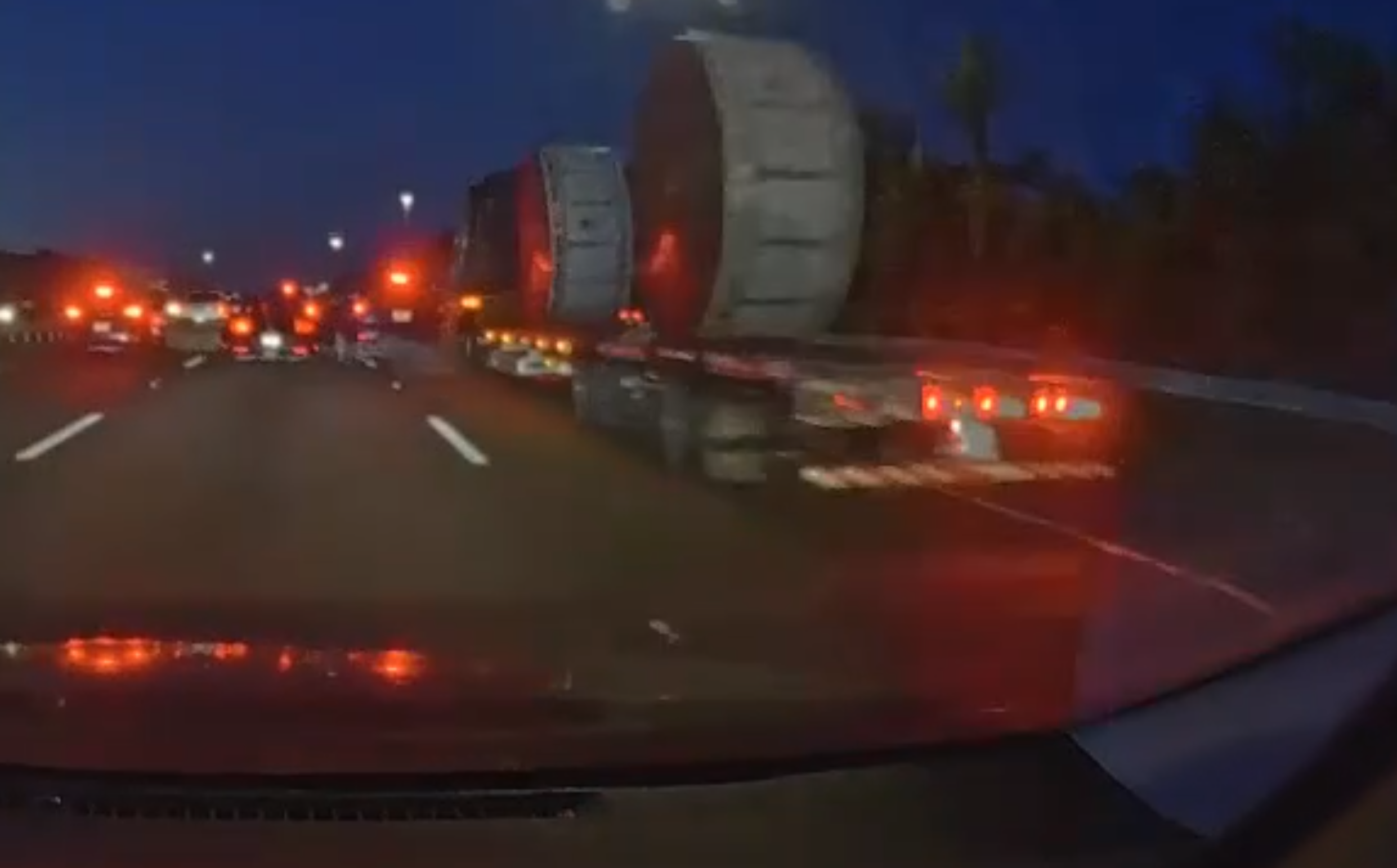
A Monday morning commute on one of Florida’s busiest highways turned fatal when a teenager’s reckless driving set off a three-vehicle chain-reaction that left one man dead and sent a semi-truck rolling onto its side. The crash, which happened just before 6:30 a.m. near Mile Marker 220 on Interstate 75, has drawn significant attention not just for the loss of life, but for what happened right after: the driver who started it all tried to run.
The victim was a 34-year-old man from New Smyrna Beach, a father whose life ended on a stretch of highway during what should have been a routine morning. The Florida Highway Patrol is leading a full traffic homicide investigation into the crash, which unfolded in Manatee County during a time when many Floridians were just beginning their day.
What makes this case especially alarming is the sequence of events. This was not a simple two-car collision. The crash cascaded from one vehicle to the next, each impact compounding the danger until a massive commercial truck was overturned across all three southbound lanes of I-75. The scale of the destruction, for what appears to have started with a careless lane change, is difficult to overstate.
An 18-year-old from Cocoa, Florida, identified as Jonathan Matos Morales, was arrested in connection with the crash and now faces charges of vehicular homicide and leaving the scene of a crash involving a death. Surveillance footage reportedly showed his vehicle briefly stopping before he chose to speed away southbound on I-75. Troopers eventually tracked him down, impounded his Mustang, and took him into custody.
How a Single Lane Change Caused a Multi-Vehicle Disaster
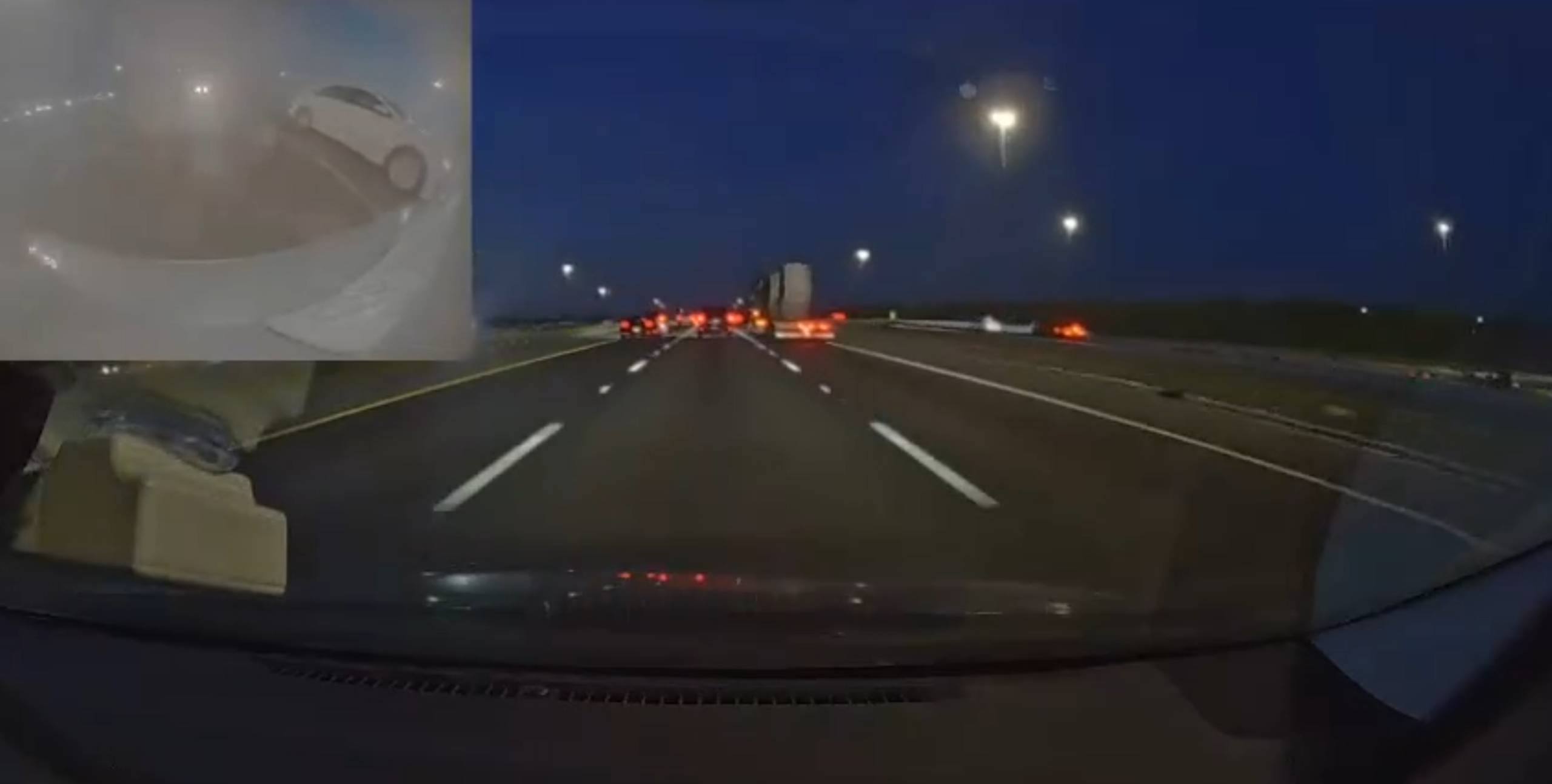
According to the Florida Highway Patrol, the crash began when Morales, driving a dark-colored Mustang, moved from the left lane into the center lane and struck the front of an SUV. That initial collision, on its own, might have been a fender bender. What followed was anything but.
The force of the Mustang’s impact pushed the SUV out of the center lane and directly into the path of an oncoming semi-truck traveling in the right lane. The semi had no room and no time. The collision with the SUV sent the big rig careening across all three southbound lanes before it overturned onto its right side, coming to rest partially in the grass median. The driver of that semi-truck, the 34-year-old New Smyrna Beach man, was killed. The investigation is ongoing, and FHP’s Traffic Homicide Unit is examining all available evidence.
The Driver Stopped, Then Ran

Perhaps the most striking detail to emerge from this crash is that Morales did not immediately flee. Video evidence reviewed by investigators shows his vehicle pausing briefly at the scene after the collisions before he made the decision to drive away southbound on I-75. That brief moment of hesitation did not translate into action, and he did not stop to render aid or wait for help to arrive.
Florida troopers ultimately located and impounded the Mustang. Morales was arrested and charged with vehicular homicide and leaving a crash scene involving a death, the latter of which carries serious penalties under Florida law. Leaving the scene of a fatal accident is a first-degree felony in the state, independent of any other charges.
What Florida Law Says About Hit-and-Run Fatalities
Florida has some of the toughest hit-and-run laws in the country, and for good reason. The state consistently ranks among the highest nationally for hit-and-run crashes. Under Florida Statute 316.027, leaving the scene of a crash that results in a death is a first-degree felony, punishable by up to 30 years in prison. Combined with a vehicular homicide charge, which can also reach felony level depending on the circumstances, Morales faces the very real possibility of spending decades behind bars.
The law also requires drivers involved in crashes to stop, provide identifying information, and render reasonable assistance to anyone who is injured. Failing to do so, even for a matter of minutes, can dramatically increase the severity of the legal consequences a driver ultimately faces.
What We Can Learn From This Crash
Incidents like this one carry lessons that extend far beyond the courtroom. First, they underscore just how quickly a single driving error can snowball into catastrophe, particularly on high-speed interstates where vehicles are traveling in close proximity at 70-plus miles per hour. A reckless or inattentive lane change does not happen in a vacuum on roads like I-75.
Second, this crash is a stark reminder of the legal and moral obligations drivers have the moment a collision occurs. Fleeing does not undo the damage, and in virtually every case, it makes things significantly worse for the person who runs. Surveillance cameras, witnesses, vehicle tracking, and modern investigative tools mean that fleeing the scene of a serious crash rarely provides any real protection.
Finally, there is the human cost, which numbers and statutes cannot fully capture. A 34-year-old father from New Smyrna Beach did not come home on Monday morning. His family is left to reckon with a loss that was entirely preventable. That reality sits at the center of what happened on I-75, and it is the one detail that no legal proceeding will fully address.