While Flock Safety claims that its cameras can accurately read more than 96% of license plate characters, the real-world results tell a different story.
Over the course of 2023 and 2024, Flock’s license plate recognition system generated 1,427 alerts for the Roseville Police Department after its cameras detected vehicles reported stolen or linked to felony investigations.
However, when the police department conducted an analysis, it found that 71% of those license plate alerts were misread by Flock’s machine learning software.
Roseville police continue to meet with Flock twice a month and have shared the issue with them several times. However, the issue is adding to the department’s frustration.
Flock Says Unique Deployment Is Causing the Problem
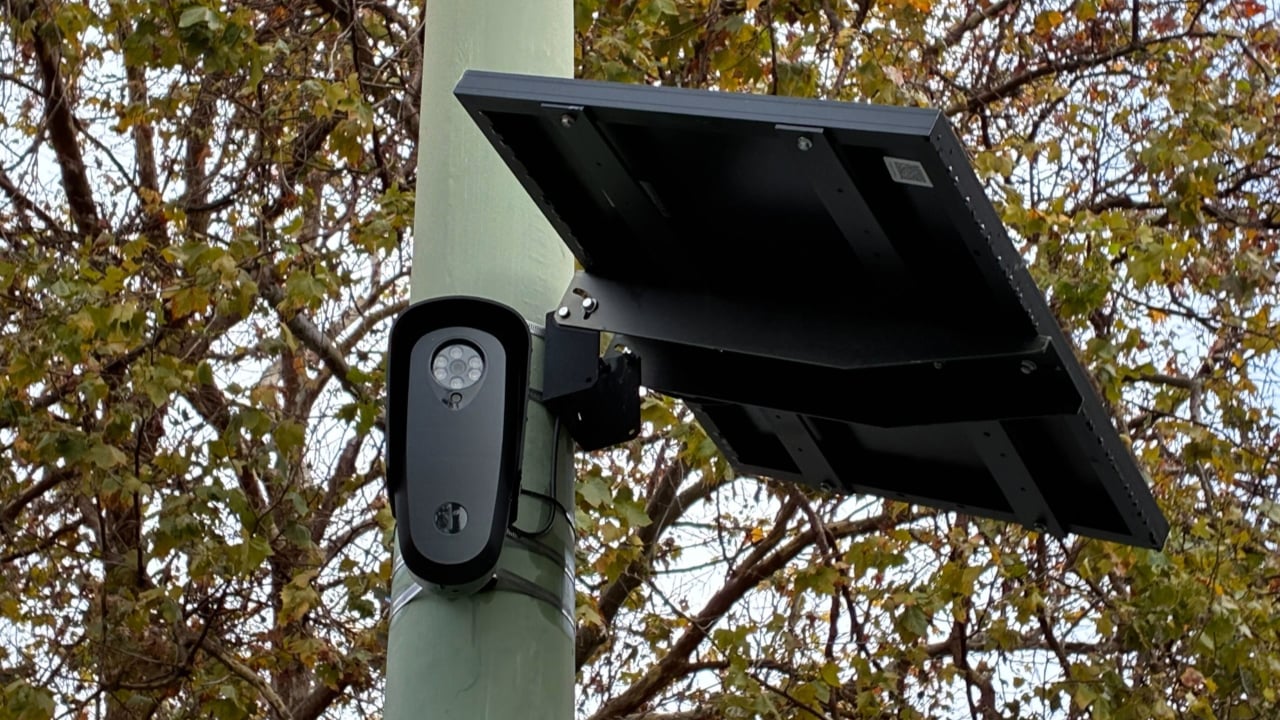
A report by Business Insider details Flock’s response after its license plate recognition cameras mistakenly flagged nearly seven out of every 10 vehicles reported to the Roseville Police Department.
A Flock spokeswoman said the high rate of misreads stems from the city’s “particularly unique deployment” of the cameras, which was installed at Roseville’s request.
Notably, the Flock cameras in Roseville only capture the rear license plates. The cameras are positioned to avoid capturing the front of vehicles so they don’t record people’s faces. In addition, Flock says the city’s cameras have older hardware and are placed higher and farther from vehicles than the recommended distance.
Flock told Business Insider that it is “dedicated to going above and beyond” in offering support “even when the deployment is more challenging than our typical conditions.”
However, the issues have frustrated the Roseville Police Department, as the cameras sometimes fail to read license plates. One example dates back to last fall, when officers were trying to track a person suspected of breaking into mailboxes.
The suspect’s dark gray SUV passed a Flock camera, which missed capturing the vehicle. A similar incident occurred in January, when a Flock camera missed documenting a dark gray vehicle being driven by another suspect.
U.S. Senator Calls It “Deeply Alarming”
Amanda Jones, a supervisor for the Roseville Police Department’s real-time crime center, sent emails to Flock about 16 license plates that were incorrectly flagged in April 2025, describing them as “blatant misreads.”
Flock apologized for the errors and said it would improve the system. The Atlanta-based startup claimed its cameras in Roseville have become significantly more accurate, but the police department said it has not analyzed its 2025 and 2026 data to confirm that. The company also declined to say whether it independently tests the accuracy of its camera system.
Roseville police confirmed that none of the false Flock alerts led to traffic stops or arrests, as officers are required to independently confirm a vehicle is stolen or have separate reasonable suspicion before pulling it over.
However, the consequences of Flock camera misreads in other places can be traumatizing for many drivers. In one instance, a driver in Toledo, Ohio, was mauled by a police dog after a Flock camera misread the 7 on his license plate as a 2.
Unfortunately, the victim lost his job due to the injuries and was evicted from his home. He eventually settled a lawsuit against the city and police officer for $35,000.
Speaking on the Flock camera misreads, U.S. Sen. Alex Padilla of California told Business Insider that “inaccuracies stemming from law enforcement’s use of this technology are deeply alarming, as are the mass surveillance capabilities that it enables.”
Such technologies “should only be deployed with strong safeguards that protect both public safety and Americans’ constitutional rights,” he added.
Why Is Roseville Still Relying on Flock?
A Roseville spokesperson said the city continues to use Flock cameras because they have helped solve crimes, especially cases that would have otherwise gone unsolved. He said:
“Our agency acknowledges that technology is not perfect and requires human oversight. We take that responsibility seriously.”
“We will continue to be steadfast in reporting issues as they arise, and committed to partnering with Flock to improve,” he added.
For Max Isaacs, the director of technology law and policy with the Policing Project at New York University’s School of Law, the technology is unsafe with such a high level of misreads. He said:
“A 71% misread rate is really beyond the pale.”
He added that “in the absence of concrete rules that directly address the problem of misreads, this technology is not safe to be deployed in communities.”