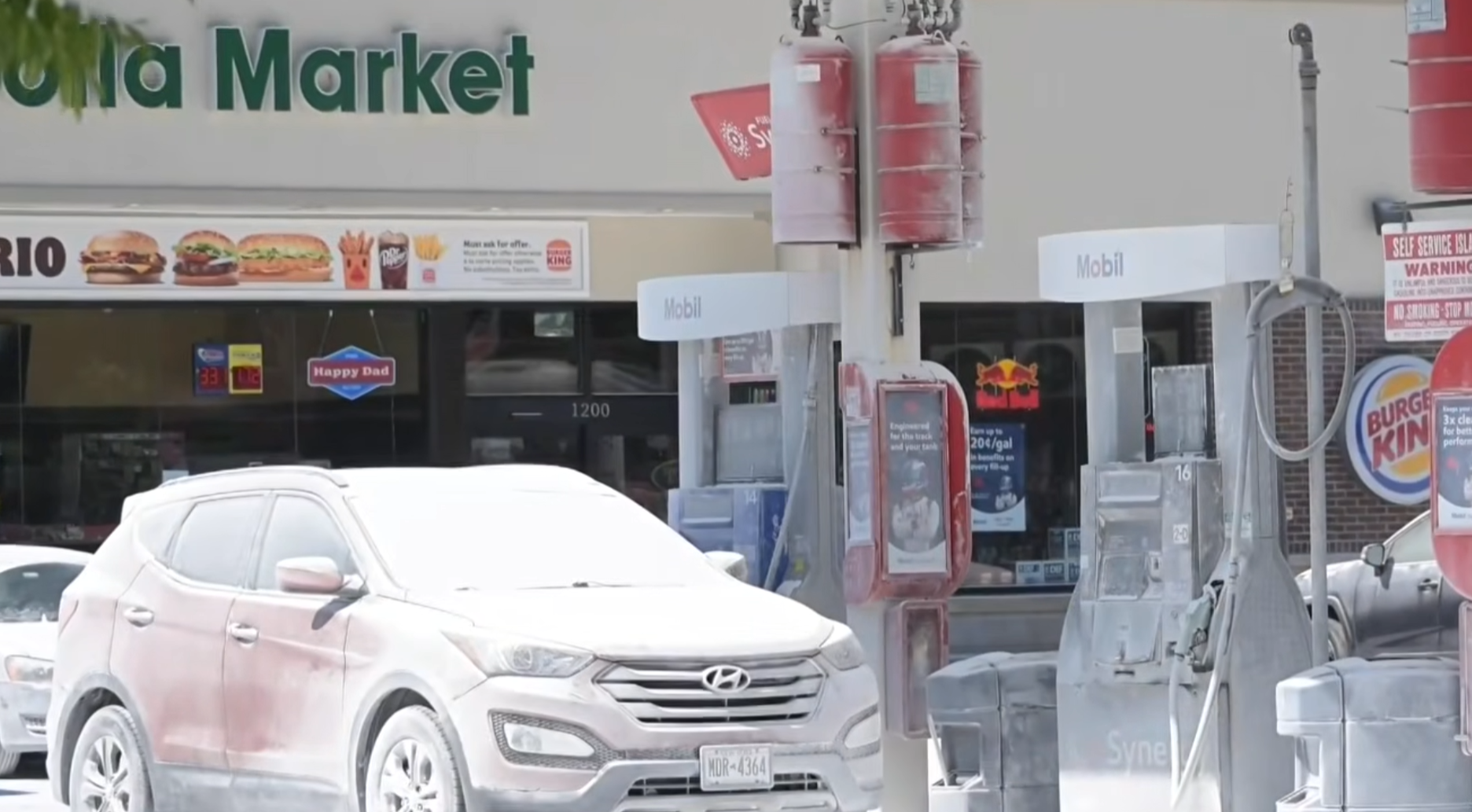
A routine stop for fuel turned into a scene few drivers could have imagined when an accidental activation of a gas station fire suppression system contributed to a chain-reaction crash involving five vehicles in New Hampshire.
The incident occurred in Loudon, where a fire suppression system at a gas station unexpectedly discharged, sending a cloud of extinguishing material into the area around the pumps and nearby roadway. Authorities said five vehicles ultimately became involved in crashes after the system was triggered.
For car enthusiasts, the story stands out because it highlights one of those rare situations where the hazard is not a distracted driver, poor weather, or mechanical failure. Instead, it was safety equipment designed to prevent a disaster that appears to have created an entirely different challenge for motorists.
While modern vehicles are packed with advanced driver assistance systems, even the best technology can struggle when visibility suddenly disappears or road conditions change without warning. A cloud of fire suppression powder is not something most drivers ever expect to encounter during a normal trip to the gas station.
How a Safety System Can Create Problems
Fire suppression systems at fuel stations are designed to react quickly when a fire threatens pumps, vehicles, or customers. These systems typically release a dry chemical agent intended to smother flames before they can spread. Similar accidental discharges at gas stations in other states have coated vehicles, fuel islands, and surrounding areas in a thick layer of powder.
The systems are a critical layer of protection because fuel station fires can escalate rapidly. However, when activated unintentionally, they can create an environment that resembles a sudden snowstorm or dust cloud, reducing visibility for drivers and potentially making surfaces more difficult to navigate.
Five Vehicles Involved
According to reports, five vehicles were involved after the suppression system discharged in Loudon. Authorities responded to the scene and worked to manage the aftermath of the unusual incident. Initial reports indicated the system was activated accidentally.
The event quickly drew attention because multi-vehicle crashes are usually associated with highway congestion, weather events, or driver error. Seeing one connected to a gas station safety system is considerably less common.
That unusual combination is precisely what has made the story resonate with drivers online. Many enthusiasts spend time thinking about vehicle safety, but few consider what might happen if the infrastructure around a vehicle suddenly becomes the source of a hazard.
Why Incidents Like This Are So Rare
Fuel stations across the country rely on suppression systems that undergo inspections and testing because of the potentially severe consequences of fuel fires. Accidental activations do happen from time to time, but incidents resulting in multiple vehicle crashes are far less common.
When these systems deploy, they are doing exactly what they were designed to do: rapidly flood an area with fire-extinguishing material. The challenge is that drivers caught nearby may suddenly find themselves dealing with dramatically different conditions than they experienced moments earlier.
A Reminder That Unexpected Hazards Exist
For experienced drivers, the Loudon incident serves as a reminder that unusual hazards can emerge from places nobody expects.
Most motorists prepare for rain, snow, traffic, or even mechanical trouble. Few expect a gas station’s emergency fire equipment to become part of the driving environment.
Fortunately, incidents like this remain uncommon. Still, the Loudon crash illustrates how quickly conditions can change and how even systems designed to improve safety can sometimes create unexpected consequences when something goes wrong. For many car enthusiasts, that unusual twist is exactly what makes this story so memorable.