
Remember when electric trucks were supposed to revolutionize American roads? Well, the reality has turned out to be more complicated than anyone imagined.
The Ford F-150 Lightning has seen sales decline by nearly 15% recently, with only 2,199 units sold in March 2025, and it’s not alone in its struggles. While automakers bet billions on battery-powered pickups, American truck buyers are proving harder to convince than anticipated. The disconnect between manufacturer expectations and consumer behavior has created a fascinating — and expensive — lesson in understanding what truck owners actually want.
It’s not that electric trucks are bad vehicles; they’re just facing an uphill battle against decades of diesel-powered tradition, real-world range concerns, and price tags that make your wallet weep.
The Lightning Strike That Never Came
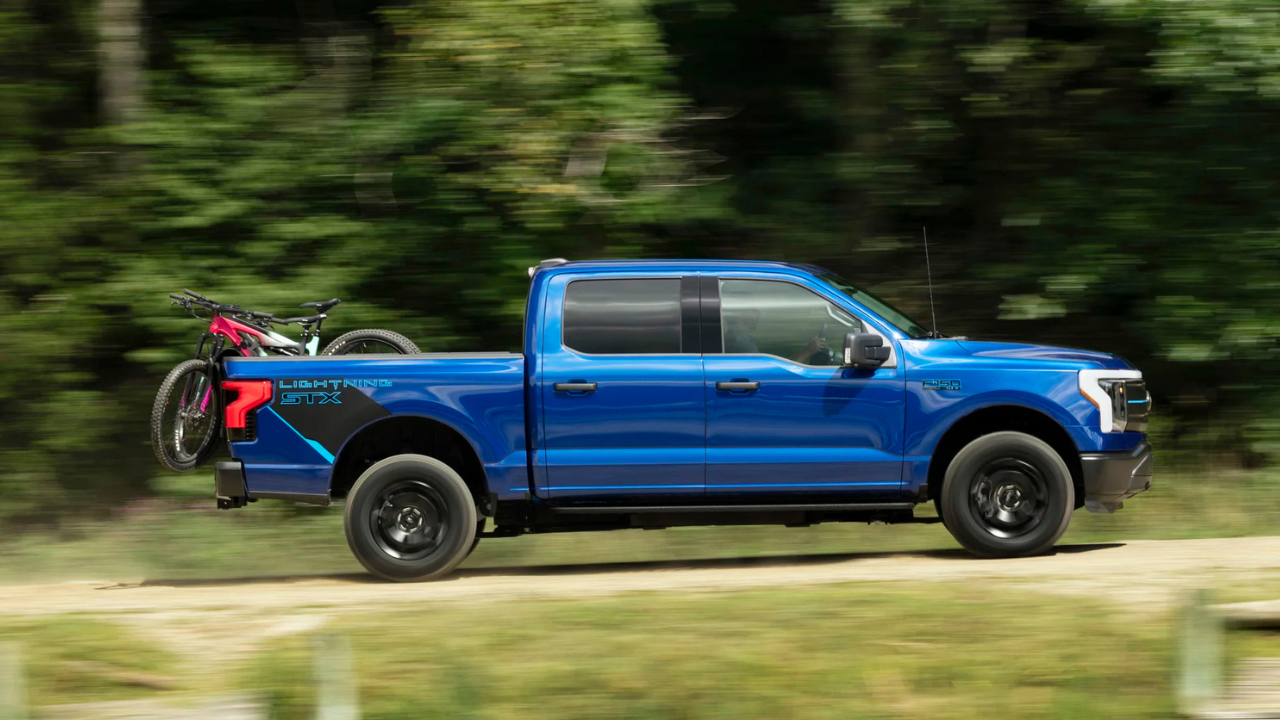
Ford really thought they had lightning in a bottle with the F-150 Lightning. At one point, Ford hoped to be selling upwards of 150,000 Lightnings per year, then production targets collapsed.
The rumor mill is churning with whispers that Ford might even axe the Lightning altogether, though the company hasn’t confirmed anything official. What’s clear is that the electric F-150 isn’t doing anywhere near as well as its gas-guzzling sibling — not even close. Ford cut Lightning production at its Rouge Electric Vehicle Center, citing slower-than-expected demand. For a truck that was supposed to be America’s electric revolution on wheels, the Lightning has turned into more of a distant thunderclap.
It’s a tough pill to swallow for Ford, especially after all the marketing muscle they put behind it.
Price Tags That Sting Worse Than Gas Prices

Let’s talk money, because that’s where the rubber meets the road for most buyers. The Ford Lightning XLT with the 300-mile-range option starts at $72,474, compared to a similar gas F-150 XLT with the 2.7-liter EcoBoost starting at $51,700 — a staggering difference of $20,774.
Even with federal tax credits (which are now discontinued, womp), that’s a significant chunk of change. Most truck buyers are practical folks who use calculators, and the math just doesn’t work out in favor of electrons over gasoline right now. Sure, you’ll save money on fuel over time, but when you’re staring at a price difference that could buy a decent used car, it’s hard to pull the trigger.
The value proposition simply isn’t there yet for the average American truck buyer who wants utility first and environmental bragging rights second.
Towing Troubles and Range Reality

Here’s where things get really dicey for electric trucks. Consumer Reports testing found the F-150 Lightning achieved a theoretical maximum range of only 91 miles when towing — less than a third of its EPA rating.
When you’re hauling a boat to the lake or pulling a camper cross-country, losing half your range or more is a legitimate deal-breaker. Rivian acknowledges that owners should expect range to drop by 50% when towing the maximum capacity of 11,000 pounds in its R1T truck. Traditional truck owners are used to watching their fuel economy tank when towing, but at least they can pull into any gas station and fill up in five minutes.
With an electric truck, you’re hunting for chargers, hoping they work, and waiting around while your family gets restless — all while that trailer is blocking charging spots designed for cars.
The Cybertruck Factor

Tesla’s Cybertruck became the top-selling electric pickup truck in the U.S. with an estimated 39,000 units sold in 2024, according to Cox Automotive. Love it or hate it, the stainless steel triangle on wheels proved that radical design can move units — at least for a while.
In Q1 2025, the Cybertruck held a 42 percent segment share, while the F-150 Lightning earned 34 percent. The Cybertruck’s success showed that Tesla’s brand power and cult following can overcome traditional truck buyer skepticism, at least temporarily. Unfortunately, Tesla’s sales are not meeting expectations and some Cybertruck trims were discontinued after a year.
The Cybertruck proved electric trucks can generate buzz and move decent volumes, but it hasn’t exactly converted the masses either.
Competition Is Getting Fierce

The electric truck market is more crowded than a Walmart parking lot on Black Friday. The GMC Hummer EV, Chevy Silverado EV, and GMC Sierra EV combined for 3,632 sales in Q1 2025, versus 7,187 units for the Lightning. Then you’ve got Rivian’s R1T trying to carve out its own premium niche, though the R1T has experienced big year-to-date sales declines in 2025.
Every manufacturer is fighting for a slice of a pie that’s smaller than anyone expected. The problem is that all these trucks are competing for the same small pool of early adopters willing to take a chance on electric.
Once you satisfy that demand, the next wave of buyers is much harder to convince.
Charging Infrastructure Headaches

Imagine towing your boat 200 miles to your favorite fishing spot, only to realize there’s exactly one charging station along the route — and it’s broken. The lack of DC fast charging stations means you will often not be able to reach the next charging station at all with a trailer in tow.
Even when chargers exist, available charging stations are typically not designed for vehicles towing a trailer. You can’t just pull through like at a gas station; you’ve got to unhitch, charge, then hook back up. It’s not the end of the world for daily commuting, but for the weekend warrior lifestyle that defines truck culture, it’s a massive hassle.
The infrastructure simply hasn’t caught up with the ambitions of electric truck manufacturers.
Ford’s $30,000 Game Plan

But wait — there’s hope on the horizon! Ford announced its new Universal EV Platform will enable a family of affordable vehicles to be produced at scale, with the first being a midsize four-door electric pickup with a targeted starting price of about $30,000, assembled at Louisville Assembly Plant and reaching customers in 2027.
Now we’re talking!
The truck will be as quick as a Mustang EcoBoost and will have more passenger volume than a 2025 Toyota RAV4 — along with a truck bed and frunk. If Ford can actually deliver on that $30,000 price point without stripping out all the good stuff, they might finally crack the code.
The key word here is “if” — we’ve heard ambitious pricing promises before that evaporated once production started.
The Universal Platform Revolution

Ford’s Universal EV Platform reduces components by 20%, fasteners by 25%, and dock-to-dock workstations in an assembly plant by 40% compared to typical models. This is Ford fundamentally rethinking how to build electric trucks from the ground up.
The platform combines Ford’s industrial know-how with a start-up mentality, creating the new Ford Universal EV Production System that radically simplifies vehicle assembly. By using lithium-iron-phosphate batteries and massive cost reduction through manufacturing innovation, Ford is betting they can build electric trucks that Americans can actually afford.
The real question is whether they can execute this vision without compromising quality or pushing the timeline back another two years.
What Truck Buyers Actually Want

Let’s get real about what American truck owners need. They want something that can haul plywood from Home Depot without drama, tow a camper without range anxiety, and not cost more than their first house.
Truck owners use their vehicles for off-road weekend trips, taking road trips, tailgating at football games, and towing things, which is fundamentally different from sedan owners. Electric trucks can deliver incredible torque, silent operation, and quick acceleration, but those features don’t mean much if the truck can’t complete basic truck duties without constant charging stops.
The manufacturers who figure out how to deliver 400+ miles of real-world range while towing at a reasonable price will win this market.
Until then, electric trucks remain a tough sell for traditional truck buyers.
The Payload Problem

Here’s an issue that doesn’t get enough attention: while the maximum payload for a Ford F-150 is 2,440 pounds, the F-150 Lightning with the extended range battery has a 1,900-pound payload limit.
Those massive battery packs weigh a ton (sometimes literally), which eats into how much weight the truck can legally carry. For contractors hauling tools and materials, that reduced payload capacity is a non-starter. You’re basically giving up capability to go electric, which defeats the purpose of buying a truck in the first place.
Until battery technology gets lighter or truck frames get stronger without adding more weight, this will remain a fundamental limitation. It’s physics, and even the best marketing can’t change the laws of physics.
Cold Weather and Real-World Range

If you live anywhere north of the Mason-Dixon line, you know winter is when EVs show their true colors — and it’s not always pretty. At temperatures below freezing, EV batteries take longer to charge and may lose a significant portion of their capacity, and using heating systems within the vehicle consumes more power, further draining the battery.
So that 300-mile range estimate? Try 200 miles in January in Minnesota. Traditional trucks might get worse fuel economy in winter too, but you’re never more than five minutes from a warm cab and a full tank. With electric trucks, you’re planning your route around charger locations and hoping the temperature doesn’t drop another ten degrees.
It’s not insurmountable, but it’s yet another friction point that makes potential buyers hesitate.
The Maintenance Advantage Nobody Talks About

Here’s where electric trucks actually shine: Ford recommends service every 10,000 miles for basic inspections of brakes, steering linkage, and cooling system, with the first major maintenance interval for either the Mach-E or F-150 Lightning not until 200,000 miles.
No oil changes, no transmission fluid, no spark plugs — just rotate the tires and check the brakes. For fleet operators and business owners, this is a massive cost savings over the vehicle’s lifetime. The problem is that most buyers focus on the upfront price tag rather than total cost of ownership. If Ford and other manufacturers can better communicate these long-term savings, they might sway some skeptics.
It’s a legitimately compelling advantage that gets overshadowed by range anxiety and towing concerns.
Conclusion: The Road Ahead

Electric trucks aren’t failing because they’re bad vehicles — they’re struggling because they’re asking American truck buyers to change everything about how they use trucks.
The technology is improving, prices are slowly coming down, and Ford’s upcoming $30,000 electric truck shows that manufacturers are listening to consumer feedback. The Cybertruck’s introduction of a long-range rear-wheel-drive model priced at $70,000 struggling with the truck market shows that affordability is becoming a bigger focus across the industry.
But let’s be honest: until electric trucks can match the convenience, capability, and value proposition of their gas counterparts, they’ll remain a niche product. The revolution hasn’t been cancelled — it’s just been postponed until the technology, infrastructure, and pricing all line up. And when that happens, American roads might finally be ready for the electric truck takeover.
Until then, traditional truck buyers will keep pumping gas and waiting for electric trucks to prove they can handle real truck duties without compromise