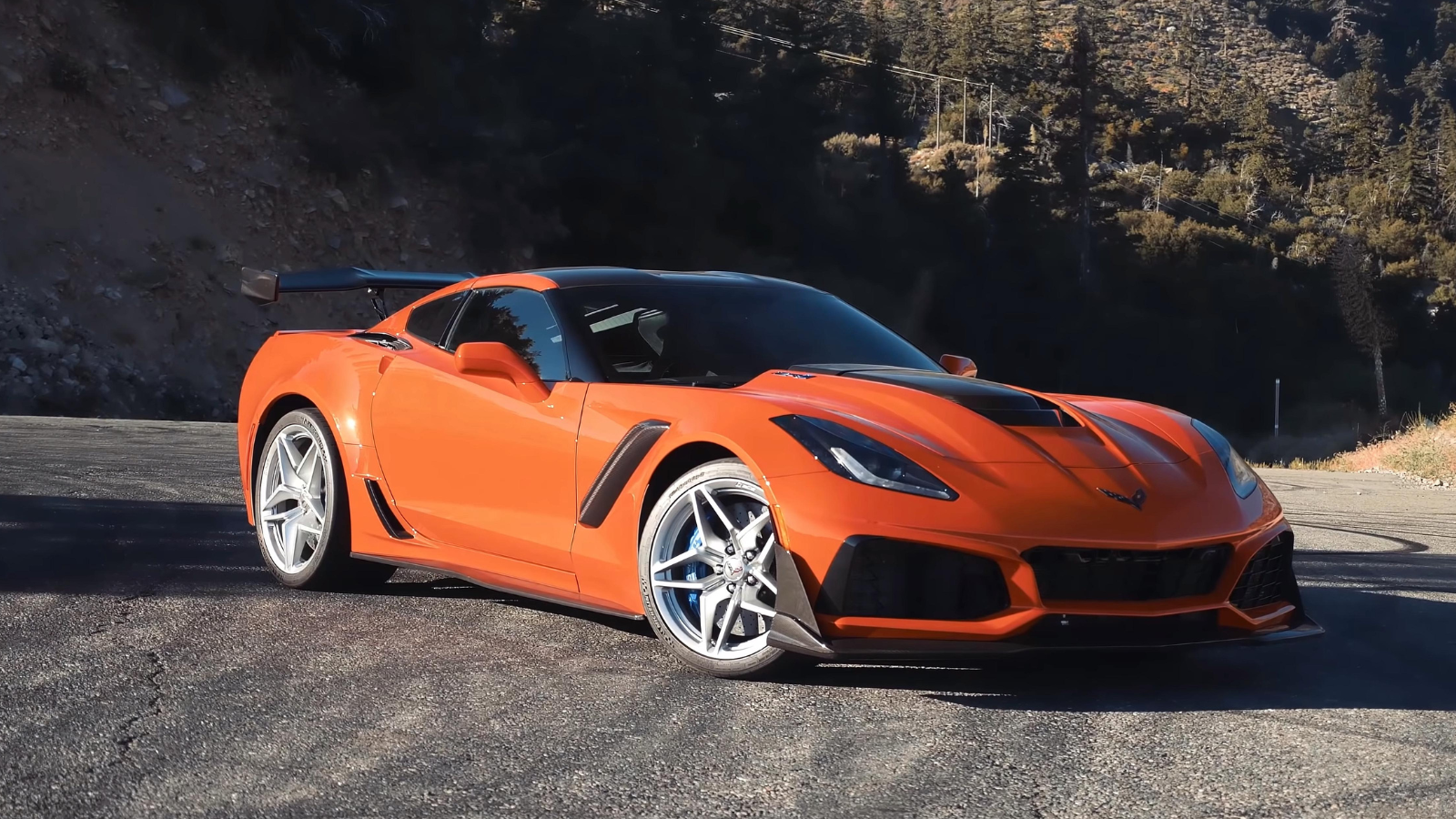
A New Jersey driver has been convicted of death by auto after prosecutors said his Corvette reached 119 mph seconds before a deadly crash that split another car in half.
Gabriel H. Woolson, 26, of Williamstown, was found guilty Tuesday in connection with the December 14, 2022, crash that killed 52-year-old Evan Silverstein of Marlton. The Gloucester County Prosecutor’s Office said Woolson was driving a 2011 Chevrolet Corvette ZR1 on South Black Horse Pike in Monroe Township when the collision occurred around 5:40 p.m.
According to investigators, Woolson’s Corvette was traveling 119 mph about three seconds before impact. Prosecutors said he did not apply the brakes until roughly one second before the crash.
Silverstein was driving a Honda Accord and was making a left turn across the westbound lanes when the Corvette struck his vehicle. The impact split the Accord into two pieces, sending the front half more than 100 feet into the parking lot of a nearby strip mall. Silverstein was ejected from the vehicle and died at the scene. A passenger in Woolson’s Corvette was also injured.
A jury found Woolson guilty of second-degree death by auto. Judge Russell DePersia also found him guilty of reckless driving and speeding, while finding him not guilty of assault by auto related to the passenger’s injuries. Woolson is scheduled to be sentenced on August 21 and faces up to 10 years in state prison on the death by auto conviction.
A Corvette ZR1 on a Public Road
The car involved in the crash was not an ordinary commuter vehicle. The 2011 Chevrolet Corvette ZR1 was one of the most powerful production Corvettes of its era, equipped with a supercharged 6.2-liter V8 rated at 638 horsepower.
That kind of performance is part of what makes the ZR1 appealing to enthusiasts. It is also exactly why the facts in this case stood out at trial. Prosecutors did not argue simply that Woolson was driving a fast car. They argued that he was driving at an extreme speed on a public road in the moments before a fatal crash.
At 119 mph, a vehicle is covering roughly 175 feet per second. Investigators said Woolson was still traveling at that speed three seconds before impact and did not begin braking until about one second before the collision.
What Prosecutors Presented at Trial
During the trial, prosecutors presented testimony from an eyewitness and multiple expert witnesses. The evidence focused on the Corvette’s speed, the timing of the braking, and the violent force of the impact.
The jury convicted Woolson of the death by auto charge. However, he was found not guilty of assault by auto for the injuries suffered by his passenger, showing that the jury and judge did not simply accept every charge tied to the crash.
The conviction means the court found Woolson criminally responsible for Silverstein’s death. Sentencing will determine the punishment.
Why the Case Stands Out
Fatal crashes involving left turns can quickly lead to arguments over who had the right of way, who should have seen whom, and whether a collision could have been avoided. This case stood out because prosecutors pointed to the Corvette’s speed in the final seconds before impact.
The facts presented at trial showed that a car was traveling at nearly 120 mph on South Black Horse Pike just before the crash. Investigators also said the brakes were not applied until roughly one second before impact.
Those details help explain why the case moved beyond a tragic crash and became a criminal prosecution.
Lessons Learned
High-performance cars are capable of incredible speed, but public roads leave little room for the kind of mistake that can happen in seconds and change families forever.
The Corvette’s capabilities were not on trial. Woolson’s driving was. A jury has now found that his conduct rose to the level of death by auto, and he will return to court in August to learn his sentence.