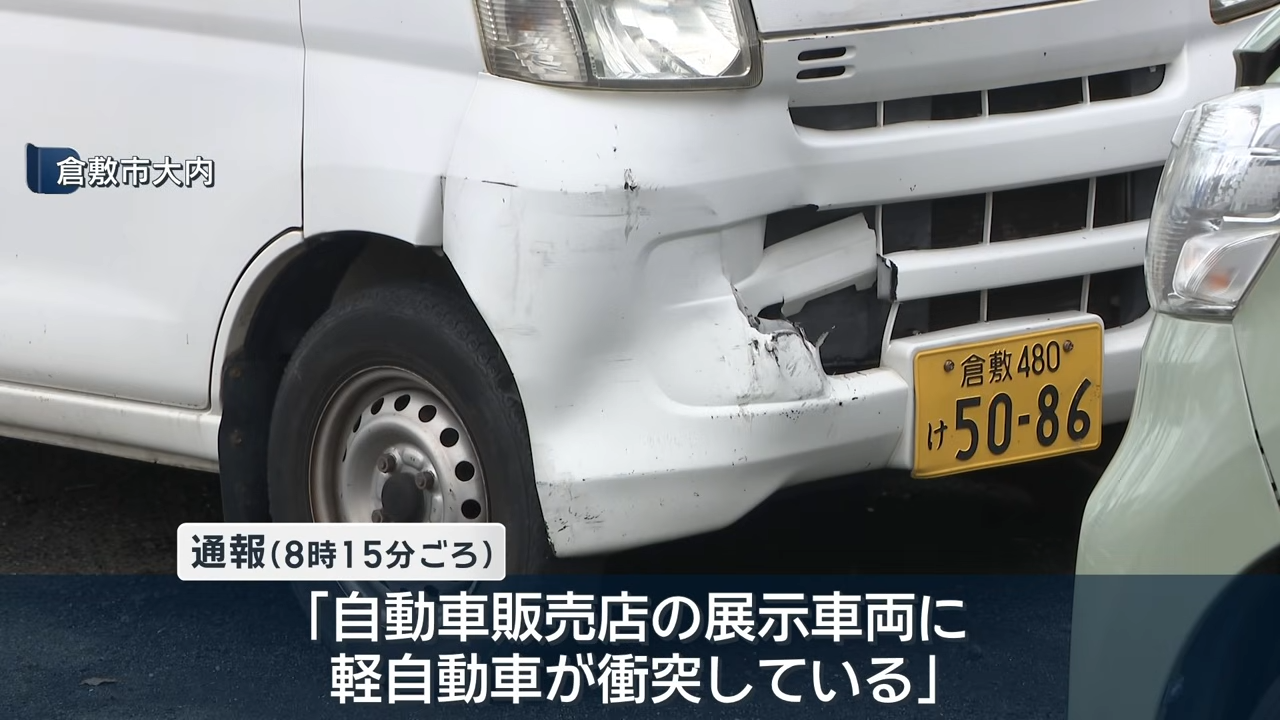
A fatal medical emergency behind the wheel of a kei car in Japan led to a crash at a dealership lot earlier this week, highlighting a risk that exists regardless of vehicle size or country.
The incident happened on June 3 in Okayama Prefecture, Japan, where police say an unidentified male driver suffered a medical episode while operating a kei car, a uniquely Japanese category of small vehicle that has recently attracted attention in the United States.
The driver lost control of the vehicle and crashed into a display car at a dealership in Kurashiki City around 8:15 a.m. Authorities later determined the driver’s cause of death was illness, meaning the vehicle was effectively unguided once the medical event began.
No other injuries were reported, a fortunate outcome considering the crash occurred during morning business hours when dealership employees and customers could have been nearby.
What Is a Kei Car?
For readers unfamiliar with the Japanese domestic market, kei cars are a very specific, heavily regulated category of vehicle. To qualify, a vehicle must have an engine no larger than 660cc, measure no more than 3.4 meters in length, and remain within strict width and weight limits. In exchange, owners receive tax, insurance, and registration advantages that make these tiny vehicles especially popular in Japan’s crowded cities and rural communities.
While kei cars have existed in Japan for decades, they have recently gained increased attention in the United States. Thousands of older kei cars and kei trucks have been imported under the federal 25-year import rule, which allows vehicles that are at least 25 years old to be brought into the country without meeting modern U.S. safety and emissions standards. Small Japanese trucks from manufacturers such as Suzuki, Honda, Daihatsu, and Subaru have developed a loyal following among collectors, farmers, and enthusiasts.
Interest in the vehicles grew even further after President Trump said he would like to see kei cars manufactured and sold in the United States. As Car and Driver recently pointed out, the idea sounds fun to enthusiasts, but there are significant regulatory, safety, manufacturing, and market hurdles that must be overcome before modern kei vehicles can be widely sold here.
The category dates back to Japan’s postwar recovery period, when the country needed affordable personal transportation that wouldn’t overwhelm a developing road network. Manufacturers spent decades refining the formula, turning these compact vehicles into surprisingly capable daily drivers. Today, kei vehicles account for a substantial share of Japan’s passenger vehicle market.
In an incident like this one, the vehicle’s size is less relevant than the fact that any car in motion with an incapacitated driver is capable of causing serious damage. That the outcome here was limited to property loss and the driver’s own medical fatality reflects more luck and timing than anything else.
Medical Events Behind the Wheel Are a Real Road Risk
Sudden incapacitation while driving, whether from a cardiac event, stroke, seizure, or loss of consciousness from another cause, is a genuine road safety concern that rarely gets the same attention as impairment from alcohol or distraction. These incidents account for only a small percentage of serious crashes, but when they happen, there may be little or no time for the driver to react.
The challenge is that many of these events are unforeseeable. A driver may have no prior diagnosis, no warning symptoms, and no history that would have flagged them as a risk. Others occur in drivers with known conditions who are otherwise cleared to operate a vehicle. Neither scenario is easy to regulate without placing unreasonable restrictions on mobility.
That appears to be what made this crash so difficult to avoid. Once the medical episode began, the kei car was no longer under meaningful control. At that point, the vehicle’s path depended less on the driver and more on speed, road position, obstacles, and timing.
Dealership Lots Are More Vulnerable Than They Look
From a vehicle placement standpoint, a car dealership fronting a prefectural road is about as exposed as commercial property gets. Display vehicles are typically positioned for maximum visibility, which means they often sit close to the road with minimal physical barriers between moving traffic and parked inventory.
Unlike a building facade, which at least presents structural resistance, a showroom-condition vehicle on an open lot is not going anywhere fast when something hits it. Dealerships in high-traffic areas occasionally lose display inventory to runaway vehicles, distracted drivers cutting corners too tightly, or low-speed parking-lot mishaps that still cause disproportionate damage to a car that was supposed to be sold at full value.
Whether this incident prompts any reconsideration of how that particular lot is configured remains to be seen. Since no other injuries were reported and police determined the driver’s death was caused by illness, the aftermath will likely center on the investigation, insurance process, and repair or replacement of the damaged inventory.
Police Are Still Piecing Together the Timeline
Kurashiki City police have not closed the case despite the cause of death being confirmed. Determining the precise sequence of events, including when the medical episode began relative to the vehicle leaving the roadway, how fast the car was traveling, and whether any evasive action was taken before the driver lost control, is standard procedure in a fatality investigation regardless of fault.
Dashcam footage from nearby vehicles or dealership security cameras, if available, could help investigators understand exactly how the crash unfolded. Japan has widespread use of dashcams in private passenger vehicles, and dealership lots often have cameras facing the inventory and entrances.
Whether that footage exists and is useful here will likely factor into how quickly the investigation concludes. For now, the crash appears to be a tragic medical emergency that turned a routine morning drive in Japan into a fatal dealership lot collision.