Ever wonder how Japan managed to create some of the most efficient, practical cars on the planet while working within strict government size limits?
The answer lies in kei cars: Japan’s miniature automotive marvels that have quietly influenced car design around the world.
What Exactly Is a Kei Car?

A kei car (short for “keijidōsha,” meaning light automobile) is Japan’s answer to urban mobility in a space-constrained society. These pint-sized vehicles must meet specific regulations: no longer than 11.2 feet, no wider than 4.9 feet, no taller than 6.6 feet, and equipped with engines under 660cc, as outlined by MotorTrend.
In exchange for staying within these dimensions, owners enjoy reduced taxes, cheaper insurance, and the ability to park in smaller spaces. Think of them as Japan’s automotive haiku: maximizing impact within rigid constraints.
Honda N-Box (2011-Present)

The N-Box proved that small doesn’t mean boring by becoming Japan’s best-selling car multiple years running. Its tall, boxy design maximizes interior space while clever storage solutions make it surprisingly practical for families.
Honda essentially created a small SUV before anyone knew they wanted one.
Suzuki Jimny (1970-Present)

This tiny off-roader has developed a cult following worldwide for its serious 4WD capabilities packed into a lunch-box-sized frame. The Jimny demonstrates that you don’t need a massive truck to tackle tough terrain.
Its honest, utilitarian design has remained virtually unchanged for decades because, frankly, it got the formula right the first time. In Japan, the Jimny has long been offered in kei-compliant 660cc form, while many export versions use larger engines and don’t qualify as kei cars.
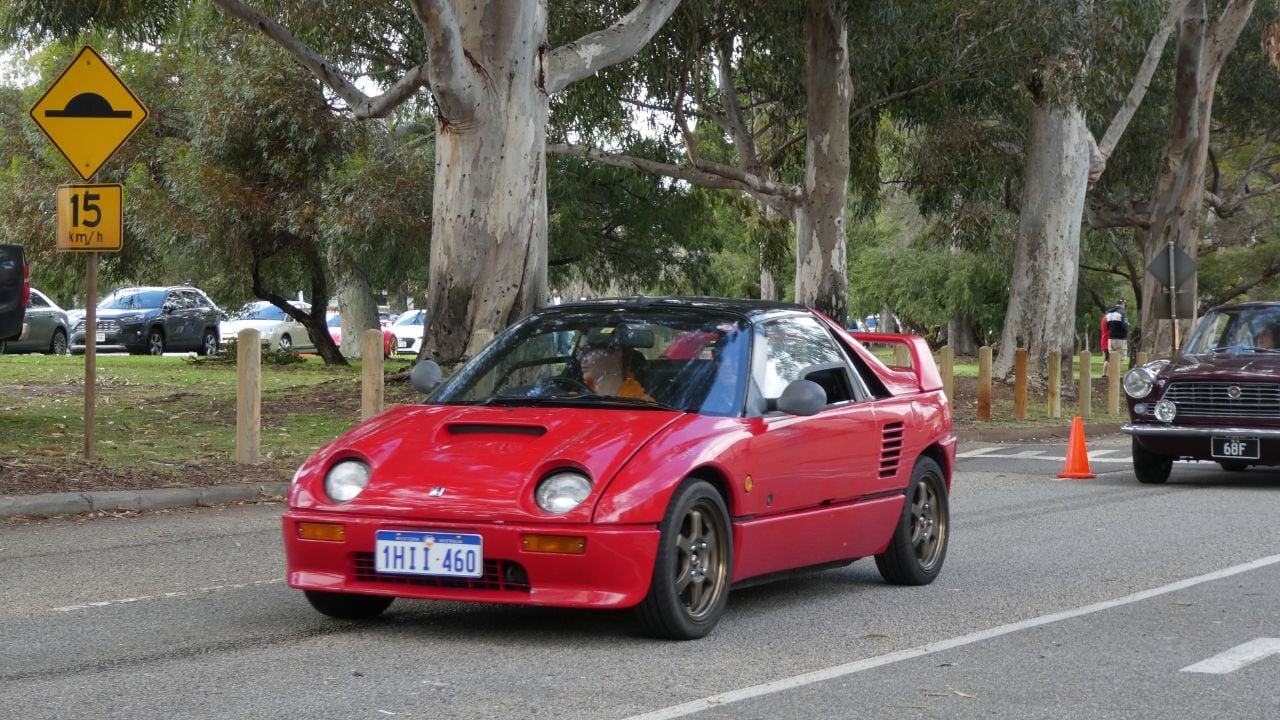
Autozam AZ-1 (1992-1994)

Mazda’s mid-engine, gull-winged sports car proved that kei regulations didn’t preclude serious driving thrills. Though only produced for three years, the AZ-1 showed the world that miniature supercars could exist.
Its influence can be seen in today’s lightweight sports car renaissance, where less weight often trumps more power.
Daihatsu Copen (2002-2012, 2014-Present)

This diminutive convertible brought affordable open-air motoring to the masses in Japan while inspiring a generation of small roadsters globally. The Copen’s retractable hardtop was an engineering marvel in such a tiny package.
It proved that fun doesn’t require a big engine or hefty price tag.
Subaru Sambar (1961-2012)

The rear-engine Sambar van became the backbone of Japanese commerce, delivering everything from mail to fresh fish across the country. Its unique layout and surprising cargo capacity influenced commercial vehicle design worldwide. American companies now offer similar compact work trucks, finally recognizing what Japanese businesses knew decades ago.
Honda Beat (1991-1996)

This mid-engine roadster was Honda’s love letter to pure driving enjoyment, weighing about 1,680 pounds and featuring a screaming 660cc engine. The Beat inspired the lightweight sports car movement that gave us modern classics like the Lotus Elise (which then inspired even more crazy cars).
Sometimes the best way forward is to strip everything away and focus on the fundamentals.
The Ripple Effect

Kei cars have quietly reshaped how we think about urban transportation. Their emphasis on efficiency over excess has influenced everything from European city cars to American urban delivery vehicles. As cities worldwide grapple with congestion and environmental concerns, the kei car’s philosophy of doing more with less feels increasingly relevant. These tiny Japanese creations remind us that sometimes the smallest solutions have the biggest impact.