

Europe’s ongoing push to “rearm” is shifting focus from defense contractors. It is currently spilling into the civilian industrial base, including automakers, as governments confront a mix of geopolitical risk, industrial shortfalls, and economic pressure.
Security is, of course, central to the EU’s rearmament push.
Since the Russian invasion of Ukraine, European governments have reassessed their vulnerability and dependence on external allies.
Defense spending across the EU has surged, rising more than 60 percent between 2020 and 2025, with a clear push to meet or exceed NATO targets. At the same time, policymakers are increasingly concerned about long term reliance on the United States, especially amid uncertainty over future US military support.
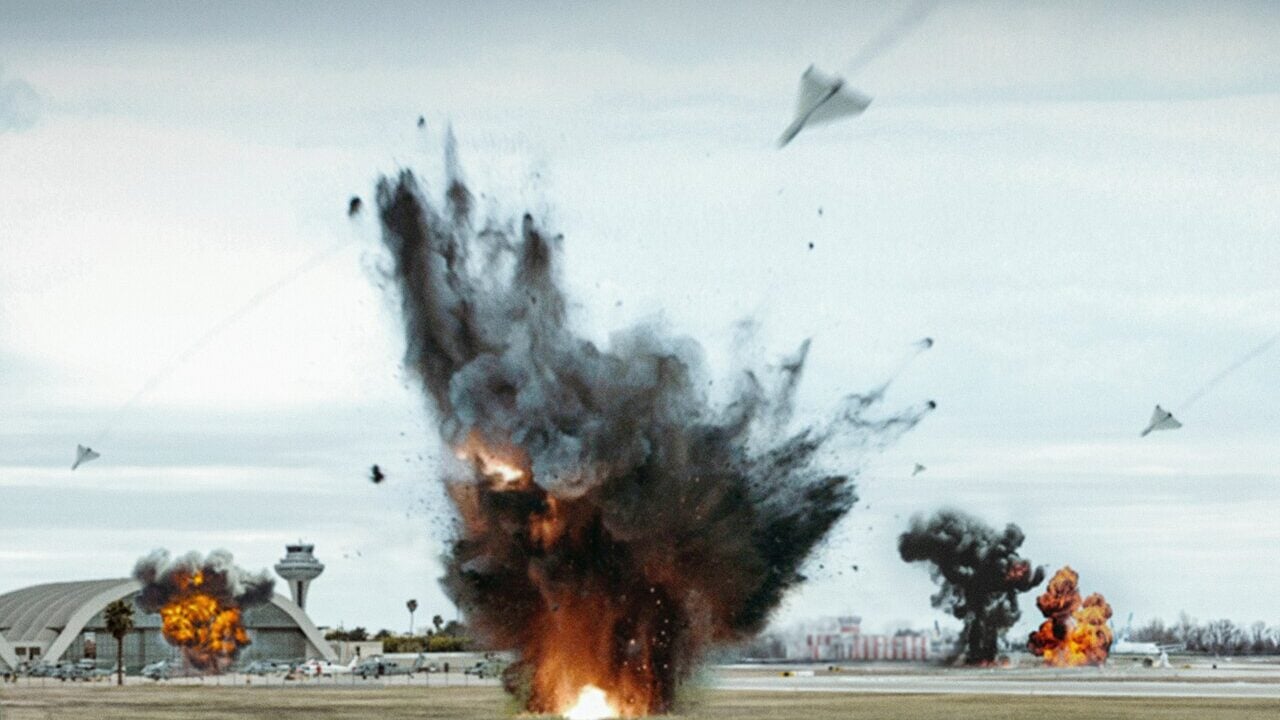
That shift has exposed a problem. Europe’s defense industrial base is not large enough to meet demand.
Decades of underinvestment and deindustrialization left gaps in production capacity for essentials such as artillery shells, armored vehicles, and air defense systems. As a result, governments are now looking beyond traditional arms makers.
This is where automakers enter the picture.
From Car Factories to Ammo Plants
Recent discussions between European Commission President Ursula von der Leyen and NATO Secretary General Mark Rutte focused explicitly on scaling up industrial output for defense, including the possibility of repurposing civilian factories.
Several EU countries are now considering converting automotive plants to produce military equipment such as armored vehicles, drones, and ammunition.

The move is not tied to a single country but reflects a bloc wide trend.
Eastern European nations including Poland, Romania, and Hungary are emerging as key hubs, helped by lower costs and proximity to NATO’s eastern flank. Germany and France are also central players due to their industrial scale and political leadership in EU defense policy.
Governments are Reaching Out to Automakers
How are EU governments reaching out to automotive marques?
At the EU level, it includes large scale policy instruments such as the €800 billion “Readiness 2030” plan, designed to mobilize public and private capital for defense production.
There is also the SAFE program, which provides loans to member states for joint arms procurement, with requirements that most components be produced within Europe.

At the national and industry level, the approach is more informal and exploratory. Governments and defense firms are assessing whether idle or underused car plants can be adapted for military output.
The automotive sector is attractive because it already has advanced manufacturing capabilities, skilled labor, and large-scale production lines.
The types of arms being sought reflect current battlefield realities. High demand items include artillery shells, armored vehicles, military trucks, drones, radar systems, and other equipment needed for both Ukraine support and NATO stockpile replenishment.
The specific automakers are more speculation than confirmed deals.
Companies like Stellantis and other major European carmakers have been mentioned in discussions about potential collaboration, but concrete agreements remain limited.
In fact, the CEO of Italian defense firm Leonardo stated in 2025 that there were no active talks with automakers such as Stellantis to directly produce military equipment, noting that full conversion from cars to tanks would be extremely difficult. However, a lot has changed on the world’s stage since Leonardo’s denial.
A Hybrid Future, not a Full Transformation
That said, partial involvement is more realistic. Automakers could supply components, engineering expertise, or adapt certain production lines rather than build complete weapons systems.

For groups like Ford Europe and Stellantis, the opportunity is tied to broader industry pressures. Europe’s car sector is facing slowing demand, high costs linked to electrification, and underutilized factories.
Defense contracts offer a potential lifeline by keeping plants running and workers employed, even if only portions of operations are redirected.
Still, this is not a wholesale transformation.
Defense executives caution that automotive manufacturing cannot simply switch to producing tanks or missiles without major investment and retraining. The likely outcome is a hybrid model where automakers support defense production at the margins while traditional arms companies expand their core capacity.
In effect, Europe’s rearmament drive is as much an industrial strategy as it is a military one. Governments are trying to rebuild capacity, reduce dependency, and align economic policy with security needs.
Automakers are being pulled into that orbit not because they build weapons today, but because they have the factories, workforce, and scale Europe now finds itself needing.
Sources: Bitget, Wikipedia, The European Conservative, CE Interim