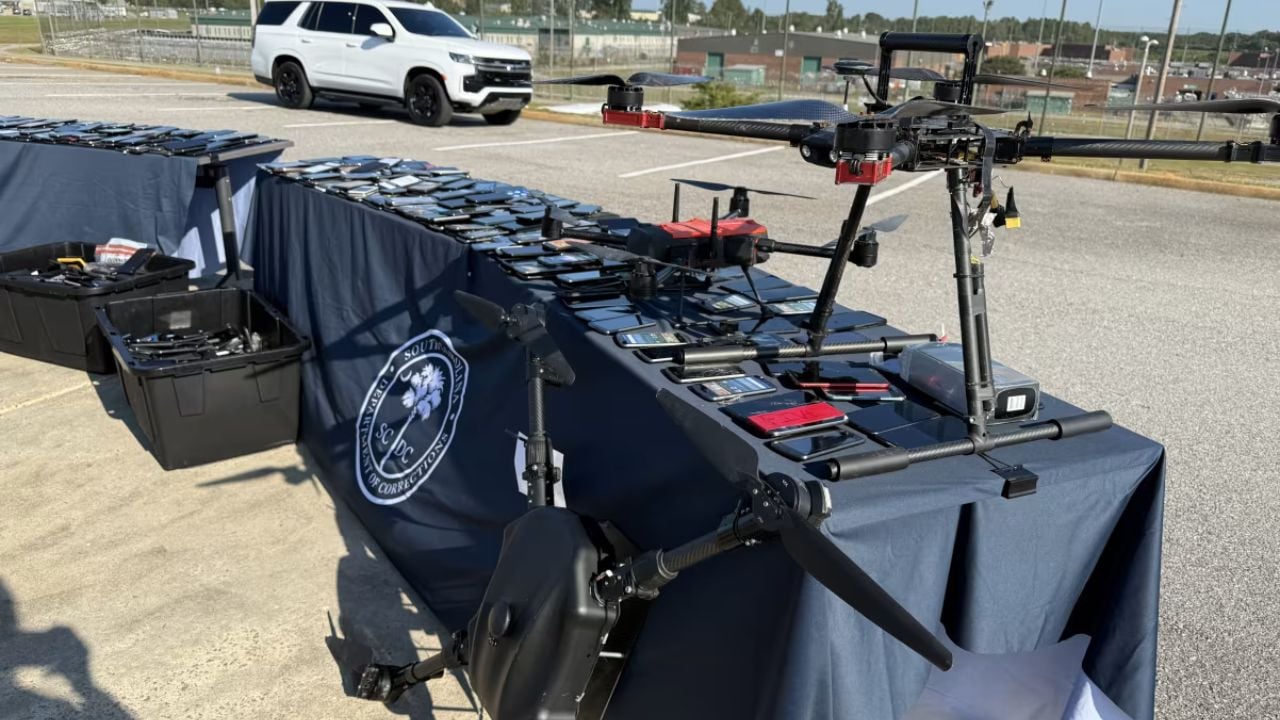

A quiet winter morning inside South Carolina’s Turbeville Correctional Institution was broken by a sound that officers have come to know too well.
Around 3:30 a.m., a faint buzzing cut through the darkness above the prison yard. One officer immediately recognized it as a drone and looked up just in time to see it descend, release a package roughly three feet long, and disappear into the night.
According to reporting by CNN and journalist Taylor Galgano, the officer rushed to intercept the drop before any inmate could reach it.
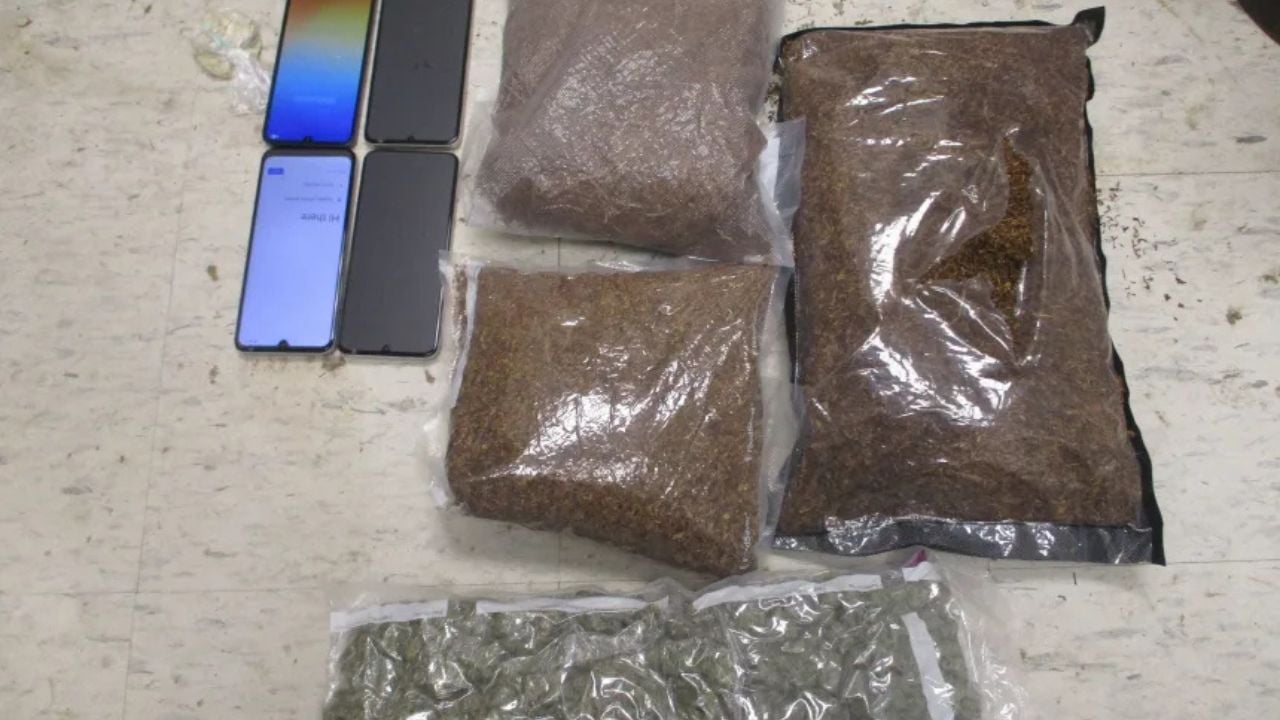
Inside the package was a haul that underscored the scale of the problem. Authorities recovered tobacco, marijuana, ecstasy, and four mobile phones. In the underground prison economy, officials estimated the contents were worth about $165,700.
That single incident reflects a growing pattern playing out across the United States, where drones have become a preferred tool for smuggling contraband into correctional facilities.
A Growing Black Market in the Sky
Contraband in prisons is nothing new, but drones have changed the game.
Instead of relying on throwing items over fences, corrupt insiders, or mail schemes, smugglers can now deliver goods directly into prison yards or even outside cell windows with surprising precision.
Officials say the range of items being delivered is staggering. Drugs, weapons, and phones remain the most common, but more unusual deliveries have also been intercepted.
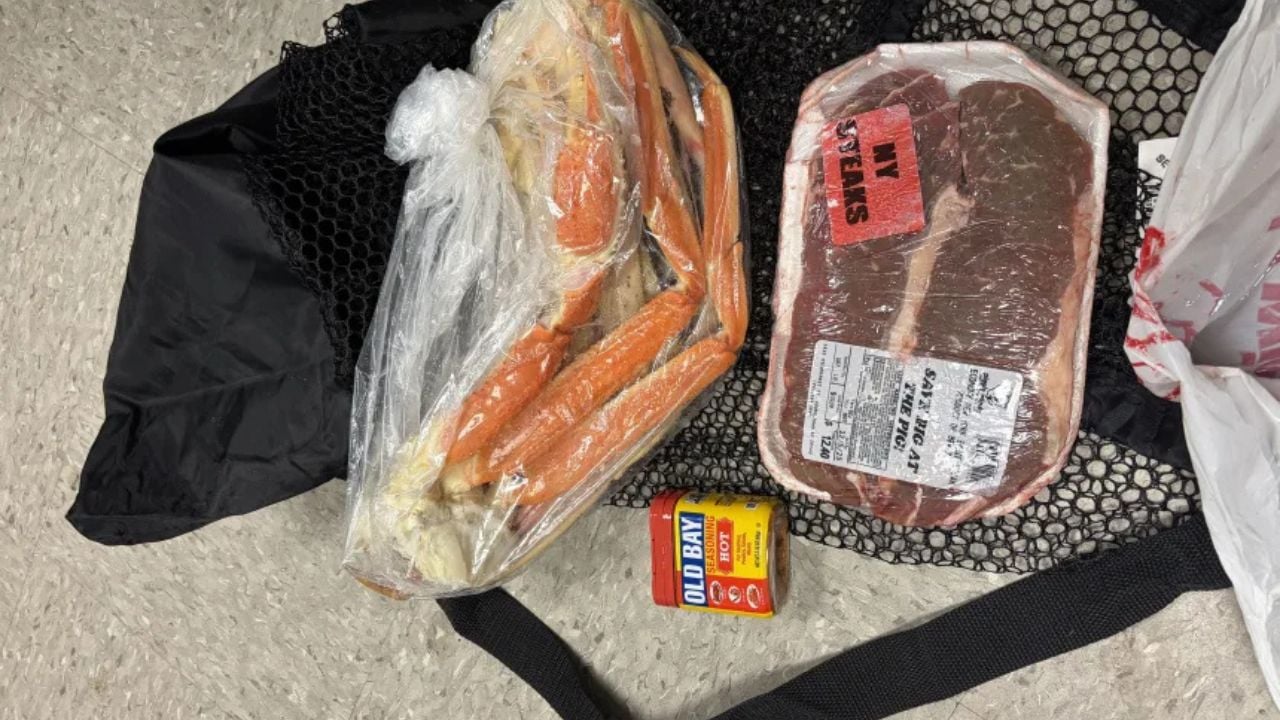
South Carolina authorities reported drones dropping crab legs, steak, cigarettes, and even seasoning during the holidays.
In other cases, items have been cleverly disguised. Officers discovered drugs hidden inside a stuffed toy cat designed to blend in with stray animals on prison grounds. Basketballs and work boots have also been used to conceal narcotics.
The risks tied to these deliveries go far beyond the items themselves.
Security experts warn that control of contraband fuels violence within prisons. Inmates who dominate these illicit supply chains often use intimidation and force to maintain power, creating dangerous conditions for both staff and other inmates.
Organized Networks Behind the Controls
Authorities stress that these drone operations are rarely the work of a lone individual. Instead, they are coordinated efforts involving gangs, former inmates, and outside accomplices.
Many drone pilots are believed to have prior knowledge of prison layouts and internal operations, giving them an advantage when planning drops.
Communication is a massive key to these operations.
Investigators say inmates use illegal cellphones, many of which were likely smuggled in through earlier drone drops, to coordinate delivery times and locations.
Pilots often fly at night, tape over drone lights, and approach from angles that make detection difficult. Some operations even deploy multiple drones at once, using one as a distraction while another completes the delivery.
Law enforcement agencies have begun cracking down.
In Texas, several individuals including correctional officers were arrested in connection with a large-scale drone smuggling operation. In Florida, a man received an 81-year sentence for orchestrating similar activities involving drugs and weapons.
Fighting Back with Technology and Limits
Prison systems are not standing still.
South Carolina has installed tall perimeter nets and deployed advanced detection systems such as Dedrone, which uses radar, video, and radio frequency tracking to identify unauthorized drones and trace their origin points.
Still, these tools have limitations. Drone flights often last only a few minutes, giving pilots enough time to escape before authorities arrive.
Some operators also use modified “dark drones” that avoid detection by disabling tracking features required under federal guidelines.
State officials argue that current laws restrict their ability to respond effectively.
Only certain federal agencies are authorized to disable or intercept drones using measures like signal takeover, nets, or directed energy systems. As a result, 21 state attorneys general have urged federal authorities to expand those powers to local and state corrections agencies.
There are signs of potential progress.
The Federal Communications Commission is exploring rules that could allow state prisons to jam signals from illegal cellphones, which would disrupt coordination between inmates and drone operators.
For now, officers on the ground continue a nightly battle.
In South Carolina, specialized teams track, intercept, and investigate each drop, often working in shifts with little rest. The challenge is relentless, and as technology evolves, so do the tactics of those determined to exploit it.
Sources: CNN