
This isn’t about your buddy’s Civic with a comically massive wing or the LS swap Miata you follow on YouTube. We’re talking about the good old days, when cars were fast, wild, and unapologetically mechanical. Back when manufacturers didn’t just slap a “Sport” badge on a family sedan, give it 10 extra horsepower compared to the base model, and call it a day — they had to prove their mettle where it really counted: on the racetrack.
That is where homologation specials came screaming into existence. Built in small, often obscure batches purely to satisfy draconian racing rulebooks, these cars were purebred, unadulterated machines disguised (barely) as road-legal oddities. These weren’t just sports cars you could drive to the office. These cars demanded to be driven how they deserved — hard, fast, and probably with a smile you can’t wipe off your face.
“Street-Legal, Race-Bred, and Worth the Hype”

So, what even is a homologation car? That peculiar term itself — homologation — means to “approve.” To put it simply, carmakers are often required to make a street-legal, limited-production version of their race cars built specifically for competitions. This includes Group A touring cars, Group B rallying, and Le Mans GT. These kinda competitions wouldn’t let carmakers go nuts and build a wild supercar — requiring them to also make a street-legal version ensured that the cars being entered in these races, well, existed.
Each entry had to meet a few core expectations: it had to be produced in sufficient numbers (or in limited runs that were still offered to the public), derived directly from motorsport ambitions, and carry a distinct identity that separated it from the standard production line. In other words, it wasn’t enough for a car to be fast — it had to be built because of racing, not just for marketing. Preference was given to vehicles that marked significant moments in motorsport history or shaped enthusiast culture in memorable ways.
While modern interpretations and spiritual successors (like recent hot hatches or supercars) were considered, they were set aside in favor of the raw, regulation-bending machines from the golden era of homologation: the 1970s through early 2000s. Ultimately, this is not a definitive ranking, but rather a curated drive down the twisted, turbocharged memory lane of homologation greatness.
Lancia Stratos HF
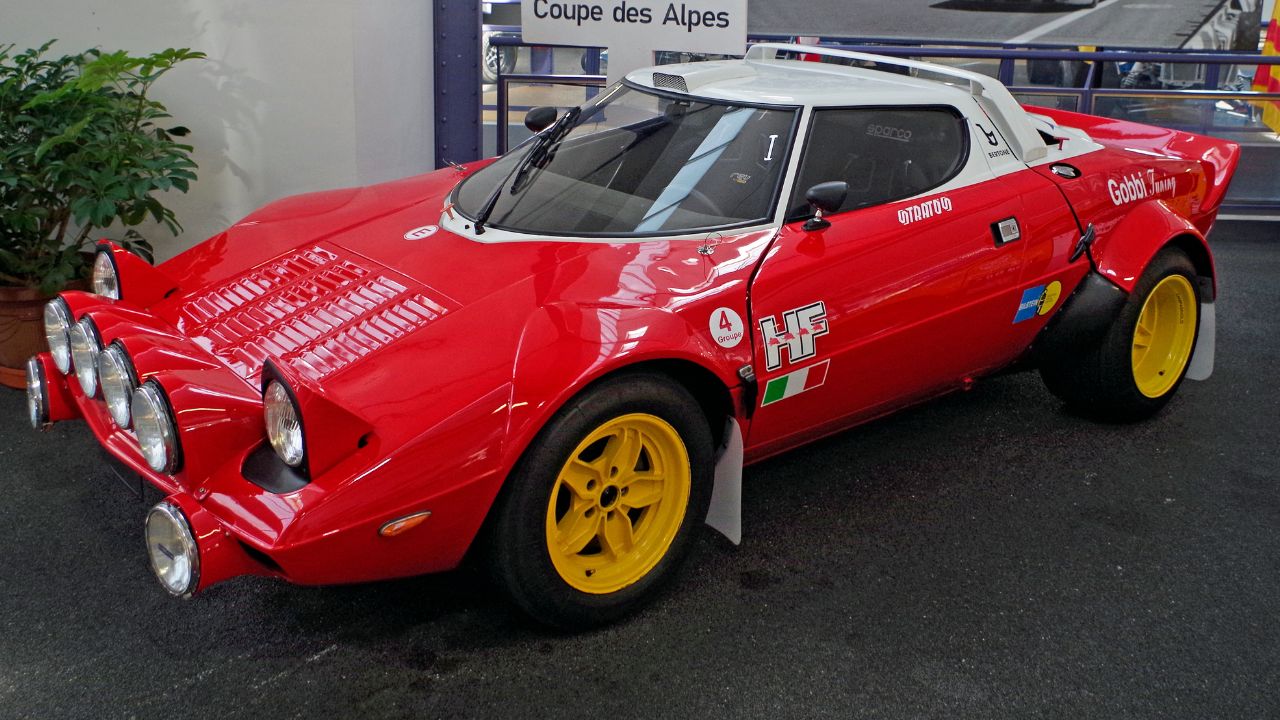
The Lancia Stratos HF didn’t just break the mold; it launched it into orbit, then blew it up. Designed explicitly for rallying with zero compromises, this wedge-shaped Italian weapon, penned by the legendary Bertone, was compact, loud, and lethal. With a screaming Ferrari Dino V6 (the 2.4-liter version putting out 190 hp in road trim, but significantly more in rally spec) tucked mid-ship, the Stratos screamed its intentions with every rev. Its wheelbase was so absurdly short (85.8 inches / 2,180 mm) that it could practically U-turn in a phone booth, or more accurately, around a single tree on a rally stage.
Drivers called it twitchy, unpredictable, and a handful, but those who mastered it found it unstoppable. On rally stages, it darted between trees like a highly caffeinated mosquito with a vendetta. It wasn’t made for comfort (good luck fitting your groceries in there), it was made to win, and win it did. A staggering three World Rally Championships (1974, 1975, 1976) say enough.
Only about 492 units were built for homologation, making each one a priceless, fire-breathing unicorn. If you’ve never seen a Stratos in full flight, you’ve missed out on automotive ballet.
BMW M3 (E30)

This, my friends, is where the legend began. The E30 M3, launched in 1986, delivered far more than straight-line speed; it offered the precision of a surgical instrument crafted for the racetrack. Built to conquer Group A touring car championships (especially DTM), BMW engineered specific body panels (flared arches, revised C-pillar, different trunk lid) for aerodynamics, not just aesthetics. Its high-revving, naturally aspirated S14 2.3-liter four-cylinder engine (starting at 192 hp in early models, climbing to 235 hp in the rarer Sport Evolution) redefined what a performance coupe could be. It looked boxy but moved like a featherweight fighter, carving corners with razor-sharp handling and telepathic steering.
Owners loved its incredible balance and poise on twisty roads and tight circuits. It was also the car that didn’t just launch; it propelled BMW’s M Division into the stratosphere of performance legends. Today, with over 16,000 units produced (including Convertibles and Sport Evolutions), it’s a collector’s darling and, in the right hands, still faster than most modern “sporty” cars around a track. Plus, it smells like success and gasoline.
Ford RS200

Built for the glorious, terrifying lunacy of Group B rallying, the Ford RS200 is less a car and more a unicorn on wheels. Its bespoke chassis was developed by Formula 1 engineers (specifically, Tony Southgate of Ghia and John Wheeler), and its turbocharged Cosworth-designed 1.8-liter (later 2.1-liter) BDT/E engine sat in the middle like a ticking time bomb of horsepower (250 hp in street trim, easily 450+ hp in rally form). The RS200 was deceptively smooth-looking, almost cute, until it unleashed its fury on gravel and snow. Its advanced four-wheel-drive system was ahead of its time and made it an absolute beast in low-grip conditions.
Drivers praised its otherworldly agility and brutal acceleration, often in the same breath as admitting it was terrifyingly fast. It was the result of Ford going all-in on rallying with no compromises, costing them a fortune. Production ended abruptly when Group B was tragically shut down in 1986, making every one of the 200 units built a precious relic. And one you’d never forget after hearing that massive turbo spool up and dump boost like a shotgun blast.
It may look like a cute little kei car in style, but this thing was almost too dangerous to unleash on public roads.
Porsche 911 GT1 Strassenversion

The Porsche 911 GT1 Strassenversion was basically a Le Mans prototype with turn signals and a slightly less aggressive roll cage. It stretched the definition of “911” into something that barely resembled the everyday sports car your dentist drives. This was a homologation special in its purest, most audacious form. Only 25 units were built in 1997-1998, so Porsche could run an even wilder version on the track and secure the 1998 Le Mans victory. Its engine was a twin-turbo flat-six mounted in the middle, not the rear (heresy!), pushing 536 hp and making sounds that could shatter glass. The design was low, long, and full of menacing carbon fiber.
Only a handful were made, each one with more presence than a whole parking lot of 911 Carreras. Driving one felt like borrowing a missile from Porsche’s secret hangar, possibly without them knowing. It’s the kind of car you need a private track to truly understand and a lottery win (they trade for multiple millions today) to own.
The ultimate flex that also happened to win the most prestigious endurance race in the world.
Toyota Celica GT-Four ST205

Before Toyota went hybrid-happy and made cars that blend into traffic like a beige wall, it built rally legends like the Celica GT-Four ST205. This 1994-1999 Celica was a turbocharged, all-wheel-drive brawler that hit the streets with genuine WRC credentials. Its legendary 3S-GTE 2.0-liter engine was robust and eager, delivering 250 hp (Japanese spec) with serious torque, even by modern standards.
With a special anti-lag system (though often neutered for road cars) and a functional hood scoop that looked like it swallowed air for breakfast, it looked the part and played it even harder. The suspension was dialed in for aggressive driving, and the grip, thanks to its sophisticated AWD system, was unshakable.
It carried a giant, multi-plane rear wing that seemed almost comical until you saw it corner or realized it was there for proper downforce. Toyota made just enough for rally homologation (around 2,500 units), which means it’s rare and highly desirable today. It was a true taste of real motorsport built into a practical (well, for a coupe) body. A subtle reminder that Toyota once knew how to party
Audi Sport Quattro

The original Audi Quattro changed rallying forever, and the Sport Quattro (launched in 1984) pushed it into a new dimension of insanity. Audi trimmed a whopping 12.6 inches (320mm) off the wheelbase, added more boost, and turned the volume up on everything. It had a unique, raucous 2.1-liter turbocharged five-cylinder engine that sounded like thunder and delivered power like a sledgehammer (302 hp in road trim, pushing 450+ hp in rally spec).
The drastically short wheelbase made it twitchy but deadly fast in the right hands, allowing it to rotate ferociously in corners. With its wide fenders, boxy proportions, and that distinctive chopped look, it looked exactly like a steroidal rally car because it was one.
The Sport Quattro was never cheap or common (only 214 units built for homologation), and that was by design. It existed only to allow Audi to keep evolving its rally weaponry. Drivers respected its raw aggression and its brutish performance, cementing its place as one of Audi’s boldest and most iconic machines. It’s the ancestor of every fast Audi you see today, proving that sometimes, less wheelbase is more fun.
Nissan Skyline GT-R R32

Nicknamed “Godzilla” for good reason, the R32 Skyline GT-R (introduced in 1989) didn’t just win races; it absolutely devoured racetracks across the globe, especially in Group A. With its revolutionary ATTESA E-TS all-wheel-drive system and the legendary RB26DETT twin-turbo straight-six engine (276 hp officially, but laughably underrated from the factory), it felt like alien tech in a late-’80s coupe. Nissan built it to win Group A races, and winning wasn’t enough — it thoroughly embarrassed rivals, leading to rule changes just to slow it down.
The car’s onboard computers adjusted torque distribution (up to 50/50 front/rear) with precision, long before that was trendy. The engine was strong and eager, allowing wild tuning without sacrificing reliability. It had a stealthy, understated look that made it all the more dangerous on the street. Fans loved its mix of high tech and brutal speed. Owning one today feels like having a piece of forbidden fruit that finally became legal for import.
With over 43,000 units produced (including special editions), it set the benchmark for Japanese performance for decades. It’s the car that launched a thousand tuner dreams and probably more speeding tickets.
Mercedes-Benz 190E 2.5-16 Evolution II
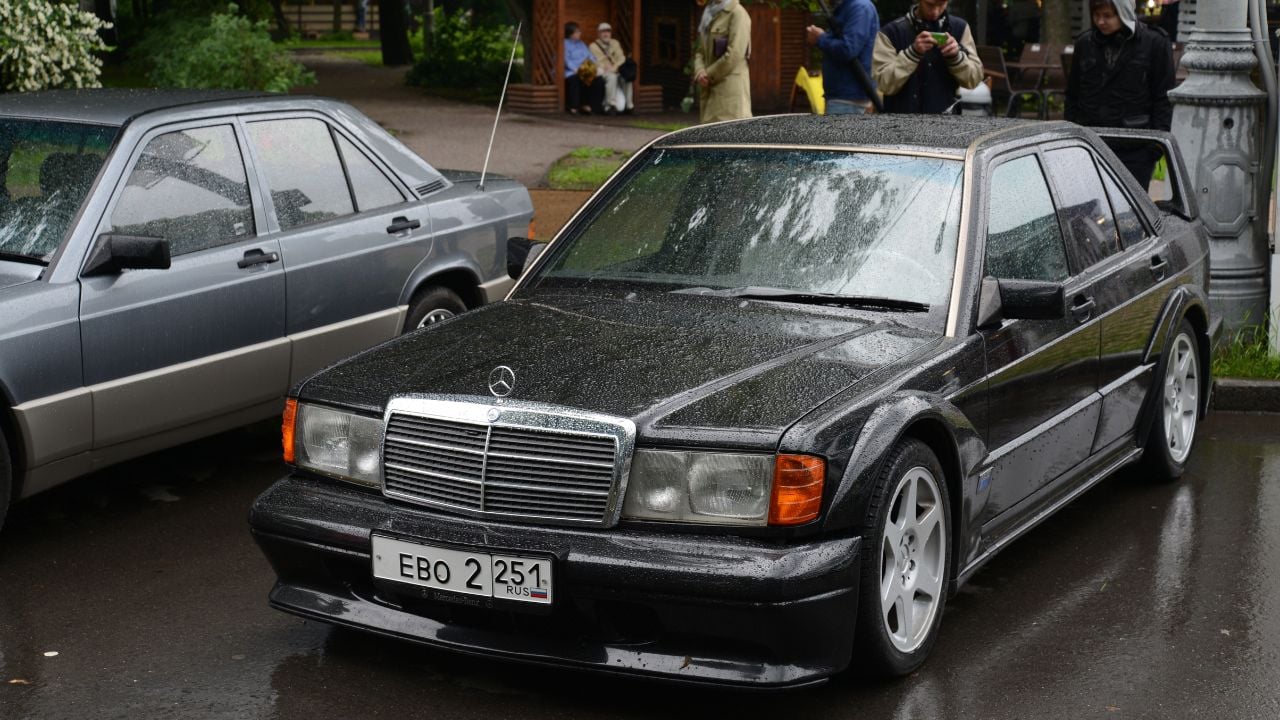
The Mercedes-Benz 190E 2.5-16 Evolution II, unleashed in 1990, was Mercedes’ proper, no-holds-barred response to the E30 M3’s dominance in DTM. And it went all in on theatrics. The car’s massive, adjustable rear wing, pronounced front splitter, and wildly flared arches weren’t just for show — they were meticulously designed for aerodynamics and were a direct result of its racing pedigree. Underneath, it featured advanced, self-leveling suspension and a screaming Cosworth-developed 2.5-liter four-cylinder engine pushing 235 hp. It handled with unexpected finesse and poise, especially at the terrifyingly high speeds achieved on DTM circuits.
The Evo II was built purely to conquer DTM circuits (only 502 units were made), and its intimidating presence in the paddock always drew attention. It also offered surprising refinement, proving that even homologation monsters could wear a suit and tie while still being a track weapon. Its rarity and motorsport ties have made it a legend in collector circles, commanding eye-watering prices.
There’s nothing quite like seeing one parked next to a modern AMG and still stealing the spotlight. It’s the dignified bully of the playground.
Peugeot 205 T16
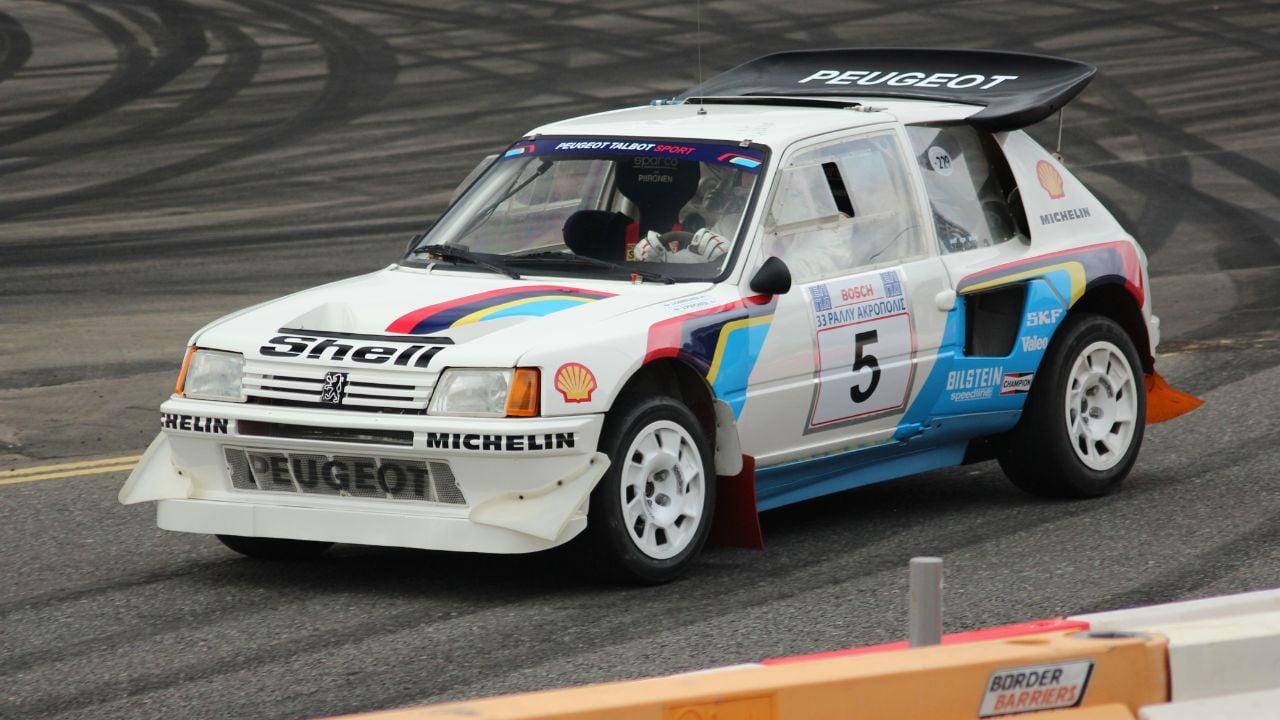
The Peugeot 205 T16 was a Group B rocket dressed (barely) like a humble hatchback. Its mid-engine, turbocharged, all-wheel-drive setup had almost nothing in common with the economy car it resembled — save for a few cosmetic panels. It was compact, aggressive, and built for one thing: absolute speed on unpredictable rally stages.
The T16’s 1.8-liter turbocharged engine (200 hp in street trim, but over 400 hp in full rally spec) had wild power delivery, and its handling was razor sharp, allowing it to dance through forests and over jumps. It thrived in the glorious chaos of rallying’s most dangerous era. Peugeot’s engineers crammed incredibly advanced tech into the small shell with zero compromise.
It utterly dominated championships and left an outsized legacy despite its short lifespan. With only 200 street versions made, each one is a precious piece of history. Today, it represents a golden age of mechanical bravery and pure, unadulterated speed. No car this small should’ve had this much power, and that’s precisely what made it so thrilling and iconic. It’s the ultimate wolf in sheep’s clothing, if the sheep had massive fender flares and screamed like a banshee.
Mitsubishi Lancer Evolution VI Tommi Makinen Edition

Named after the legendary Finnish rally driver who helped make it famous (winning four consecutive WRC titles for Mitsubishi), the Tommi Makinen Edition Evo VI (launched in 2000) was less a car and more a precision tool. It sported distinctive red paint with special decals, a unique front bumper, and rally-style white Enkei wheels that screamed “competition DNA.”
Under the skin, it featured a refined 2.0-liter turbocharged 4G63 engine (276 hp officially, but we all know the drill with Japanese numbers), a titanium turbo, and even sharper handling than its already-potent siblings. It felt like an extension of the driver – agile, grippy, and always eager to be pushed.
Mitsubishi tuned everything from suspension geometry to throttle response for spirited driving and optimal gravel performance. It offered enough daily usability to surprise many, but it always preferred being pushed hard. As the swan song of the early Evo lineage (before they went a bit soft), it captured an era when Japan dominated the tuner world and WRC. And it did it with class, confidence, and enough turbo flutter to make you giggle. It’s the final form of an icon.
Chevrolet Monte Carlo SS Aerocoupe

The Chevrolet Monte Carlo SS Aerocoupe, introduced in 1986, was pure NASCAR strategy in a street-legal shell. Chevrolet crafted it to meet the stringent NASCAR homologation rules that demanded production versions of racecars. Its distinctive, long, steeply sloped rear window wasn’t for style points (though some love it); it significantly improved aerodynamics on high-speed oval tracks.
The body style was unmistakable, and the very idea of a “fastback Monte Carlo” still sparks heated debates among old-school enthusiasts. Under the hood, it packed a classic 5.0-liter small-block V8 that delivered undeniable American grunt (180 hp), more suited to thunderous straightaways than tight corners.
Only a few thousand were made (200 units in 1986, 6,000 in 1987), giving it immediate collector appeal as a quirky piece of racing history. The Aerocoupe reminds everyone that American manufacturers played the homologation game too, just with more chrome, more rumble, and a preference for left turns. The car wore its racing heritage with pride, offering a silhouette that made grandstands take notice. Its presence in the showroom made weekend warriors feel closer to the stock car heroes they cheered on Sundays.
It’s the mullet of homologation cars: business in the front, party (for aero) in the back. And ready to rock and roll.
A Legacy Built in Limited Numbers

Homologation specials capture a rare, glorious moment when carmakers poured their best engineering, their deepest desires to win, and occasionally, their darkest secrets into machines that had to exist for the public, but were undeniably born for the podium. These cars speak fluently in the language of speed, grip, and single-minded purpose. Their flared fenders, oversized wings, and often bizarre bodywork tell stories of regulation loopholes, factory ambition, and engineers working late nights fueled by coffee and a burning desire for victory.
Each one brought the raw, unfiltered thrill of competition to driveways and backroads, where enthusiasts could experience a direct, visceral connection to motorsport.
The legacy of these vehicles continues to burn brightly through the admiration they receive from collectors, drivers, and historians. Their values rise not just because of scarcity, but because of the incredible experiences they deliver and the stories they represent. They are often the centerpiece of gatherings, conversations, and deep respect among those who truly understand what it takes to make a racecar street-legal (and often, barely street-legal).
Looking at these 12 cars is like reading a timeline of motorsport evolution, with each model serving as a chapter written in metal, rubber, and pure adrenaline. They show how creativity, determination, and sometimes, the sheer absurdity of racing regulations, can lead to truly remarkable, unforgettable results. For every wide-eyed kid who stared at one on a poster, and for every driver who felt the turbo spool just before a hairpin on their favorite backroad, these cars are indelibly marked in automotive history. Their place is secure, not by marketing fluff, but by sheer, unadulterated merit.
Which one makes your heart race the fastest?