
Long before today’s sleek SUVs and electric vehicles hit the road, automotive designers were dreaming up wild concepts that seemed straight out of science fiction. These experimental vehicles from the 1950s through 1970s didn’t just showcase bold styling; they actually predicted many of the design trends we see today.
Let’s take a look at nine concept cars that got it surprisingly right about the future of automotive design, proving that sometimes dreams do come true!
General Motors Firebird I (XP-21) (1953/1954)
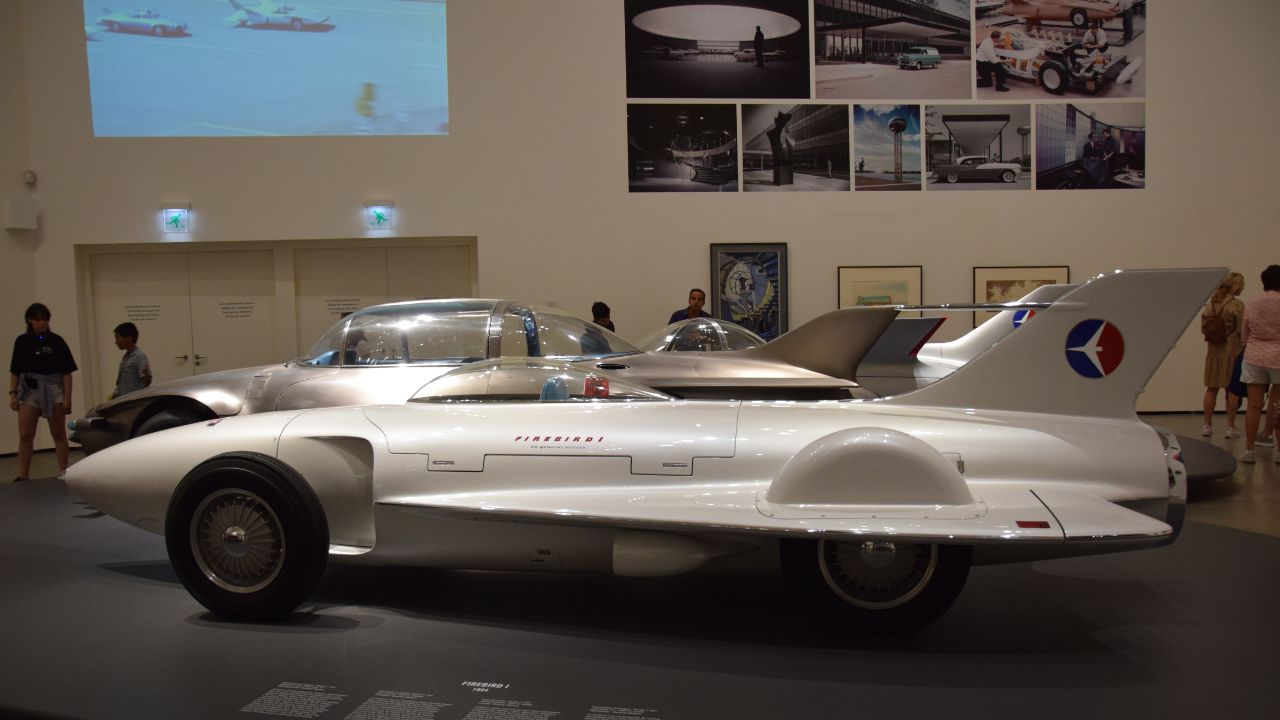
The Firebird I looked more like a jet fighter than a car, and that was exactly the point. GM’s first gas turbine concept featured a bubble canopy, sleek fins, and an aircraft-inspired cockpit that predicted the aerospace influence we’d see throughout the 1950s and beyond.
While we never got jet engines in our daily drivers, the Firebird’s emphasis on future-forward aesthetics, aerodynamics, and driver-focused interiors became standard thinking in automotive design.
Ford Nucleon (1958)

Ford’s nuclear-powered Nucleon concept, developed in 1957 and shown only as a scale model, may seem laughably optimistic now, but the Nucleon’s clean, minimalist design language was decades ahead of its time. The car’s smooth, unadorned surfaces and emphasis on efficiency over ornamentation anticipated minimalist, efficiency-minded themes that would re-emerge decades later in automotive design.
Sometimes the most forward-thinking ideas come wrapped in the most impractical packages.
Cadillac Cyclone (1959)

Called a “laboratory on wheels,” the Cyclone featured radar-based obstacle detection / driver warning, a transparent bubble top, and sleek fins that made it look like something from a 1950s space opera. While the radar technology was decades ahead of its time, the car’s emphasis on safety systems and 360-degree visibility predicted features we now take for granted in modern vehicles.
The Cyclone proved that sometimes the most fantastical concepts contain the most practical ideas about the future of driving.
Chrysler Turbine Car (1963)

While the Turbine Car’s jet engine never caught on, its sophisticated design philosophy absolutely did. The car featured clean lines, integrated bumpers, and a focus on aerodynamic efficiency that wouldn’t become mainstream until the 1980s.
Chrysler built 55 Turbine Cars in total, five prototypes plus 50 cars used in a public driver program, and while the turbine drivetrain didn’t catch on, the program remains a landmark experiment in alternative power and jet-age styling that prioritizes smooth airflow.
Lamborghini Marzal (1967)

The Marzal’s extensive use of glass and angular, wedge-shaped design didn’t just influence supercars – it predicted the geometric styling that would define the 1970s and early 1980s. Its silver-painted structure and transparent panels created a sense of lightness that modern designers still chase today.
The Marzal was a one-off design study for a futuristic four-seater, and it remained a show car rather than a true production plan. Mechanically, it used a 2.0-liter inline-six derived from Lamborghini’s V12, exploring packaging and styling ideas later echoed in Lamborghini’s four-seat thinking. However, the Miura became one of the first supercars in history.
Lancia Stratos HF Zero (1970)

Designed by Marcello Gandini, the Stratos Zero was so low and angular it barely looked like a car at all. This radical wedge shape predicted the geometric supercars of the 1970s and influenced production supercars such as the Lamborghini Countach and helped cement the wedge-shaped design language that persists in modern performance cars.
The concept proved that sometimes the most extreme design ideas become tomorrow’s production reality.
Ferrari Modulo (1970)

Pininfarina’s Ferrari Modulo looked like a spaceship that had landed at a car show, with its ultra-low, spacecraft-like wedge form and triangular side windows. The concept’s emphasis on aerodynamic purity and minimal visual interruption predicted the flowing, organic shapes that would become popular in the 1990s and 2000s.
While most supercars of the era were all about sharp angles, the Modulo showed that curves could be just as futuristic.
BMW Turbo (1972)

BMW’s gull-winged concept reinterpreted BMW’s signature cues, like the kidney grille, within a futuristic mid-engine concept of the brand for decades. The prominent kidney grille, sculptured flanks, and driver-focused cockpit established a design language that BMW still uses today.
The Turbo also featured early explorations of safety and technology, such as a radar-based brake-distance warning system, years ahead of mainstream adoption, and lightweight construction techniques that wouldn’t become common until the 21st century.
Maserati Boomerang (1971)

The Boomerang took the wedge concept to its logical extreme, creating a shape so sharp and angular it looked like it could cut through air itself. Designed by Giugiaro, it predicted the aggressive, geometric styling that would become synonymous with high-performance cars in the following decades.
The concept’s influence can still be seen in modern supercars that use sharp lines and dramatic angles to communicate speed and performance.
Looking Back to See Forward

These concept cars remind us that the most lasting design innovations often come from the boldest experiments. While few of these vehicles made it to production unchanged, their influence shaped the cars we drive today in ways both obvious and subtle.
The best concept cars don’t just showcase what’s possible, they plant seeds for design ideas that won’t fully bloom until decades later. In many ways, we’re still catching up to the vision these designers had all those years ago.