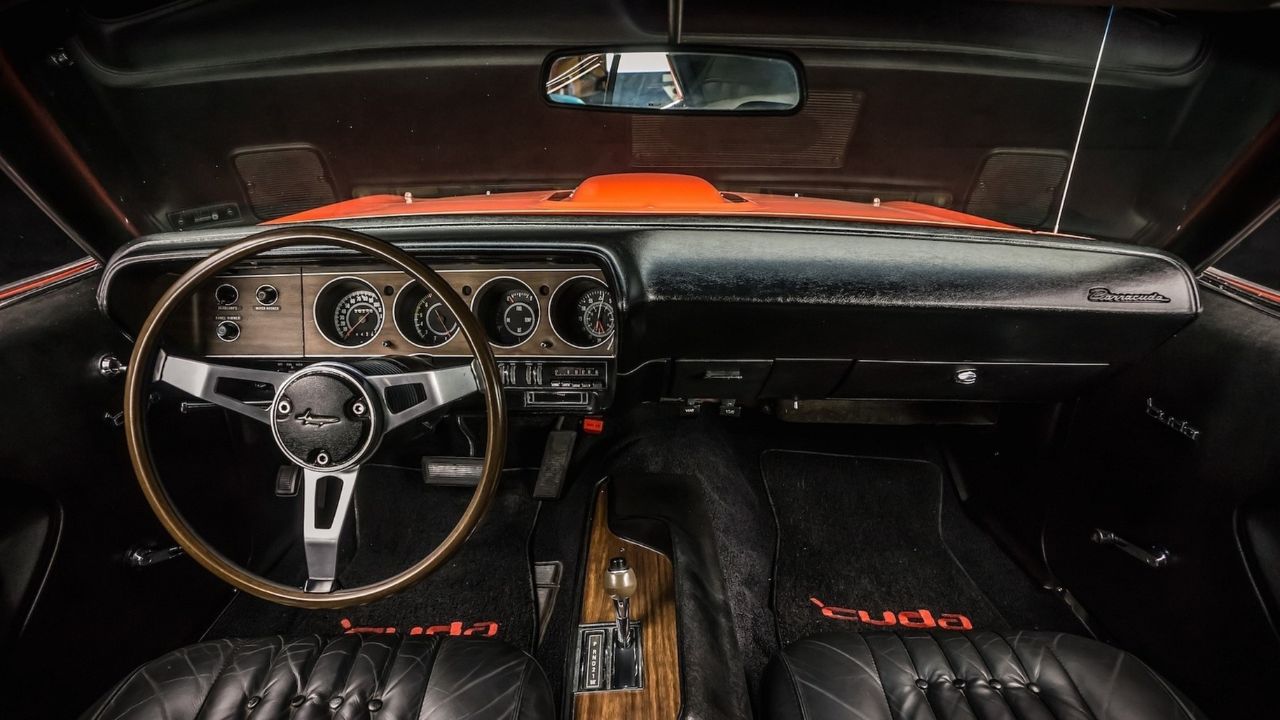
The 1970s were when Detroit was still riding high on horsepower, and nobody had hit the brakes on excess yet. Before emissions rules, insurance crackdowns, and the fuel crisis fully hit, automakers were shoving monster engines into anything with four wheels and calling it a good day.
These cars take you back to an era when gas was 36 cents a gallon, and no one cared about your carbon footprint because they were too busy laying rubber down Main Street. Sure, we’re all for saving the planet now, but back then? Think of the Chevrolet 454 LS6’s thunder as America’s unofficial national anthem.
Here are the glorious, ridiculous, and completely impractical features that made 70s American cars legendary, and why today’s machines feel about as exciting as a Camry convention by comparison.
Hood Tachometers

Nothing screams “I have trust issues with my dashboard” quite like mounting a tachometer on your hood. Pontiac basically said, “You know what this GTO needs? A gauge that gets rained on.” And somehow, it worked.
Picture this: you’re sitting at a red light in your grocery-getter Corolla, and next to you is a ’70 GTO Judge with a hood-mounted tach needle dancing at 1,000 RPM like it’s warming up for a street fight. That needle wasn’t just measuring engine speed; it was measuring your inadequacy.
The Pontiac hood tach was an extra cost factory option in the early 1970s, and originals are now prized by restorers. For comparison, that’s more than most people spend on their entire infotainment system now, and all it did was count engine revolutions. But it counted them with style!
The best part? These things were exposed to every element Mother Nature could throw at them. Rain, snow, bird droppings, angry ex-girlfriends with baseball bats, the hood tach endured it all. Modern car enthusiasts baby their paint jobs like newborns, but 70s muscle car owners literally bolted precision instruments to the outside of their cars and drove them through blizzards.
Factory Louvers
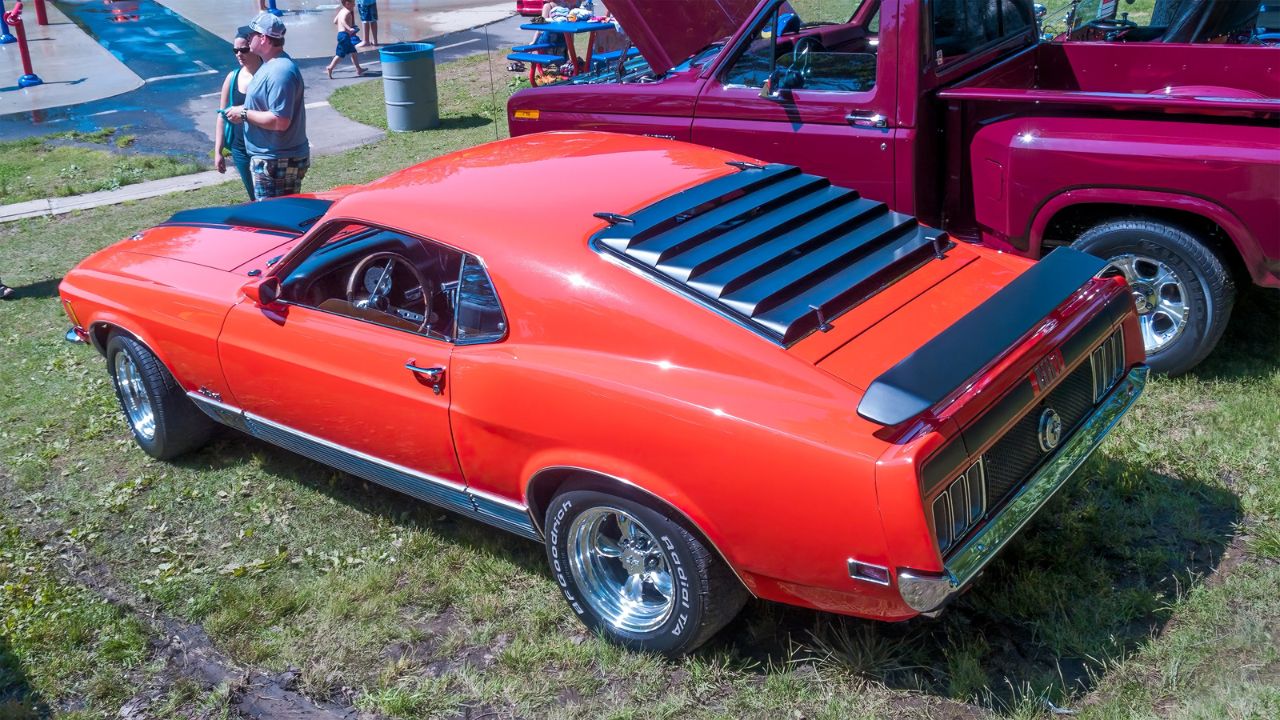
Factory louvers were Detroit’s way of saying, “What if we made rear windows look like medieval armor?” On cars like the Mustang Mach 1, rear window louvers were a popular period option, turning every grocery store parking lot into a scene from a spaghetti western.
These were statements of intent. Regular cars had clear rear windows like civilized vehicles. Muscle cars had louvers, because who needs to see what’s behind you when everything else should be getting out of your way anyway?
Louvers actually served a purpose beyond looking wicked awesome. They reduced glare and kept the interior cooler, basically air conditioning for people who thought air conditioning was for weaklings. Ford’s engineers probably sat around saying, “How can we make this car look more intimidating while solving a practical problem?” The answer was always more metal slats.
Today’s cars have tinted windows and UV protection built into the glass. Boring. Where’s the drama? Where’s the shadow-casting, stripe-throwing, “I-might-be-carrying-a-shotgun-in-here” aesthetic? Gone, replaced by efficiency and common sense. Tragic.
Slap-Stick Shifters

Ever wonder what it’d be like if shifting gears sounded like starting a chainsaw? Me neither, but Chrysler’s Slap-Stick answered this question anyway. Loudly. This wasn’t a shifter, it was a mechanical temper tantrum waiting to happen.
The beauty was in the brutality. You didn’t gently guide this thing into gear like some European luxury sedan. You attacked it. You grabbed that lever and gave it the business, slapping it sideways like you were settling a score. The transmission responded not with smooth sophistication, but with a mechanical “THUNK” that said, “Message received, preparing for combat.”
The Slap-Stick used a modified TorqueFlite 727 transmission, one of the most bulletproof automatics ever built. These things could handle 500+ horsepower without breaking a sweat, which was good because nobody was treating them gently. Meanwhile, modern CVT transmissions sound like they’re dying when you ask them to accelerate up a slight incline.
Real talk: Try explaining a Slap-Stick to a Gen Z kid driving a Tesla. “So you physically hit the shifter to make it go faster?” Yes, and it was glorious. We’ve gone from tactile violence to touchscreen menus. Evolution isn’t always progress.
Ashtrays Big Enough for a Cigar

Modern cars come with seventeen cup holders and nowhere to put your ashes. The ’70s had different priorities. These ashtrays weren’t cute little receptacles, they were architecture. Chrome-lined, spring-loaded monuments to a time when driving and smoking went together like peanut butter and jelly.
The Chevelle SS came with an ashtray so big you could lose a small child in it. It was practically furniture. Heavy, substantial, with that satisfying metallic slide that announced your intentions to everyone in the car. That sound meant business was about to be conducted.
These things could hold cigars, cigarettes, loose change, breath mints, and your shame after losing a drag race all at the same time. Modern cars give you a little plastic cup that can barely handle a stick of gum. Progress? More like regress with better emissions standards.
This was back when smoking cigars, drinking whiskey, and driving cars that could double as weapons of mass destruction was a normal Monday evening. The ashtray wasn’t just a convenience, it was a statement piece that said, “I’m sophisticated enough to enjoy a fine cigar and powerful enough to drive a machine that gets 8 miles per gallon.” Trust me, some muscle cars got even less.
Hideaway Headlights

Hideaway headlights were the closest thing to Transformers technology available in 1970. These lights were a magic trick performed by vacuum actuators and sheer American audacity.
Picture the scene: nightfall on a country road, and you flip the headlight switch. Suddenly, your car’s face completely changes. The sleepy-eyed Charger becomes a wide-awake predator, the docile Corvette transforms into something that looks like it blends Volkswagens into its morning shake. It was automotive theater at its finest.
These systems used vacuum actuators, electric motors, and enough moving parts to keep dealership service departments in business for decades. When they worked, they were magnificent. When they didn’t, you were driving around with one eye open like a mechanical pirate. Some muscle cars with hideaway headlights took a moment to open, which only added to the dramatic effect when you flipped the switch. That doesn’t sound like much until you’re trying to make a dramatic entrance, and you have to wait for your car to finish blinking before you can properly intimidate anyone.
Today’s cars have LED headlights that turn on instantly with no drama whatsoever. Efficient? Yes. Soul-crushing? Also yes. We’ve traded mechanical theater for reliability, and our hearts are emptier for it.
Racing Stripes and Judge Decals from the Factory
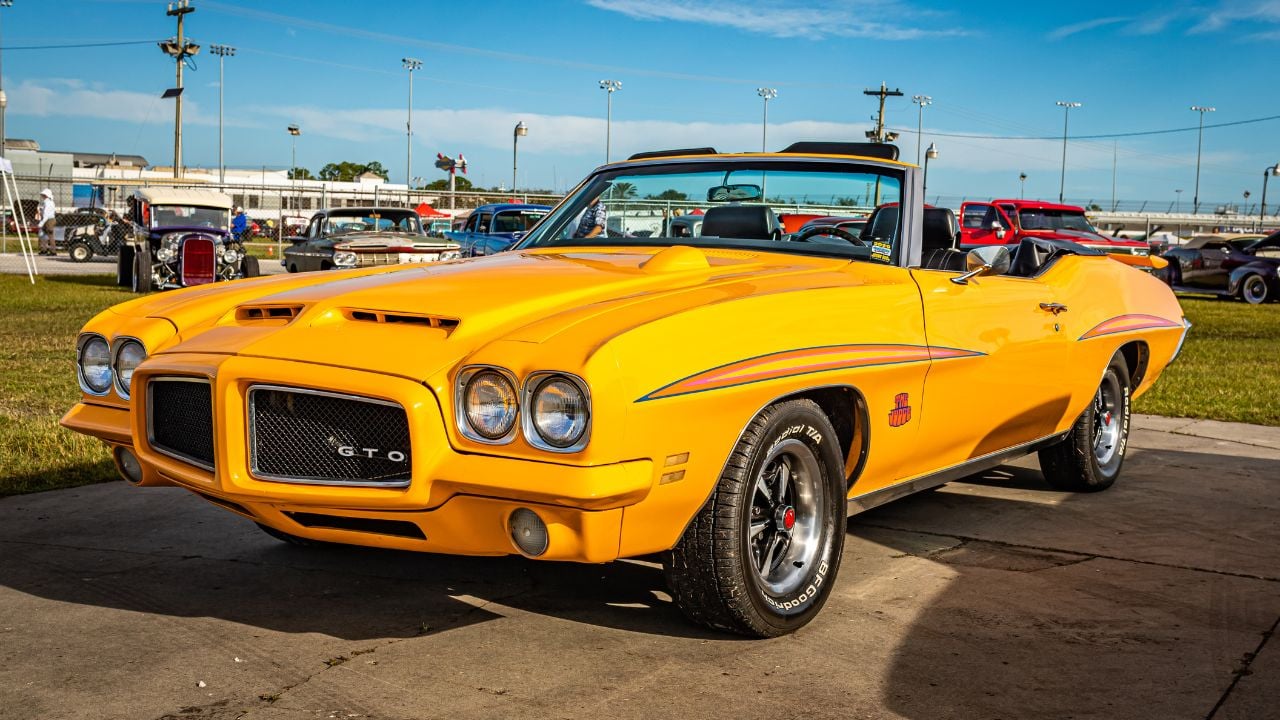
The GTO Judge had racing highways painted on its body. These weren’t timid little accent lines; they were bold declarations of war against boring transportation.
Factory stripes in the 70s were applied with the subtlety of a Vegas wedding chapel. Bright orange, electric blue, racing yellow, colors that could be seen from orbit and caused actual physical pain to look at directly. The Judge decal wasn’t just branding; it was a warning label.
These stripes served no aerodynamic purpose whatsoever. They were pure peacocking, automotive plumage designed to attract mates and intimidate rivals. And it worked. A Chevelle SS with racing stripes got more respect at a stoplight than most modern supercars get at a Cars and Coffee.
Today’s “sporty” trim packages come with subtle body-colored accents and tasteful badges. The most aggressive thing you’ll see is a small “Sport” logo that requires a magnifying glass to read. We’ve gone from war paint to watercolors.
Floor-Mounted Dimmer Switches
The high-beam switch on the floor was peak mechanical elegance. Why complicate things with steering wheel stalks when you could give your left foot something useful to do? One solid stomp, and you’d light up the road like the second coming.
This was practical, but it was also instinctive. Your foot knew where that switch was in complete darkness, muscle memory developed through thousands of miles of nighttime driving. Meanwhile, modern cars have high-beam switches buried in a forest of steering wheel controls that require a degree in electrical engineering to operate.
That floor switch had weight, substance, and a satisfying click that confirmed your command had been received and executed. Modern cars have touch-sensitive buttons that may or may not work and provide no feedback whatsoever. We’ve traded mechanical certainty for digital confusion.
With both hands on the wheel and your foot controlling the lights, you were completely connected to your machine. Today’s cars want you to take your thumb off the steering wheel to flash your high beams. It’s like they’re actively trying to make driving less engaging. (Not surprising, considering the number of screens and lack of manual transmissions.)
Functional Ram Air Hoods

Before cold air intakes became a $300 aftermarket accessory that added 2.3 horsepower and a lot of noise, classic cars came with legitimate ram air systems from the factory. The Pontiac Ram Air IV, the Plymouth Air Grabber, the Chevy Cowl Induction, these weren’t cosmetic additions; they were functional breathing apparatus for monsters.
At highway speeds, these systems actually created positive pressure in the intake, forcing more air into the engine. More air plus more fuel equals more power. It was beautiful in its simplicity, physics working exactly as intended, no computers required.
Opening the Air Grabber hood on a ’70 Plymouth ‘Cuda was like watching a mechanical flower bloom. The entire scoop would rise up, transforming the car’s profile from aggressive to absolutely predatory. Modern cars hide their air intakes behind plastic covers because heaven forbid we actually see the mechanical bits. We can’t have driving be interesting now, can we?
But it wasn’t all flash. These systems were designed to feed cooler, denser air at speed, and while the real world gains varied by model and conditions, the intent was genuine performance. Compare that to modern “performance” air filters that cost more and do less. The 70s solved the air intake problem with mechanical engineering and theater. Today we solve it with marketing and RGB lighting.
Analog Gauges That Meant Something
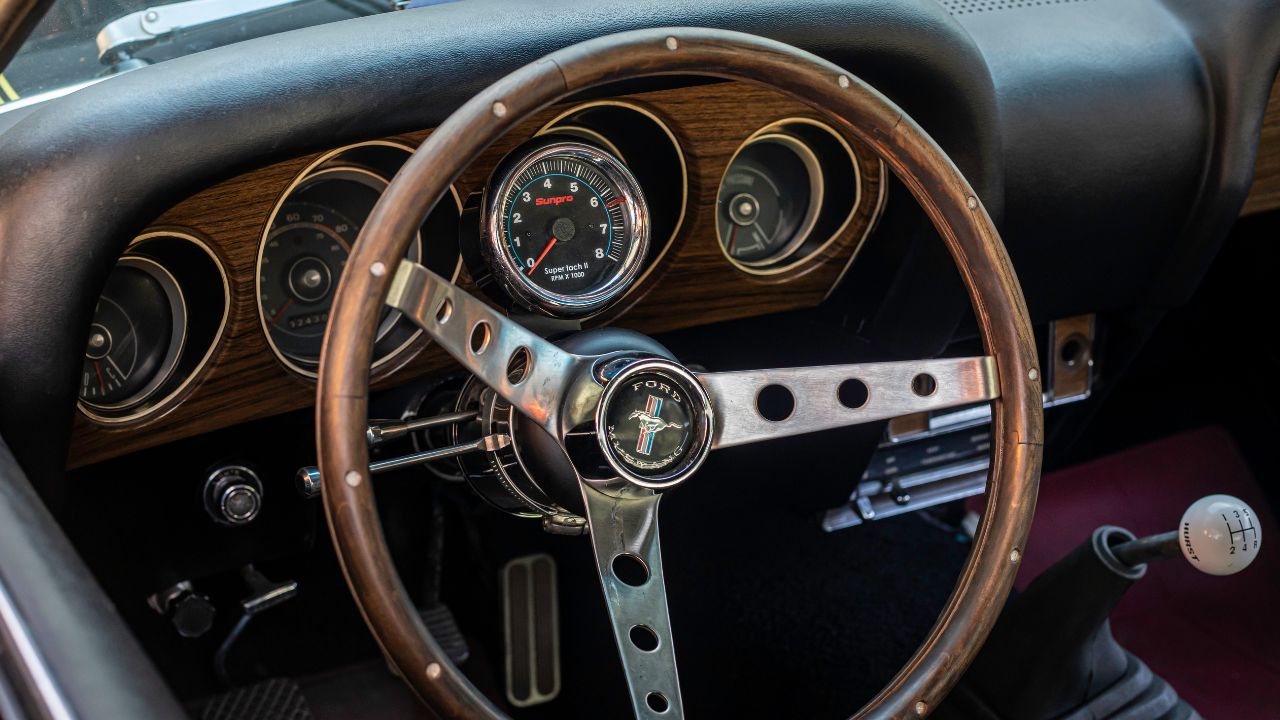
Forget digital displays and warning lights, 70s cars came with gauges that told you everything you needed to know about your mechanical beast. Oil pressure, water temperature, battery voltage, fuel level, all displayed with analog precision and zero ambiguity.
These weren’t just numbers on a screen; they were direct mechanical connections to your engine’s vital signs. When the oil pressure gauge started dropping, you knew immediately that your engine was about to transform from a precision machine into an expensive paperweight.
Driving a ’70s car was like taking a continuous course in mechanical engineering. You learned to read your gauges, understand what they meant, and respond accordingly. Modern cars have idiot lights that basically say “STOP DRIVING NOW” when it’s already too late. You won’t get an oil pressure reading. Instead, you’ll get a “NOT OKAY” seconds before you have to call a tow truck.
Mechanical Everything
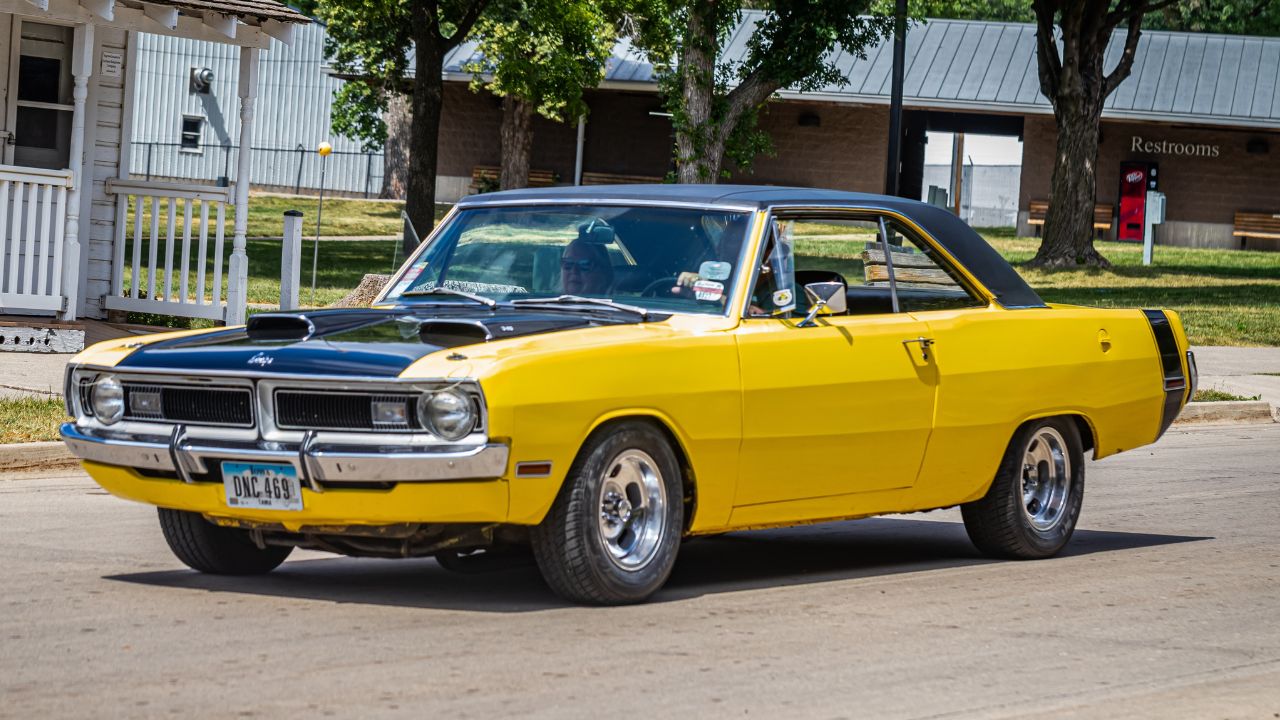
Power steering pumps that you could hear working. Brake boosters that required actual leg strength as backup. Carburetors that you could adjust with a screwdriver and a good ear. These cars were mechanically honest; when something wasn’t working, you knew about it immediately.
Every input had a direct mechanical response. Turn the steering wheel, and you could feel the road through your hands. Press the brake pedal, and you knew exactly how much stopping power you had available. Modern cars isolate you from all of this in the name of comfort and safety.
Yes, these cars required more attention than modern vehicles. But that attention taught you about your machine. You knew when your carburetor needed adjustment, when your points were wearing out, when your timing was off. Today’s cars are black boxes that either work perfectly or fail catastrophically with no middle ground.
There was deep satisfaction in keeping one of these mechanical beasts running properly. Every successful repair was a personal victory. Today’s cars either work or they don’t, and when they don’t, you drive to the dealer and hand over your credit card.
Where Memory Meets the Machine

The 1970s ended not with a whimper, but with the dull thud of emission controls and insurance rates landing on Detroit’s party like a concrete blanket. The Clean Air Act, the energy crisis, and lawyers with calculators conspired to turn thundering beasts into wheezing shadows of their former selves.
By 1975, the Corvette’s base V8 was rated at 165 net horsepower, and the big block era was already over. The party was over, but what a party it had been.
These features live on in the hearts, minds, and garages of enthusiasts who understand that sometimes, the best engineering solutions involve more drama, not less. Every car show, every cruise night, every time someone fires up a big block and lets it rumble, that’s the sound of automotive rebellion against the tyranny of efficiency.
We gained a lot when cars became reliable, efficient, and safe, but we lost something too. The mechanical theater, the direct connection, the sense that your car was a partner in adventure rather than just an appliance for getting from Point A to Point B. We may never see their like again.
At least we can remember them, celebrate them, and occasionally, if we’re very lucky, hear one fire up on a Saturday morning and remember what automotive passion sounds like.