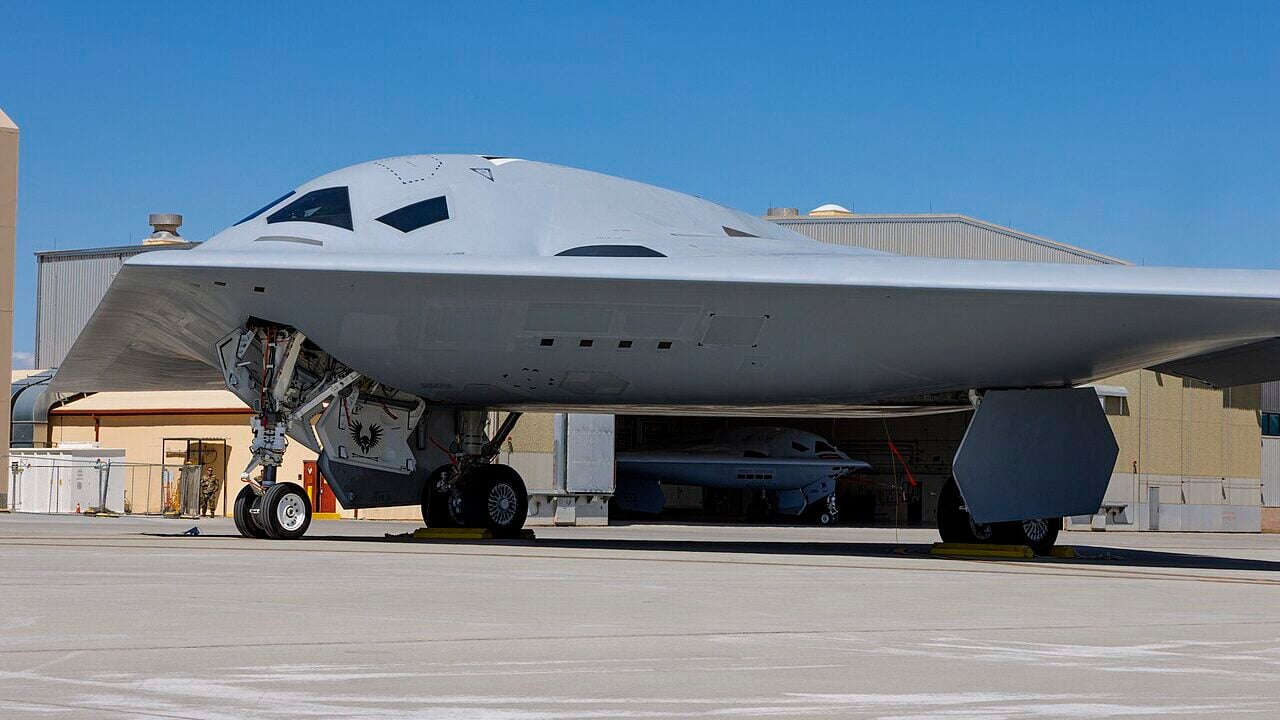

According to a recent report by National Security Journal, a group of Chinese aerospace researchers believe they may have spotted potential weaknesses in America’s newest stealth bomber, the B-21 Raider.
The claim, as presented in the publication, is not based on insider access or classified intelligence. Instead, it comes from a detailed simulation study that tries to reverse-engineer the aircraft’s behavior using publicly available information.
The study was conducted at the China Aerodynamics Research and Development Center, a major institution focused on military aviation science.
Researchers there used a simulation platform called PADJ-X, a high-end computational tool designed to model how advanced aircraft behave in flight. Using images, known design principles, and educated assumptions, they built a digital version of the B-21 and tested how it might perform under different conditions.
A Car Guy’s Guide to Stealth Bombers
For our readers more familiar with cars than combat aircraft, think of this like engineers studying spy shots of a camouflaged prototype car and running airflow simulations to guess its drag coefficient, stability, and handling characteristics. That is essentially what these researchers attempted, but at a far more complex level.

The B-21 Raider itself is a highly secretive project developed by Northrop Grumman for the US Air Force. It is intended to replace both the B-2 Spirit and the B-1B Lancer, marking a major shift in America’s long-range strike capability.
The aircraft uses a flying wing design, similar in appearance to the B-2, which helps reduce drag and radar visibility. This shape improves fuel efficiency and enhances stealth, allowing the bomber to operate deep inside heavily defended airspace.
According to the report, the Chinese team focused heavily on how air flows around that flying wing structure. They analyzed aerodynamic efficiency, flight stability across different speeds and altitudes, and how small design adjustments might influence performance.
Their simulations suggested that certain tweaks to the aircraft’s configuration could theoretically improve its aerodynamic behavior.
The Keywords: Theoretically
However, the key word here is “theoretically.” As emphasized in the National Security Journal article, the entire study is built on assumptions. The real B-21’s exact shape, materials, internal systems, and flight control software remain classified.

That means the digital model used in the study is, at best, an approximation.
There is another important factor that the researchers cannot fully account for. Modern stealth aircraft are often intentionally designed to be aerodynamically unstable. This might sound like a flaw, but it is actually a feature.
Advanced onboard computers constantly adjust control surfaces to keep the aircraft stable in flight. This allows engineers to prioritize stealth and efficiency over natural stability. Without access to those control systems, any external analysis will miss a major part of how the aircraft truly performs.
In other words, what might look like a weakness in a simulation could be completely managed in the real aircraft through software and control logic.
Even so, the study highlights something larger than the B-21 itself. Nations closely study each other’s hardware, whether it is fighter jets or performance cars.
Engineers analyze shapes, proportions, and visible design cues to estimate what lies beneath. In the automotive world, this happens every time a new electric vehicle platform or aerodynamic concept appears in testing. Competitors try to decode it long before official specs are released.
Simulation Warfare
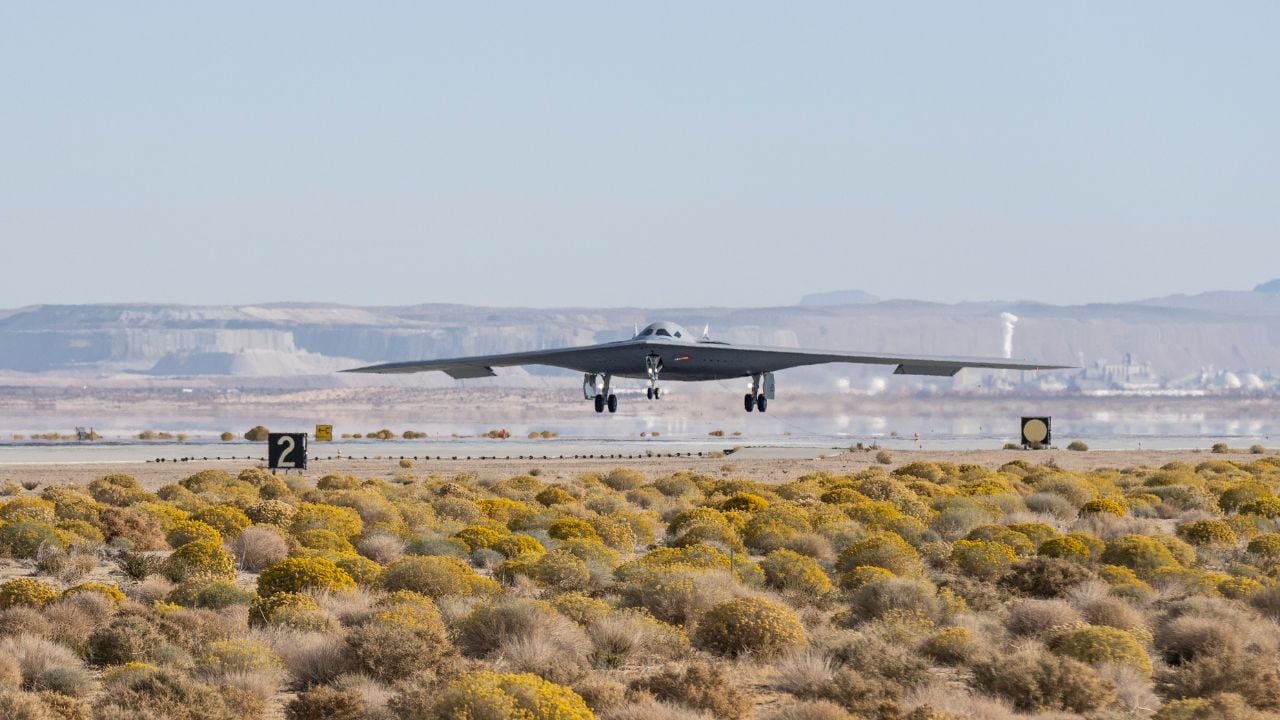
The use of tools like PADJ-X also reflects how engineering is evolving. High-powered simulations now allow designers to test extreme scenarios digitally, reducing reliance on physical prototypes.
This shortens development cycles and lowers costs, whether you are building a stealth bomber or a next-generation EV.
The broader context, as outlined by National Security Journal, is the ongoing technological rivalry between the United States and China.
Just as the US is developing the B-21, China is believed to be working on its own stealth bomber, often referred to as the H-20. Each side is watching the other closely, feeding every available detail into increasingly sophisticated models.
So, while headlines about “flaws” may grab attention, the reality is more nuanced. In fact, it’s even possible that the Chinese state is ‘fishing.’ This is less about exposing a fatal weakness and more about a high-stakes guessing game powered by data, software, and a lot of informed speculation.