Car design studios spend years developing concepts that may never see production.
One X user spent a few seconds typing a prompt into AI—and accidentally created one of the internet’s most talked-about fictional supercars.
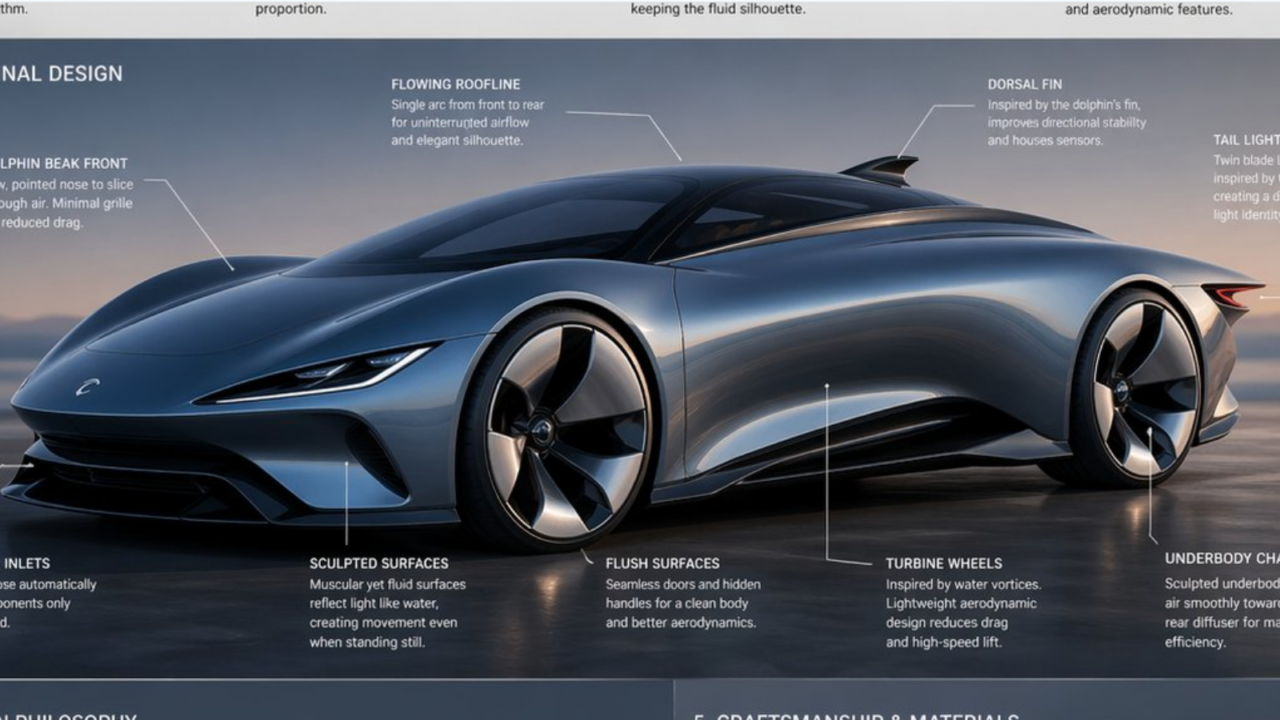
The user, Prophet_Ikuku, asked a chatbot to design a supercar inspired by a dolphin, explain the design process, and generate final renders. What came back looked surprisingly polished, quickly racking up millions of views online.
Looking at it, it’s easy to see why people were impressed.
The Render Looked Shockingly Professional
Lol
The prompt The output https://t.co/oheLSl5tEg pic.twitter.com/z11L0afOGJ
— Prophet_Ikuku | Neural Network (@Zyyon_) April 24, 2026
The AI didn’t simply spit out a random sports car image.
It created what looked like a genuine manufacturer design presentation, complete with reference imagery, sketch progressions, material breakdowns, and a final polished render.
The finished car featured flowing body lines, a tapered nose inspired by a dolphin’s snout, dramatic side sculpting, and a roof detail resembling a dorsal fin. Finished in an iridescent ocean-blue shade, it looked like something you might expect from a futuristic concept reveal at Geneva or Pebble Beach.
That presentation style is a big reason the image went viral. It looked believable enough to make people pause.
Automakers Have Been Borrowing From Nature For Decades
As futuristic as this concept looks, automotive biomimicry is nothing new.
Mercedes-Benz famously introduced the Mercedes-Benz Bionic in 2005, using the shape of a boxfish to create a remarkably aerodynamic concept vehicle.
Designers have long borrowed inspiration from sharks, birds, marine animals, and even fighter jets when trying to create vehicles that feel fast and efficient.
Modern EVs such as the Lucid Air, Mercedes-Benz EQS, and Hyundai Ioniq 6 already use extremely smooth, flowing designs because aerodynamics matter more than ever.
In many ways, the AI simply exaggerated design trends that already exist.
It Probably Wouldn’t Work In Real Life
As cool as it is, once you look closer, the fantasy begins to fall apart.
The wheel proportions seem slightly off, some of the body lines appear impossible to manufacture, and certain aerodynamic features look more decorative than functional.
That’s where human designers still have a major advantage.
Creating something visually striking is only part of the process. Real automakers still need to worry about crash regulations, aerodynamics testing, manufacturing limitations, and packaging components that AI doesn’t fully understand.
AI Is Moving Faster Than Many People Realize
That’s what makes this story interesting.
A decade ago, creating a concept this polished would have required an entire design team, multiple software specialists, and weeks of revisions.
Now someone can create something that looks this convincing in under a minute.
The dolphin-inspired supercar may never exist, but it does offer a glimpse into how quickly AI tools are changing creative industries.
And if random users are creating concepts this polished today, imagine what real automakers are already experimenting with behind closed doors.