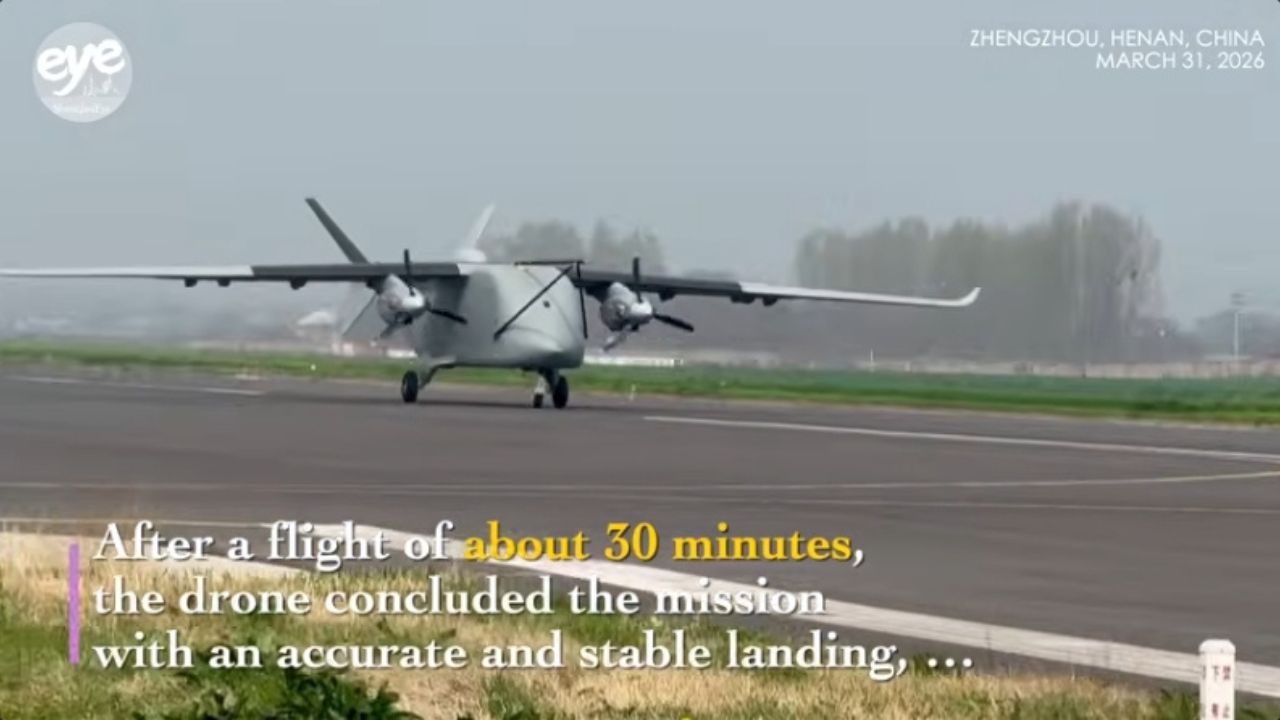

China has taken a notable step forward in unmanned aviation with the successful test flight of the world’s largest cargo drone yet, a machine designed to move heavy loads without a pilot on board. The aircraft, called the Changying-8, represents a growing push toward smarter, more flexible logistics systems that can operate in places traditional cargo planes struggle to reach.
According to a report by Chosun Ilbo, citing Hong Kong media, the Changying-8 recently completed a 30-minute test flight after taking off from Zhengzhou Shangqiao International Airport in Henan Province. The drone rolled for roughly 280 meters before lifting into the air, a relatively short distance for an aircraft of its size and capability.
Design and Capabilities
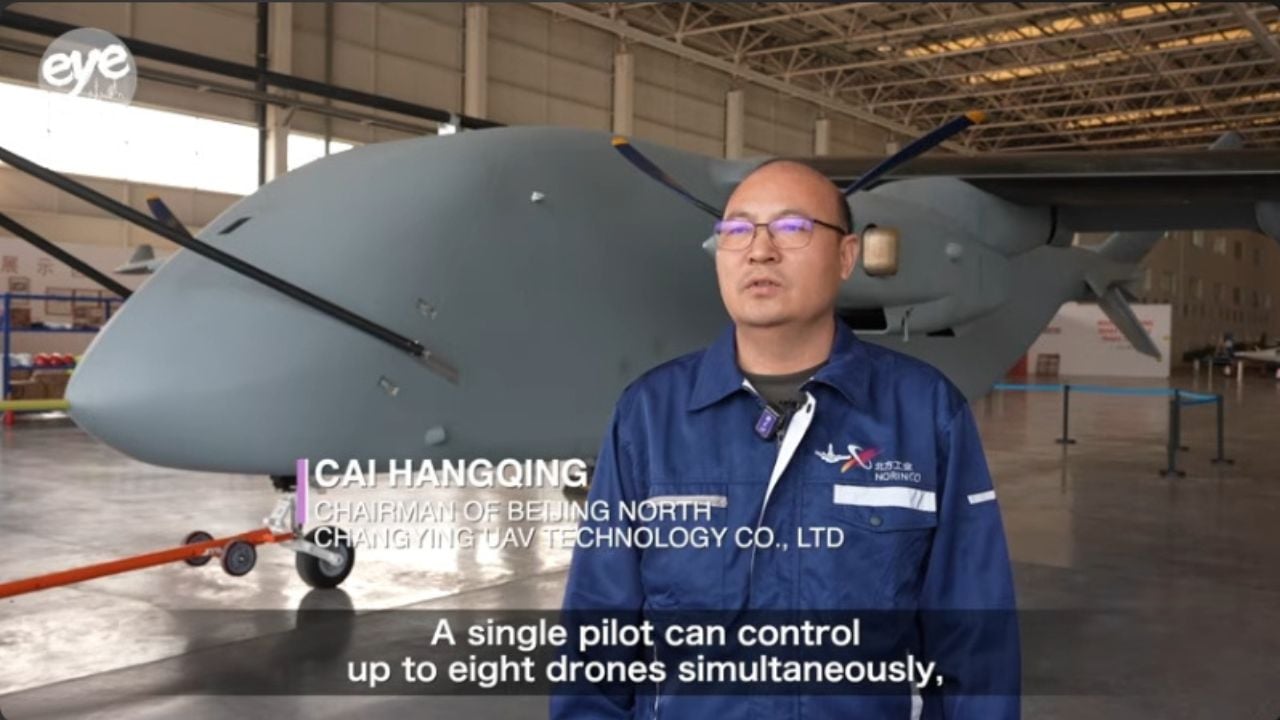
At first glance, the Changying-8 looks like a conventional cargo plane. It has a body length of 17 meters and a wingspan of 25 meters, placing it firmly in the large drone category. What sets it apart is that it operates entirely without a human pilot onboard, relying instead on advanced onboard systems to control navigation, stability, and performance.
Built by China North Industries Group Corporation Limited, also known as Norinco, the drone is designed to carry up to 3.5 metric tons of cargo. That is roughly the weight of a medium-sized truck. Even more impressive is its estimated range of about 1,865 miles, which opens the door for long-distance deliveries across regions that may lack strong infrastructure.
One of the Changying-8’s most practical features is its ability to operate in challenging environments. Unlike many traditional cargo aircraft that require long, paved runways, this drone is built to take off and land on shorter, rougher surfaces. It needs less than 500 meters of runway and can handle unpaved strips, plateaus, and even remote island terrain.
This flexibility could make it especially useful in disaster relief, military logistics, or delivering goods to isolated communities.
Efficiency and Domestic Production
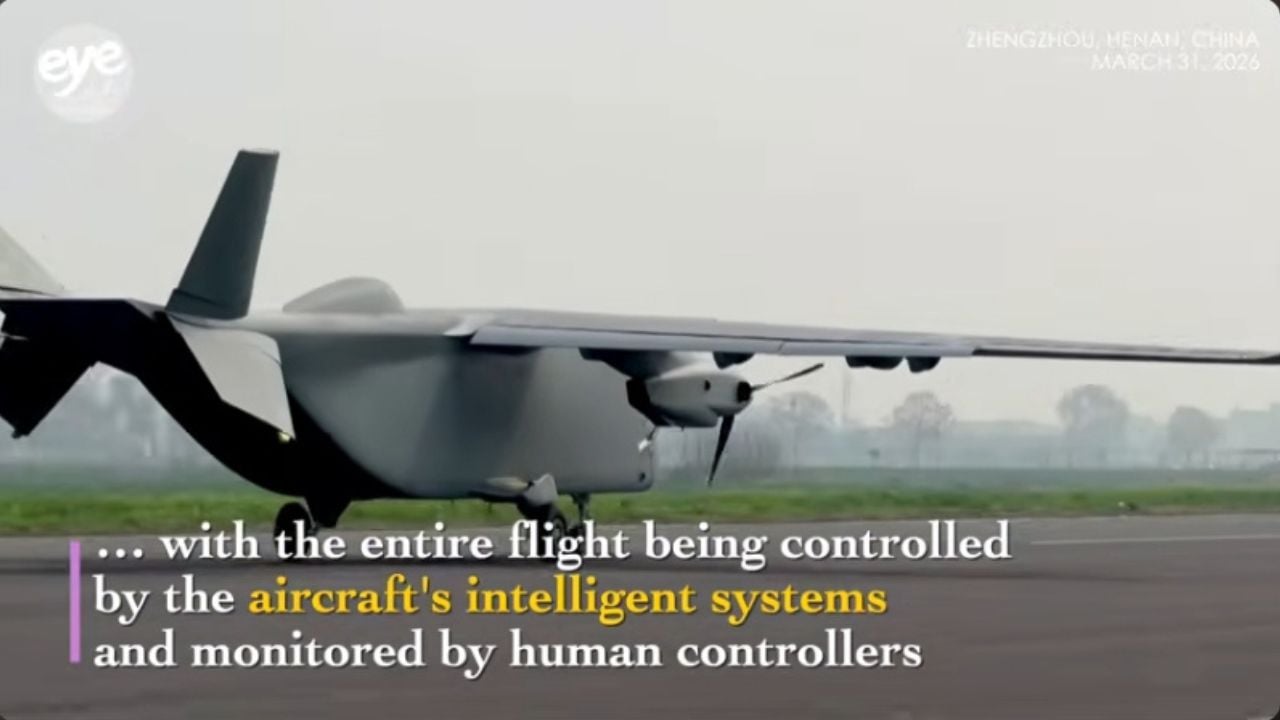
Loading and unloading cargo has also been streamlined. The aircraft is equipped with doors at both the front and rear, allowing operators to load up to 3.5 tons of goods in about 15 minutes. That kind of turnaround time is critical in situations where speed matters, such as emergency supply drops or time-sensitive deliveries.
During the test flight, engineers evaluated a wide range of systems, including flight control, avionics, power, fuel efficiency, and overall stability. Chinese state media described the aircraft as part of a broader effort to develop a new generation of intelligent, unmanned transport platforms in the 7-ton class.
While the Changying-8 itself carries 3.5 tons, the larger classification points to future models that could double that capacity.
Another key detail highlighted in the report is that all major components of the drone are domestically produced in China. This includes the engine, which is often one of the most complex and strategically important parts of any aircraft. The emphasis on local manufacturing suggests a push for greater self-reliance in aerospace technology.
Changying-8 vs. Other Cargo Drones
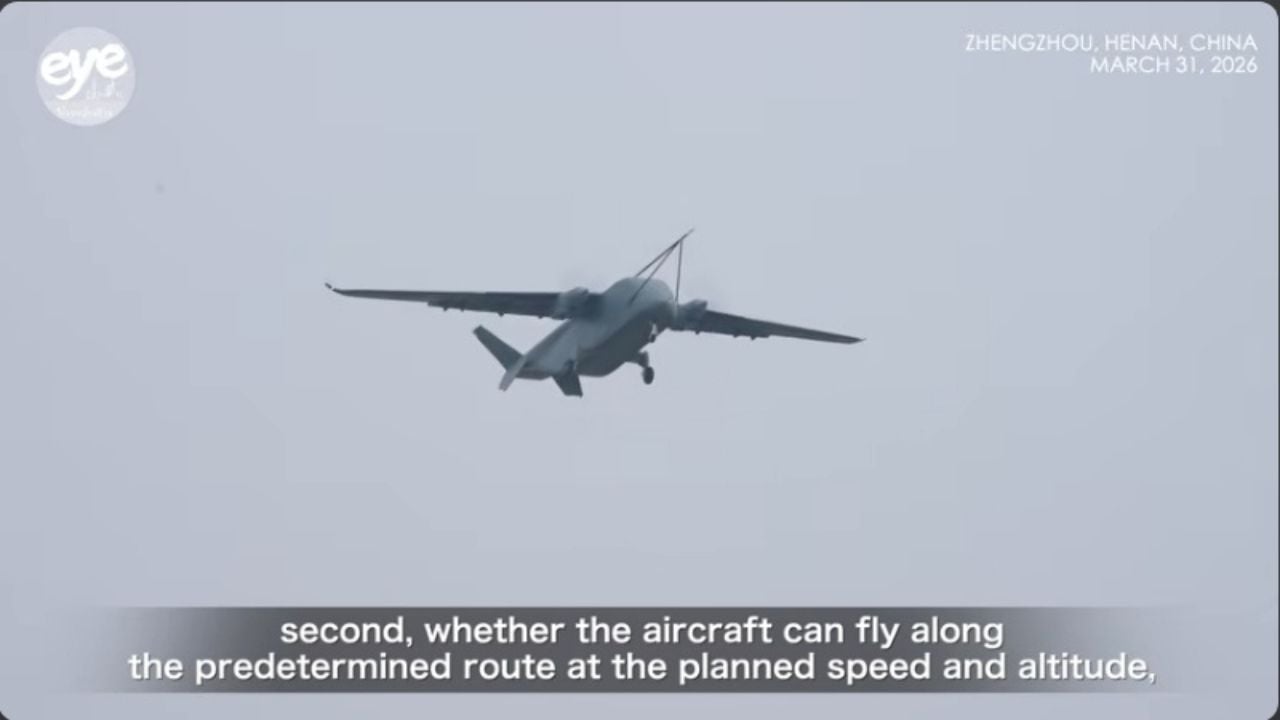
The name Changying translates to “big eagle,” which feels fitting for a machine designed to carry heavy loads across long distances with autonomy and precision. The successful test flight is likely to accelerate development of even larger and more advanced cargo drones.
Changying vs Other Large Cargo Drones
| Drone Model | Country | Payload Capacity | Wingspan | Notable Features |
| Changying‑8 (CY‑8) | China | 3.5 tons | 25 m | STOL, 3,000 km range, largest tested cargo drone |
| Natilus Kona | USA | ~4.5 tons (planned) | 19 m | Still in development, autonomous freight aircraft |
| AT200 Cargo UAV | China | 1.5 tons | 11 m | Converted agricultural aircraft, smaller scale |
| Kaman K‑MAX (UAV) | USA | 2.7 tons | 14.7 m | Helicopter-based unmanned cargo system |
While the United States and Turkey have been investing heavily in combat-oriented drones—such as the U.S. MQ‑9 Reaper and Turkey’s Bayraktar TB2, both designed for surveillance and strike missions—China is charting a different course.
The Changying‑8 cargo drone illustrates Beijing’s emphasis on industry-facing unmanned systems that prioritize logistics, infrastructure, and supply chain resilience. By focusing on drones capable of carrying several tons of cargo across thousands of miles, China is positioning unmanned aviation as a backbone for both civilian and military logistics.
This contrasts with Western programs that often highlight battlefield applications. The divergence underscores a broader strategic philosophy: while Washington and Ankara refine drones as force multipliers in combat, Beijing is leveraging autonomy to solve industrial challenges, disaster relief, and remote delivery.
In effect, China is reframing drones not just as weapons, but as engines of economic and logistical modernization. We’re reminded that logistics is evolving beyond roads and traditional aircraft. While trucks and vans will always play a central role, unmanned cargo aircraft like the Changying-8 could soon become part of a broader ecosystem that moves goods faster and more efficiently across difficult terrain.
Sources: Chosun