

It’s hard to believe, but some cars we find cool now were just regular traffic sitting in a used car lot back in the 1980s. At the time, I’m sure some of us knew that they’d be classics, but some were unsuspecting. That’s the fun (or not fun) of collector cars. Since when did the 80s become collectors? I need to go sit down…
The 1980s gave us some wild automotive experiments: cars that critics dismissed, buyers ignored, or enthusiasts overlooked in favor of flashier alternatives. But time has a funny way of revealing hidden gems. Today, these six machines command respect at car meets across the country, spark bidding wars on Bring a Trailer, and turn heads in ways their original owners never imagined.
How We Drove Back Through Time

These aren’t the obvious choices; no Ferrari Testarossa or Lamborghini Countach here. Instead, we focused on cars that initially flew under the radar but have since earned cult followings. At the time, they were maybe seen as too weird, too boring, or “not real muscle cars.”
We’re not going to pretend everybody overlooked these cars. Real enthusiasts can’t help but nod at most cars that seem special in some way. However, these cars have grown more popular in recent years and are finally getting the full-blown attention they deserve.
Chevrolet Camaro IROC-Z

Back in the day, purists scoffed at the IROC-Z. Some purists dismissed the IROC-Z as a marketing gimmick, overlooking the fact that it was an option package on the Camaro Z28 in the early days, but later on it became a standalone performance model. Sure, the International Race of Champions tie-in felt like marketing fluff, but those critics missed the point entirely.
What really set the IROC apart was the handling package. Those 16-inch wheels were huge for 1985, wrapped in sticky 245/50VR16 Goodyear Eagle GT ‘Gatorback’ tires mounted on 16×8-inch wheels that actually worked. The suspension tuning struck a sweet spot between boulevard cruising and canyon carving that GM wouldn’t achieve again until the fourth-gen cars arrived.
Today, clean IROC-Zs are pulling $15,000-25,000 at auction – prices that would’ve seemed impossible just 10 years ago. Younger enthusiasts love the angular ’80s styling, while guys who owned them new are buying them back for their kids. The irony? The car everyone called a “mall cruiser” now represents peak third-gen Camaro performance.
Ford Mustang GT

The Fox-body Mustang GT tells one of the greatest underdog stories in automotive history. When it debuted in 1982, car magazines barely noticed. The styling looked awkward – too angular, too European, nothing like the muscular Mustangs of old.
The real genius of the Fox Mustang wasn’t immediately obvious. While GM and Chrysler built heavier, more complex cars, Ford kept things simple. The Fox platform was essentially a modified Fairmont chassis: not exactly exotic, but light and responsive. The 302 Windsor small-block was ancient by 1980s standards, but it responded beautifully to modifications.
What really turned the tide was the aftermarket explosion. Companies like Saleen, Roush, and ASC McLaren demonstrated the platform’s capabilities with proper development. Meanwhile, grassroots racers discovered that Magazine testing in the mid-to-late 1980s showed that properly driven 5.0-liter Fox GTs could dip into the high-14-second range, delivering strong performance for the money without exotic hardware – Ferrari money wasn’t required for serious fun.
Today, clean 5.0 Fox GTs are automotive gold. Pristine examples bring $20,000-30,000, while Select rare Saleen models can command very high prices today, though ASC McLaren Fox Mustangs typically trade well below six-figure territory, depending on condition and originality. The car that critics called “uninspiring” launched a thousand drag cars and became the foundation of modern Ford performance.
Buick Grand National GNX

Nothing quite prepared the automotive world for the Grand National GNX. Here was a Buick – a Buick – that could embarrass Corvettes and Ferraris at stoplights. The automotive press was baffled, while muscle car enthusiasts dismissed it as a “turbo four-banger” (never mind that it was actually a V6).
The GNX was essentially a collaboration between Buick and ASC McLaren, with only 547 built. The package included a revised turbo system, stronger transmission, limited-slip differential, and subtle body modifications. The all-black paint scheme made it look menacing, but the real intimidation came from the performance.
What made the GNX special wasn’t just the straight-line speed: it was the complete package. The turbo V6 delivered torque in waves, creating an addictive rush that V8s couldn’t match. The chassis handled the power admirably, and the interior struck the right balance between luxury and performance.
Initially, GNXs sold for around $30,000, and many sat on dealer lots. Buyers weren’t sure what to make of a $30K Buick when a Corvette cost about the same. But collectors caught on quickly. Today, GNXs routinely sell for $150,000-200,000, with pristine examples pushing even higher. The car that confused buyers in 1987 is now considered one of the greatest American performance machines ever built.
DeLorean DMC-12

Let’s be honest, when the DMC-12 was new, most people thought it was a disaster. The gull-wing doors were cool, sure, but everything else seemed problematic. The PRV V6 engine was underpowered, the build quality was questionable, and John DeLorean’s legal troubles made the whole company seem sketchy.
But time has been incredibly kind to the DeLorean. The brushed stainless steel body that seemed like a gimmick in 1981 now looks absolutely timeless. Those angular lines that critics called “awkward” perfectly capture ’80s futurism. And yes, Back to the Future helped, but the car’s appeal runs deeper than movie nostalgia.
The gull-wing doors weren’t just for show – they were beautifully engineered, with gas struts that opened them with theatrical flair. The interior mixed luxury touches with futuristic details, creating an environment that felt genuinely special. Even the handling, despite the rear weight bias, was more entertaining than critics admitted.
Today, the DMC-12 is automotive royalty. Driver-quality examples generally trade in the $50,000–60,000 range, while well-preserved and low-mile cars can exceed $80,000. More importantly, DeLorean has achieved something no other ’80s car can claim: universal recognition. Kids point and shout when they see one, adults stop conversations to stare, and even non-car people understand its significance.
Porsche 944

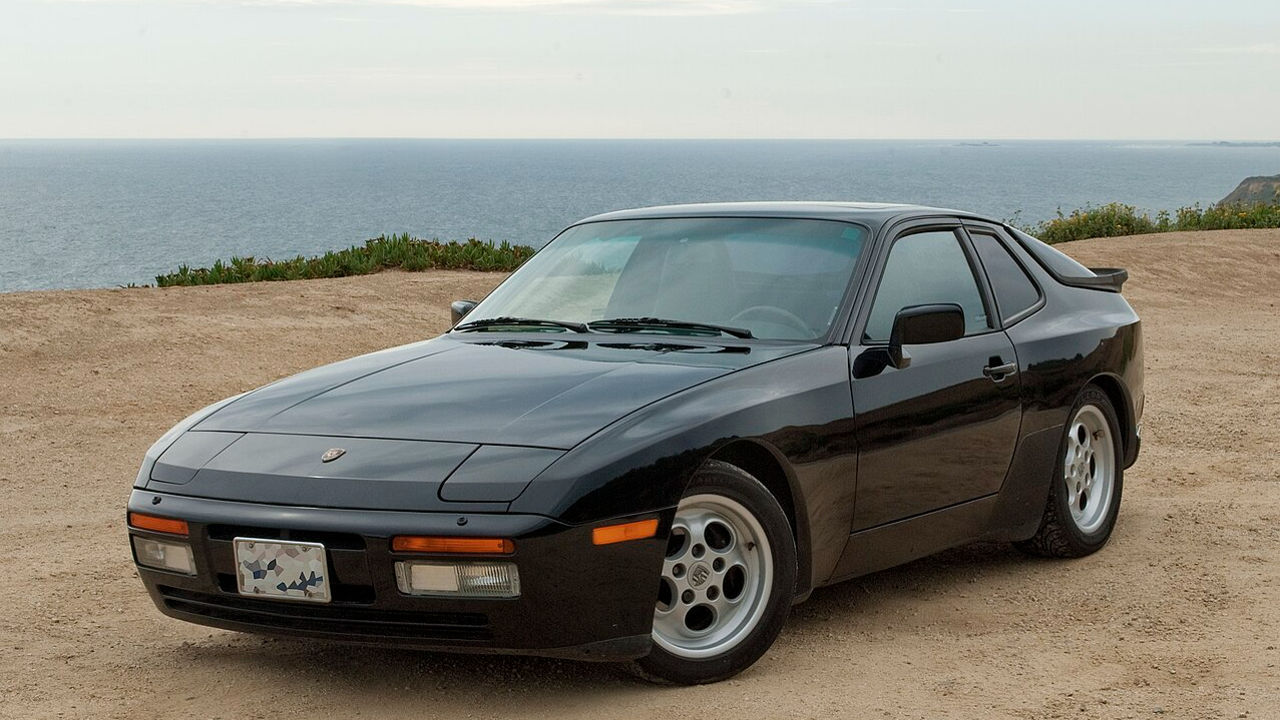
When Porsche introduced the 944, traditionalists were horrified. A front-engine Porsche with four cylinders? Heresy! Porsche purists dismissed it as a “secretary’s car” – not a real sports car like the 911. Even the automotive press was skeptical, questioning whether a water-cooled four-cylinder could deliver proper Porsche performance.
And what a chassis it was. The 944 achieved nearly perfect 50/50 weight distribution through clever engineering – the transmission was mounted at the rear axle, connected to the front-mounted engine via a rigid torque tube. The result was handling that even the 911 couldn’t match, with none of the snap-oversteer characteristics that made the rear-engine car tricky for average drivers.
The 944 also offered something the 911 didn’t – practicality. The hatchback design provided surprising cargo space, while the interior could actually accommodate adults. It was the Porsche you could live with daily, not just on weekends.
Critics eventually came around. By the late 1980s, the 944 was widely recognized as one of the best-handling cars in the world. The Turbo version, with 217 horsepower in standard Turbo form, rising to approximately 247 horsepower for the Turbo S, with some sources quoting 250 PS depending on market and measurement standards, could match or beat the 911 in most performance metrics.
Today, clean 944s are climbing rapidly in value. Base cars bring $8,000-15,000, while Turbo models command $20,000-35,000. The car that was dismissed as “not a real Porsche” is now considered the best entry point into classic Porsche ownership.
Jeep Cherokee XJ

Nobody expected the Cherokee XJ to become a legend. When Jeep introduced it in 1984, SUVs were still considered truck-based utility vehicles – farming equipment with windows. The Cherokee’s unibody construction and car-like ride seemed like compromises that would appeal to nobody.
Instead, Jeep accidentally created the template for every modern SUV. The XJ combined genuine off-road capability with on-road manners that didn’t require a chiropractor after every commute. The Cherokee later gained its legendary 4.0-liter AMC-designed inline-six in 1987, an engine that became known for bulletproof reliability and strong performance and surprisingly good performance.
The XJ’s boxy styling initially seemed ungainly compared to contemporary cars, but time has revealed its brilliance. Those angular lines now look purposeful and timeless, while the upright seating position and excellent visibility feel refreshingly honest in an era of bunker-like crossovers.
Perhaps most importantly, the Cherokee became the foundation for American off-road culture. It was affordable enough for teenagers to modify, tough enough to handle abuse, and capable enough to tackle serious trails. The aftermarket responded with an explosion of lift kits, armor, and accessories that continues today.
Clean Cherokee XJs now command surprising respect. Low-mileage examples bring $10,000-15,000, while pristine two-door models can exceed $20,000. The humble Cherokee, initially dismissed as insignificant, is now considered the blueprint for every SUV that followed.
Coming Back to the Future
These cars prove that automotive greatness isn’t always immediately obvious. Critics can miss the point, buyers can overlook genius, and enthusiasts can dismiss innovations that later become essential. The Camaro IROC was too flashy until it wasn’t. The Mustang GT was too simple until simple became brilliant. The GNX was too weird until weird became wonderful.
What unites these cars is their authenticity. They weren’t trying to be something else: they were honest expressions of their time and purpose. The 1980s may have given us some questionable automotive decisions, but these six machines represent the decade at its creative peak.
The best cars aren’t always the most obvious choices. They went against the grain. Sometimes you have to wait for the world to catch up to the vision. And sometimes, the car everyone ignored becomes the one everyone wants.