
The SUV takeover of American roads has been nothing short of remarkable.
According to Experian Automotive’s 2025 Consumer Trends data, SUVs accounted for 62.8% of new retail vehicle registrations in Q1 2025, far outpacing sedans at 18.4 percent, pickups at 16.6 percent, and vans at just 2.2 percent. Once considered niche family haulers, crossovers, and SUVs have become the default choice for drivers who want comfort, capability, and a commanding view of the road.
However, it was not always that way. Some of the world’s most prestigious automakers resisted the SUV trend for years, determined to protect their performance-focused or luxury-centric identities. For brands built on racing pedigree, lightweight design, or elegant grand tourers, the idea of building a bulky, high-riding vehicle felt almost sacrilegious.
Eventually, though, even the proudest holdouts gave in, and in most cases, those SUVs went on to become their best-selling models. That tension between heritage and market reality reveals a fascinating chapter in modern automotive history.
This is not meant to be an exhaustive list of every brand that resisted the SUV wave. Rather, it highlights some of the most interesting examples, the companies that hesitated the longest, fought the hardest, or tried the most creative ways to justify going big.
Some readers may argue that brands like Subaru or Mazda were never “true holdouts,” while others might point out that Porsche and Lamborghini proved early on that SUVs could save a company. All those perspectives are fair and part of what makes this story worth telling.
Porsche

In the mid-1990s, Porsche’s sales division realized that relying on the 911 and new Boxster alone would not secure the company’s future. Market research in the mid-to-late 1990s convinced Porsche leadership that the company needed a third model line to stabilize long-term growth.
Porsche evaluated multiple directions for a third model line, eventually focusing on a high-end SUV concept as the strongest business case. U.S. research ruled out the van because minivans were seen as budget family cars, while large SUVs were thriving across all income levels.
In 1998, Porsche partnered with Volkswagen to co-develop the Cayenne and Touareg under Project Colorado. The two companies co-developed the vehicles, sharing major architecture while keeping brand-specific tuning and powertrain strategies distinct.
To better understand the segment, Porsche’s team closely studied the early luxury-SUV market to understand what customers valued most. The exercise gave engineers firsthand insight into what customers valued most.
When the Cayenne debuted at the 2002 Paris Motor Show, Porsche positioned the Cayenne as a landmark expansion for the brand, and early demand quickly proved the business case. Some Porsche enthusiasts initially had reservations about an SUV wearing the crest, but its success proved undeniable. The Cayenne’s profitability has since provided the financial foundation for continued innovation in the 911 and other sports cars that define the brand.
Lamborghini

Lamborghini built its reputation on dramatic, high-performance supercars and largely stayed out of the SUV conversation for decades. The company’s only previous venture into that territory was the LM002, a bold off-roader built from 1986 to 1993 that gained a cult following but never became a core part of the lineup.
Lamborghini returned to the segment with the Urus, launched in 2018, a model designed to combine everyday usability with supercar performance. The result exceeded expectations. The Urus quickly became Lamborghini’s best-selling model, and Lamborghini has credited it with driving record results and transformed the company’s bottom line. What began as a cautious expansion turned into one of the most successful strategic moves in the brand’s history.
Ferrari

Ferrari resisted the SUV trend longer than almost any other luxury automaker. According to WhichCar, former CEO Sergio Marchionne once dismissed the idea outright, famously saying, “You’d have to shoot me first” before Ferrari would build an SUV. That stance reflected the brand’s deep commitment to racing heritage and exclusivity.
When Ferrari finally introduced the Purosangue in 2022, it avoided using the SUV label entirely, avoiding the ‘SUV’ label and presenting the Purosangue as a four-door, four-seater Ferrari with performance-first intent. The distinction was deliberate. Ferrari positioned the Purosangue as a performance vehicle that happens to sit higher, rather than as a family hauler or crossover.
So far, the move has paid off. Strong demand led Ferrari to reportedly pause new Purosangue orders as the order book filled out. For a company that once swore off the idea, it’s clear that Maranello’s first four-door model didn’t dilute the brand, it strengthened it.
Lotus

Lotus built its reputation on lightweight sports cars and driving purity. It largely avoided SUVs until the recent shift to electrification.
In 2022, Lotus introduced the Eletre, its first electric SUV, as part of a broader strategy to secure funding and expand the brand’s reach in a changing market.
The Eletre doesn’t just represent an entry into a lucrative segment for Lotus; it’s a bet on survival in a market that increasingly demands utility, range, and scale.
Maserati

Maserati spent decades focused on elegant grand tourers and stylish sedans. It wasn’t until 2016 that they entered the SUV space with the Levante.
Their approach has emphasized that the Levante must feel like a Maserati first, SUV second, preserving performance cues, interior materials, and brand character wherever possible (a point often stressed in Maserati’s marketing).
The Levante may have come later than rivals, but for Maserati, it became a necessary balance between heritage and profitability.
Alfa Romeo

Alfa Romeo’s strength has long been in driver-focused sedans and sports cars. Alfa Romeo’s first modern SUV, the Stelvio, debuted in late 2016 and launched in 2017 in many markets.
That delay was partly due to financial turbulence; Alfa needed a bestselling model to stabilize the business. The Stelvio has since become one of its core models, especially in the U.S., where demand for SUVs dominates.
By entering the SUV field, Alfa aimed to survive, not to abandon its style or performance pedigree.
Aston Martin

Aston Martin built its legend on grand tourers and cinematic glamour, supplying 007 with sleek machines that mixed luxury and danger in equal measure. For decades, the company avoided the SUV craze, insisting that its focus would remain on performance and style.
That changed in November 2019, when Aston Martin revealed the DBX (with deliveries beginning in 2020), Aston Martin’s first production SUV. The DBX arrived after years of financial turbulence and quickly became the brand’s best-selling model, helping to stabilize the company and fund future projects.
For Aston Martin, building an SUV wasn’t a betrayal of tradition but a means to preserve it. After all, someone has to pay for all those James Bond gadgets.
McLaren

McLaren is still one of the few supercar brands that hasn’t launched an SUV, and it has long argued that a tall, heavy vehicle conflicts with its lightweight philosophy, though reports suggest it has explored a higher-riding model for the future.
That position may not last forever. Executives have hinted that McLaren could eventually explore a more practical model if it can meet the brand’s demanding standards for handling and weight. For now, though, McLaren stands alone in holding the purist line, and the enthusiasts who still believe in mid-engine perfection salute them for it.
Mazda
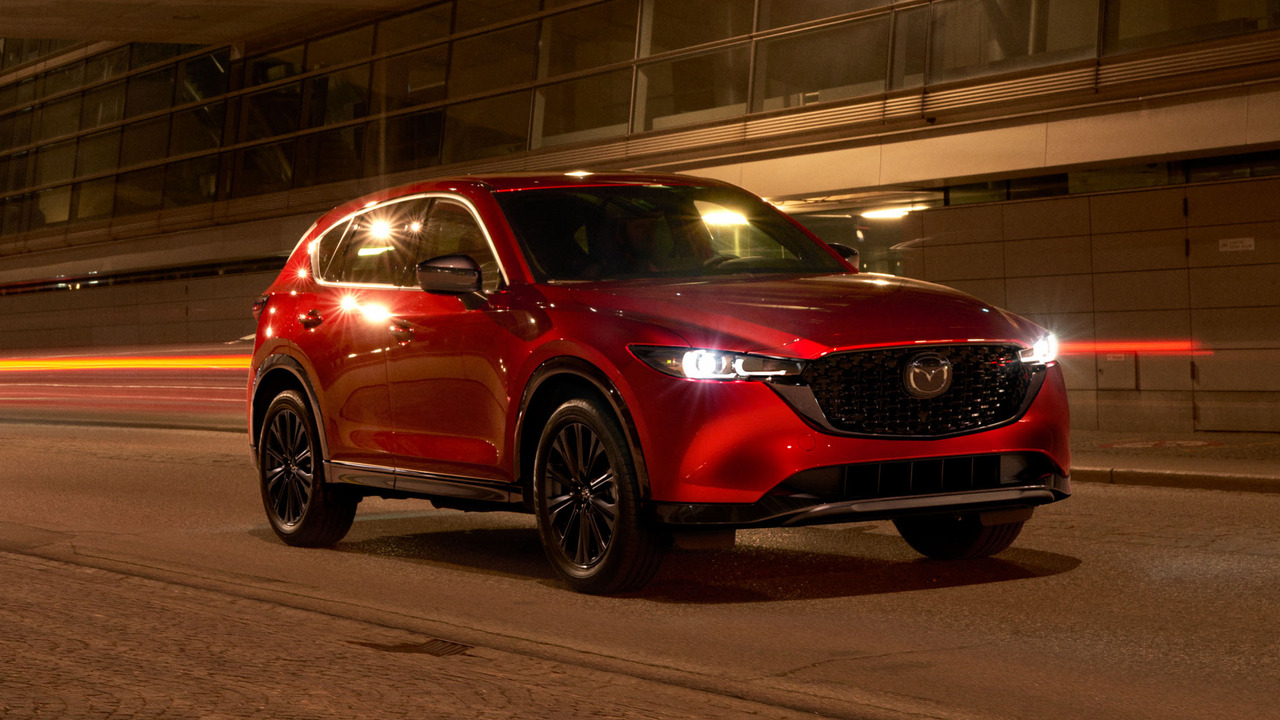
Mazda wasn’t a latecomer to SUVs, but the brand’s modern crossover breakthrough came with models like the CX-5, which helped Mazda scale up SUV volume while keeping a ‘driver’s car’ feel.
That “Zoom-Zoom” spirit carried through, blending responsive handling with family-friendly practicality. By refusing to chase trends and staying focused on driving enjoyment, Mazda proved that even everyday SUVs can have soul.
Subaru

Before crossovers were cool, Subaru was already building the blueprint. The brand’s early all-wheel-drive wagons, like the Legacy and Outback, offered SUV-like capability long before “SUV” became a marketing buzzword.
As consumer tastes evolved, Subaru’s lineup naturally shifted higher, evolving its wagon roots into modern crossovers like the Forester and Crosstrek. For Subaru, the SUV era wasn’t a leap, it was a continuation of what it had been doing all along.
Tesla

Tesla began with the original Roadster, then proved EVs could be fast and desirable in the mainstream with sedans like the Model S and Model 3.
That shifted with the Model X (delivered starting in 2015) and the Model Y (delivered starting in 2020), both of which became key to Tesla’s explosive growth. Today, the Model Y is one of the world’s best-selling vehicles, period. Tesla didn’t just follow the SUV trend; it electrified it.
MINI
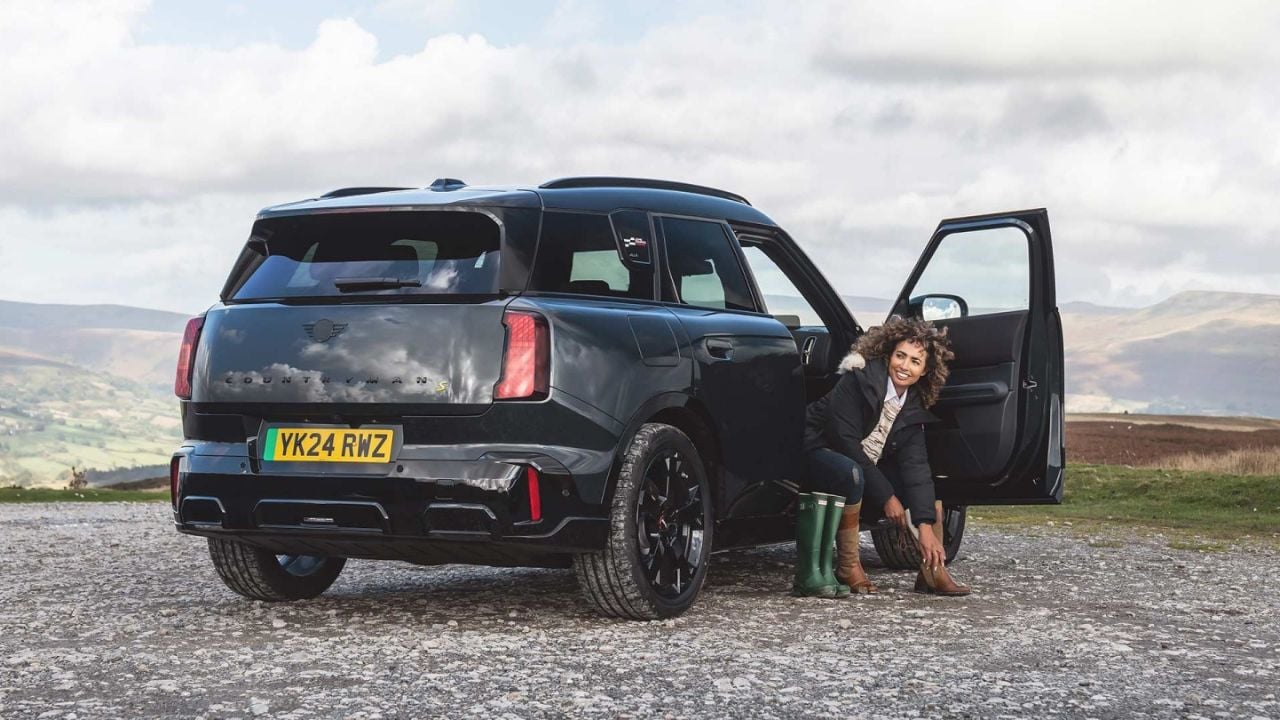
MINI built its identity around small, playful cars that made city driving fun. For decades, that formula worked, and the idea of an SUV-sized Mini seemed impossible.
Then came the Countryman in 2010, a crossover that gave the brand more space without losing its quirky personality. Some purists grumbled that it was “too big to be a MINI,” but buyers disagreed. The Countryman became a key part of MINI’s lineup, proving that even icons can grow up a little, as long as they keep their charm.
Conclusion

The SUV gold rush proved too tempting for almost every automaker to resist, no matter how much it seemed to contradict their identity. In the end, most of the brands that hesitated found their SUVs became best-sellers, validating a business case that once seemed unthinkable.
Only a few niche manufacturers like McLaren still hold out, though even they feel the market’s pull. The lesson is clear: in the auto industry, heritage and philosophy eventually make peace with reality, and sometimes, that peace comes on four driven wheels.