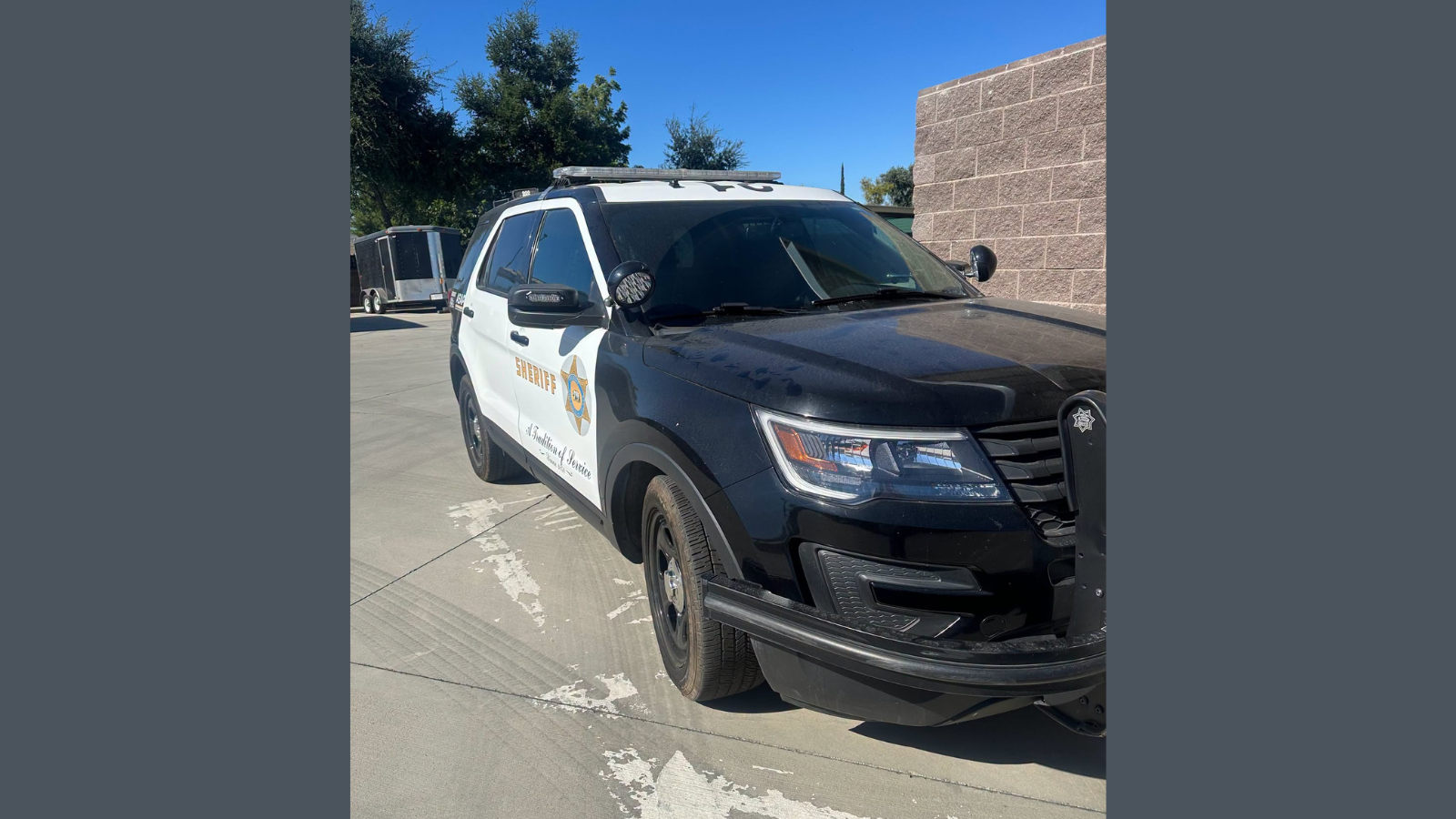
A California Highway Patrol (CHP) officer working a construction detail stumbled onto something that looked completely out of place late one evening: a black-and-white Los Angeles County Sheriff’s Department patrol vehicle sitting along State Route 99 near Manteca, roughly 300 miles from where most people would expect to see it.
At first glance, there was little reason to believe the SUV wasn’t an authentic law enforcement vehicle. It wasn’t.
What happened next led to a traffic stop, a DUI arrest, and left plenty of Californians wondering how someone ended up driving what appeared to be a fully marked sheriff’s cruiser on a public highway.
The unusual arrest has also sparked a broader conversation about retired police vehicles, replica patrol cars, and just how closely a civilian vehicle can resemble an active law enforcement cruiser before it crosses the line.
CHP Stops What Appeared to Be a Sheriff’s Patrol Vehicle
A CHP officer working a construction detail on northbound State Route 99 near Yosemite Avenue at approximately 10:13 p.m. on July 6 noticed what appeared to be a black-and-white Los Angeles County Sheriff’s Department patrol vehicle stopped partially on the shoulder and roadway. The SUV was not an authorized law enforcement patrol vehicle.
As the officer attempted to make contact, the driver pulled away before being stopped at the Yosemite Avenue off-ramp. The driver, identified as Kevin Michael Silva, was arrested on suspicion of driving under the influence of alcohol and operating an unauthorized law enforcement patrol vehicle. CHP did not explain how Silva obtained the vehicle or say whether investigators believe it had been used to stop motorists or otherwise impersonate law enforcement.
The agency also used the unusual arrest as an opportunity to remind drivers what to do if they are stopped by a vehicle claiming to be law enforcement.
CHP said legitimate patrol vehicles are equipped with emergency lights and a siren. Drivers should activate their right turn signal to acknowledge the officer, pull over at the nearest safe, well-lit location, remain inside the vehicle with their hands visible, and wait for the officer to approach. If you’re ever unsure whether a traffic stop is legitimate, CHP says it’s appropriate to call 911 to verify the officer’s identity before proceeding.
What California Law Says About Former Police Vehicles
California law places strict restrictions on former law enforcement vehicles that return to civilian ownership.
Under California Vehicle Code Section 27604, agencies selling former patrol vehicles must repaint or partially repaint them so they no longer resemble active traffic enforcement vehicles. Law enforcement insignia and other identifying markings must also be removed before the vehicle is operated on a public street or highway.
Limited exceptions exist for vehicles used exclusively in movie or television productions, certain museum vehicles, historic vehicles, and former law enforcement vehicles without insignia that are painted one solid color.
A related statute, Vehicle Code Section 27605, generally prohibits private individuals from owning or operating vehicles painted to resemble active traffic enforcement vehicles unless one of the statutory exceptions applies.
In other words, the question is not simply whether a civilian can own a retired police vehicle. It is whether that vehicle can legally be driven on public roads while still appearing to be an active patrol unit.
Social Media Couldn’t Decide if It Was Real or a Replica
The CHP’s Facebook post quickly attracted hundreds of comments, with many readers less interested in the DUI arrest than in one question: Where did the patrol vehicle come from?
Without additional details from CHP, commenters floated a wide range of theories. Some wondered whether the SUV had once belonged to the Los Angeles County Sheriff’s Department, while others believed it was a carefully built replica or a retired patrol vehicle that had somehow returned to public roads without its markings and equipment being removed.
Several commenters also discussed California’s distinctive steady forward-facing red light found on many emergency vehicles. Others countered that someone capable of building such a convincing patrol-car clone would probably know about that detail as well.
Readers also questioned why Silva was not charged with impersonating a peace officer. However, police impersonation and operating a vehicle that illegally resembles a law enforcement patrol unit are separate issues. CHP did not say Silva had attempted to pull anyone over, present himself as an officer, or exercise police authority.
Why We Don’t Have a Mugshot
If you’re wondering why we don’t have a booking photo or additional information about the driver, you’re asking the same question we did.
CHP said Kevin Michael Silva was booked into the San Joaquin County Jail following the arrest. We searched the jail’s online inmate roster but couldn’t find him. Another local news outlet reported reaching the same dead end.
Frankly, if that frustrates you, it probably should.
Public arrests generate public interest, and it is reasonable to expect booking information to remain available long enough for the public to verify what happened. Whether that system should be more transparent is a conversation worth having with the agencies that maintain those records and with California lawmakers who write the laws governing public access.
Questions about the missing booking photo and the lack of additional information are not questions news organizations can answer on their own. They are fair questions to direct to the California Highway Patrol and the San Joaquin County Sheriff’s Office. California residents who believe booking records should remain publicly accessible for longer may also want to raise the issue with their elected representatives.
Until additional information is released, several questions remain unanswered, including how Silva obtained the vehicle and whether it had ever been used to impersonate law enforcement.
An arrest is an allegation, and the driver is presumed innocent unless and until proven guilty in court.