

A viral clip circulating on X (formerly Twitter) is drawing attention to what may be one of the most consequential leaps in electric vehicle infrastructure in years.
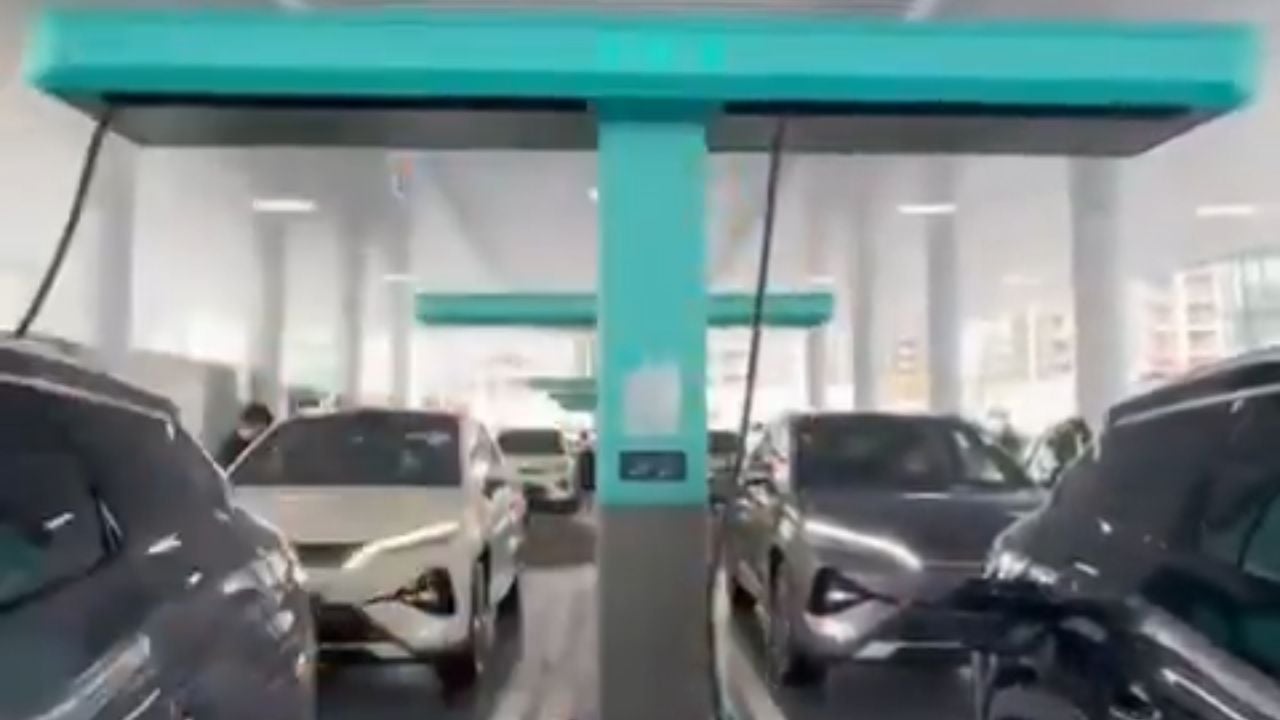
The video showcases Chinese automaker BYD demonstrating its new “Flash Charging” system paired with the second-generation Blade Battery. That combination pushes charging performance into territory once thought impractical for mass-market EVs.
The breakthrough is the product of sheer electrical throughput. BYD’s Flash Charging stations deliver up to 1,500 kilowatts of power, or 1.5 megawatts, a figure that dwarfs the 250 to 350 kW peak output of most high-end public fast chargers currently deployed across Europe and North America.
Tesla’s latest Supercharger technology peaks at around 325–500 kW, far below BYD’s 1.5 MW “Flash Charging” stations. In other words, BYD’s system delivers roughly three times the maximum power of Tesla’s most advanced chargers.
This leap is enabled by a 1000-volt electrical architecture and current delivery reaching roughly 1500 amps. This, of course, requires entirely new thermal management strategies and power electronics to maintain stability under such extreme loads.
The result is a charging curve that compresses refueling time to near parity with internal combustion vehicles.
From 10% to 70% in Five
BYD claims its Blade Battery 2.0 can move from 10 percent to 70 percent state of charge in just five minutes and reach 97 percent in approximately nine minutes under optimal conditions. In practical terms, that translates to roughly 249 miles of driving range added in the time it takes to grab a coffee. Such a metric directly targets one of the biggest psychological barriers to EV adoption.
Chinese carmaker BYD unveils a recharge as fast as filling up with gaspic.twitter.com/EoNNclxyEY
— Tansu Yegen (@TansuYegen) April 8, 2026
Technically, the gains are not coming from charging hardware alone. The second-generation Blade Battery introduces a revised lithium manganese iron phosphate chemistry, often abbreviated as LMFP, paired with a silicon-carbon anode structure.
This combination improves ion mobility while maintaining the thermal stability that made the original Blade battery notable. BYD also credits a proprietary “FlashPass” ion transport system that reduces internal resistance and heat buildup during high-rate charging, allowing the battery to safely accept extreme current without degradation.
Thermal control is a critical piece of the puzzle. At megawatt charging levels, even small inefficiencies can generate enormous heat. BYD’s system integrates advanced liquid cooling within both the battery pack and the charging cable, alongside silicon carbide power semiconductors that reduce switching losses and improve efficiency at high voltages.
The infrastructure itself is also supported by on-site energy storage systems, which act as buffers to smooth out grid demand and ensure consistent delivery even in regions with limited electrical capacity.
Thousands of Stations Already in China
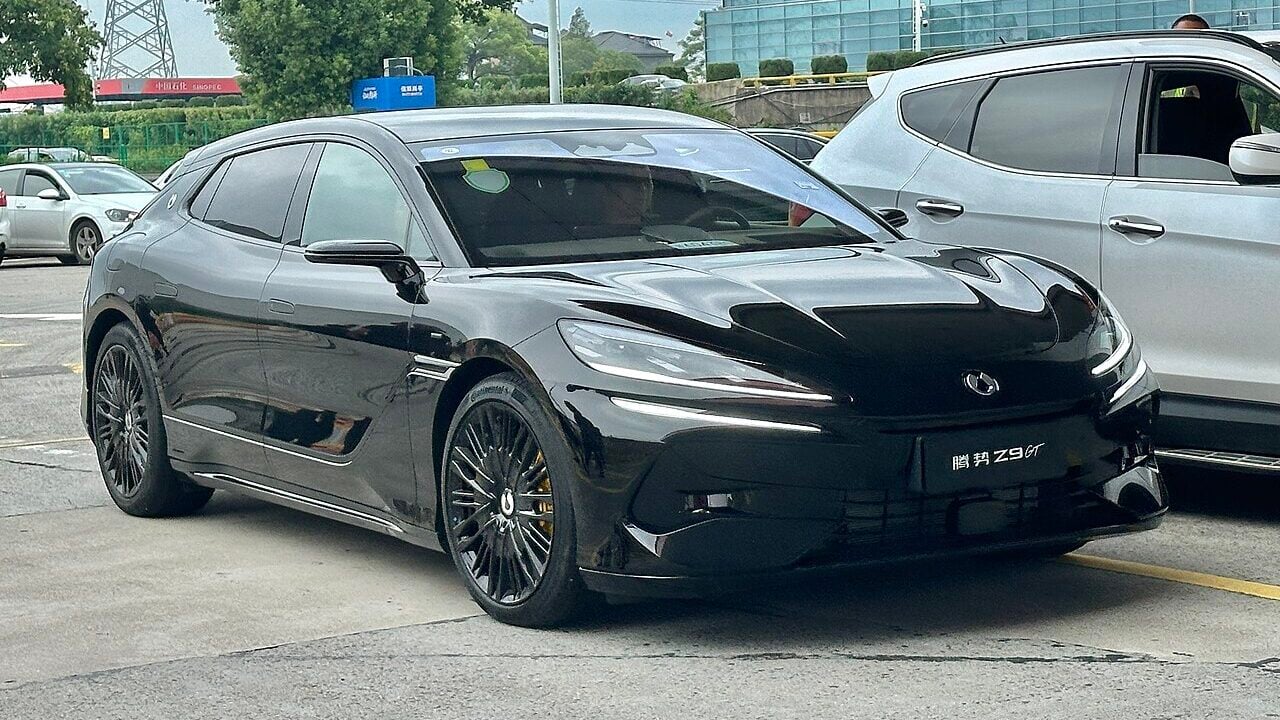
Importantly, the technology is not just theoretical. Vehicles such as the Denza Z9 GT and upcoming models built on BYD’s latest platform are already designed to take advantage of these charging speeds, though compatibility remains limited for now.
BYD has installed thousands of Flash Charging stations across China and plans to scale that number to around 20,000 by the end of 2026.
If BYD can scale its Flash Charging stations to match the ubiquity of Tesla’s Supercharger network, it would be transformative. A 1.5‑megawatt charger doesn’t just shave minutes off charging; it redefines the EV experience.
Imagine replenishing a 100 kWh battery in under five minutes: that’s gas‑station convenience with electric sustainability. For consumers, the psychological barrier of “range anxiety” evaporates when charging feels instantaneous. For fleets, downtime shrinks dramatically, unlocking new efficiencies in logistics and public transit.
The selling point becomes irresistible: buying a BYD would be tapping into a network that makes electricity as accessible as fuel. Tesla’s advantage has always been infrastructure, but if BYD can replicate that reach with superior speed, it shifts the competitive landscape.
Suddenly, the question isn’t whether EVs can replace combustion but which brand delivers the fastest, most seamless energy experience.
Why Aren’t More People Talking about This?
Despite the heady performance, people aren’t talking about this enough. Why? Because the system requires a tightly integrated ecosystem of automobile, battery, and charger, something BYD controls internally but most Western automakers do not.
Grid constraints, cost of deployment, and regional regulatory barriers also limit immediate global expansion.
China’s 5 minute full-charged EV charging stations pic.twitter.com/9iO3n3H36C
— Massimo (@Rainmaker1973) April 9, 2026
Even so, the implications are difficult to ignore. If scaled successfully, megawatt-level charging could eliminate one of the last functional advantages of gasoline vehicles, reshaping consumer expectations and accelerating the transition to electric mobility in markets willing to support the infrastructure.