BMW keeps insisting the manual transmission is on borrowed time. Earlier this year, BMW M boss Frank van Meel openly admitted that developing modern manual gearboxes is becoming increasingly difficult because of emissions regulations, torque limitations, and efficiency targets.
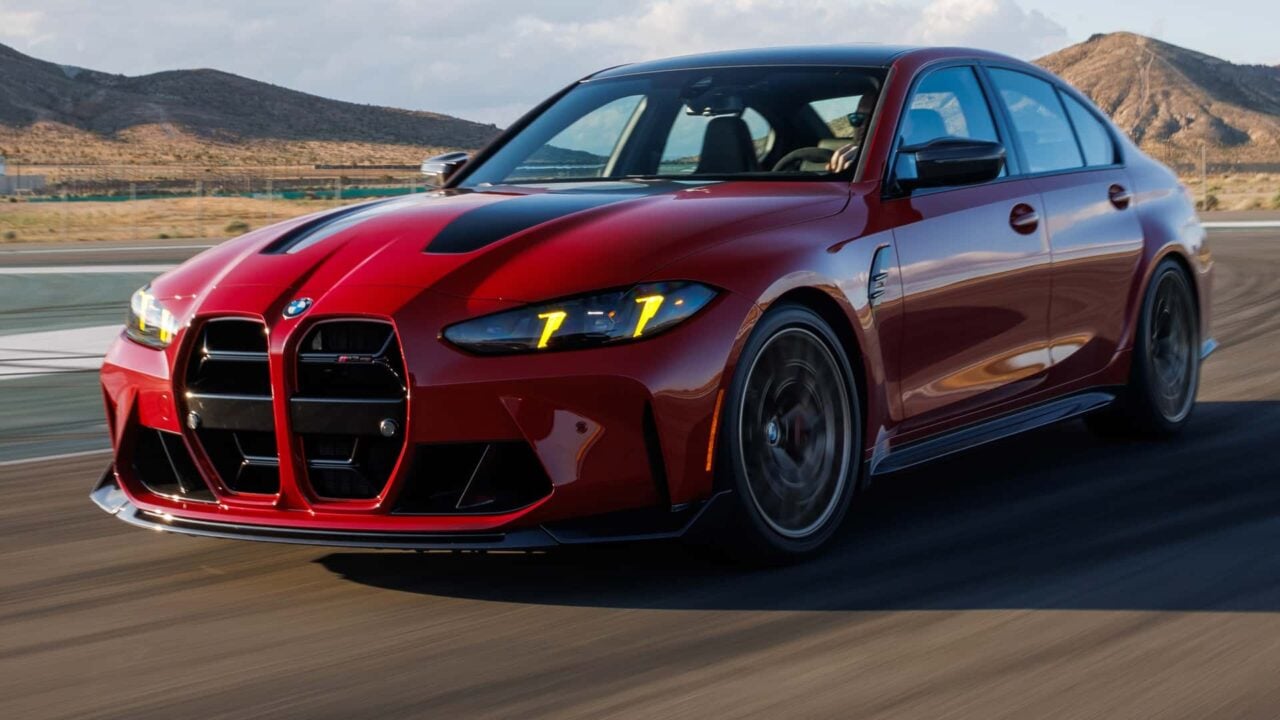
Then BMW went ahead and built something enthusiasts thought was basically impossible. Meet the 2027 BMW M3 CS Handschalter, a limited-production, rear-wheel-drive, six-speed manual M3 CS designed exclusively for the United States and Canada.
The timing feels intentional. BMW says the car is meant to celebrate the end of the current G80-generation M3 before the next chapter begins with electrification and new Neue Klasse-based models later this decade.
For enthusiasts worried the modern M3 was becoming too digital, too heavy, or too all-wheel-drive-dependent, this may be BMW’s last great apology letter.
BMW Finally Combined The Right Ingredients
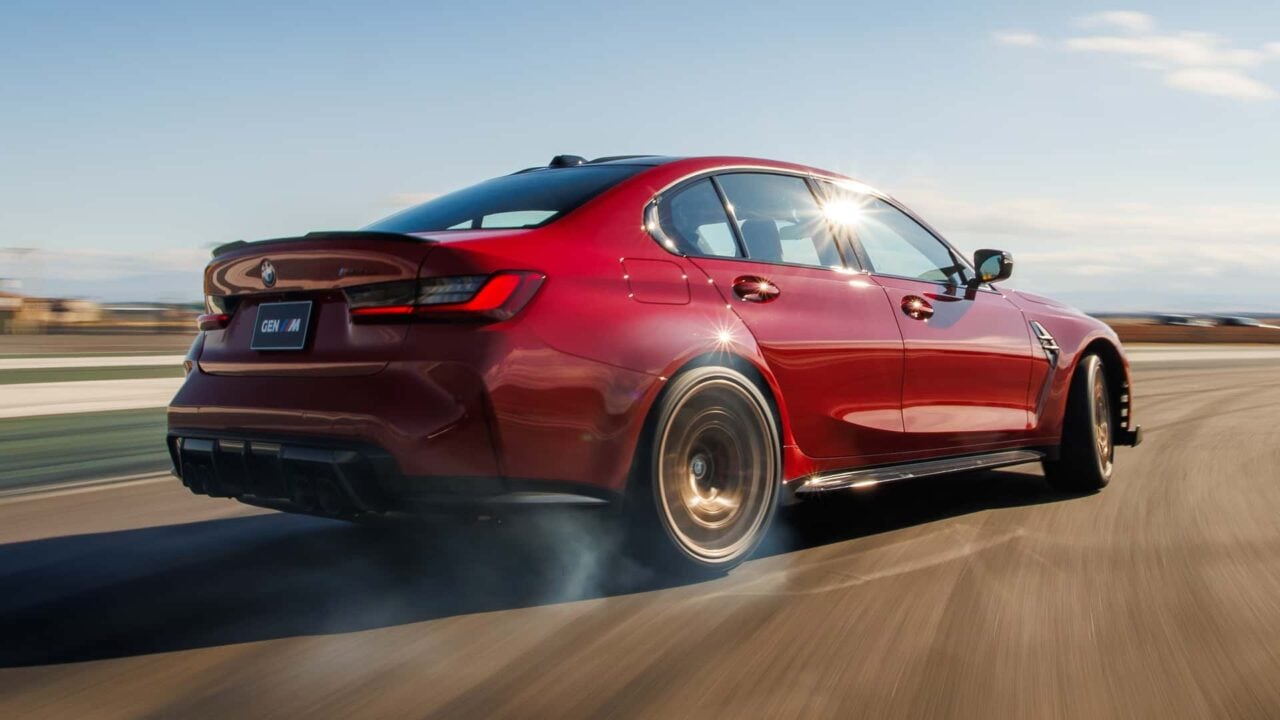
The regular M3 CS already existed, but it came exclusively with xDrive all-wheel drive and an automatic transmission. This new Handschalter version completely changes the formula by ditching the front axle and bringing back a proper six-speed manual gearbox.
That combination immediately makes this one of the most enthusiast-focused M3 variants BMW has built in years. The rear-wheel-drive setup removes additional drivetrain weight while also restoring the tail-happy personality many purists felt recent M cars started to lose.
The powertrain itself uses BMW’s familiar S58 twin-turbocharged 3.0-liter inline-six. Unlike the 543-horsepower all-wheel-drive M3 CS, however, the manual version drops output to 473 horsepower and 406 lb-ft of torque because the manual gearbox cannot handle the higher torque figures.
Even with the reduced output, performance remains serious. BMW claims 0-60 mph happens in 4.1 seconds, while top speed reaches 180 mph with the standard M Driver’s Package equipped. Knowing BMW, those numbers are probably conservative.
Lighter, Sharper, And More Focused
BMW says the M3 CS Handschalter weighs up to 75 pounds less than a standard M3, though that figure requires optional carbon-ceramic brakes to achieve the full reduction.
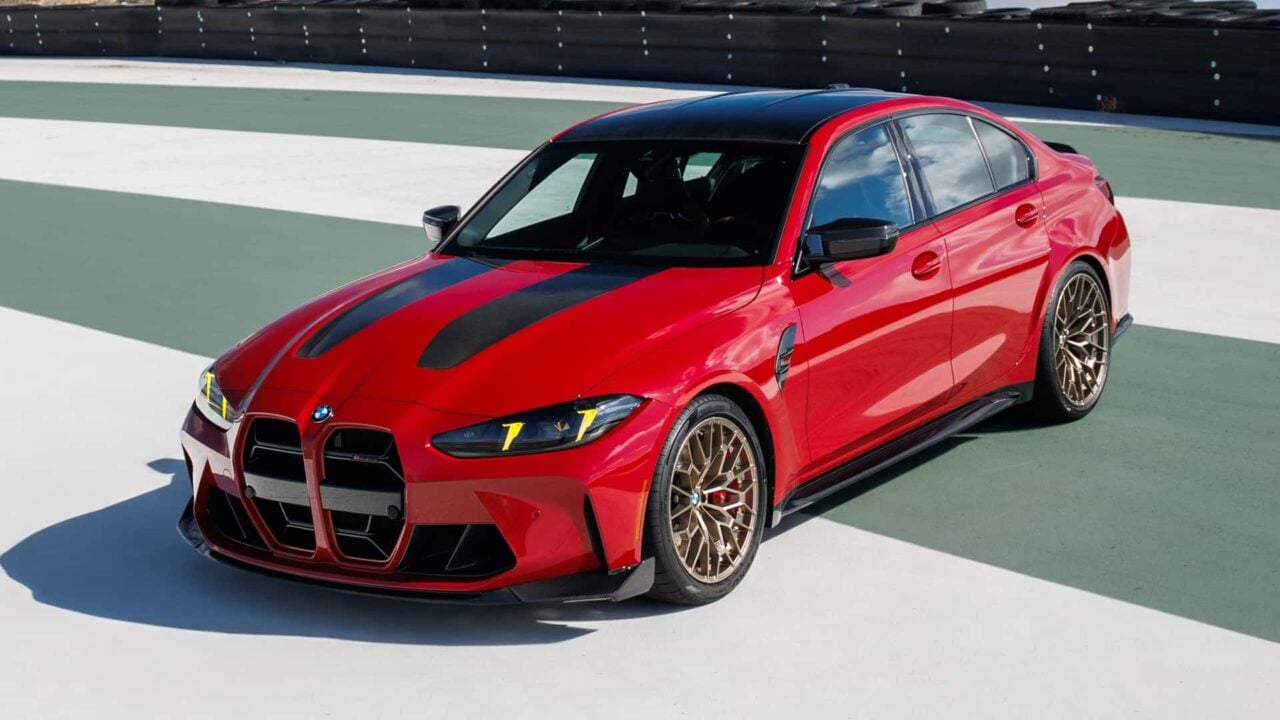
Carbon fiber appears almost everywhere. The roof, hood details, splitter, diffuser, mirror caps, rear spoiler, center console, and bucket seats all use lightweight composite materials, while the titanium exhaust system helps shave additional weight.
BMW also borrowed suspension hardware directly from the M4 CSL. The car receives revised springs, updated camber settings, modified axle kinematics, auxiliary springs, and a lowered rear axle link designed specifically around the rear-wheel-drive configuration.
The result sounds like a much sharper and more playful version of the already aggressive M3 platform. Buyers can even add optional track-focused tires and an aluminum front strut brace for additional rigidity.
Visually, the car keeps the familiar M3 CS formula but adds a few retro touches. Yellow daytime running lights remain, while buyers can choose between Isle of Man Green, Black Sapphire, Imola Red, or Techno Violet paint finishes. The last two are especially interesting because both colors pay tribute to classic E36 and E46-era BMW M cars.
This Might Be The Last Manual M3 Ever
The bigger story here may be what this car represents rather than the actual car itself. BMW has already confirmed the next-generation M3 lineup will eventually include both electric and gasoline-powered versions, but reports increasingly suggest the future combustion-powered M3 may abandon both manual transmissions and rear-wheel drive entirely.
If that happens, the M3 CS Handschalter becomes historically significant overnight. It would effectively mark the end of the manual, rear-wheel-drive M3 lineage that helped define BMW performance cars for decades.
BMW clearly understands that significance. The company is limiting production exclusively to North America, one of the few remaining markets where demand for manual performance cars still exists in meaningful numbers.
Pricing starts at $107,100 in the United States before destination fees, while Canadian pricing begins at CAD $132,500. That makes it substantially more expensive than a standard M3, though buyers interested in this sort of car probably are not shopping rationally anyway.
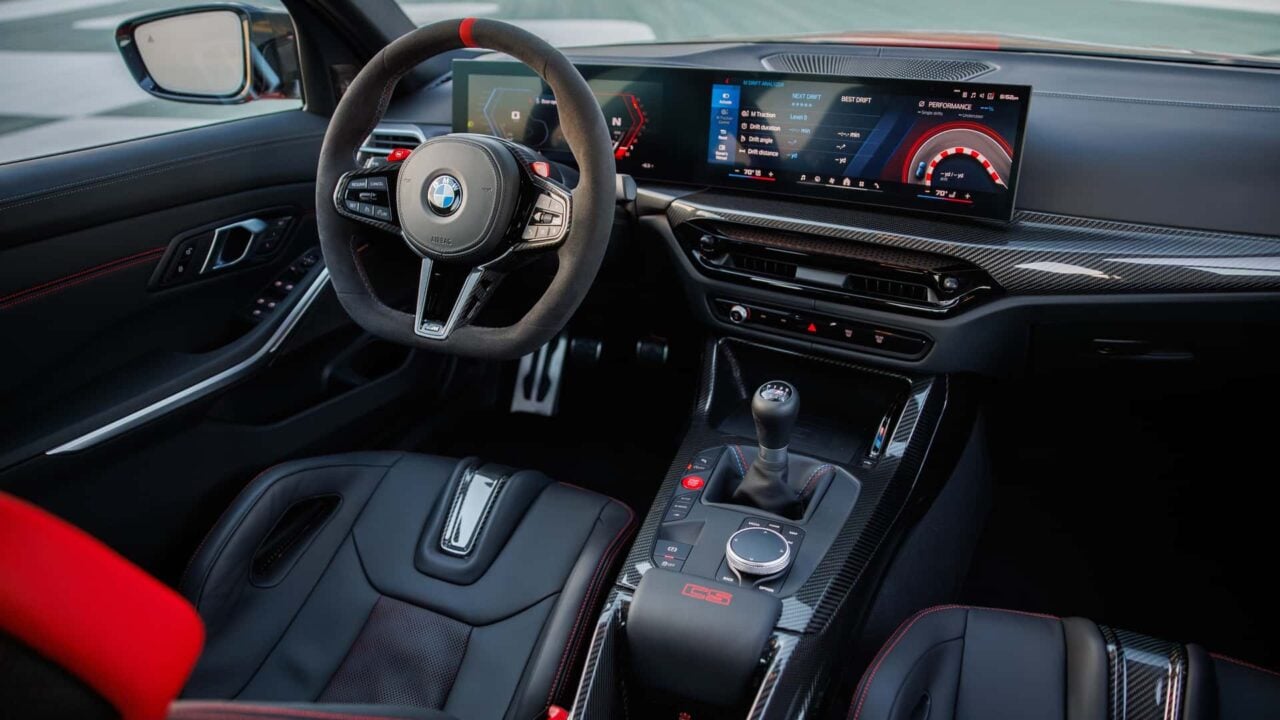
Cars like this barely exist anymore. A manual transmission, rear-wheel drive, a straight-six engine, aggressive chassis tuning, and absolutely no attempt to prioritize efficiency or electrification above driver engagement.
BMW may be preparing for an electric future, but this feels like one final reminder that the company still remembers exactly what made enthusiasts fall in love with M cars in the first place.