Across land, sea, and sky, the biggest war machines ever built were feats of engineering; statements of power. From battleships that dwarfed city blocks to tanks that rolled like fortresses, these giants were designed to dominate, intimidate, and endure. Every bolt and rivet carried the weight of a nation’s ambition, and their presence alone could shift the balance of war.
Some pushed the limits of practicality, others became legends through sheer scale. But all of them reflect a time when military might was measured not just in strategy, but in tons of steel and firepower. These six machines still stand as awe-inspiring reminders of what happens when engineering meets the battlefield.
Maus Super Heavy Tank
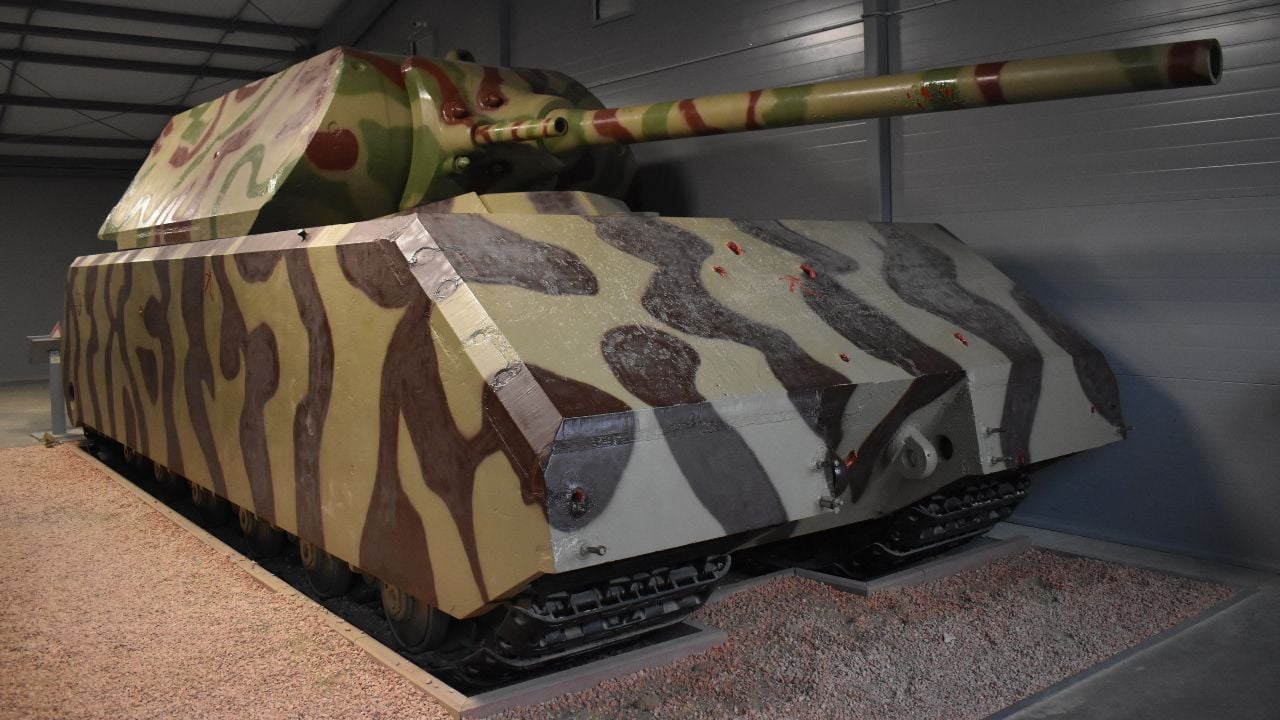
According to Warfare History Network, Germany’s Panzer VIII Maus remains the heaviest tank ever built, weighing about 188 metric tons.
Armed with a 128 mm main gun and a coaxial 75 mm, it was protected by armor up to 220 mm thick—extremely resistant to most contemporary anti-tank weapons. Only two prototypes were completed late in WWII, and their extreme bulk made them nearly impossible to deploy. One surviving Maus is preserved at the Kubinka Tank Museum, a monument to engineering ambition and battlefield impracticality.
Yamato Battleship

Japan’s Yamato was the largest battleship ever built, stretching 863 feet and displacing about 71,659 tons (full load).
Its nine 18.1-inch guns—the biggest ever mounted on a warship—could fire shells weighing over 3,000 pounds out to about 26 miles (42 km), With armor up to 650 mm thick and a top speed of 27 knots, Yamato was a floating fortress built for dominance. Though sunk in 1945 during Operation Ten-Go, its legacy endures as a symbol of naval ambition and engineering might.
Schwerer Gustav Railway Gun

Schwerer Gustav was the largest-caliber rifled artillery piece ever used in combat, with a barrel over 100 feet long and shells weighing nearly 7 tons.
Built by Krupp for the German Army, this 80 cm railway gun could strike targets up to 29 miles away, famously bombarding Soviet fortifications during the 1942 siege of Sevastopol. Deploying Gustav required custom rail lines and over 1,000 personnel, making it a logistical operation as massive as the weapon itself. Though its tactical value was limited, Gustav remains a towering symbol of wartime spectacle and engineering ambition.
Antonov An-225 Mriya

The Antonov An-225 Mriya was the largest aircraft ever to fly, with a wingspan of 290 feet and a maximum takeoff weight of 640 metric tonnes.
Powered by six turbofan engines, it could haul oversized cargo like tanks, generators, and even Soviet space shuttles across continents without refueling. Only one was ever completed, and it became a global icon, setting records and drawing crowds at air shows. Though destroyed in 2022, Mriya remains a symbol of aviation ambition and unmatched engineering scale.
USS Gerald R. Ford Aircraft Carrier

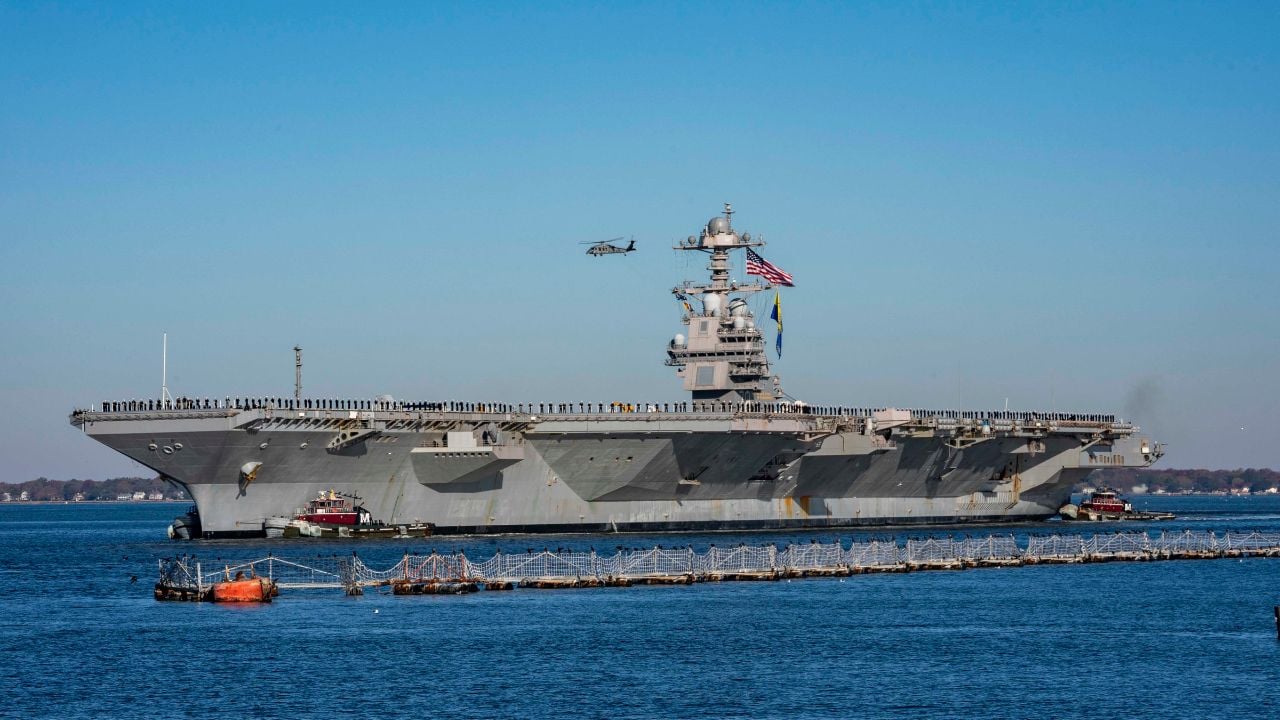
USS Gerald R. Ford is the lead ship of America’s newest class of aircraft carriers, displacing over 100,000 tons and stretching nearly 1,100 feet.
Powered by twin nuclear reactors, it boasts virtually unlimited range and features an electromagnetic launch system that improves aircraft efficiency and reduces wear. With capacity for more than 75 aircraft and a crew of over 4,500, it’s a floating fortress of air power and defense. As the most advanced carrier ever built, Ford represents a bold leap in naval warfare and a cornerstone of U.S. maritime strategy.
B-52 Stratofortress

The B-52 Stratofortress has been a cornerstone of American air power since the 1950s, with a wingspan of over 185 feet and a max takeoff weight of 488,000 pounds.
Powered by eight jet engines, it can carry nuclear or conventional payloads across 8,800 miles without refueling—extended even further with aerial tankers. Its long-range patrols and enduring presence made it a Cold War icon, and continuous upgrades keep it flying today. The B-52 remains a symbol of strategic reach, psychological deterrence, and unmatched aviation longevity.
Echoes of Steel and Silence

The legacies of these colossal machines linger like shadows across history, each one a monument to ambition forged in steel. Size became a language of power, and engineers answered with creations too massive to ignore—symbols of national pride and technological daring. Today, they rest as relics in museums and memorials, studied and admired by generations who see awe where once there was fear.
There’s poetry in their rust and silence. These machines speak to what humanity can build when vision meets limitless ambition—icons not just of war, but of imagination cast in metal and fire.