There’s something magical about firing up your engine on a crisp European morning, knowing you’re about to tackle some of the world’s most legendary tarmac. Whether you’re behind the wheel of a nimble sports car, a touring grand tourer, or even a well-sorted hot hatch, Europe serves up driving experiences that’ll remind you why you fell in love with cars in the first place.
These scenic routes are proving grounds where driver, machine, and engineering excellence come together. From alpine passes that test your heel-and-toe technique to coastal stretches perfect for opening up the throttle, each road has earned its reputation among driving purists worldwide.
Finding Roads That Spark Adventure and Wonder
The best driving roads share certain DNA. They challenge your skills without being dangerous, reward smooth inputs, and offer enough variety to keep you engaged for hours. Surface quality matters enormously – there’s nothing worse than gorgeous scenery paired with broken asphalt that punishes your suspension and ruins the rhythm.
Elevation changes are crucial, too. A great driving road flows like a roller coaster, with climbs that let your engine breathe hard, followed by descents where you can work those brakes. The corners need character; not just endless straights or repetitive curves, but a mix of sweepers, hairpins, and technical sections that let you explore your car’s capabilities.
Weather adds another dimension. Roads that transform with the seasons keep calling you back. A pass that’s thrilling in summer sunshine becomes an entirely different beast when autumn mist rolls in or spring snow melts off the peaks.
Stelvio Pass, Italy: The Alpine Master Class

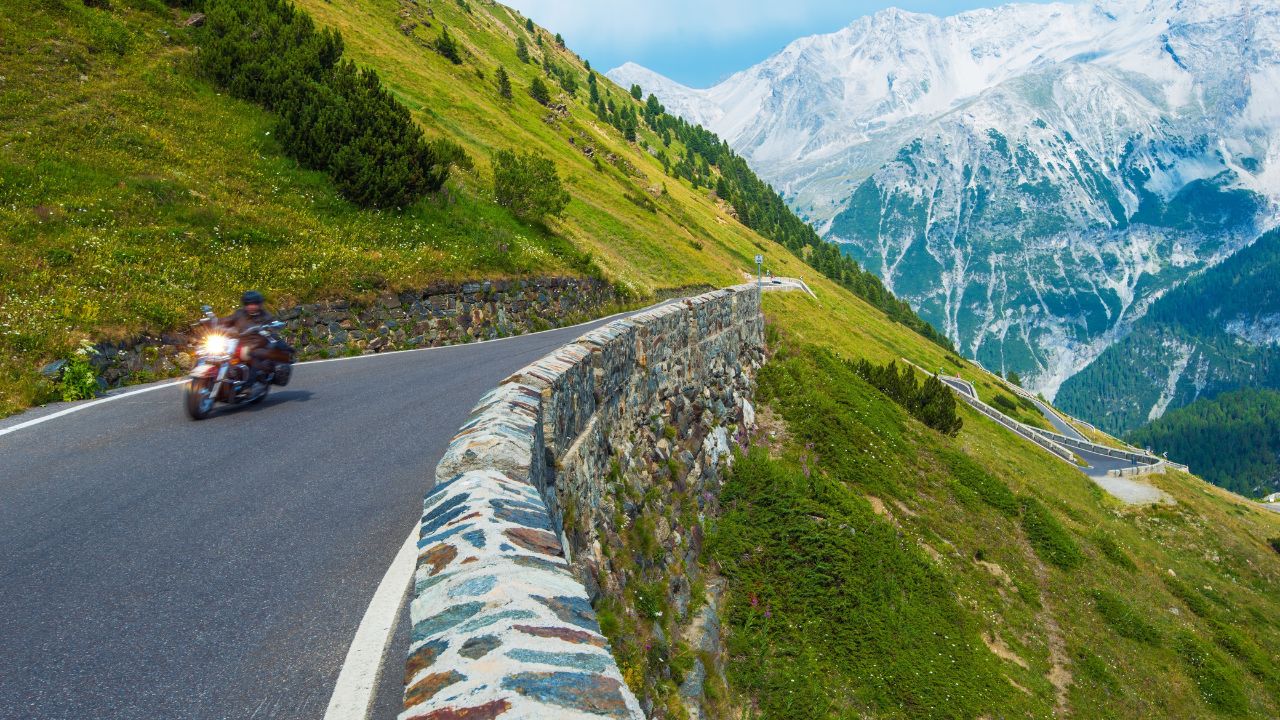
Ask any serious driving enthusiast about bucket-list roads, and the Stelvio Pass tops nearly every list. This isn’t just tourist attraction hype – the numbers tell the story. At 9,045 feet above sea level, it’s the highest paved mountain pass in the Eastern Alps and one of the highest paved passes in the Alps, featuring 48 numbered hairpin bends on the Prato allo Stelvio (Trafoi) approach.
The engineering here is remarkable. Built between 1820 and 1825, the road maintains consistent gradients that modern sports cars can handle comfortably while still challenging drivers with technical precision. The surface is generally excellent, recently repaved in key sections, giving you confidence to push harder through the tighter corners.
What makes Stelvio special for car people is how it rewards different driving styles. In a lightweight roadster like a Lotus Elise or Miata, you can dance through the switchbacks, carrying momentum and barely touching the brakes. Bring something with more grunt – say a Porsche 911 or BMW M3 – and you can explore the pull out of corners, feeling that surge as you climb toward the clouds.
The pass is typically open from May through November (weather-dependent), and closed through winter, though early and late season conditions can be tricky. Peak summer brings crowds, but the road opens early (around 6 AM) for serious drivers who want clean runs. Local traffic is minimal – mostly motorcycles and fellow enthusiasts who respect the unwritten rules of mountain driving.
Germany’s Romantic Road: Heritage and Handling

Don’t let the tourist-friendly name fool you – Germany’s Romantic Road offers rougly 260-285 miles of varied driving that showcases why German automotive culture runs so deep. This route from Würzburg to Füssen isn’t about speed; it’s about precision, smoothness, and appreciating how a well-engineered car can make even moderate paces feel special.
The road surface throughout Bavaria is typically German: immaculate. Speed limits vary intelligently with conditions, and the traffic flow usually lets you find your rhythm. The route combines gentle sweepers through wine country with tighter sections through forested hills, plus some beautiful straight stretches where you can appreciate your car’s cruising refinement.
This is perfect territory for grand tourers. Something like a BMW 6 Series, Mercedes SL, or Audi A7 shows its true character here: comfortable enough for the full day’s drive, but responsive enough to make the twisty bits engaging. The numerous stops at medieval towns give you time to let the car cool down while you explore some genuine automotive history. Many of these villages have connections to early automotive pioneers or house small museums celebrating local racing heroes.
The route works year-round, though autumn offers special rewards. The changing leaves are spectacular, temperatures are perfect for spirited driving without overheating concerns, and tourist traffic drops significantly after September.
Route Napoleon, France: Technical Precision Meets Alpine Beauty

Named after Napoleon’s 1815 march from the coast to Grenoble, this about 200-mile route combines Mediterranean starting points with serious Alpine driving. What makes it exceptional for car enthusiasts is the variety: you’ll experience everything from coastal cruising to technical mountain passes, often within the same hour.
The road begins near Cannes, letting you enjoy some relaxed miles while warming up tires and getting into rhythm. But don’t get too comfortable: the route quickly turns serious as it climbs through the Alpes-de-Haute-Provence. The surface quality is generally excellent, maintained to French standards that prioritize smooth tarmac over perfect straightness.
Key sections like the approach to Col de Luens offer sustained climbing with well-engineered curves that flow naturally. The gradients rarely exceed what a modern sports car handles easily, but there’s enough elevation gain to feel your engine working. Naturally aspirated cars shine here – there’s something pure about hearing a flat-six or V8 pull hard at altitude.
The route passes through Sisteron, where you can stop to check your car over and grab excellent local food. The final push toward Grenoble includes some of the best driving, with longer sweepers that let you carry speed while still demanding attention. Total drive time varies from 4-6 hours depending on stops and traffic, making it perfect for a day trip or leisurely weekend exploration.
Atlantic Road, Norway: Engineering Marvel Meets Raw Power

Norway’s Atlantic Road (Atlanterhavsveien) proves that sometimes the most memorable drives are the shortest ones. At just 8.3 km (5.2 miles) long, this seems almost insignificant until you realize it connects eight small islands with eight bridges, creating one of the most dramatic driving experiences in Europe.
The engineering is astounding. The Storseisundet Bridge, the route’s centerpiece, appears to launch cars into thin air due to its curved design – though it’s perfectly safe at legal speeds. What makes this special for driving enthusiasts is how the road interacts withthe weather. On calm days, it’s a scenic cruise with stunning views. When North Atlantic storms roll in, it becomes something entirely different – waves crash over the guardrails, wind buffets your car, and the driving experience becomes genuinely challenging.
The road opened in 1989 after six years of construction in brutal conditions. The surface is built to withstand salt spray and temperature extremes, so it offers good grip in most conditions. However, this isn’t a road for high speeds: the real thrill comes from the environment and the engineering accomplishment of driving on what feels like a bridge to nowhere.
Cars with good weather sealing and solid wind stability work best here. A heavy, well-planted grand tourer handles the crosswinds better than a light sports car, though both can be spectacular in their own ways. The route is accessible year-round, but winter driving requires serious preparation and weather monitoring.
Transfăgărășan Highway, Romania: The Hidden Gem

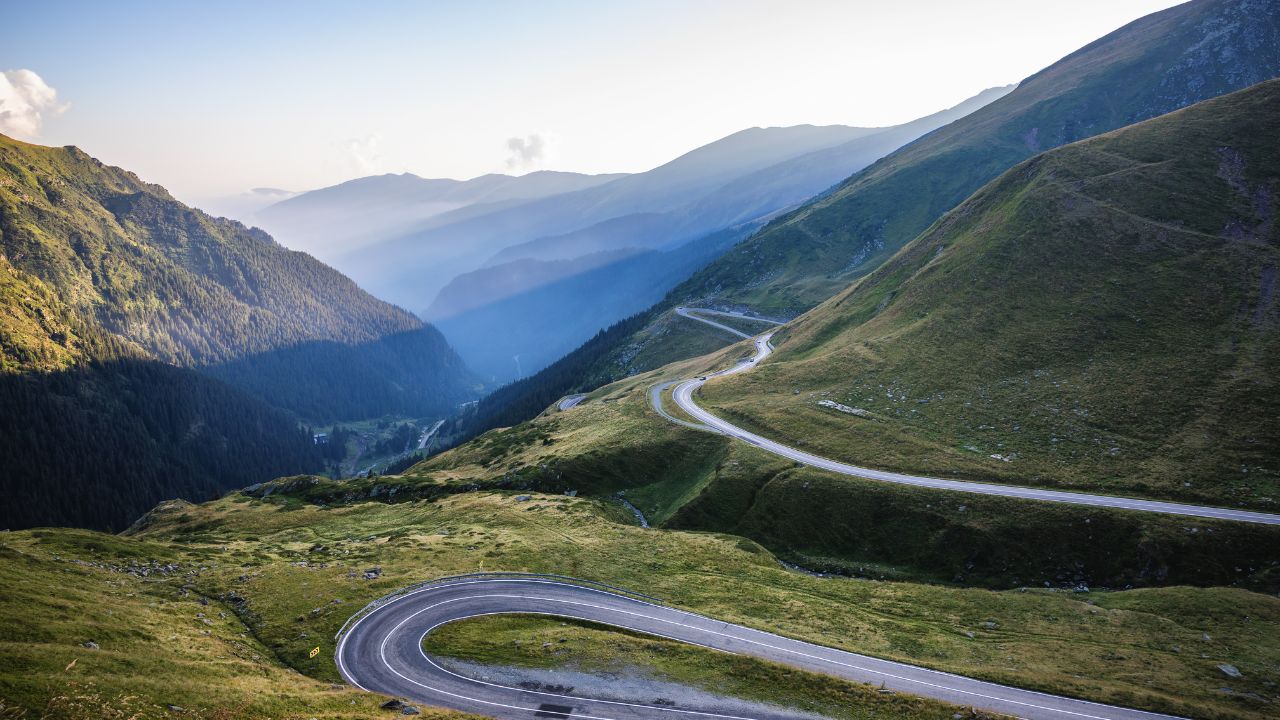
Romania’s Transfăgărășan Highway remained relatively unknown until Top Gear featured it, but serious drivers have been making pilgrimages here for decades. Built in the 1970s as a strategic military road, it climbs to 6,673 feet through the Carpathian Mountains, offering 90 kilometers of driving that rivals anything in the Alps at a fraction of the cost and crowds.
only fully open from June through October (weather-dependent) due to snow conditions, but when it’s open, it’s spectacular. The northern approach features dozens of hairpin bends with excellent sightlines and consistent surface quality. Unlike some alpine passes, the Transfăgărășan was built with modern vehicles in mind, so the curves flow naturally and gradients stay manageable.
What sets this road apart is the variety. You’ll encounter everything from technical hairpins requiring proper heel-and-toe technique to fast sweepers where you can stretch your car’s legs. The approach to Bâlea Lake includes some of the finest mountain driving in Europe: sustained climbs with perfect rhythm that let you explore your engine’s powerband while maintaining complete control.
The route offers excellent value for driving enthusiasts. Fuel costs are reasonable, accommodation nearby is affordable, and you can drive multiple runs without significant crowds. Local drivers are generally respectful of tourists, and police presence focuses on safety rather than minor speed violations.
Ring of Kerry, Ireland: Rhythm and Flow

Ireland’s Ring of Kerry proves that great driving roads don’t always need mountains or high speeds. This 111-mile loop around the Iveragh Peninsula offers a masterclass in rhythm and flow, with roads that undulate through landscapes shaped by thousands of years of Atlantic weather.
Tour buses often run the loop counterclockwise; some drivers follow that to avoid head-on encounters on narrow sections, while others go clockwise to reduce the chance of getting stuck behind buses, though serious drivers often start early to avoid tour buses. The road surface varies but is generally good, with recent improvements on key sections. What makes the Ring special is how it teaches you to read the landscape: corners often follow natural contours, and experienced drivers learn to anticipate the road’s character from the surrounding terrain.
This is ideal territory for cars that prioritize balance over raw power. A well-sorted hot hatch like a Golf GTI or Focus ST feels perfectly at home here, offering enough performance to make the twisty bits engaging while remaining practical for the full loop. The numerous villages provide natural stopping points, and local mechanics are surprisingly knowledgeable about European cars.
The weather adds significant character to the drive. Morning mist creates an otherworldly atmosphere, while afternoon sunshine reveals the dramatic coastal scenery. Rain is always possible, making this an excellent practice for wet-weather driving skills. The route remains accessible year-round, though winter conditions require careful preparation.
Planning Your European Driving Adventure

The beauty of European road trips lies in their accessibility. Unlike some global driving destinations, you can easily access these routes, rent excellent cars locally, and find support infrastructure wherever you go. Many European rental agencies cater specifically to driving enthusiasts, offering everything from hot hatches to exotic sports cars.
Consider the season carefully. Summer provides the most reliable weather and longest daylight hours, but also brings crowds and higher costs. Spring and autumn often offer the best compromise: good conditions with fewer tourists and more reasonable prices. Winter driving can be spectacular but requires proper preparation and equipment.
Each of these roads rewards return visits. Weather changes, different cars reveal new characteristics in familiar corners, and your own skills develop with experience. The best driving enthusiasts treat these routes like old friends – familiar enough to feel comfortable, but always offering something new to discover.
Whether you’re planning a weekend getaway or a longer European tour, these roads represent some of the finest driving experiences available anywhere. They remind us why we became car enthusiasts in the first place – for the pure joy of the perfect corner, the satisfaction of a smooth heel-and-toe downshift, and the thrill of discovering just how good the partnership between driver and machine can be.