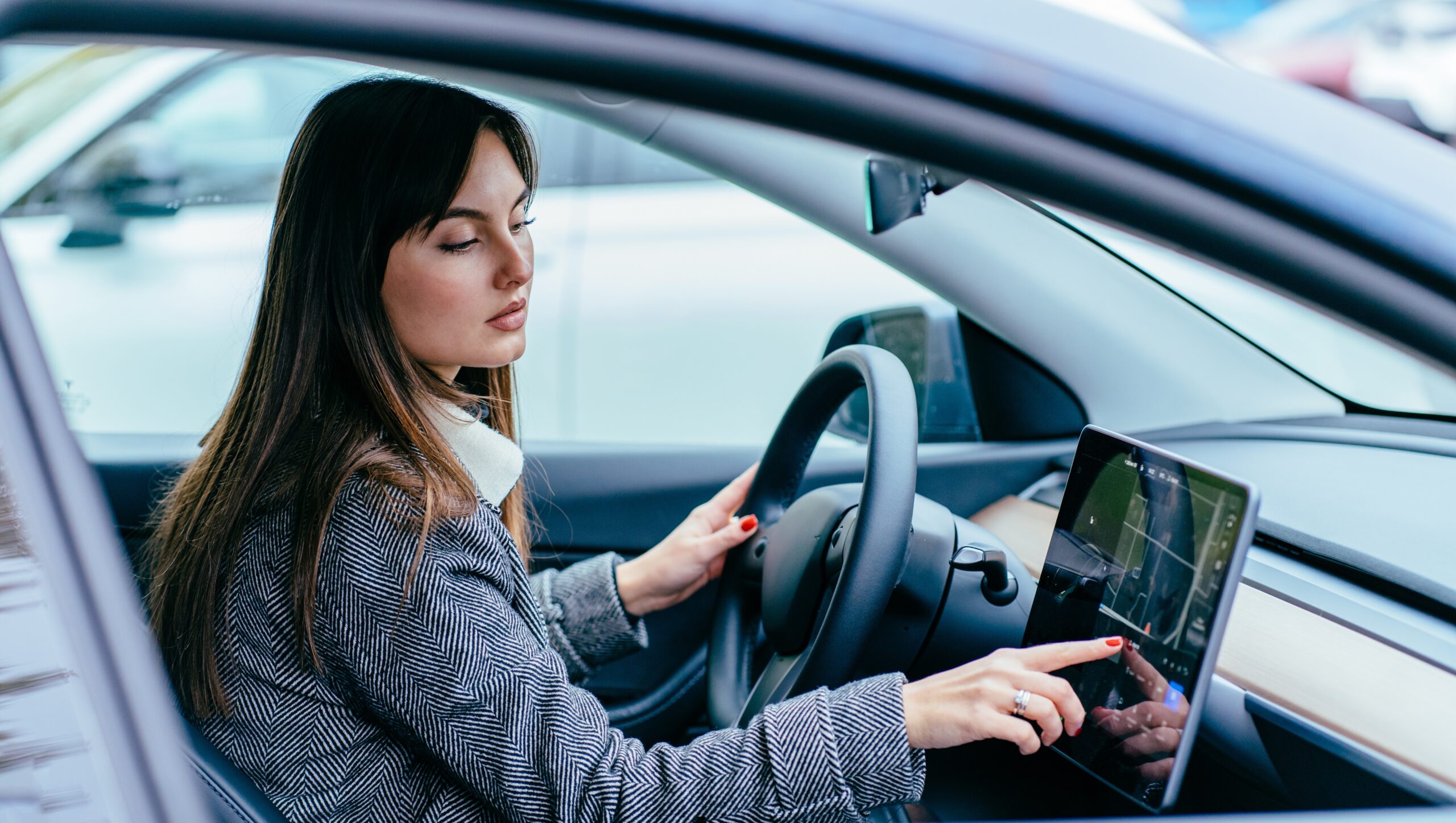
Car companies now say they are bringing physical buttons back because they “listened to customers.” That explanation sounds nice. The timeline tells a more interesting story.
A recent analysis published by Texas Law Dog compiled safety studies, recall data, customer satisfaction reports, and legal filings related to touchscreen-heavy car interiors. When those pieces are lined up chronologically, a clear pattern starts to appear. Safety research raises alarms. Recalls happen. Regulators step in. Lawsuits follow. Only then do automakers start talking about bringing buttons back.
That sequence looks less like a feel-good design correction and more like the moment the liability math stopped working.
Why Touchscreens Took Over
Over the past decade, automakers enthusiastically replaced traditional knobs and switches with large touchscreens that control everything from temperature to radio volume. The look was futuristic. The marketing pitch sounded modern. The economics were even better.
Industry analysts say screens were often cheaper. Robby DeGraff, Product and Consumer Insights Manager at AutoPacific, told The Drive that falling display costs made it easier for some automakers to install a large screen rather than engineer rows of mechanical switches. Sam Abuelsamid, Vice President of Market Research at Telemetry, explained that physical buttons require significant engineering validation and manufacturing complexity.
In other words, screens were not just stylish. They were lower cost and space efficient.
Safety Research Started Raising Red Flags
Safety researchers started asking uncomfortable questions fairly early in the touchscreen experiment.
An AAA Foundation for Traffic Safety study found that many infotainment systems demanded significant visual and cognitive attention from drivers. Some tasks distracted drivers for more than 40 seconds. At highway speeds, that is long enough for a vehicle to travel the length of several football fields.
The warnings did not stop there. A Transport Research Laboratory and IAM RoadSmart study found reaction times increased by as much as 57 percent when drivers used touchscreen infotainment controls for certain tasks. Researchers said those delays exceeded benchmarks associated with legal-limit alcohol impairment.
When Screens Fail, Everything Fails
Touchscreens also introduced a new kind of failure risk. In 2021, the National Highway Traffic Safety Administration recall database shows Tesla recalled 134,951 Model S and Model X vehicles after memory failures in the center display could disable the touchscreen.
That single screen controlled or displayed multiple safety functions, including the rearview camera and windshield defrost system. When the display fails, a surprising number of the car’s systems stop working with it.
Drivers Started Noticing Too
Drivers noticed the problems as well. The J.D. Power U.S. Vehicle Dependability Study found infotainment systems generated 49.1 problems per 100 vehicles, making it the most problematic category in the entire survey.
That kind of data tends to quickly catch automakers’ attention. Infotainment frustration does not just annoy drivers. It affects resale value, brand loyalty, and long-term customer satisfaction.
Automakers Are Starting To Admit It
Automakers started changing their tone around the same time.
Volkswagen design chief Andreas Mindt told reporters the company would not repeat the touchscreen-heavy approach used in some earlier models. In comments reported by The Drive, Mindt said, “We will never, ever make this mistake anymore. It’s a car. It’s not a phone.”
Mercedes-Benz has reached a similar conclusion. Software chief Magnus Östberg told Autocar that the company’s internal research pointed in the same direction.
“The data shows us the physical buttons are better,” Östberg said.
Meanwhile, Drivers Are Still Arguing About It
The debate is not limited to safety researchers and automaker executives. Drivers themselves remain deeply divided on the topic.
A recent discussion on Reddit shows just how heated the conversation can get.
One commenter argued that screens force drivers to look away from the road for basic functions, writing that “touch screens off center are not good, eyes off the road. The Tesla one is just plain dangerous.”
Another user pointed out that certain real-world situations make physical buttons easier to use. “The worst part of the touch controls for me is when I need to do something unexpected, like turn on the recirculate because I’m behind a stinky truck or turn on the defogger because my windscreen is fogging up.”
Other drivers pushed back. One commenter said modern automatic climate systems make the issue less important: “I set the auto climate control the day I bought it and never touched it again.”
Another argued that the entire debate is overblown because newer systems require very little interaction once configured.
The discussion highlights something automakers rarely mention in press releases. Drivers do not all want the same thing. Some prefer tactile controls that they can use without looking. Others are perfectly comfortable letting software handle most of the work.
The Industry Is Rebalancing
Touchscreens are not disappearing from cars anytime soon. Modern vehicles simply have too many features to control everything with physical switches alone.
What is happening instead looks more like a reset.
Safety research raised concerns. Recalls exposed new risks. Customer satisfaction scores took a hit. Regulators started paying attention. Automakers eventually began bringing back some of the controls they removed.
Car companies say they listened to customers. That explanation is not entirely wrong.
The timeline suggests they listened much more closely once the lawyers, regulators, and safety researchers started talking too.