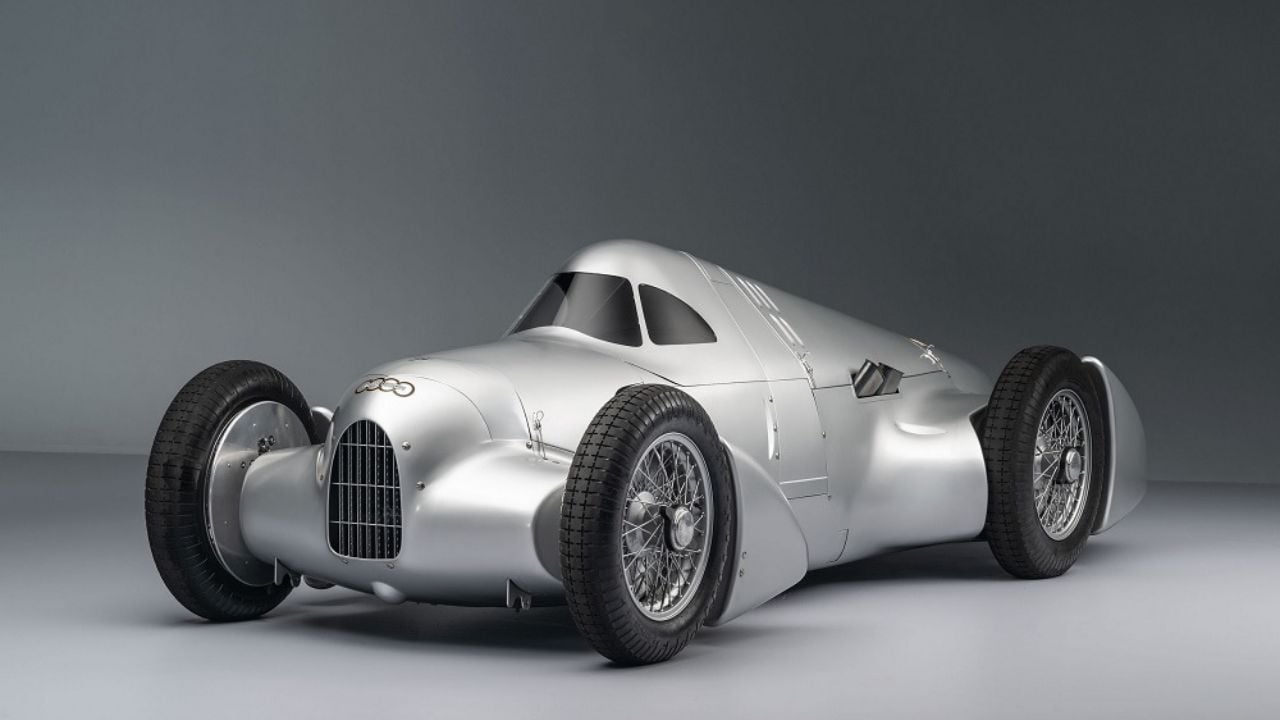
Some cars are fast, and some cars change the course of history. The Auto Union Lucca belongs to the second group.
Its story is about speed, but also about rivalry, innovation, and an era when automakers pushed physics to prove technical superiority.
To understand why Audi decided to revive the Lucca, we have to return to the 1930s. At that time, Audi was part of Auto Union, together with three other brands, a legacy still represented today by the four rings in the company’s logo.
Grand Prix racing was becoming increasingly popular, and performance had become the strongest marketing weapon. The rivalry with Mercedes turned into an open war for speed.
Auto Union Answered Mercedes With A Record Car
In 1934, Auto Union set three world records with the Type A, but Mercedes quickly responded with a specially built car that reached an average speed of 196.7 mph over a 1-mile distance with a flying start. That was not merely a challenge. It was a direct invitation to compete.
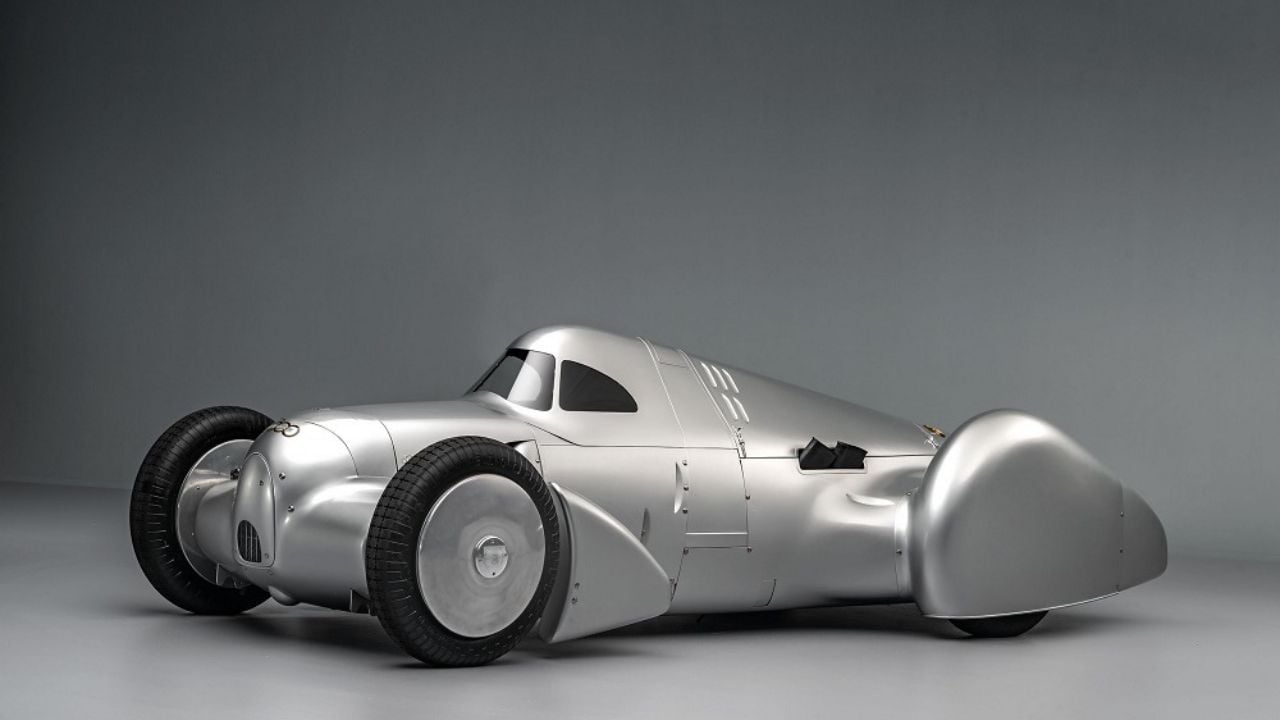
Auto Union engineers created their response during the winter. Starting from the open-wheel Type A racing car, they developed a completely new aerodynamically optimized shape. The front wheels received aerodynamic covers, while the rear wheels were fully enclosed.
The body was narrow, almost like a projectile, and the cockpit was reduced to the minimum needed to fit the driver. Two small circular openings at the rear fed fresh air to the carburetors, while the exhaust outlets exited on both sides just ahead of the rear wheels.
A 16-Cylinder Machine Built For Extreme Speed
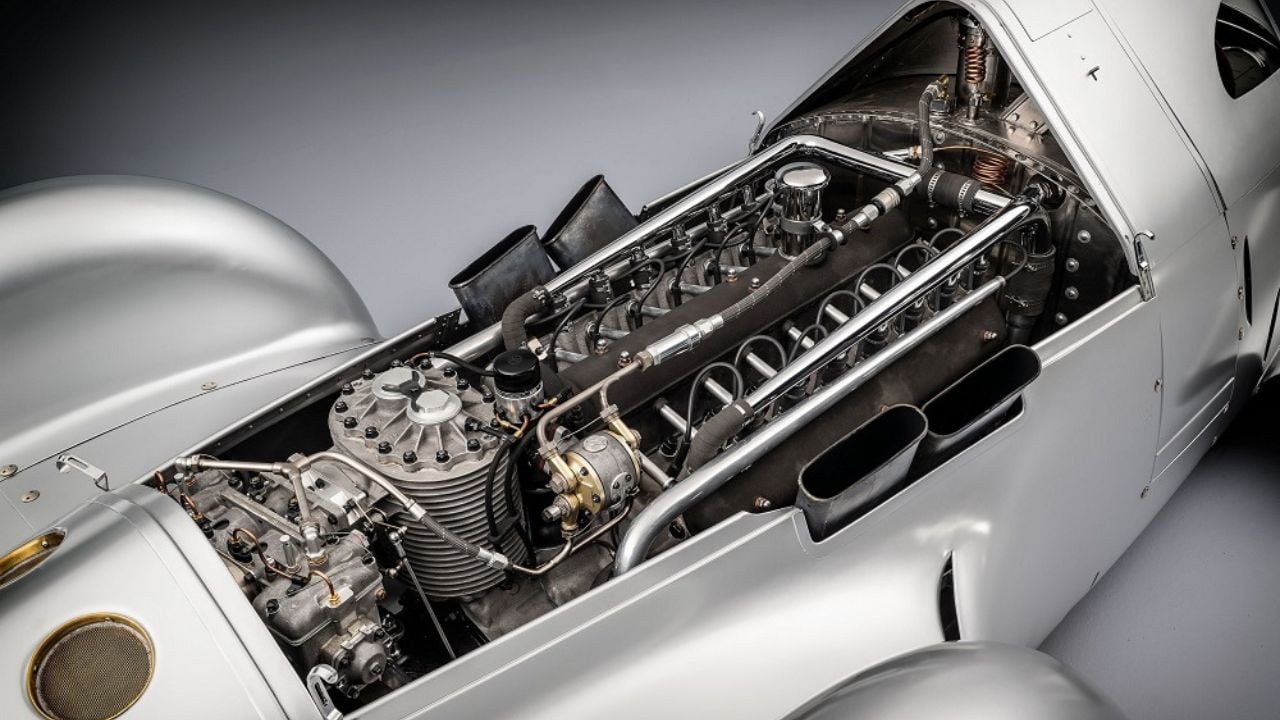
When it set out to break records, the Lucca had 369 hp. Its 16-cylinder engine was taken from Auto Union’s Grand Prix car and enlarged to 305 cubic inches.
The car weighed a little above 1,984 pounds, with dimensions that still feel striking today. It measured 179.9 inches long, only 47.2 inches tall, and 66.9 inches wide.
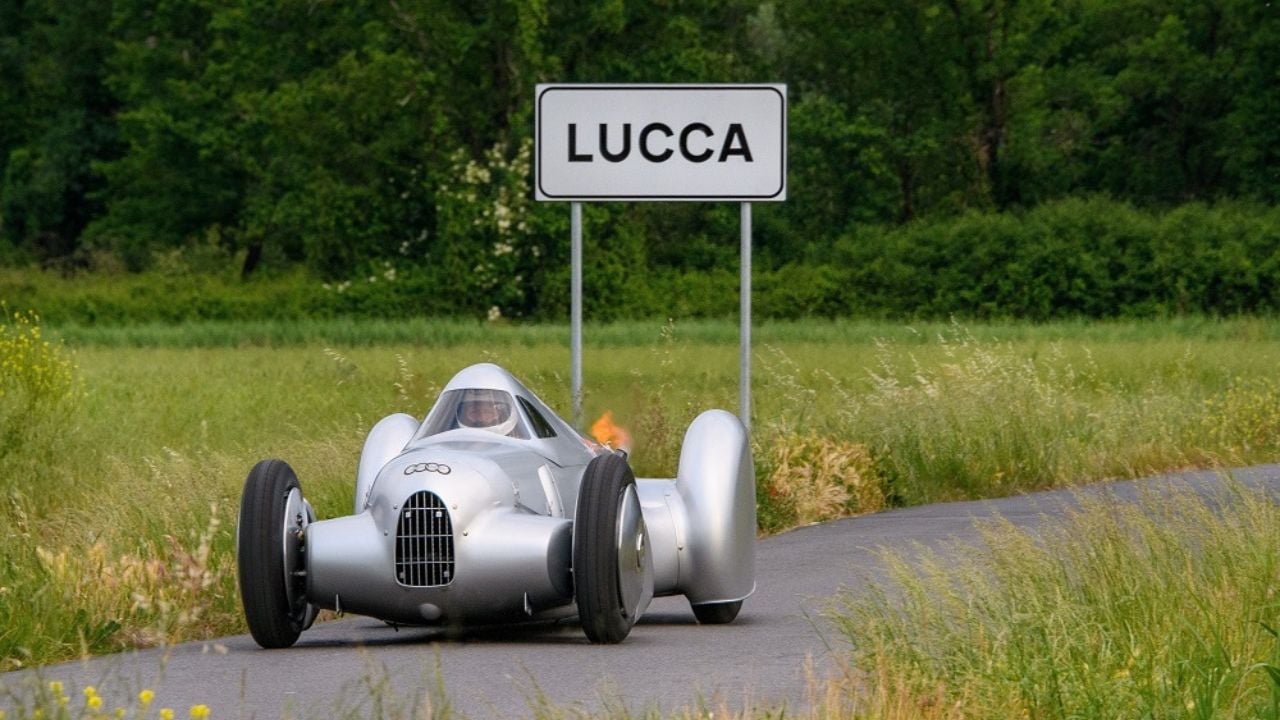
After several failed attempts caused by poor weather and technical problems, the Auto Union team arrived on February 15, 1935, at a highway section near the Italian city of Lucca. Hans Erich Karl Josef Stuck was behind the wheel.
The result was historic. The car achieved an average speed of 199 mph and a maximum speed of 203.2 mph. With that run, the Lucca became the fastest road racing car of its time.
AVUS Showed Its Potential And Its Limits
At the same time, another example of the “Rennlimousine” was shown at the Berlin Motor Show. Later that year, both cars took part in the fifth international AVUS race in Berlin.
AVUS was one of the strangest tracks of its era, with two long parallel straights and sharp turns at each end. The Auto Union cars showed huge potential and fought Mercedes for victory, but mechanical problems prevented success.
One car retired because of a tire failure, while the other suffered a cooling system problem. The speed was there, but the fragility of the technology showed how difficult this level of performance was in the 1930s.
The Originals Were Lost To History
The fate of the original cars remains unclear, but the historical context gives a likely explanation. Like many experimental racing and record cars from the prewar period, the Lucca was not treated as a historical artifact worth preserving.
Cars of this kind were often modified, used for further development, or simply dismantled so their parts could support new projects.
Many Auto Union racing cars were lost, destroyed, or disappeared during the war and the chaotic postwar period. Most were destroyed after the war, when East Germany, where Auto Union had originally been based, was under Soviet control. These special cars were often taken to the Soviet Union as war trophies, tested, and later scrapped.
It is assumed that the Lucca suffered a similar fate, disappearing in the events that erased entire generations of technology.
Audi Tradition Rebuilt A Missing Chapter
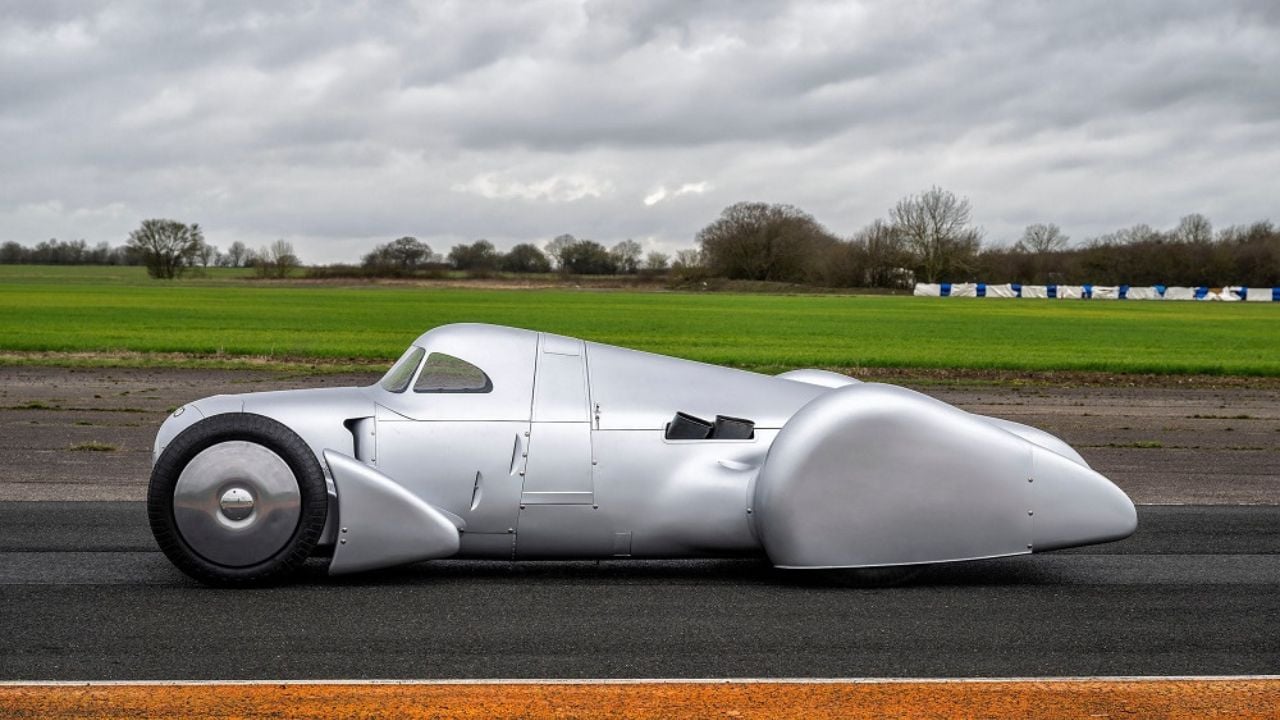
That is why Audi Tradition decided to fill a major gap in its collection. It did not have any example of the racing or record cars from Auto Union’s early Grand Prix era.
The reconstruction of the Lucca was entrusted to the British company Crosthwaite & Gardiner, a specialist in historic racing cars and the same firm that worked on the Type 52 project.
Teams in Germany and the United Kingdom used rare photographs and available documentation for over three years to create a faithful replica. The result is a fully hand-built car, with attention given to every detail.
The silver bodywork, carefully shaped, finished, and painted, captures the spirit of the original, while every mechanical component was made specifically for this one-of-a-kind project.
A Modern Recreation With The Same Spirit
The modern interpretation also preserves the technical essence. Its supercharged 366 cubic inch 16-cylinder engine develops 512 hp at 4,500 rpm, using a special fuel mixture of methanol, gasoline, and toluene.
Even with a drag coefficient of 0.43, which looks modest by modern standards, the car still radiates raw power and engineering courage.
The restored Lucca is scheduled to make its public debut at the Goodwood Festival of Speed, where spectators will see this historic machine in motion for the first time.
When it moves again, almost a century after it first broke the 199 mph barrier, the Lucca will not be chasing new records. It will serve as a reminder of how far engineers of that era had already gone.
This article originally appeared on Autorepublika.com and has been republished with permission by Guessing Headlights. AI-assisted translation was used, followed by human editing and review.