
Selling cars gets the attention, but dealerships increasingly make their real money after the customer has signed the paperwork and driven away. As the huge profits of the pandemic-era car market continue to fade, service departments, parts counters, financing, warranties, and insurance products are becoming increasingly important to the dealership business model.
That change helps explain why dealers can remain highly profitable even when new-car margins weaken. A dealership has several different ways to make money from the same customer, meaning softer showroom profits don’t necessarily translate into weaker overall earnings.
According to Erin Kerrigan, founder and managing director of dealership advisory firm Kerrigan Advisors, the economics are dramatically different between selling and servicing cars. She told CNBC that new-car margins can be around 5 percent, while service margins can reach roughly 50 percent.
“If you lose $10 of new vehicle revenue, you only have to pick up $1 of service to have your gross margin remain flat,” Kerrigan said. That makes the workshop a powerful cushion when demand or pricing in the showroom starts cooling.
The Pandemic Profit Boom Is Fading

Dealership profitability exploded during the pandemic as vehicle shortages pushed transaction prices higher and gave retailers far more pricing power. Kerrigan Advisors data cited by CNBC shows average pretax profit per dealership climbing from $1.9 million in 2018 to $6.8 million in 2022.
Those extraordinary conditions didn’t last, and average gross profit among dealerships owned by publicly traded groups had fallen to roughly $3.9 million by 2025.
However, parts and service moved in the opposite direction, as average dealership gross profit from those operations rose from around $3.3 million in 2020 to $5 million in 2025.
That divergence is a major reason dealers are still relatively sturdy businesses. Customers may postpone replacing a car, especially an expensive one, but they still need oil changes, tires, brakes, repairs, warranty work, and maintenance on the vehicles already sitting in their driveways.
Finance And Insurance Are Huge Profit Centers

The other major money-maker is finance and insurance, usually shortened to F&I. That department handles products such as vehicle financing, extended warranties, prepaid maintenance plans, and protection packages.
The amount of revenue generated by F&I can look small compared with selling cars, yet the profit contribution can be enormous. CNBC reports that Asbury Automotive generated only about 4 percent of its revenue from finance and insurance during the first half of 2026, while those products accounted for 23 percent of gross profit.
That happens partly because dealerships frequently act as intermediaries rather than carrying the full cost or risk of the product themselves. Once a warranty, financing agreement, or maintenance plan is sold, a large portion of that transaction can flow through at a very attractive margin.
Consumers may roll their eyes at some dealership add-ons, yet there is real demand for products that reduce uncertainty around a $40,000, $50,000, or $60,000 vehicle purchase. That makes F&I one of the most dependable parts of the dealership profit machine.
Dealers Are Losing Service Customers To Chains
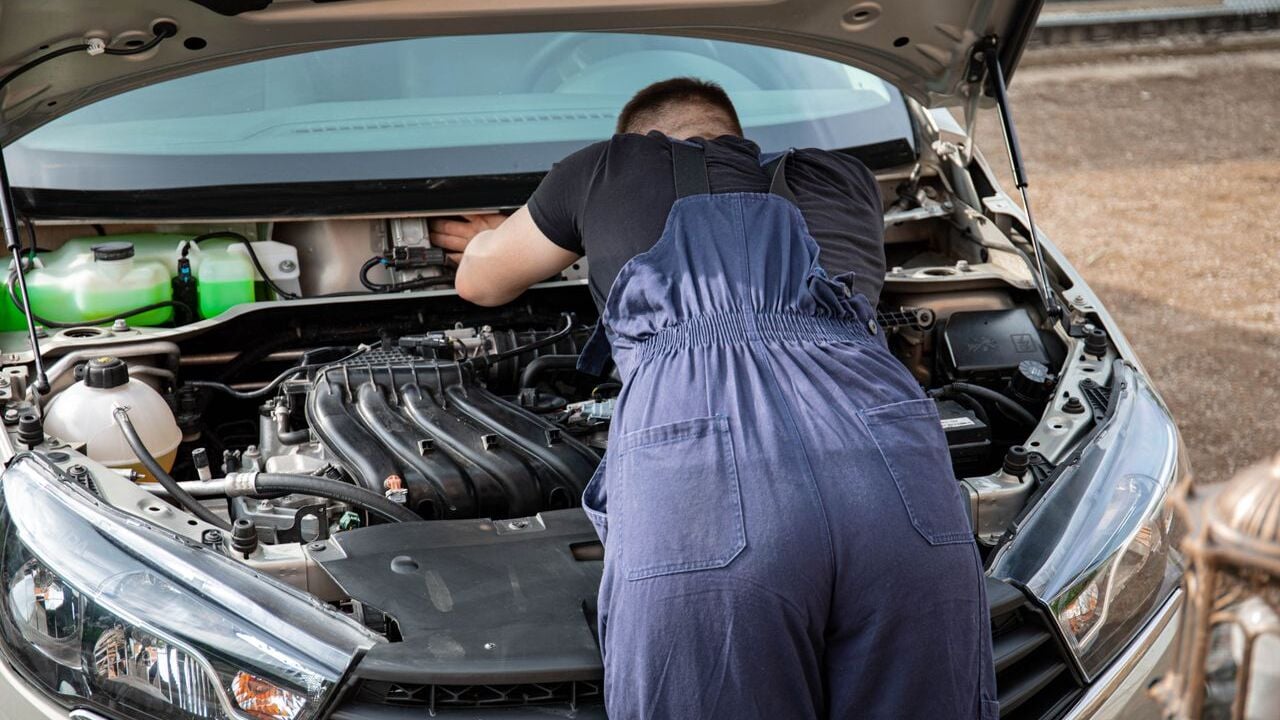
There is one problem with relying more heavily on service: dealerships are not keeping as much of that business as they once did.
Cox Automotive found that franchised dealers handled 29 percent of service visits in 2025, down from 33 percent in 2017. A separate Ducker Carlisle report found that the share of customers considering chains such as Jiffy Lube, Meineke, and Walmart their primary service provider jumped from 20 percent in 2020 to 42 percent in 2025.
Dealers have long battled the perception that dealership servicing costs considerably more than independent shops. Interestingly, Cox Automotive found average consumer parts spending of $261 at dealerships compared with $275 at general repair shops, suggesting the pricing gap is not always as clear as customers assume.
That helps explain why franchised retailers are increasingly pushing service offers, prepaid maintenance, pickup-and-delivery programs, and competitive pricing. Keeping customers inside the dealership ecosystem after the sale is becoming increasingly valuable.
Selling You The Car Is Only The Beginning
A modern dealership effectively gets several chances to earn money from one customer. It can profit from the original vehicle sale, the financing, optional protection products, routine maintenance, repairs, replacement parts, trade-ins, and eventually the next vehicle purchase.
That diversified model is precisely why dealerships can weather slower new-car markets better than might be expected. The showroom may get customers through the door, but the service bay and finance office can keep generating money for years afterward.