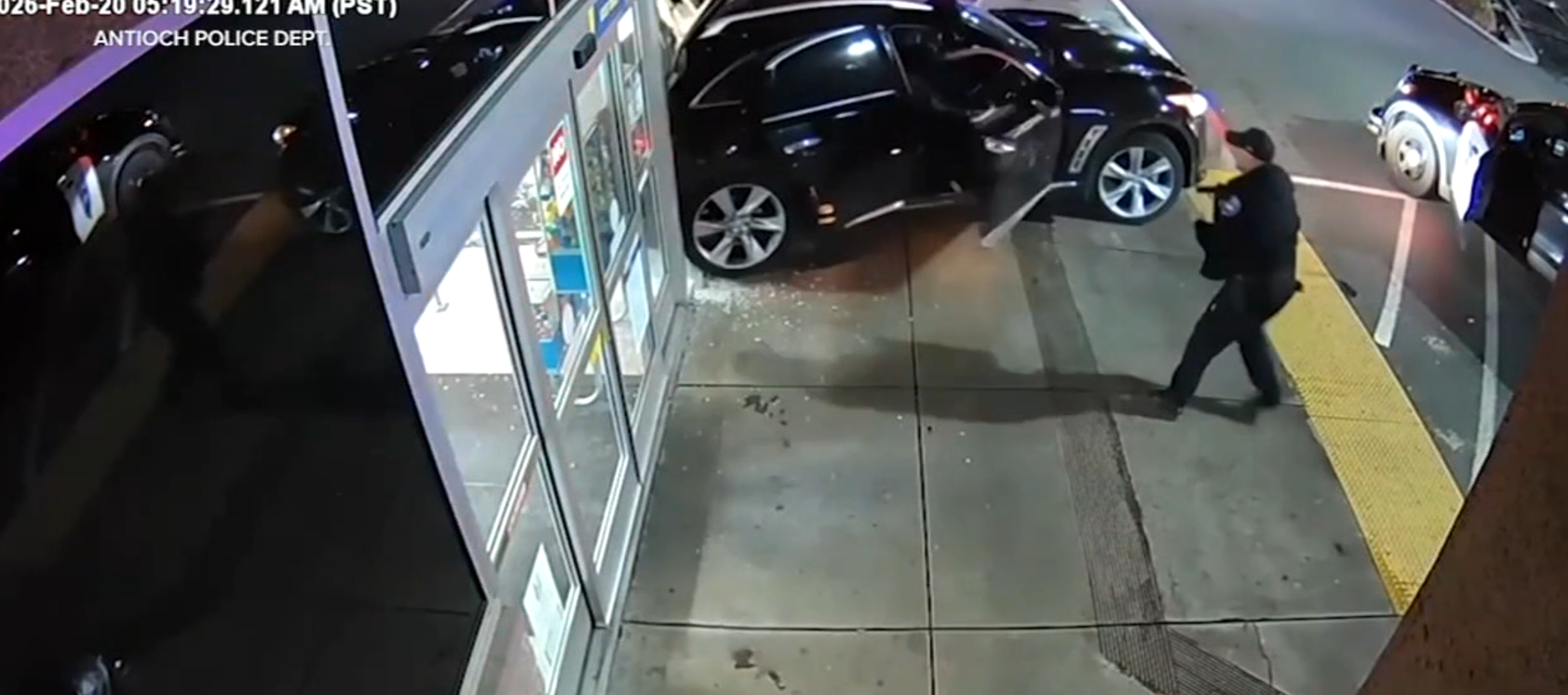
An armed robbery at a California grocery store turned into one of the most nerve-wracking police encounters you will see on camera this year. Antioch police have released body camera footage from a February 20 incident that started with a smash-and-grab style robbery at a local Food Maxx and spiraled into a high-speed nightmare when a responding officer ended up involuntarily hitching a ride in the suspect’s getaway car.
The whole ordeal reads like the plot of an action movie, except it was very real, and the officer had to think on their feet while literally being driven away from the crime scene by the person they were trying to arrest. The body cam footage captures every tense second, including a verbal exchange between officer and suspect that somehow managed to be both terrifying and oddly negotiation-like.
Antioch police made the footage public to offer transparency around the incident, which drew widespread attention after initial reports confirmed that the officer had fired a weapon while inside the moving vehicle. The suspect was struck in the leg and later taken into custody after the car crashed.
Fortunately, nobody died and no bystanders were injured, which, given the chaos on display in the video, feels like the most surprising part of the whole story.
How the Robbery Unfolded at Food Maxx
It started at a Food Maxx grocery store in Antioch, where surveillance cameras caught a suspect using their vehicle as a battering ram, reversing directly into the building. Officers arrived quickly and moved to confront the suspect in the immediate aftermath of the robbery.
That is where things took a sharp turn. During the confrontation, the suspect’s car sped off with one officer partially inside the vehicle, unable to get out in time. What followed was not a typical car chase. It was something far more chaotic, with the officer essentially trapped in the moving car with the very person they were attempting to arrest.
What Was Said Inside That Moving Car
The body cam audio is where this story gets particularly surreal. The officer, understandably not thrilled about being an unwilling passenger, repeatedly warned the suspect to stop the vehicle. According to police, the officer stated clearly that they would fire if the car did not stop.
The suspect’s response, captured on audio, was oddly measured for the situation. The suspect told the officer they were going to slow down to around 10 miles per hour and also asked the officer to lower their weapon, saying they did not feel safe with a gun pointed at them. The irony of an armed robbery suspect asking for a sense of safety in that moment is something worth sitting with for a second.
After warnings were issued and ignored, the officer fired one shot, intentionally targeting the suspect’s leg. The car then crashed into a parked vehicle, bringing the involuntary joyride to an abrupt end.
What Happened After the Crash
Once the car came to a stop, the suspect made one final attempt to flee on foot. It did not work out. Officers captured and arrested the suspect shortly after they exited the vehicle. The officer who had been pulled into the car walked away without any physical injuries, which is remarkable given that they were inside a moving vehicle during a shooting.
The suspect was treated for the gunshot wound to the leg. No other injuries were reported.
What This Incident Teaches Us About Split-Second Policing
Situations like this one highlight just how unpredictable law enforcement encounters can become in a matter of seconds. One moment officers are responding to a grocery store robbery, and the next, one of them is inside a getaway car trying to avoid becoming a casualty.
The officer’s decision to fire was not impulsive. Multiple warnings were given verbally, and the shot was aimed at a non-lethal target to stop the threat without killing the suspect. That kind of restraint and precision under pressure is exactly what use-of-force training is designed to produce, and in this case, it worked.
The incident also underscores the value of body camera footage, not just for accountability, but for public understanding. Seeing the footage puts the officer’s decision-making in full context. Without it, the facts alone, an officer shooting someone inside a moving car, might sound alarming without the full picture. With it, the situation becomes much easier to understand.