
American supercars have come a long way from the muscle car era, evolving into legitimate world-class performers that can hold their own against European exotics. These machines blend raw power with sophisticated engineering, proving that American automotive ingenuity extends far beyond straight-line speed. From track-focused monsters to luxurious speed demons, domestic manufacturers have created vehicles that redefine what’s possible with American horsepower.
Whether you’re drawn to the thunderous roar of a supercharged V8 or the high-tech precision of modern aerodynamics, these supercars represent the pinnacle of American performance. Let’s explore exceptional examples that showcase why American supercars deserve respect on the global stage.
Ford GT
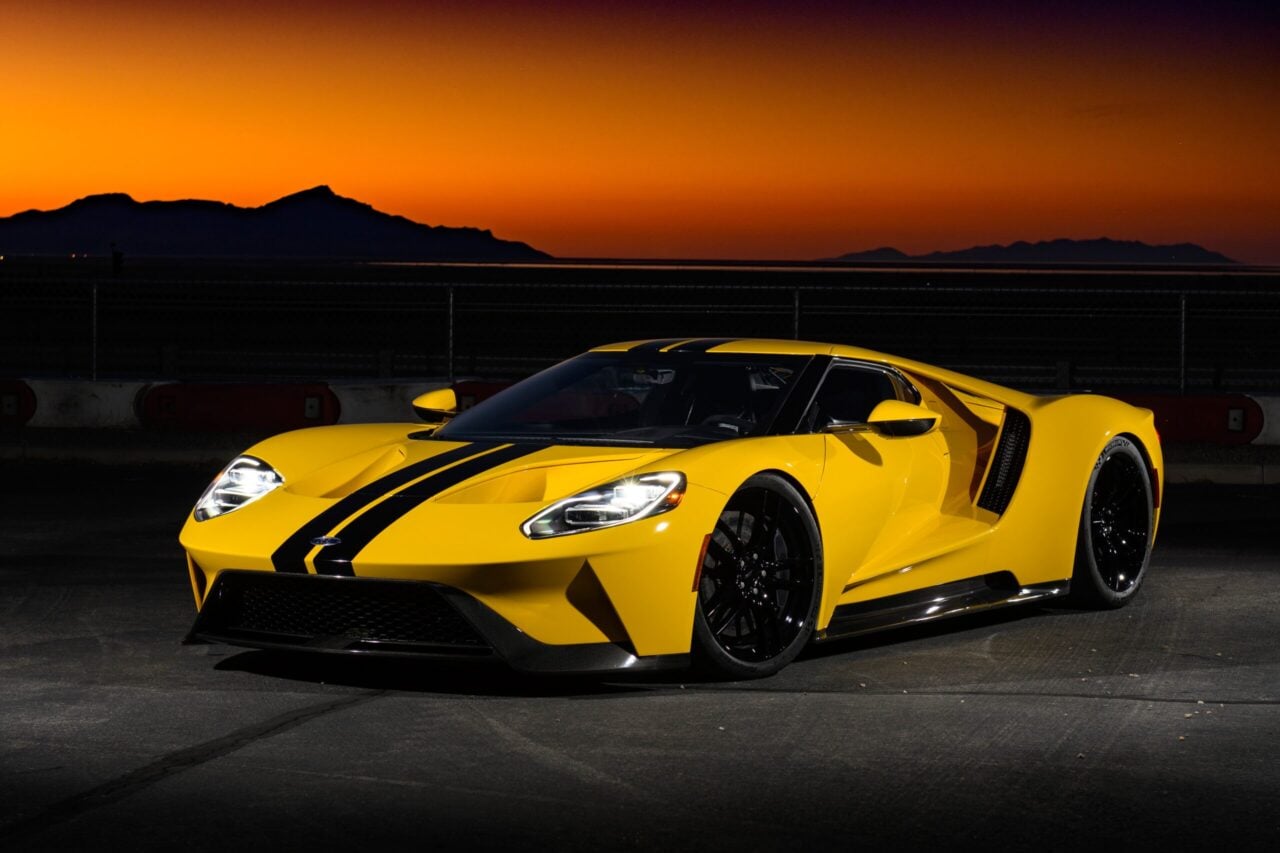
Ford’s modern GT pays homage to the Le Mans-winning heritage while incorporating cutting-edge technology and design. The twin-turbocharged 3.5-liter EcoBoost V6 produces up to 660 horsepower, proving that cylinder count doesn’t determine supercar credibility.
Its carbon fiber construction and active aerodynamics create a package that’s equally at home on road courses and public roads. The flying buttress design isn’t just stunning to look at; it channels air efficiently while maintaining structural rigidity. Ford’s racing-derived suspension and Multimatic dampers provide handling that genuinely rivals European exotics.
With an MSRP that was roughly $450,000 early on and rose to about $500,000 by 2020 depending on model year and configuration, plus limited production, the GT became an instant collectible that demonstrated American supercar ambitions on a global scale.
Saleen S7 Twin Turbo

The Saleen S7 Twin Turbo represented one of the earliest modern American midengine supercars, with its twin-turbocharged 7.0-liter V8 producing 750 horsepower. This California-built exotic featured a steel space frame chassis with aluminum honeycomb composite reinforcing panels and carbon fiber bodywork, demonstrating that American manufacturers could build lightweight supercars.
The aggressive aerodynamics included ground effects and an adjustable rear wing, generating substantial downforce at speed. With a manufacturer-estimated top speed of 248 mph, the S7 competed directly with European supercars of its era. The hand-built nature meant production remained limited, adding to its exclusivity and collectibility.
Starting around $555,000 when new, the S7 was a world-class mid-engine supercar that kept up with the more popular supercars of that era.
Chevrolet Corvette Z06 (C8)

This is definitely a debate I’ve had in the car community: is the Z06 a supercar? I have always said no, based on strict specifications. But many have argued against me, so I’ll put it in here.
The mid-engine C8 Z06 represents Chevrolet’s most track-capable Corvette ever, featuring a naturally aspirated 5.5-liter flat-plane crank V8 that revs to 8,600 rpm. With 670 horsepower on tap, this screaming engine produces a sound that’s decidedly un-American in the best possible way. The Z06 put down a 2:38.6 lap at Virginia International Raceway in Car and Driver testing, and the cars that ran quicker cost more than twice as much, proving that value and performance aren’t mutually exclusive.
Its wide-body design incorporates genuine functional aerodynamics rather than just styling flourishes, with cooling ducts and downforce-generating surfaces everywhere you look. The chassis balance and steering feedback place it among the world’s best handling cars, period. With a base price just under $120,000 for the 2026 model year, you’re getting supercar performance that challenges far more expensive cars on track day.
Ford Mustang Shelby GT500 (Current Generation)

The most recent Shelby GT500, sold for the 2020 through 2022 model years, packs a supercharged 5.2-liter V8 producing 760 horsepower, making it one of the most powerful street-legal Fords of its era. Is it a supercar? That’s a bit up for debate. However, this pony car has genuinely supercar-level acceleration, hitting 60 mph in the mid-3-second range.
The seven-speed dual-clutch transmission delivers lightning-fast shifts that a manual simply can’t match for pure performance. Engineers balanced straight-line speed with genuine handling capability, creating a car that’s surprisingly competent on road courses. The available Carbon Fiber Track Pack adds aerodynamic enhancements and weight reduction for serious track enthusiasts.
Starting around $80,000, the GT500 offers an accessible entry point into American supercar performance.
Hennessey Venom F5

Texas-based Hennessey created the Venom F5 to chase speed records with a twin-turbo 6.6-liter V8 producing 1,817 horsepower. The company targets a top speed exceeding 300 mph, though achieving that goal requires very specific conditions and venues.
Its carbon fiber monocoque chassis keeps weight remarkably low for such a powerful machine. The F5’s design focuses on aerodynamic efficiency, with every surface optimized for minimal drag. While production numbers remain limited and pricing starts around $2.1 million, the F5 represents American hypercar ambitions at their highest level.
Hennessey’s creation demonstrates that small American manufacturers can compete with established European hypercar makers.
Hennessey Venom GT
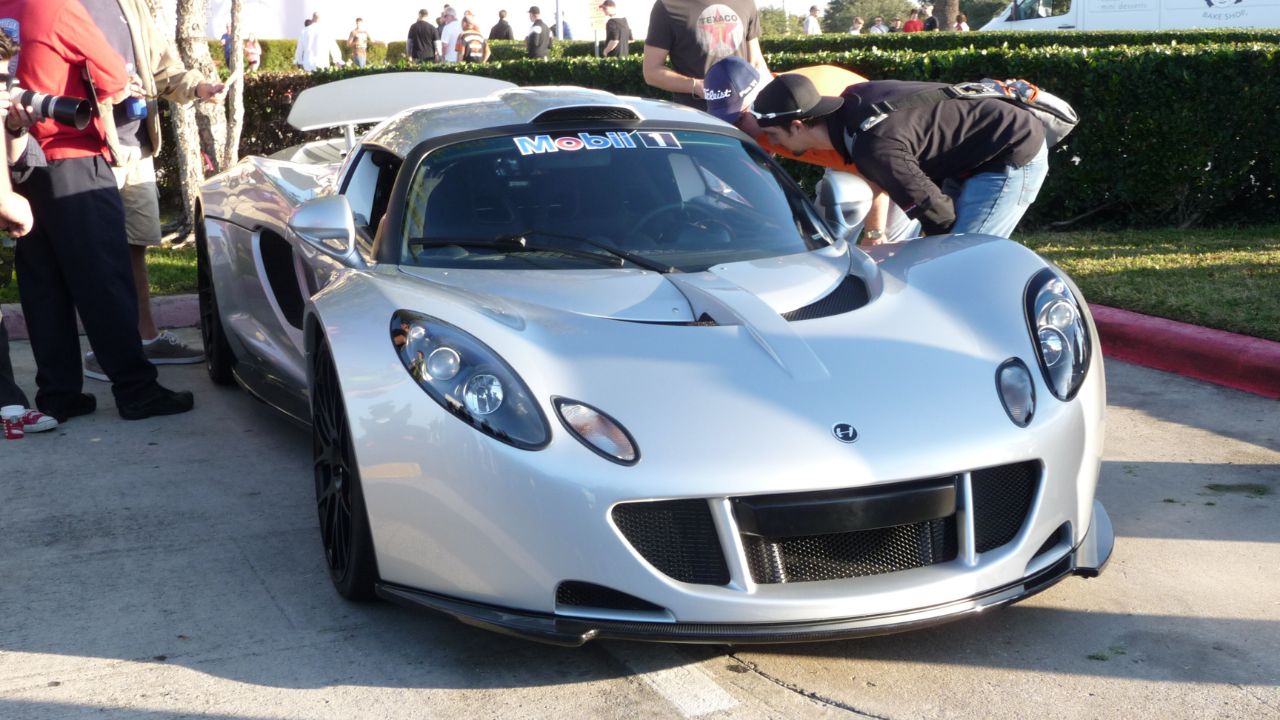
The Venom GT emerged from Texas-based Hennessey Performance as a modified Lotus Exige taken to extreme levels. Its twin-turbocharged 7.0-liter V8 produces up to 1,244 horsepower, creating one of the highest power-to-weight ratios of any production car.
In 2014, the Venom GT recorded a one-way top speed run of 270.49 mph at the Kennedy Space Center. Its lightweight construction, with extensive carbon fiber usage, kept the curb weight remarkably low at around 2,743 pounds. The manual transmission option appealed to purists who wanted full control over the massive power output.
With limited production and pricing around $1.2 million, the Venom GT demonstrated that American tuners could create legitimate hypercar competitors.
SSC Tuatara

Washington-based SSC created the Tuatara to challenge top speed records with a twin-turbo 5.9-liter V8 producing up to 1,750 horsepower on E85. SSC has claimed over 300 mph capability, while later instrumented runs have reported speeds in the high 200s. SSC claims its sleek carbon fiber body achieves a drag coefficient of 0.279, among the lowest figures claimed for a production car.
The Tuatara’s design incorporates active aerodynamics that adjust for maximum speed or maximum downforce depending on conditions. With pricing starting around $1.9 million, this hypercar represents American engineering reaching for the absolute limits.
SSC’s achievement demonstrates that small American manufacturers can create vehicles that compete at the highest levels.
Dodge Viper TA (Time Attack)

The Viper TA emerged as a street-legal track weapon that sat between the base Viper and the extreme ACR. Its 8.4-liter V10 produces 640 horsepower, delivered through a six-speed manual transmission that demands driver engagement.
Dodge equipped the TA with lightweight wheels, adjustable suspension, and aggressive aerodynamics borrowed from the ACR program. The stripped-down interior removed unnecessary weight while maintaining enough comfort for street driving. Special Pirelli P Zero Corsa tires provided exceptional grip levels for both track days and canyon carving.
Starting around $102,000, the TA offered a compelling middle ground between raw performance and daily usability.
Conclusion

American supercars have evolved from straight-line specialists into sophisticated machines that excel in multiple performance dimensions. These bold examples demonstrate the breadth and depth of domestic performance engineering, from affordable track weapons to million-dollar hypercars.
The common thread connecting them isn’t just horsepower but rather a commitment to pushing boundaries and challenging preconceptions about American automotive capabilities. Today’s American supercars compete directly with European exotics on performance metrics while often offering better value propositions. Whether you prioritize raw acceleration, track lap times, or exclusivity, American manufacturers have created compelling options.
The future of American performance looks incredibly bright as manufacturers continue innovating and refining their supercar offerings.