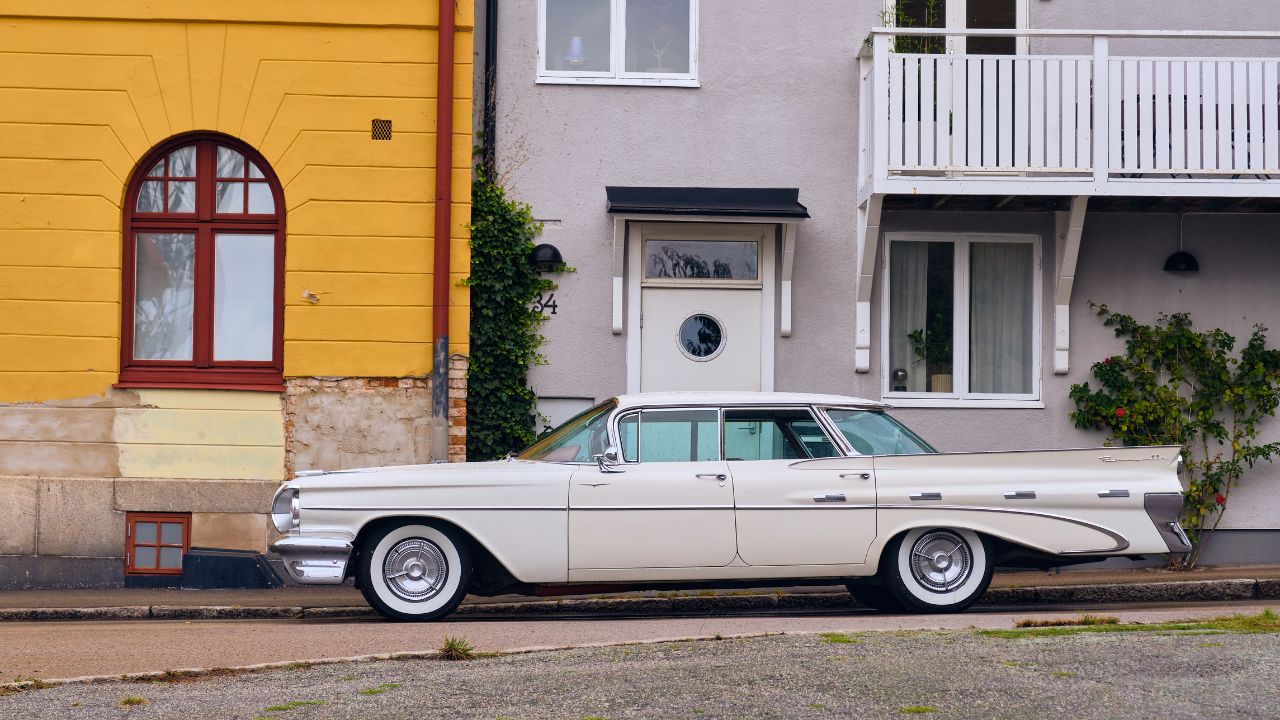
The 1950s marked a golden era for American automotive design, where chrome was king and bigger was almost always better. Fresh from wartime production, American automakers unleashed their creativity with bold styling, powerful engines, and features that would define car culture for decades.
This was the decade that gave us tail fins reaching toward the sky, wraparound windshields, and the birth of muscle car DNA. Whether you’re a lifelong gearhead or someone who appreciates the artistry of these rolling sculptures, these 12 icons represent the spirit of an unforgettable automotive era.
So let’s take a cruise through memory lane and celebrate the machines that made the ’50s roar.
Chevrolet Bel Air

The ’57 Bel Air represents the sweet spot in Chevy’s Tri-Five lineup, combining elegant styling with genuine performance capability. With its distinctive chrome trim, modest tail fins, and available fuel-injected V8, this was the year Chevrolet truly nailed the formula.
The 283 cubic-inch small block could produce an impressive 283 horsepower with fuel injection, achieving the coveted one horsepower per cubic inch ratio. Today, the ’57 Bel Air remains one of the most recognizable classic cars in existence, and spotting one at a car show still turns heads. Its balanced proportions and timeless two-tone paint schemes prove that sometimes restraint beats excess, even in a decade known for automotive exuberance.
Whether in hardtop, convertible, or the rare Nomad wagon form, the Bel Air captured America’s optimistic spirit perfectly.
Ford Thunderbird

Ford’s answer to the Corvette took a different approach, creating the “personal luxury car” segment in the process. The first-generation Thunderbird offered comfort and style over raw performance, featuring a removable hardtop, porthole windows, and enough chrome to require regular polishing.
Its 292 cubic-inch V8 delivered a respectable 193 horsepower, providing smooth cruising rather than tire-smoking acceleration. The T-Bird outsold the Corvette by a wide margin in these early years, proving that not every sports car needed to sacrifice comfort. Only produced from 1955 to 1957 as a two-seater, these first-gen Birds remain highly collectible today.
It’s the car that showed you could have both performance pedigree and a civilized ride to the country club.
Cadillac Eldorado

If ever a car embodied “more is more,” it’s the ’59 Eldorado with its towering tail fins and acres of chrome. At over 18 feet long, this Cadillac made a statement that was impossible to ignore, featuring bullet-shaped taillights that could guide aircraft.
The 390 cubic-inch V8 produced 345 horsepower, enough to move this land yacht with surprising authority. Critics might call it excessive, but fans recognize it as peak American automotive design confidence. The wraparound windshield and jet-age styling elements captured the space-race optimism of the era perfectly.
Today, these Cadillacs represent an unrepeatable moment when designers were given free rein to dream big, and they’re celebrated for exactly that boldness.
Chevrolet Corvette

America’s sports car was born in 1953, though it took a few years to find its footing. The first-generation Corvette featured a fiberglass body, a bold move that reduced weight and allowed for flowing curves. Initially powered by a modest inline-six with just 150 horsepower, the early Vette prioritized style over raw performance.
Only 300 were built that first year, all in Polo White with red interiors, making them incredibly rare today. The introduction of a V8 option in 1955 transformed the Corvette into a legitimate performance machine.
These first-gen Corvettes represent the humble beginnings of an icon that’s still going strong seven decades later.
Chevrolet Nomad

The Nomad wagon took station wagon practicality and wrapped it in Bel Air beauty, creating something truly special. With its sloping rear roofline, seven vertical chrome bars on the tailgate, and two-door configuration, this wasn’t your typical family hauler.
Chevy positioned it as a premium offering, which meant lower production numbers and higher prices than standard wagons. The result was a vehicle that combined utility with style in a way few manufacturers attempted. Today, Nomads command premium prices at auctions, with collectors appreciating their rarity and distinctive looks.
It proved that practicality didn’t have to mean boring, a lesson that still resonates with enthusiasts today.
Chevrolet El Camino

Chevy’s car-truck hybrid arrived in 1959, creating a unique blend of passenger car comfort and pickup utility. Built on Chevrolet’s full-size passenger car platform and derived from the two-door Brookwood wagon, the first-gen El Camino featured the same sweeping styling and generous chrome trim as its sedan siblings.
The combination of a spacious cab and a functional bed appealed to buyers who wanted versatility without sacrificing style. While Ford had experimented with the Ranchero earlier, the El Camino brought its own flair to the segment. These first-generation models only lasted two years before being discontinued, making them particularly interesting to collectors.
The El Camino would return in the ’60s and enjoy a much longer run, but these late-’50s originals started it all.
Continental Mark II

Ford’s ultra-luxury Continental Mark II represented an ambitious attempt to create an American Rolls-Royce competitor. Priced at $9,966 in 1956, nearly $10,000, it cost more than two Cadillacs and was hand-assembled with meticulous attention to detail.
The understated styling eschewed tail fins and excessive chrome for clean, elegant lines that remain timeless. Its 368 cubic-inch V8 provided smooth, refined power rather than neck-snapping acceleration. Total production was 3,005 over the 1956 and 1957 model years, making it one of the rarest American luxury cars of the decade.
The Mark II proved that American manufacturers could build something truly refined when they set their minds to it.
Chrysler 300C

Chrysler’s letter-series 300 combined luxury appointments with legitimate high performance, earning it the “Beautiful Brute” nickname. The 300C packed a 392 cubic-inch Hemi V8 producing up to 390 horsepower, making it one of the most powerful cars available. Its distinctive forward-canted fins and aggressive stance made it clear this wasn’t just another luxury cruiser.
NASCAR teams took notice, and the 300 series dominated racing throughout the decade. Production numbers were deliberately limited to maintain exclusivity, with 2,402 built for 1957, including 1,918 hardtops and 484 convertibles.
The 300C represents Chrysler’s golden era, when they built cars that could dominate both the boulevard and the racetrack.
Mercedes-Benz 300SL Gullwing

While American manufacturers dominated the market, this German sports car captured imaginations with its revolutionary design and engineering. The iconic gullwing doors weren’t just for show, they were necessary due to the high door sills required by the space-frame chassis.
Its fuel-injected 3.0-liter inline-six produced 215 horsepower, impressive for the displacement and era. The 300SL could reach speeds over 160 mph, making it the fastest production car of its time. Advanced features like direct fuel injection and a lightweight tubular frame showed European engineering at its finest.
Today, gullwing 300SLs rank among the most valuable and sought-after collector cars in the world.
Plymouth Fury

Christine made this car famous decades later, but the ’58 Fury deserved recognition on its own merits. With its quad headlights, sweeping fins, and aggressive front grille, Plymouth’s flagship turned heads everywhere it went.
The optional Golden Commando 350 cubic-inch V8 was rated at 305 horsepower with dual four barrel carburetors, and a 315 horsepower Bendix Electrojector fuel injection version was offered briefly before most were recalled and retrofitted with carburetors. Its “Golden Commando” engine option brought race-proven technology to the street. Plymouth positioned the Fury as a limited-production performance model, though Hollywood would later give it an entirely different kind of notoriety.
For enthusiasts, the ’58 Fury represents Chrysler Corporation’s design boldness during a particularly creative period.
Pontiac Bonneville

Pontiac’s Bonneville convertible debuted as a limited-production model that showcased the brand’s performance direction. With Rochester mechanical fuel injection and 310 horsepower from its 347 cubic-inch V8, the 1957 Bonneville offered luxury and power in equal measure. Its distinctive styling helped establish Pontiac’s reputation for building excitement, even before Pontiac’s Wide Track era arrived for 1959.
Only 630 were built in its debut year, making it a rare sight even when new. The Bonneville nameplate would continue for decades, but this first-year model set the template for Pontiac’s performance-luxury formula.
Its combination of showroom appeal and genuine capability helped transform Pontiac’s stodgy image into something much more exciting.
Chrysler C-300

The original letter-series 300 combined Chrysler’s largest Hemi engine with its lightest full-size body for impressive results. With 300 horsepower from its 331 cubic-inch Hemi, this was the most powerful American production car when it launched.
he C-300 dominated NASCAR era competition in 1955 and is widely credited with 37 NASCAR and AAA wins in races of 100 miles or more. Its understated styling let the performance do the talking, with minimal chrome and purposeful proportions. Only about 1,700 were built, keeping it exclusive while proving Chrysler could build a proper performance machine.
The C-300 established the template for the muscle car movement that would explode in the following decade.
Conclusion

The 1950s gave us automotive designs that remain instantly recognizable seven decades later, a testament to their lasting impact on car culture. From Chevrolet’s balanced Bel Air to Cadillac’s extravagant Eldorado, these machines captured America’s postwar confidence and optimism.
The decade proved that cars could be practical transportation, rolling art, and performance machines all at once. These icons established design languages, performance benchmarks, and entire market segments that shaped the industry for generations. Whether you prefer the understated elegance of a Continental Mark II or the unapologetic boldness of a ’59 Cadillac, the ’50s offered something for every taste.
Today, these classics remain cherished by collectors and enthusiasts who understand that some designs are truly timeless.