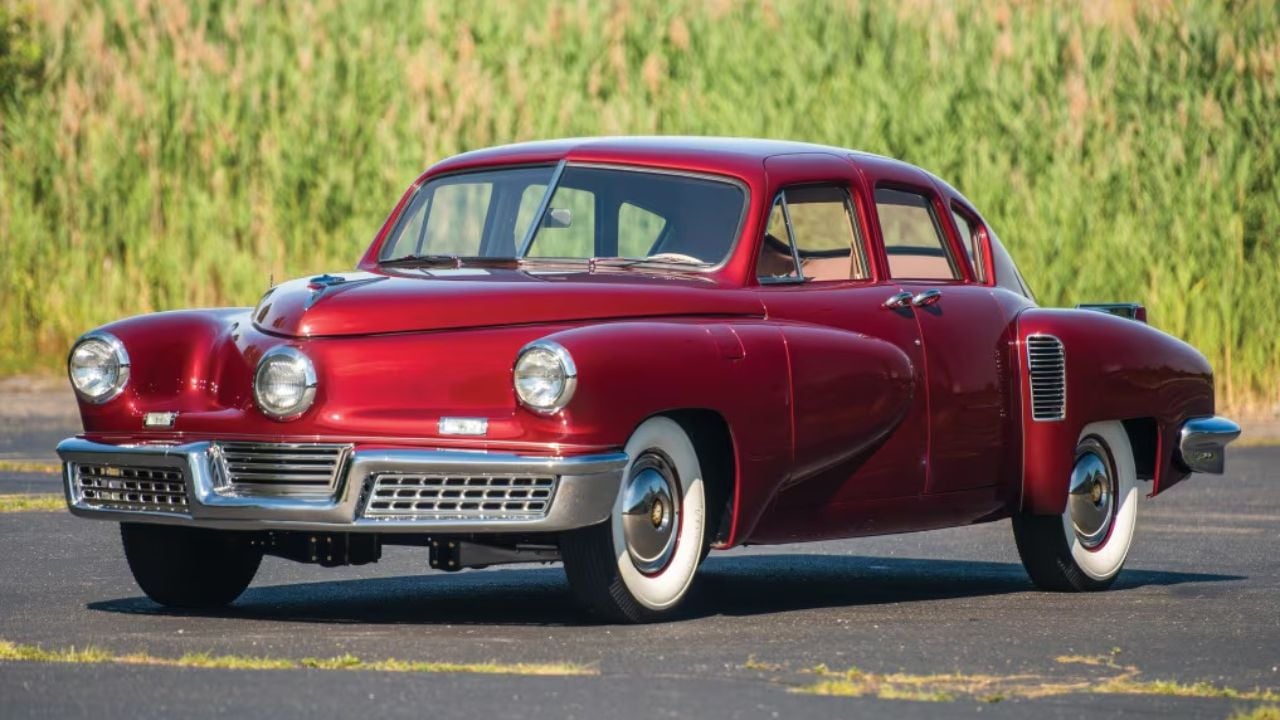
Few cars became legends after only a brief production run. The Tucker 48 is one of them. Built in the late 1940s, it challenged Detroit with futuristic engineering, unusual safety ideas, and styling that looked years ahead of its time.
Tucker Corporation produced 51 cars in total: the original Tin Goose prototype and 50 Model 48 pilot-production cars. The company collapsed in 1949 after legal, financial, and political pressure stopped the dream before true mass production could begin.
For years, the accepted count has been 47 surviving Tuckers from the original 51. Tucker #1018 has long been treated as one of the lost or destroyed cars, but its surviving chassis, original engine, and authentic components are now at the center of a new museum project.
This would not be a conventional restored Tucker with an original steel body. If completed as planned, #1018 would become something different: a transparent, drivable educational car built around original Tucker remains, giving the so-called 48th survivor a new kind of life.
A Car That Was Far Ahead Of Detroit
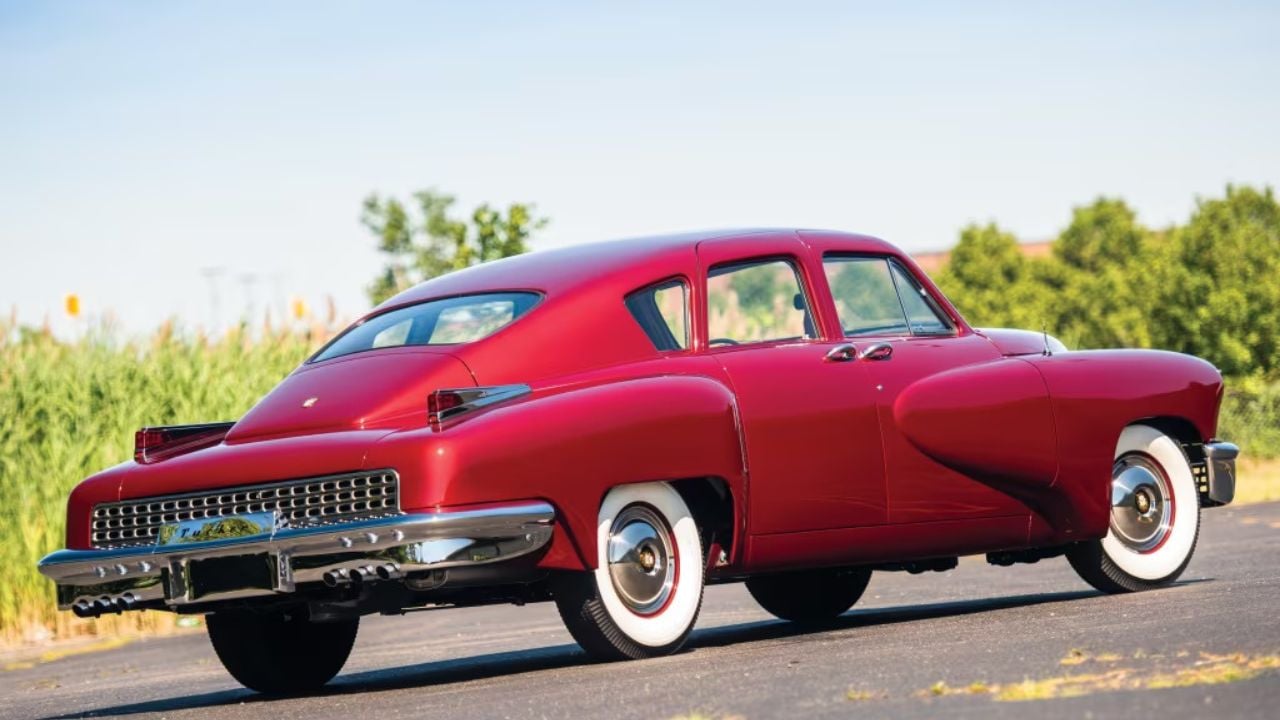
The Tucker 48 introduced several ideas that felt radical in its era. Its famous center-mounted headlight, often called the “Cyclops,” was designed to turn with the steering wheel and help illuminate corners.
The layout was just as unusual for an American sedan. The Tucker used a rear-mounted engine, rear-wheel drive, and four-wheel independent suspension at a time when most Detroit sedans followed far more conventional formulas.
Safety was a major part of the car’s identity. Tucker promoted a reinforced safety structure, padded dashboard, windshield designed to pop out in a crash, and a front passenger crash chamber meant to reduce injury risk in an accident.
The car’s reputation also grew through testing stories. During endurance testing at Indianapolis, Tucker #1027 rolled at high speed; period records later described the safety windshield popping out as designed, the engine restarting afterward, and the driver escaping with only minor injury. The story helped feed the idea that Tucker was thinking about crash protection long before it became a normal selling point.
The Tucker Dream Collapsed Too Soon
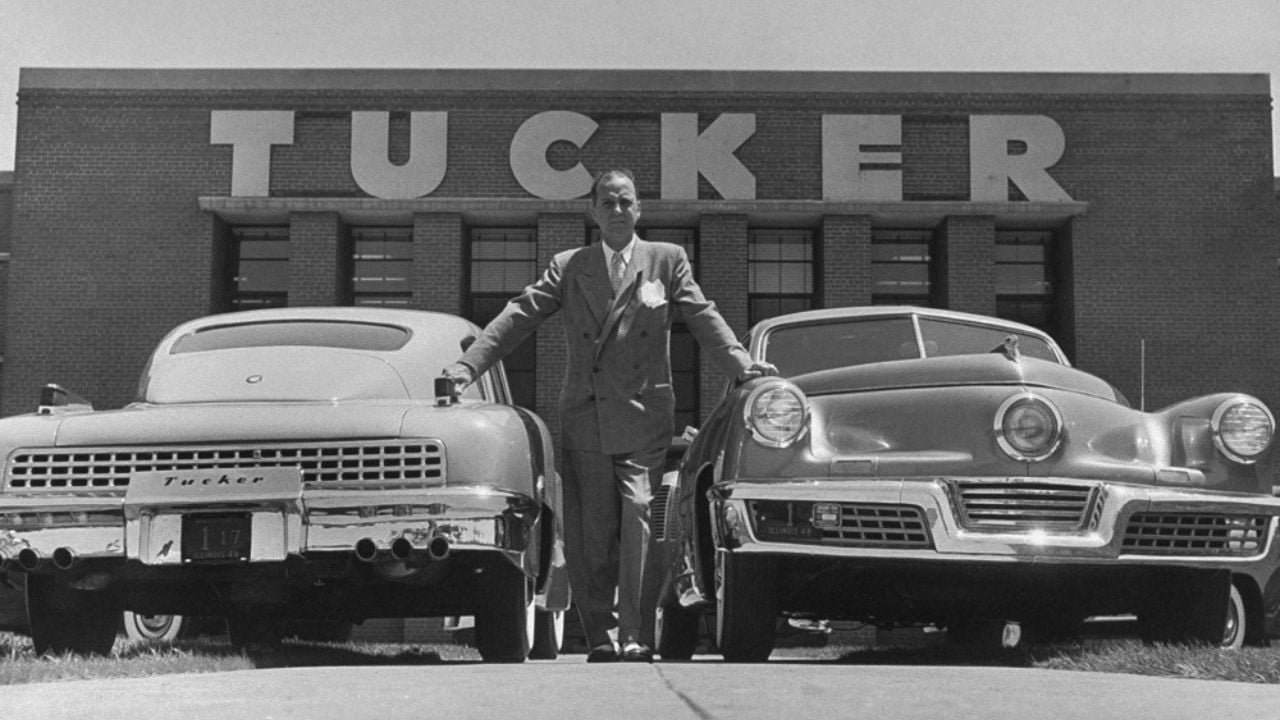
The company’s fall became almost as famous as the car itself. Tucker Corporation needed money before full production was established, and its financing methods, dealer arrangements, and accessory sales attracted attention from federal investigators.
The company and its executives were accused of misleading investors and customers. Tucker was acquitted in court, but the legal fight damaged the business, drained momentum, and left the company unable to continue.
Preston Tucker later argued that entrenched Detroit interests helped create pressure against his company. Those claims remain unproven, but the trial and collapse became inseparable from the car’s legend.
That unfinished story is one reason the Tucker 48 still holds so much attention. It was not just a rare car. It became a symbol of ambition, risk, innovation, and the brutal difficulty of challenging America’s postwar auto industry.
Tucker 1018 Gets A Second Life
The car now at the center of the story is Tucker #1018, the 18th Model 48 produced on the pilot-production line in Chicago. It was originally painted beige with a tan interior and carried a Tucker Y-1 transmission.
Tucker Corporation sold #1018 on July 30, 1948, to Buffalo Tucker Sales, the company’s New York-area distributor. Local newspaper reports later described the car being driven from town to town for demonstrations, where people reportedly stopped and turned around to get another look at the “car of tomorrow.”
Its life as a promotional machine was short. After those early appearances, #1018 was destroyed in a severe one-car crash in western New York. Sources differ on the exact timing and location, but the common thread is clear: the car struck a tree at high speed and was considered damaged beyond normal repair.
Old Cars Weekly has described the crash as happening after late-1948 newspaper reports near South Wales, New York, while Autoweek’s 2026 account cites a 1953 crash in East Aurora, New York. Because those accounts do not fully agree, the safest reading is that #1018 was lost after a serious western New York crash rather than a normal retirement.
Over the following decades, the car’s parts scattered. Some pieces were used in other Tucker projects, while the original engine and other components entered major collections. The surviving chassis eventually became the foundation for a new attempt to tell #1018’s story.
A Transparent Tucker Is Planned To Drive Again
Mark Lieberman, a major Tucker expert and restorer, has donated the surviving #1018 remains to the AACA Museum in Hershey, Pennsylvania. The museum is now presenting the project as the “Clear Vision Tucker,” built around #1018’s original chassis, original engine, and authentic components.
Instead of recreating a normal steel body, the plan is to build a transparent body that follows the original shape. The see-through shell would allow visitors to view the chassis, rear-mounted engine, steering headlight system, suspension layout, and safety engineering directly through the car.
The museum says the restoration will use professional preservation methods, original factory blueprints, historical research, and recreated parts where original pieces cannot be obtained. The goal is not simply to make another display car, but to create an educational tool that explains why Tucker’s ideas mattered.
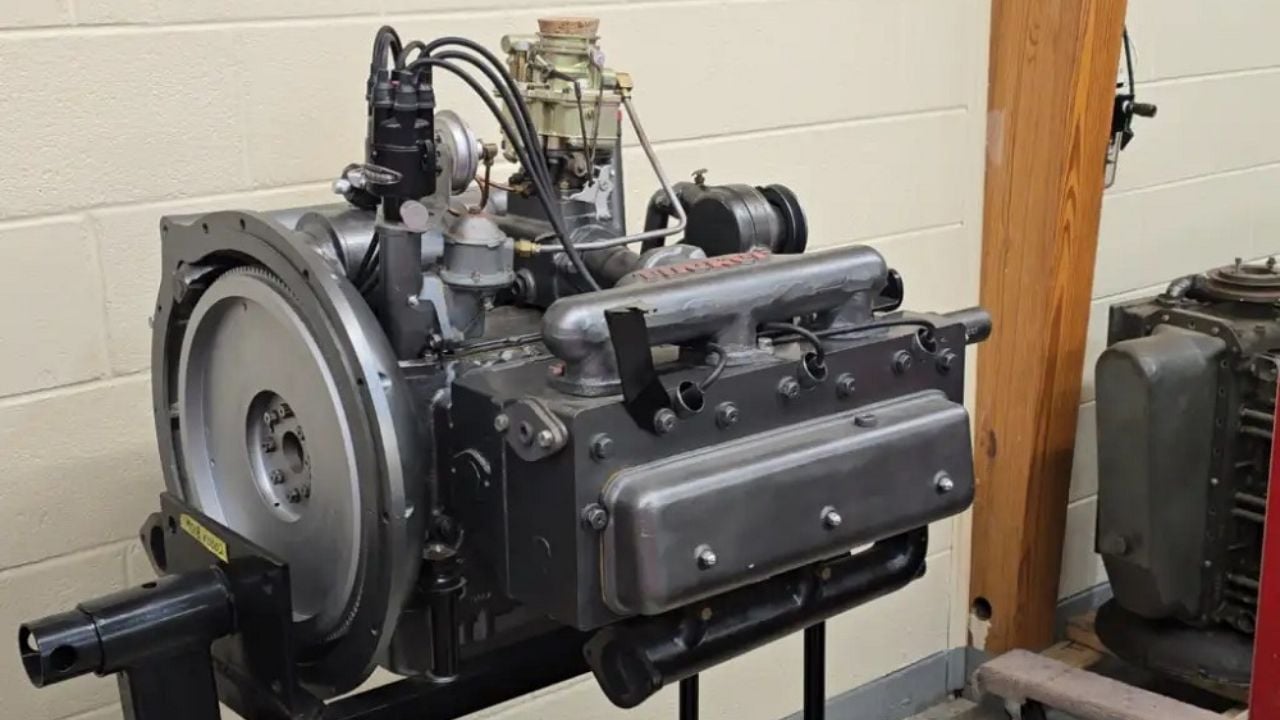
The original 335-cubic-inch Franklin-derived flat-six engine, rated around 166 to 167 hp, is expected to be reunited with the project. The Tucker Y-1 four-speed preselector transmission also gives the car the kind of mechanical authenticity that makes #1018 more than a loose tribute.
If completed as planned, Tucker #1018 will not sit silently as a bare frame. The project is intended to become a drivable, see-through museum vehicle that can appear at public events and help people understand one of the most ambitious American cars ever built.
That is why the survivor count matters. #1018 may never be a conventional restored Tucker 48, but it could turn a long-lost original into a working educational survivor, one built to show exactly why Preston Tucker’s car still fascinates people more than 75 years later.
This article was originally published by Autorepublika.com and is republished with permission. It has been reviewed and edited by Guessing Headlights.