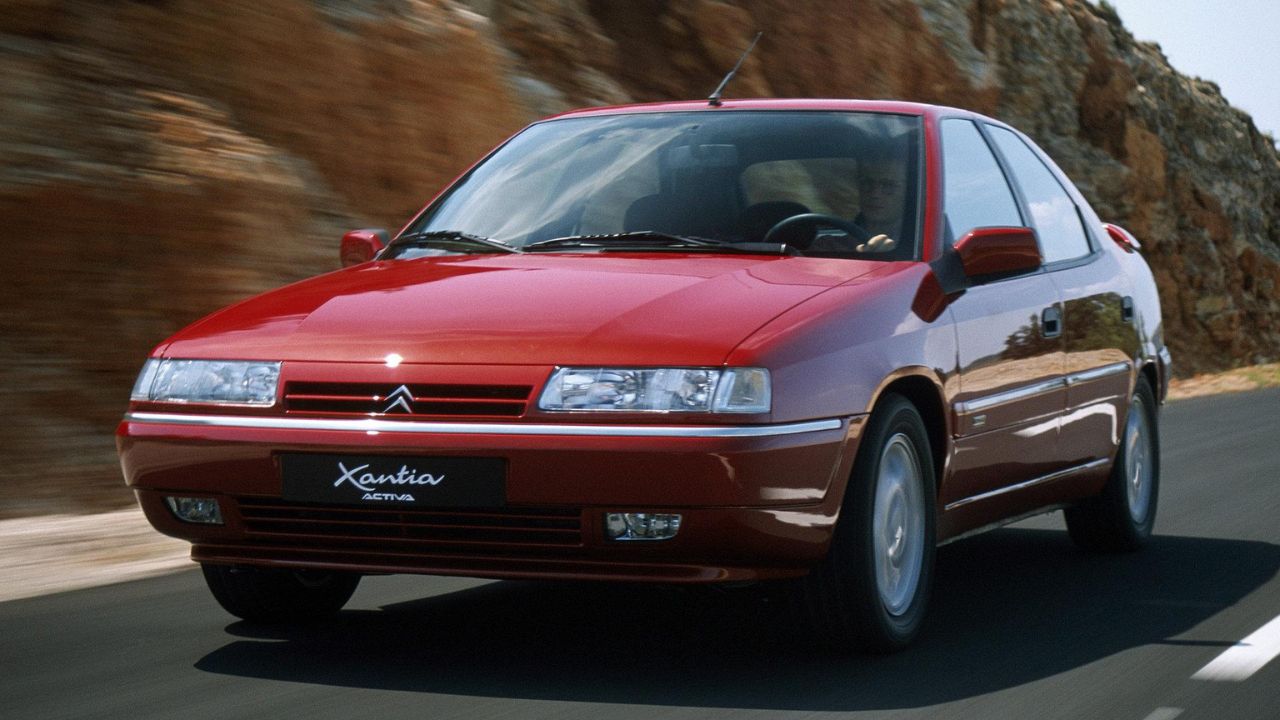
Classic cars, especially those that fall into the youngtimer category, do not have to be rare or exotic to be interesting. In fact, some of the most appealing older cars are the ones people quietly overlooked. That is exactly the case with the Citroën Xantia, a French midsize sedan that remains one of the more affordable modern classics with genuine character and real everyday usability.
When the Xantia arrived in late 1992, it replaced the Citroën BX and immediately stood out as something different in a crowded family sedan market. Over a ten-year production run, Citroën built about 1.216 million examples, with a facelift arriving in 1997.
Even today, the Xantia is remembered less for showroom flash and more for the way it drove. It developed a strong reputation for ride quality and road holding, and it became especially famous for its performance in the moose test, where it reportedly managed an extraordinary 53 mph, a remarkable figure for its time.
Comfort Was The Xantia’s Greatest Strength

Although it was a mass-produced car, the Xantia offered an impressive feature list for the early 1990s. Depending on trim and market, buyers could get ABS, front and side airbags, velour seats, a panoramic roof, and automatic climate control. That alone gave it strong value in the European family car segment.
What truly set the car apart, however, was its hydropneumatic suspension. Citroën had already built its reputation on suspension comfort with models such as the DS and CX, and the Xantia carried that tradition into a more modern package. Owners and enthusiasts still describe the car as floating over the road in a way few conventional sedans ever could. It did not feel identical to older Citroëns, but it preserved that unmistakable sense of softness and isolation that made the brand unique.
For American readers unfamiliar with Citroën’s history, this matters because the Xantia was not merely a comfortable European commuter. It was one of the last mainstream sedans to offer a truly different engineering philosophy from the established German and Japanese approach.
A Wide Range Of Engines And A Surprisingly Broad Appeal
Citroën gave the Xantia a broad powertrain lineup. The range started with a 1.6-liter gasoline engine producing 88 horsepower. At the top sat a 3.0 liter V6 rated at 190 horsepower, enough to push the sedan to a top speed of about 143 mph. Diesel options were also part of the lineup, including later HDi engines, which helped make the Xantia appealing to high-mileage European drivers.
Throughout the car’s life, Citroën continued refining its suspension technology. That development eventually led to the Xantia Activa, the most technically ambitious version of the model. It was the Activa that became legendary for its handling and its moose test result, proving that the same car known for comfort could also deliver astonishing body control.
Why It Still Makes Sense Today

Production in France ended in October 2002, when the Xantia made way for the Citroën C5. That successor would become the last Citroën to continue the hydropneumatic tradition. Xantia production did not end there, though, because assembly continued in Iran until 2010.
Part of the Xantia’s appeal today is simple value. It offers a surprising amount of engineering, comfort, and personality for very little money. That is why enthusiasts still seek them out. Basic versions remain relatively inexpensive, while special models such as the V6 Activa have already gained collector status. A very well-preserved Activa abroad can now command around $10,900, which shows how much appreciation the best examples have earned.
Even the interior has aged better than many rivals from the same era. It may not look flashy by modern standards, but it still feels functional and honest rather than hopelessly outdated.
Parts, Problems, And Ownership Reality

Owning a Xantia is not without challenges. Citroën no longer produces many replacement parts, so owners often rely on former suppliers or salvage yards. Routine parts can still be found, and costs for many standard maintenance items remain fairly reasonable. A full brake set for a basic 1.6 model, for example, can still be sourced without outrageous expense.
The biggest concern is the hydropneumatic system itself. It is complex, and age can make maintenance more demanding. Automatic transmissions have also developed a reputation for trouble, and sagging headliners are another common age-related issue. The good news is that Citroën applied strong corrosion protection to the Xantia, which means rust is generally less of a problem than many people might expect from a 1990s European sedan.
That is an encouraging detail, because it increases the odds that these cars will remain visible on the road for years to come. The Xantia may have been overlooked for a long time, but it deserves far more recognition today. It was an unusual, deeply comfortable, and technically fascinating sedan that is steadily becoming more appreciated by people who want something different from the usual young-timer choices.
This article originally appeared on Autorepublika.com and has been republished with permission by Guessing Headlights. AI-assisted translation was used, followed by human editing and review.