
They say beauty is in the eye of the beholder, and nowhere is that more true than in the world of sports cars. The cars on this list had the performance, the engineering, and sometimes even the pedigree to become fan favorites. But for one reason or another (usually styling), they didn’t capture widespread love.
This isn’t a teardown or a list of “failures.” These are cars that intrigued us, impressed us, or even made us smile, but also made us wonder: what if they had looked just a little more conventional? Some are cult favorites. Others vanished quietly. All of them remind us that car design is as much about personality as it is about polish.
Quirky, Quick, and Controversial
We set out to highlight sports cars that made a strong impression… but not always for the usual reasons. These aren’t the worst cars ever made, nor are they failures. In fact, many delivered jaw-dropping performance, advanced engineering, and creative vision. But despite all that, they didn’t win over the public the way more conventionally styled competitors did.
This list is based on a mix of historical reception, design commentary, and our own editorial opinions. We leaned into cars that sparked conversation, turned heads for better or worse, and dared to be different. Whether they became cult classics or footnotes in automotive history, each one adds something valuable to the conversation about how we define beauty, performance, and success in the car world.
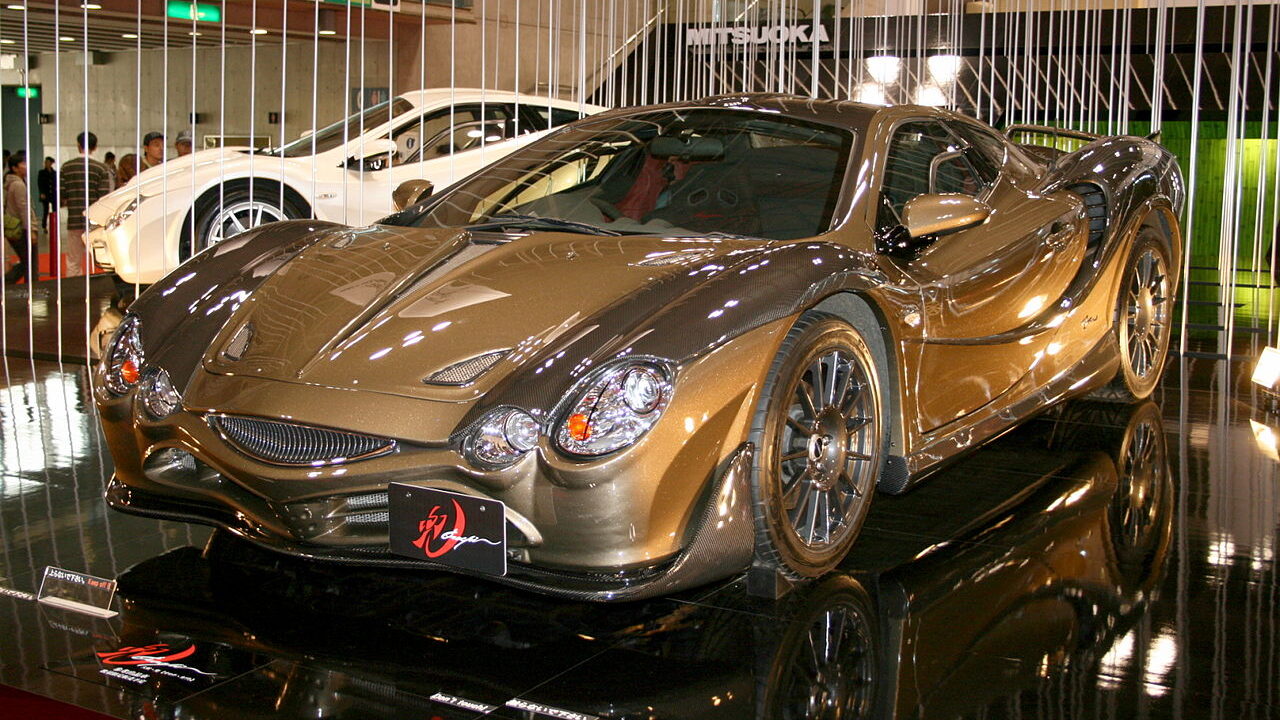
Mitsuoka Orochi

Mitsuoka is a Japanese automaker known for doing things a little differently, blending classic inspiration with bold design choices. The mid-engined Orochi is one of its most recognizable — and most talked-about — creations.
Named after the eight-headed serpent from Japanese mythology, the Orochi lives up to its legendary name with styling that’s anything but conventional. Beneath its sculpted curves, it’s actually a well-sorted sports car built on a Honda NSX platform and powered by a 3.3-liter Toyota V6 producing 233 horsepower. While its looks may divide opinions, there’s something undeniably fascinating about a car that dares to be this distinctive.
Caparo T1

Caparo Vehicle Technologies set out to build a road-going car that captured the essence of Formula One—and the result was the Caparo T1. Its design was shaped by the goal of achieving extreme performance, even if that meant making some compromises in everyday usability.
Powered by a high-revving 3.5-liter V8 derived from IndyCar racing, the T1 produced 575 horsepower at 10,500 rpm. It delivered blistering speed and sharp handling at high velocity, but like a true F1 car, it wasn’t exactly built for traffic. While it wasn’t a practical commuter, the T1 remains an audacious and unforgettable exercise in pushing road car performance to the edge.
Jensen S-V8

Jensen is best known for the beautifully styled Interceptor, so the S-V8 marked a dramatic departure when it arrived in the late 1990s. With bold curves and retro-inspired lines, the S-V8 aimed to revive the brand with a modern British roadster, but its styling didn’t appeal to everyone.
Originally slated for a 300-car production run, only 20 were fully completed before Jensen closed its doors in 2002. While some appreciated its individuality, the design proved polarizing, which may have played a role in its limited success. Still, the S-V8 remains a fascinating footnote in British automotive history.
Covini C6W
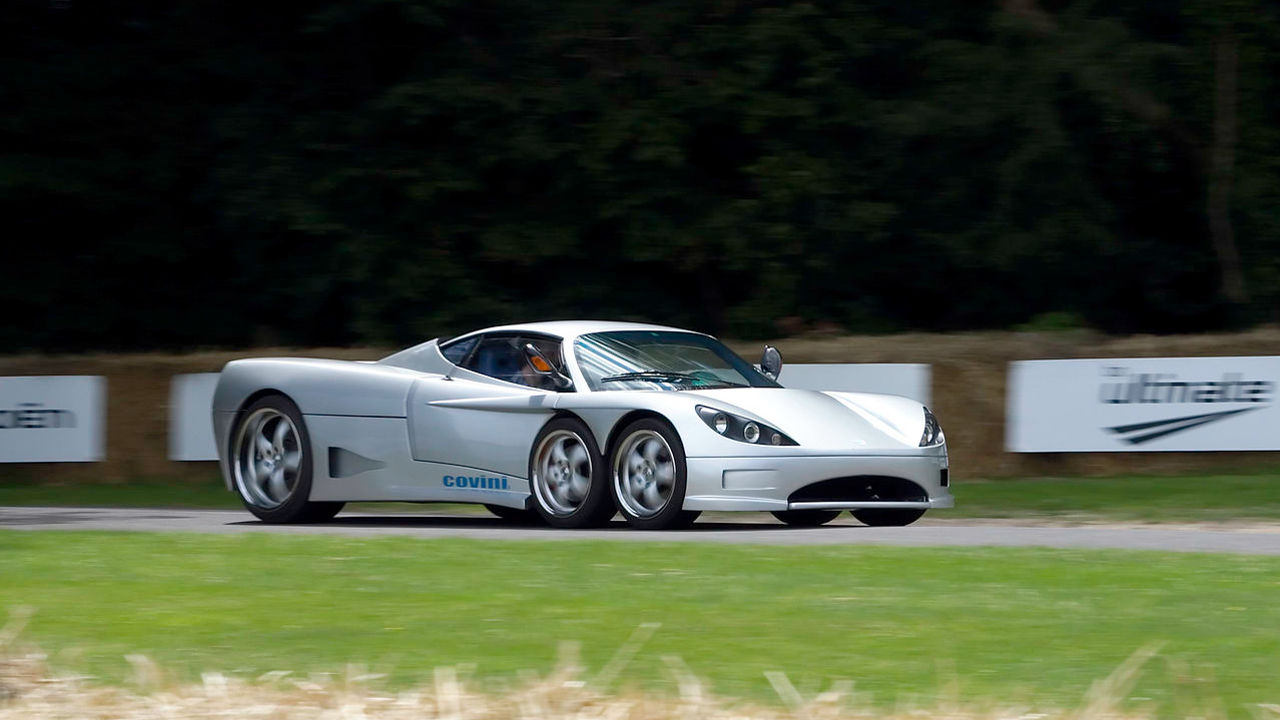
The Covini C6W is one of the most visually distinctive sports cars ever built, thanks to its unusual six-wheel layout—four up front and two in the rear. Inspired by the six-wheeled Formula One cars of the 1970s, Covini claimed the extra wheels offered improved grip and safety under braking.
Power came from a tried-and-true Audi 4.2-liter V8 producing over 430 horsepower, giving the C6W solid performance to match its unconventional design. While it didn’t find widespread success in the market, it remains a fascinating example of outside-the-box engineering in the modern era.
Gumpert Apollo

Gumpert may not have the same brand recognition as Ferrari or Lamborghini, but its credentials are no joke. Founded by Roland Gumpert, Audi’s former head of motorsports, the Apollo was built with one mission in mind: to dominate the track.
Powered by a twin-turbocharged 4.2-liter V8, it delivered 650 horsepower and 627 lb-ft of torque, rocketing from 0 to 60 mph in just 3.1 seconds with a top speed of 224 mph. It even claimed a Nürburgring lap record. While its design stirred plenty of debate, the Apollo was a performance-first machine that delivered on its promise, and then some.
Tramontana XTR

The Tramontana XTR looks like something straight out of a sci-fi movie, with its open-wheeled stance, fighter jet-style cockpit, and dramatic lines. Its futuristic styling may not appeal to everyone, but it certainly makes a statement.
Underneath the bold exterior lies a serious performance machine. Powered by a Mercedes-sourced twin-turbocharged V12, the XTR produces an astonishing 890 horsepower. Built with track days in mind, it’s a niche supercar that blends extreme engineering with unmistakable character.
Weber Faster One

Swiss automaker Weber set its sights high with the Faster One, promising a hypercar that could rival, or even surpass, the legendary Bugatti Veyron. With a twin-supercharged 7.0-liter V8 producing 890 horsepower, it claimed a 0 to 60 mph time of 2.5 seconds and a top speed of 248 mph.
While the performance numbers were impressive, the design sparked mixed reactions. Focused heavily on aerodynamics, the styling leaned more functional than fashionable. The car made its first appearance in 2008, then resurfaced in 2013 with a V10 and even bolder performance targets. Though it never entered widespread production, the Faster One remains an ambitious — and fascinating — chapter in hypercar history.
Youabian Puma
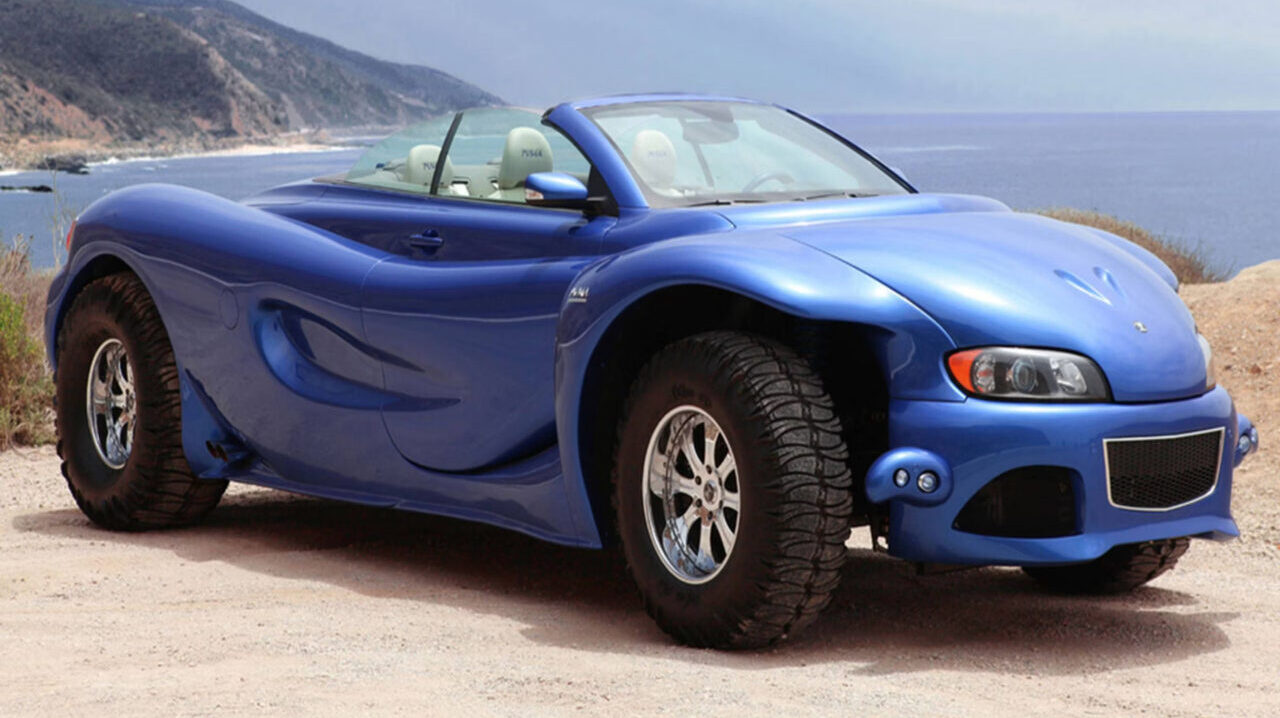
The Youabian Puma is one of the most unconventional vehicles to ever wear the label of a sports car. Blending elements of a convertible grand tourer with the size and stance of an off-roader, it was designed to stand out—and it certainly succeeded.
Powered by a 505-horsepower LS7 V8 and featuring a surprisingly plush Volvo-sourced interior, the Puma had legitimate performance potential and comfort. Its design, however, divided opinion, and with a nearly $1 million price tag, it remained firmly in the realm of rare curiosities rather than mainstream success.
Jetstream SC250

The Jetstream SC250 may look like a throwback to a bygone era of kit cars and track-day specials, but it was actually introduced in 2008 by British carmaker Jetstream. Its design may not win beauty contests, but its performance specs are hard to ignore.
With a 250-horsepower turbocharged 2.0-liter engine mounted at the rear and a featherweight 1,543-pound curb weight, the SC250 could hit 60 mph in just four seconds and reach a top speed of 165 mph. It’s a focused, no-frills sports car that put speed ahead of style.
Panoz Esperante GTR-1

Built by Georgia-based sports car manufacturer Panoz, the Esperante GTR-1 was designed with one goal in mind: racing. While its design may not have the sleek curves of its European competitors, it made up for it with grit and purpose.
Under the hood, it packed a 6.0-liter Ford V8 tuned by Roush to produce 600 horsepower. On the racetrack, the GTR-1 proved its worth as a serious contender, delivering raw American performance with a distinct identity all its own.
Consulier GTP

The Consulier GTP was never known for its looks, but it earned a reputation for performance where it counted: on the track. Built with lightweight composite materials and powered by a turbocharged 2.2-liter Chrysler engine making 175 horsepower, it was surprisingly quick.
In fact, it was quick enough to get banned from IMSA competition for being too dominant. Later versions received small-block Chevy V8s, further boosting their capabilities. While the design was always polarizing, the GTP’s performance credentials were hard to ignore.
Marcos Mantis

Marcos Engineering, a British sports car maker known for its unconventional designs, launched the Mantis M70 in the early 1970s. While the car never achieved widespread popularity, it left a lasting impression thanks to its distinctive styling.
Powered by a Triumph-sourced 2.5-liter inline-six producing 150 horsepower, the Mantis M70 could reach 60 mph in about nine seconds and topped out at 125 mph. Only 32 were built, making it a rare sight today—and a curious footnote in British motoring history.
Lamborghini Veneno

Lamborghini is known for designing some of the most iconic supercars in history—from the elegant Miura to the wedge-shaped Countach and aggressive Diablo. In 2013, the brand took a bold turn with the ultra-limited Veneno.
Built to celebrate Lamborghini’s 50th anniversary, the Veneno features a 740-horsepower 6.5-liter V12 capable of hitting 60 mph in just 2.7 seconds. While its performance is undeniably impressive, the styling sparked plenty of debate. With sharp lines, extreme aero, and a fighter-jet aesthetic, the Veneno remains one of the brand’s most controversial designs to date. Some see it as a daring work of art; others find it a step too far.
Fast, Flawed, and Unforgettable

Not every sports car gets to be the prom king. Some show up in wild outfits, dance to their own rhythm, and leave people scratching their heads — or applauding the boldness. The cars on this list didn’t play it safe. They zigged when everyone else zagged.
And while they may not hang in the Louvre of automotive design, they each left a mark. Some were ahead of their time. Others were just delightfully strange. But in a world full of cookie-cutter cars, there’s something refreshing about machines that make you pause, tilt your head, and say, “Wait… what is that?”