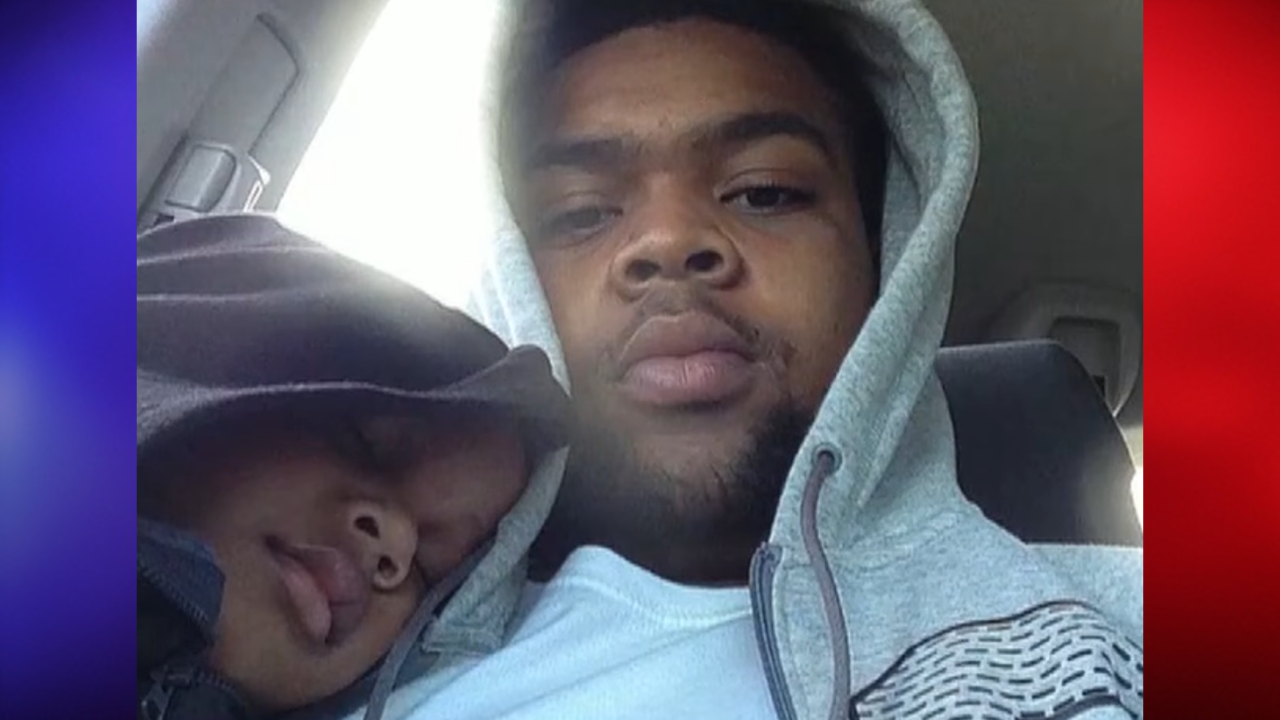
A sandbag dropped from a Toledo bridge killed a passenger on Interstate 75, and his mother later won an appeals court ruling holding Ohio responsible. That victory has now been overturned: the Ohio Supreme Court ordered her wrongful-death lawsuit against the Ohio Department of Transportation dismissed on October 6, 2026.
The case centered on a bridge under reconstruction, where protective fencing had been removed from one side while traffic continued below. The sandbags used to hold construction signs and barricades in place were accessible on the overpass.
Marquise Shawndell Byrd was fatally injured on December 19, 2017. His mother, Patricia Wilkes, sued on behalf of his estate in January 2019, arguing that ODOT had failed to remove or reduce dangerous conditions along the interstate.
The trial court initially ruled in ODOT’s favor after finding that Wilkes had not proved her claims. In March 2025, the Tenth District Court of Appeals reversed that judgment and sent the case back to determine how much the estate should receive in damages.
Above the Highway
Embedded media follows; please allow a moment for it to load.
Before construction, the Indiana Avenue bridge had sidewalks and protective fencing on both sides. Contractor Kokosing Construction proposed closing it entirely and rebuilding it at once, but ODOT chose to keep a lane and sidewalk open because the bridge provided access to downtown Toledo and served nearby neighborhoods.
Crews instead started by demolishing the north half. Its sidewalk and fencing came down with the deck and beams, while the south-side sidewalk retained its fencing. Concrete barricades and signs directed pedestrians away from the construction side.
At about 10 p.m. on December 19, a driver traveling south on I-75 heard a crash as her Hyundai Elantra filled with dust and dirt. Byrd, in the front passenger seat, was unconscious and not breathing. She pulled over, called 911, and began CPR.
Toledo police found a shattered passenger-side windshield and a burst sandbag in the back seat behind Byrd. He never regained consciousness and later died at a hospital.
The sandbag had been thrown deliberately. According to the Supreme Court’s opinion, one juvenile told police that another had said, “I’m going to throw this over the bridge and run because the cops are going to come.”
Four boys, ages 13 and 14 at the time, were adjudicated delinquent for vehicular vandalism. Pedro Salinas, who dropped the fatal sandbag, was also adjudicated delinquent for murder, while the other three were adjudicated delinquent for involuntary manslaughter. Police said the boys had been throwing rocks and sandbags onto the interstate.
At their April 2018 sentencing, a Lucas County judge suspended commitments to the Ohio Department of Youth Services and instead ordered the four boys to the Lucas County Youth Treatment Center. Salinas faced commitment until age 21 if he failed to comply with the treatment program, while the other three faced three-year commitments. The boys were also placed on probation and ordered to perform community service, according to contemporaneous reporting. Byrd’s family objected to the punishment, arguing that it was too lenient.
Salinas was later released to a group home. On July 1, 2019, the 15-year-old died after entering the water at Centennial Quarry in Sylvania Township, according to 13ABC.
A Policy Choice
Chief Justice Sharon L. Kennedy’s majority opinion treated the decision against temporary fencing as a basic policy choice involving a high degree of official judgment. Under the court’s precedent, Ohio has immunity from negligence suits challenging that kind of decision, although immunity does not protect negligent implementation of an adopted policy.
ODOT employees testified that the bridge design requirements addressed permanent structures rather than temporary fencing during reconstruction. Because no policy required temporary fencing, the majority concluded that employees had discretion to decide whether to install it.
ODOT’s area engineer explained that he considered temporary fencing unnecessary because the north side was closed to pedestrians. Kokosing’s regional manager testified that the contractor had experienced no earlier attempts to throw objects from that side during reconstruction and had no safety concerns before the incident.
The Supreme Court’s decision turned on whether ODOT could be sued over its fencing decision. The majority concluded that the decision was protected by discretionary immunity, requiring dismissal of the lawsuit rather than a determination of damages.
Justice Jennifer Brunner dissented. She argued that deciding how to carry out an existing bridge-safety policy was a technical decision, rather than the sort of high-level policymaking protected by immunity. ODOT could not adopt a fencing policy and then disregard it or implement it negligently, she wrote.
A Separate Objection
Justice Patrick F. Fischer supplied the sixth vote for the result but questioned the legal foundation supporting it. He argued that the court’s 1984 Reynolds precedent created broad discretionary immunity without a proper analysis of the statute allowing lawsuits against Ohio.
In Fischer’s reading, the statute requires the state’s liability to be determined under the same rules that apply to private parties, subject to specific exceptions. Broad protection for basic policy decisions, he argued, was absent from that language.
He nevertheless agreed to apply the existing precedent because neither side had asked the court to overturn it. Fischer wrote that reconsidering the doctrine should wait for a case in which the court had the benefit of briefing and argument on that question.