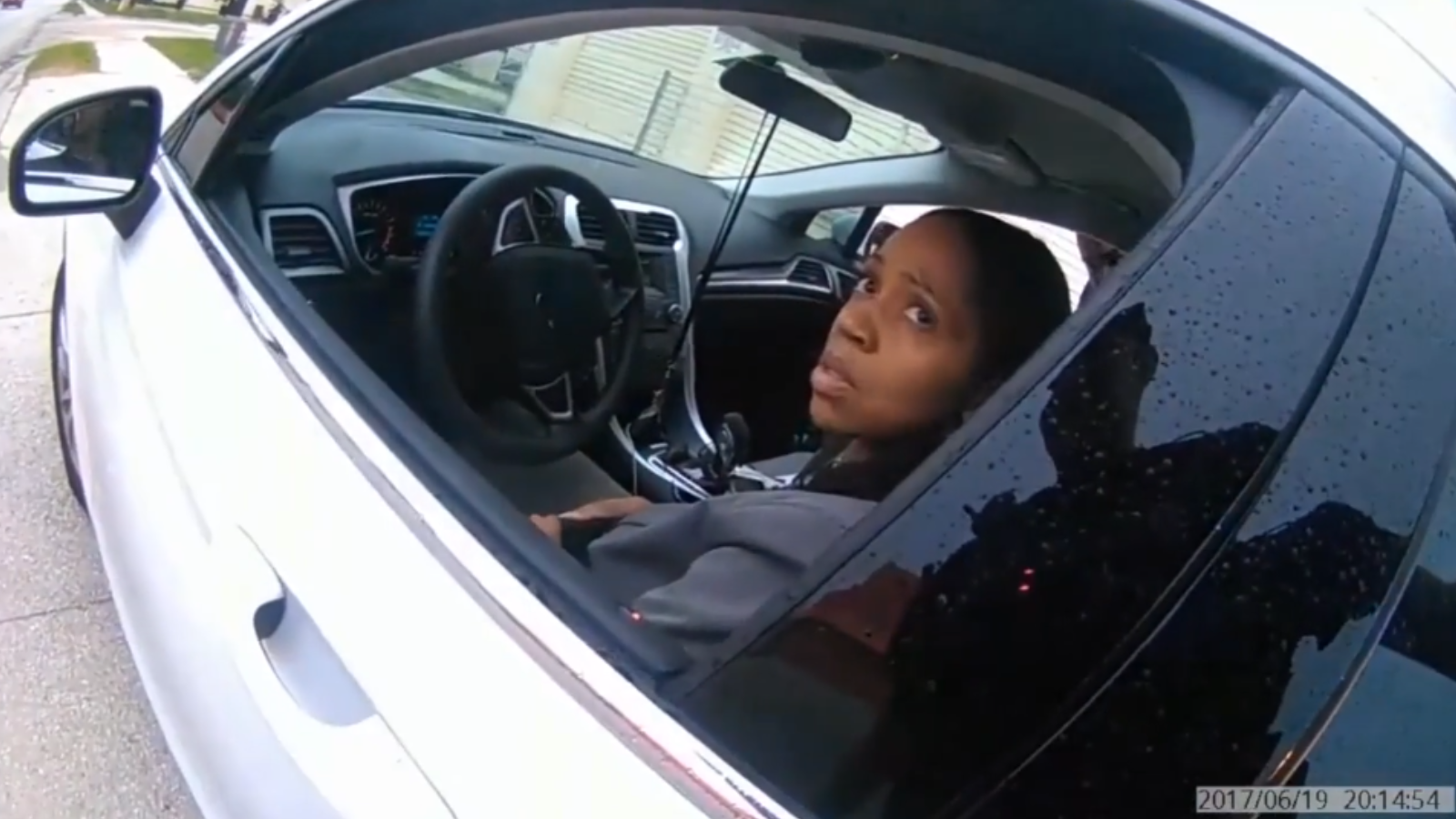

Nine years after Orlando police pulled over then-State Attorney Aramis Ayala, the body camera footage is still circulating online and generating debate.
The June 19, 2017, traffic stop lasted only a few minutes and ended without a citation, warning, complaint, or lawsuit. Yet the video continues to attract new viewers who return to the same questions that surfaced when it was first released.
Ayala, then Florida’s Ninth Judicial Circuit state attorney, was stopped shortly after leaving Florida A&M University College of Law in Orlando. The encounter quickly drew national attention and remains one of the most discussed body camera videos involving a high-profile public official.
As the footage shows, what began as a routine traffic stop soon turned into a conversation about license plate checks, window tint, and police discretion.
A Brief Stop That Still Draws Questions
Officers initiated the stop after a license plate check returned no information on Ayala’s vehicle. The Orlando Police Department released the officers’ body camera footage the following month, and the video quickly spread across news outlets and social media platforms.
Ayala is the first Black woman elected as a state attorney in Florida history. The footage drew national attention, in part because of her position and in part because the stop ended so quickly once officers confirmed who she was.
Officers approached Ayala’s car and asked for her license. She handed over her identification and informed them of her position as state attorney. The tone remained professional throughout the interaction.
The body camera footage shows one officer approaching Ayala’s driver-side window. He took her license and asked, “What agency you with?” Ayala responded, “I’m the state attorney.” The officer then explained the reasons for the stop.
“Your tag didn’t come back. Never seen that before,” the officer said. He explained that the license plate check returned no vehicle registration information. Ayala asked why officers ran her plate in the first place. The officer replied that officers routinely run tags to check for stolen vehicles and other issues.
The officer also said Ayala’s car windows appeared very dark. He noted he did not have a tint meter to measure the exact darkness level. Ayala asked for the officers’ business cards. Neither officer had one available, so one wrote their name on a piece of paper.
Why the Plate Question Became Part of the Story
One reason the video continues to generate discussion is that many viewers focus on the explanation officers gave for the stop.
According to CNN’s reporting at the time, Ayala was driving a state-issued vehicle. Orlando police told CNN that license plates assigned to state-issued vehicles are confidential and would not appear as registered during a routine database check.
That detail helps explain one of the most common questions raised whenever the footage resurfaces online. Ayala also addressed the issue directly, stating that while the plate was confidential, it was properly registered.
The Orlando Police Department later reiterated that officers routinely run license plates during patrol and maintained that the stop was lawful.
Questions Raised by the Stop
Some viewers interpreted the interaction differently after officers learned Ayala’s identity, while others viewed the encounter as a routine traffic stop that concluded without enforcement action.
The footage showed officers discussing the reasons for the stop before ultimately returning Ayala’s license and ending the encounter. Ayala did not raise her voice or challenge the officers directly. She requested their contact information and accepted the handwritten note with their names.
The stop concluded with officers returning her license and allowing her to leave. No ticket or written warning was issued. Ayala drove away without further incident.
The video accumulated millions of views after its release. Some social media users questioned whether racial profiling played a role in the stop, while others pointed to the officers’ explanation that the plate check returned no information and that the vehicle’s windows appeared unusually dark.
In a statement released after the video became public, Ayala said the stop appeared consistent with Florida law. She also maintained that she had violated no laws, that her vehicle was properly registered, and that its tint complied with state regulations.
Ayala further clarified that she had not filed a lawsuit over the encounter. Instead, she said she hoped to use the incident as an opportunity for dialogue.
“My goal is to have a constructive and mutually respectful relationship between law enforcement and the community,” she said at the time.
Aftermath and Larger Context
Ayala never filed a formal complaint or lawsuit over the incident, and Orlando police defended the stop as lawful. No disciplinary action was reported against the officers involved.
The stop occurred during a period when Ayala was already receiving significant national attention. At the time, she was involved in a high-profile dispute with then-Governor Rick Scott over her decision not to seek the death penalty in certain cases.
Ultimately, those legal and political battles drew far more sustained attention than the traffic stop itself. Ayala left office in 2021 after declining to seek reelection.
Still, the body camera footage remains online and continues to find new audiences. Although the stop resulted in no citation, arrest, lawsuit, or reported policy change, viewers continue to debate many of the same questions nearly a decade later.
For some, the video represents a routine stop that ended professionally. For others, it raises broader questions about police discretion and public perception. Either way, a traffic stop that lasted only a few minutes on June 19, 2017, is still generating conversation nine years later.